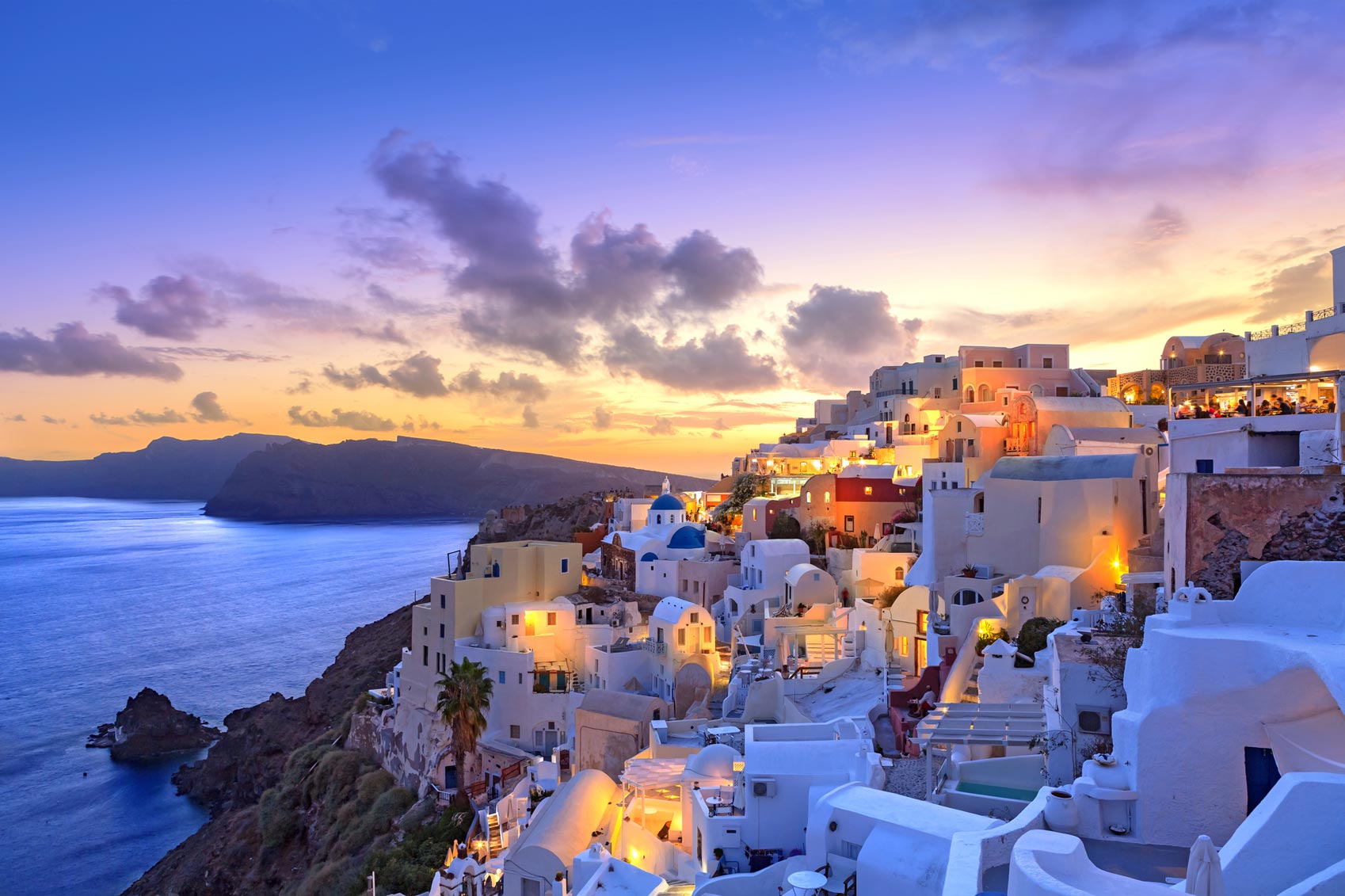
Choosing between the Greek islands is less about finding beauty and more about deciding which version of paradise calls to you most. Across the Aegean and Ionian seas lie more than 200 inhabited islands, each with its own rhythm: some wild and untamed, others impossibly glamorous; some devoted to quiet beaches and village life, others alive with music, art, and late-night dinners that stretch long past midnight.
The magic of Greece is that no two islands feel quite the same. In one place, you might wake to the scent of pine drifting through open shutters and spend the afternoon swimming in translucent turquoise coves; in another, you might find yourself wandering whitewashed lanes before settling into a candlelit terrace overlooking a harbour scattered with fishing boats.
Paxos and Antipaxos: The Ionian Islands Still Whispered About
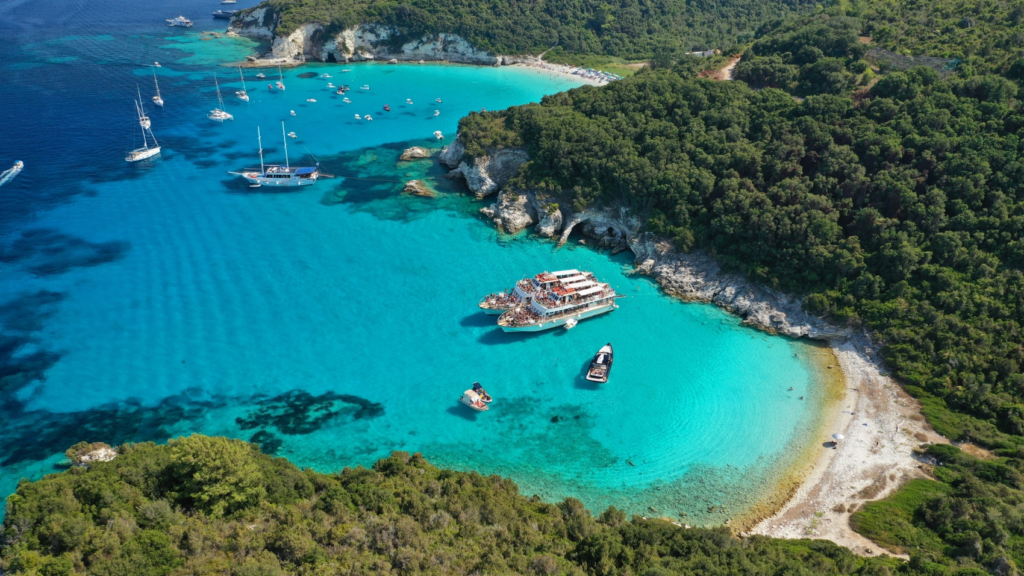
Among the Ionian Islands, Paxos feels like a well-kept secret shared among those who prefer beauty without spectacle. Smaller and quieter than many of Greece’s headline destinations, the island unfolds slowly: olive groves spill down gentle hillsides, tiny harbour towns hum softly with life, and the sea shifts between emerald and cobalt depending on the hour of the day.
The main port of Gaios is a postcard scene of pastel houses, waterside tavernas, and bobbing boats, where evenings are best spent lingering over grilled fish and chilled local wine. From here, narrow roads wind towards hidden beaches where limestone cliffs frame impossibly clear water.
Just across the channel lies Antipaxos, an even smaller island where the beaches are among the most luminous in Greece. Vrika and Voutoumi, with their powdery sand and dazzling turquoise shallows, feel almost Caribbean in colour yet unmistakably Mediterranean in spirit. Most visitors arrive by boat for the day, leaving long stretches of quiet coastline for those who stay overnight to enjoy.
Folegandros: The Cycladic Island for Quiet Luxury
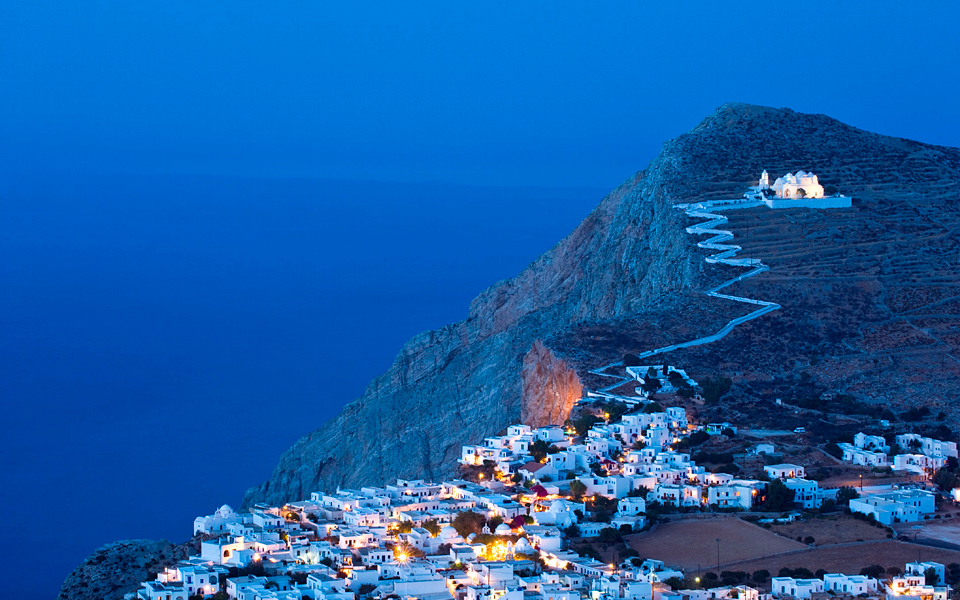
Tucked between Santorini and Paros, Folegandros has long attracted travellers who love the Cyclades but prefer their islands a little less discovered. It possesses the same dramatic cliffs and whitewashed villages as its famous neighbours, yet the atmosphere remains refreshingly understated.
The island’s heart is Chora, one of the most beautiful villages in the Cyclades. Here, narrow stone streets open into sun-drenched squares where bougainvillea spills over white walls and small tavernas serve simple seafood dishes beneath lantern light. In the evenings, locals and visitors alike gather in the main square, where the pace of life slows to conversation, wine, and the sound of cicadas.
Folegandros’ beaches require a little effort to reachl, many involve winding footpaths or boat journeys, but the reward is solitude and scenery that feels almost cinematic. Livadaki, with its translucent water and raw, rocky landscape, is one of the island’s most enchanting escapes.
Paros: The Cycladic Island That Balances Style and Soul
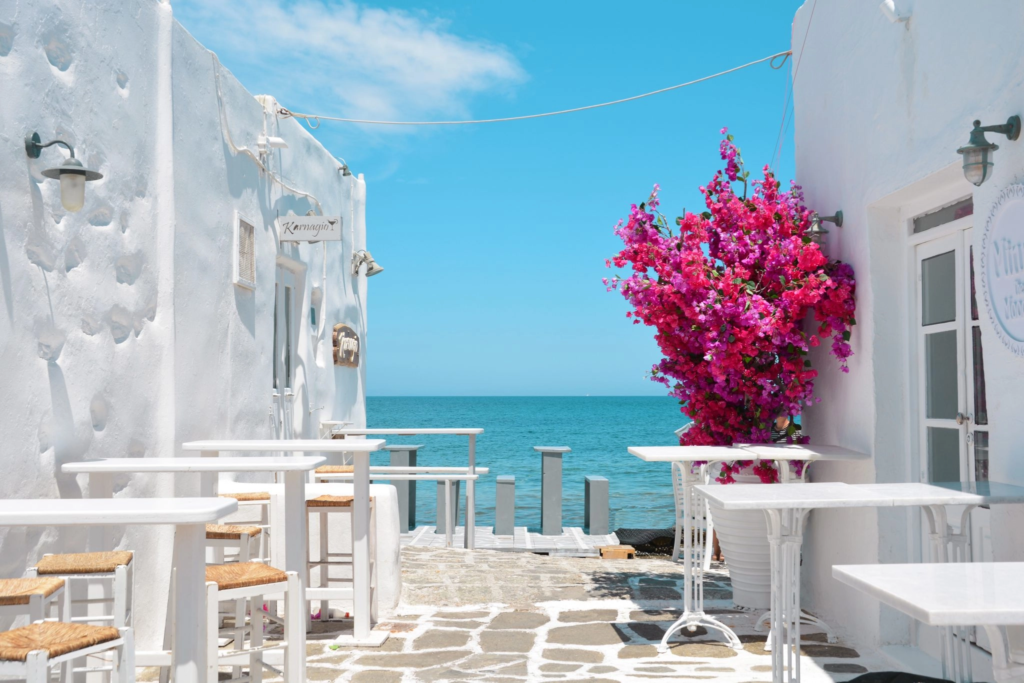
Paros has quietly become one of the most compelling islands in Greece: sophisticated enough to feel exciting, yet still grounded in tradition. Positioned at the centre of the Cyclades, it serves as an ideal base for island-hopping, but increasingly travellers arrive here with no intention of leaving.
The harbour town of Naoussa has transformed into one of the most stylish corners of the Aegean. Its fishing port, once lined with simple tavernas, now hosts an elegant mix of boutique hotels, wine bars, and restaurants that bring contemporary flair to classic Greek flavours. Evenings here are electric yet effortless, with tables spilling onto the waterfront and yachts gliding into the harbour.
Beyond the town, Paros reveals another side entirely: rolling hills dotted with windmills, peaceful villages such as Lefkés, and beaches ranging from lively stretches of sand to secluded coves hidden along the coastline.
Milos: Where Landscape Becomes Art
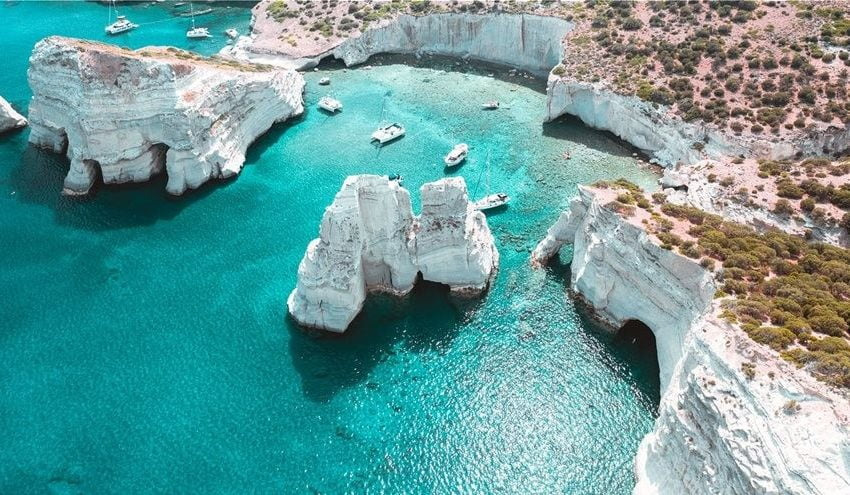
Few Greek islands possess a landscape as striking as Milos. Formed by volcanic activity, the island’s coastline is sculpted into surreal rock formations, hidden caves, and beaches where the colours shift from pale ivory to rust-red depending on the minerals in the cliffs.
Sarakiniko, perhaps the most famous of these beaches, resembles a lunar landscape: smooth white rock carved into gentle waves, meeting water so clear it seems almost unreal. Elsewhere, the fishing village of Klima adds another layer of charm, its rainbow-painted boathouses perched directly at the water’s edge.
Milos rewards curiosity. Small roads lead to remote coves and quiet fishing harbours where seafood is served hours after being caught, and the sense of discovery is constant: each turn revealing a new view, a new beach, or a new shade of blue.
Crete: Greece’s Island of Endless Possibilities
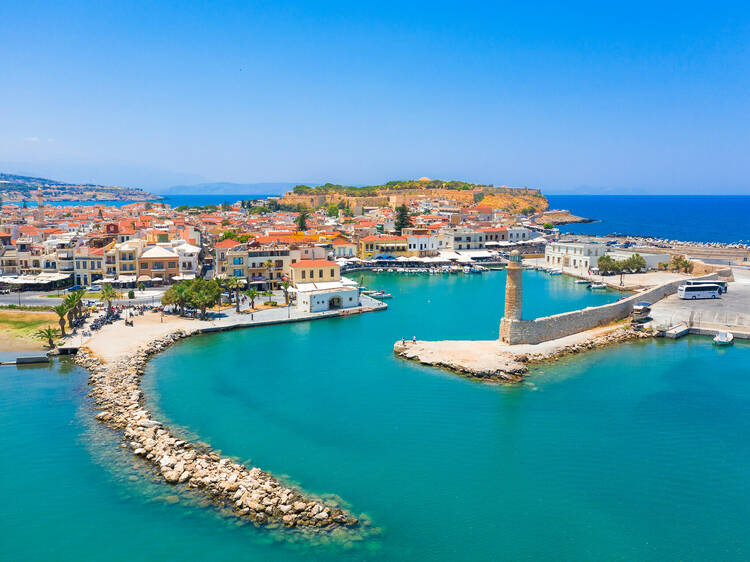
Crete is less an island than a world of its own. Vast, diverse, and deeply layered in history, it offers everything from ancient ruins and dramatic mountains to glamorous beach resorts and traditional villages that feel unchanged for generations.
In the north, cities such as Chania and Heraklion combine Venetian architecture, bustling markets, and lively dining scenes. The old town of Chania in particular feels wonderfully atmospheric at night, when lantern-lit alleys lead to rooftop bars and waterfront restaurants.
Yet Crete’s real magic often lies beyond the cities. In the interior, villages cling to mountainsides where life moves slowly and recipes have been passed down for centuries. Along the coast, beaches range from pink-tinted lagoons to vast golden bays, each revealing another side of the island’s remarkable character.
Mykonos: Greece’s Most Glamorous Playground
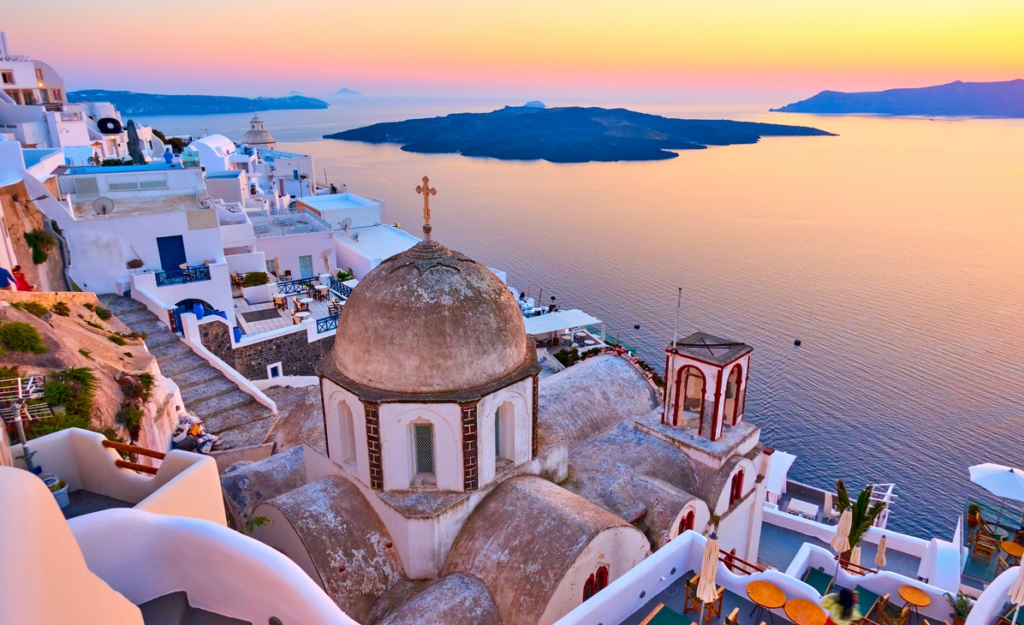
Mykonos remains one of the Mediterranean’s most dazzling summer destinations, where the days unfold between beach clubs and private terraces overlooking the sea. Despite its reputation for high-energy nightlife, the island also holds quieter pleasures for those who know where to look.
In Mykonos Town, whitewashed houses cascade down towards the harbour, their balconies draped with flowers and their doorways painted in shades of blue. Narrow alleyways twist between chic boutiques and art galleries, while cafés spill into sunlit squares.
By day, the island’s beaches are the main attraction. From the polished glamour of Psarou to the laid-back charm of Ornos, each stretch of sand offers a slightly different atmosphere. As sunset approaches, the mood shifts once again, and the island transforms into a stage for long dinners, music, and celebrations that continue until morning.
Santorini: Drama, Beauty and the Iconic Aegean View
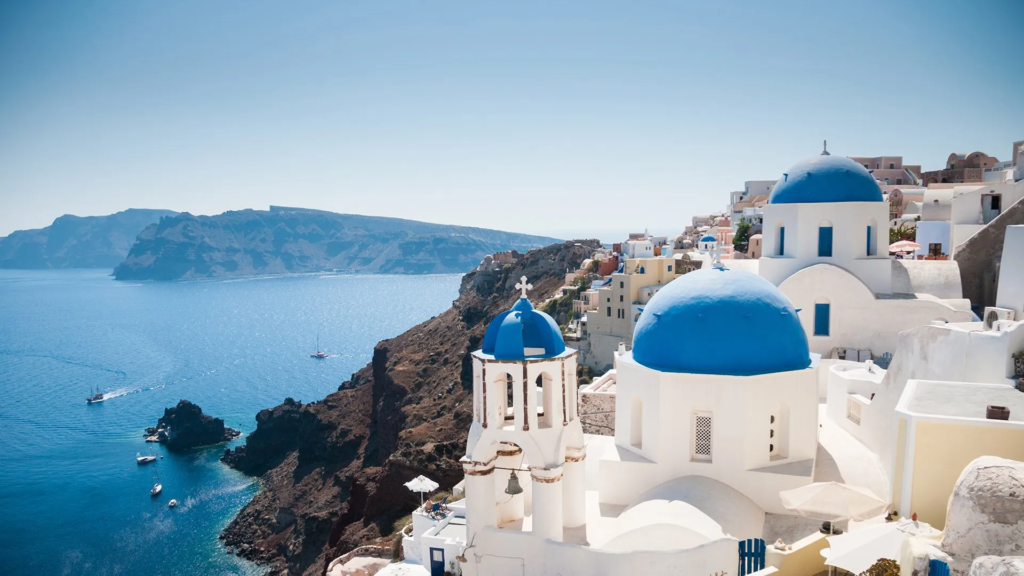
Few places capture the imagination quite like Santorini. Formed by a volcanic eruption thousands of years ago, the island rises dramatically from the sea in a series of steep cliffs crowned with white villages.
From the caldera edge, the views are nothing short of extraordinary: blue-domed churches, terraces carved into the rock, and the vast expanse of the Aegean stretching into the distance. It is this landscape, particularly at sunset, that has made Santorini one of the most photographed destinations in the world.
Yet beyond the famous viewpoints lies a quieter side of the island. Small vineyards produce the mineral-rich Assyrtiko wines that thrive in Santorini’s volcanic soil, while coastal villages serve fresh seafood alongside traditional dishes such as fava and white aubergine.
Corfu: The Greek Island with an Italian Soul
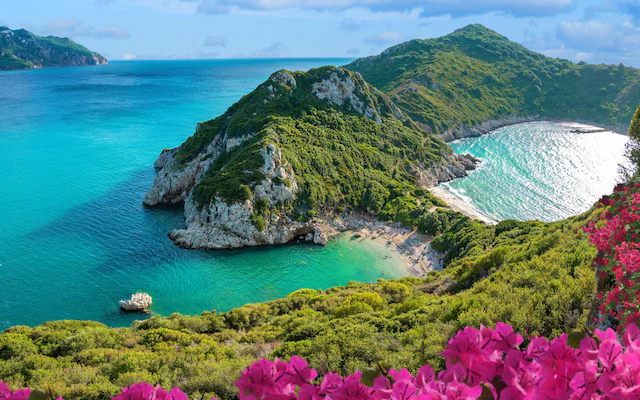
Corfu sits closer to Italy than to Athens, and its architecture reveals centuries of Venetian influence. Elegant arcades, pastel buildings, and grand piazzas lend the island a distinctive European character that feels different from the Cycladic aesthetic.
The old town of Corfu is a UNESCO-listed maze of narrow streets, where cafés and artisan shops hide beneath arches and balconies overflow with flowers. In the evenings, locals gather along the waterfront for long walks and late dinners overlooking the sea.
Beyond the town, the island reveals lush green hills, dramatic cliffs, and beaches framed by olive groves. The landscape feels softer and more verdant than much of Greece, giving Corfu an atmosphere that is both romantic and timeless.
Why the Greek Islands Still Capture the Imagination
What makes the Greek islands so enduringly irresistible is not simply their beauty, though that alone would be enough. It is the way life unfolds there: slowly, sensorially, and always in rhythm with the sea.
Days begin with sunlight spilling across white terraces, stretch into afternoons spent drifting between beaches and cafés, and end with long dinners beneath the stars. Whether you seek quiet coves, design-led boutique hotels, or lively harbours filled with music and conversation, somewhere among Greece’s islands is the place that feels exactly right.
The only challenge is deciding where to begin.