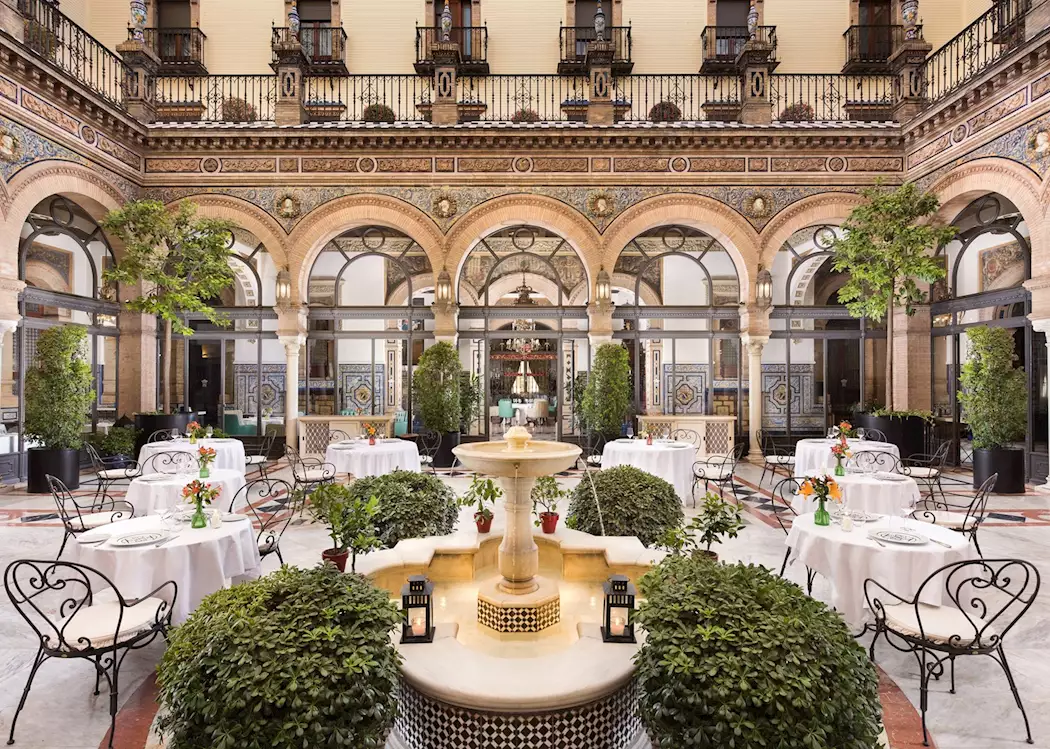
There is a particular light that finds its way into Seville: late-afternoon honey that slides across whitewashed walls, gilds wrought iron balconies and pools in tiled inner courtyards where orange trees scent the air. Choosing a hotel here is not merely about a bed; it is about selecting a vantage point from which to inhabit the city’s layered pleasures: the sudden hush of a patio, a rooftop view of the cathedral’s Giralda, an evening that begins with vermouth and ends with flamenco. These rooms and houses are less anonymous hotels and more domestic stages, each with a distinct truth about Seville’s temperament: ceremonial, sensual and quietly generous.
Below, eight places where design, history and atmosphere conspire to make time feel slower and more beautiful. Each offers a different way to live in Seville for a few days: from palace grandeur to intimate maisonette, and each one is arranged around courtyards, rooftops and passageways that coax you into a local rhythm.
Hotel Alfonso XIII
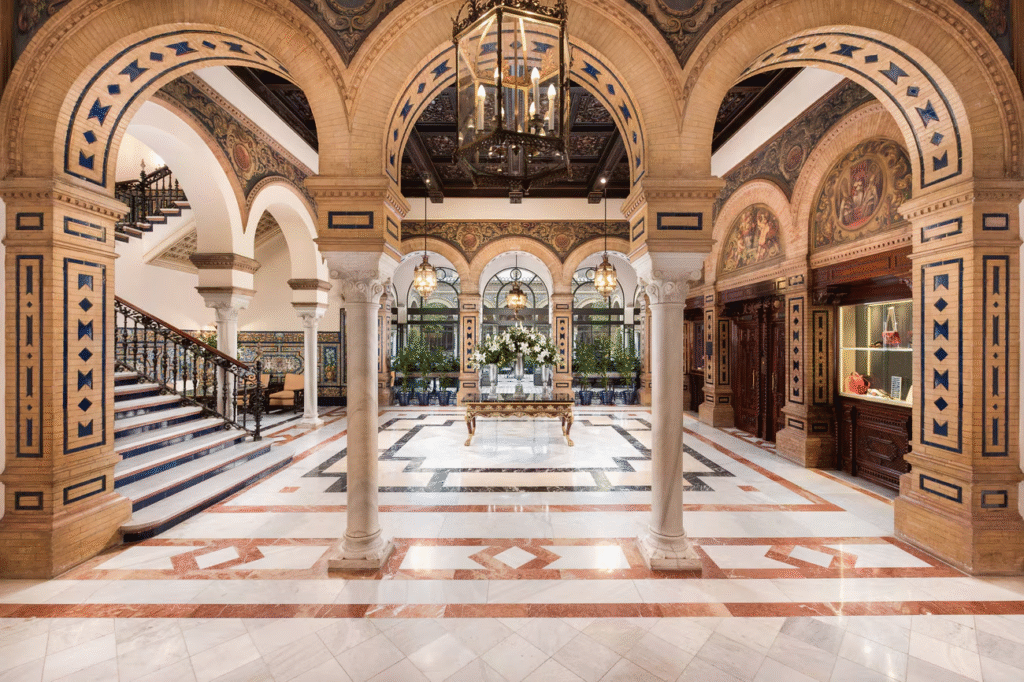
Built for an exposition and still performing as Seville’s ceremonial address, Alfonso XIII is the sort of hotel that behaves like an ambassador: it is formally gracious, impeccably serviced and quietly proud of its heritage. The public rooms are a study in Andalusian couture, tiling, carved wood, velvet and antique brass, but the experience is not museum-like. Wake-up sunlight arrives through tall windows; suites often open onto quiet courtyards; and while the scale is grand, the staff’s instinct is domestic rather than distant.
For travellers who want their Seville to feel like an elegant story, pageantry, history and the pleasing hum of a working city beyond the palace gates, this remains the reference point.
EME Catedral Hotel
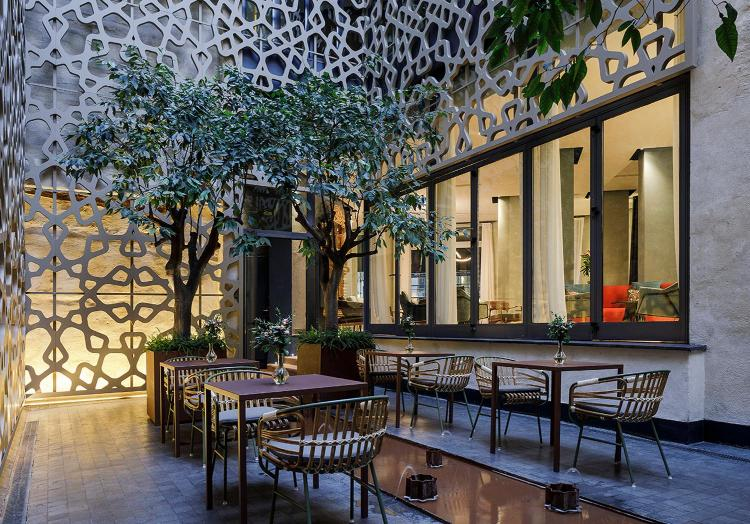
Perched a breath away from the cathedral, EME trades on bold contrasts: contemporary interiors set against one of Spain’s most ornate backdrops. Its rooftop terrace is the hotel’s manifesto: a place to watch the Giralda shift from day to night with a glass of local manzanilla in hand. Interiors are streamlined, with Andalusian detail arriving in the form of patterned tile or a moody, low-slung sofa.
The experience is metropolitan and slightly theatrical: excellent for short stays when you want to walk everywhere, see everything framed by a remarkable skyline, and sleep in a room that feels like part design studio, part observatory.
Fontecruz Sevilla Seises
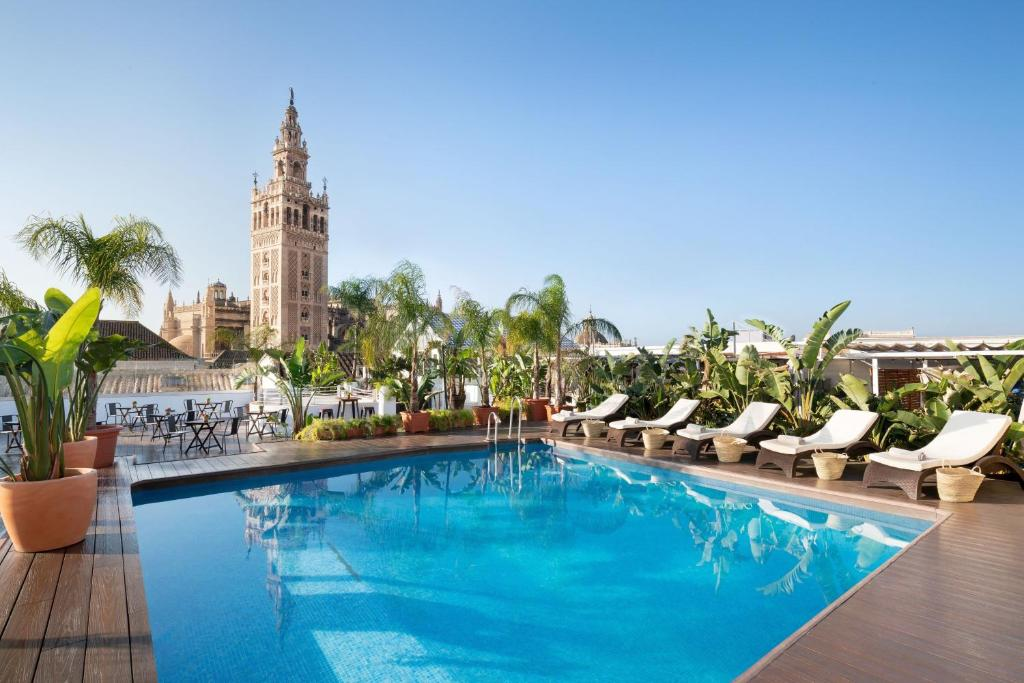
Housed in an 18th-century building, Fontecruz Sevilla Seises offers an intimacy that feels almost residential. Rooms open onto a narrow lane and inner courtyards where late light lingers; the palette is restrained, natural linens, pale stone and occasional pops of green, letting the building’s proportions do the talking.
There is a restrained attention to hospitality: thoughtful bathroom details, well-chosen local ceramics, and a sense that each room has been arranged as a private set. It’s particularly lovely for travellers who prize calm after a day of museums and tapas, and who appreciate being one or two turns from the cathedral without the theatrics of a rooftop crowd.
Palacio de Villapanés
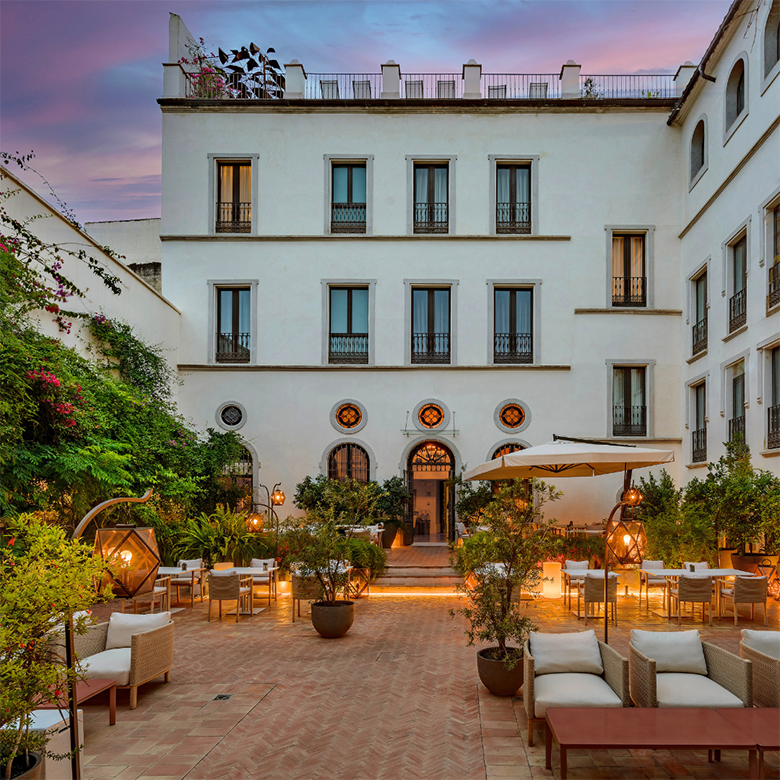
This converted 18th-century palace is a lesson in how architecture can slow you down. Thick stone walls and deep windows frame courtyards planted with orange trees and shaded terraces that feel like secret salons. Interiors blend Baroque bones with contemporary comfort: restored mouldings and heirloom furniture sit alongside soft, modern beds and bathrooms that favour tactile stone and brass. There is a sense of being housed in a private collection: an edited, elegant home where each object has been chosen to amplify the building’s bones.
It suits travellers who want to be cocooned by history without the fuss of theatrical restoration.
Corral del Rey
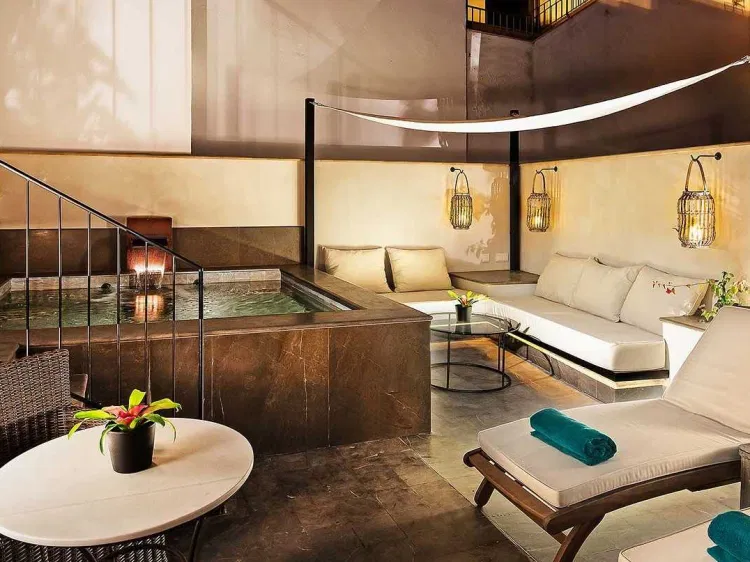
Corral del Rey is a boutique favorite for good reason: rooms feel like private apartments, many with living rooms, kitchens and little terraces that invite lingering. The architecture is typical of Seville: inward-looking, with a central patio that becomes the hotel’s heartbeat, but the design is contemporary and quietly luxurious, layered in warm woods, deep colours and artisanal textiles. There’s a domestic ease here that rewards longer stays: mornings unfold over coffee at a small table, afternoons over a book by a shuttered window.
Choose this if you want to live like a local for a few days, with the comforts of a well-curated home and the ability to retreat between discoveries.
Las Casas de la Judería
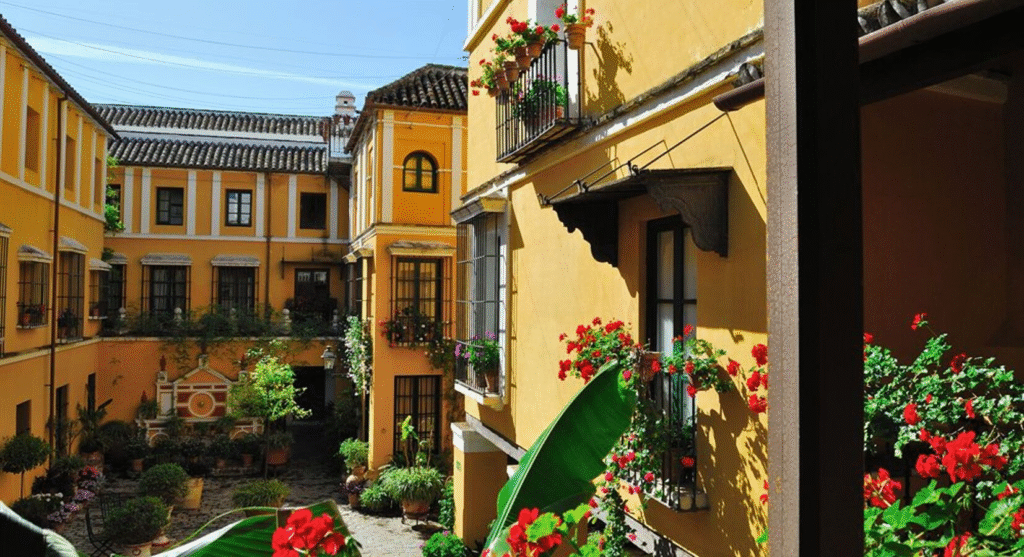
True to its name, this property is a stitched-together collection of traditional houses spanning narrow lanes and tiny plazas. Walking through it feels like following a whispered narrative: each door opens onto a new court, small terraces reveal different views, and the hotel reads like an anthology of Seville’s domestic typologies.
Rooms vary: some are snug and atmospheric, others more generous, but all are suffused with the patina of age: hand-painted tiles, exposed beams and mottled stone.
This is for travellers enchanted by discovery, those who appreciate wandering with a key and delight in the serendipity of finding a quiet roof terrace at dusk.
Hotel Casa 1800
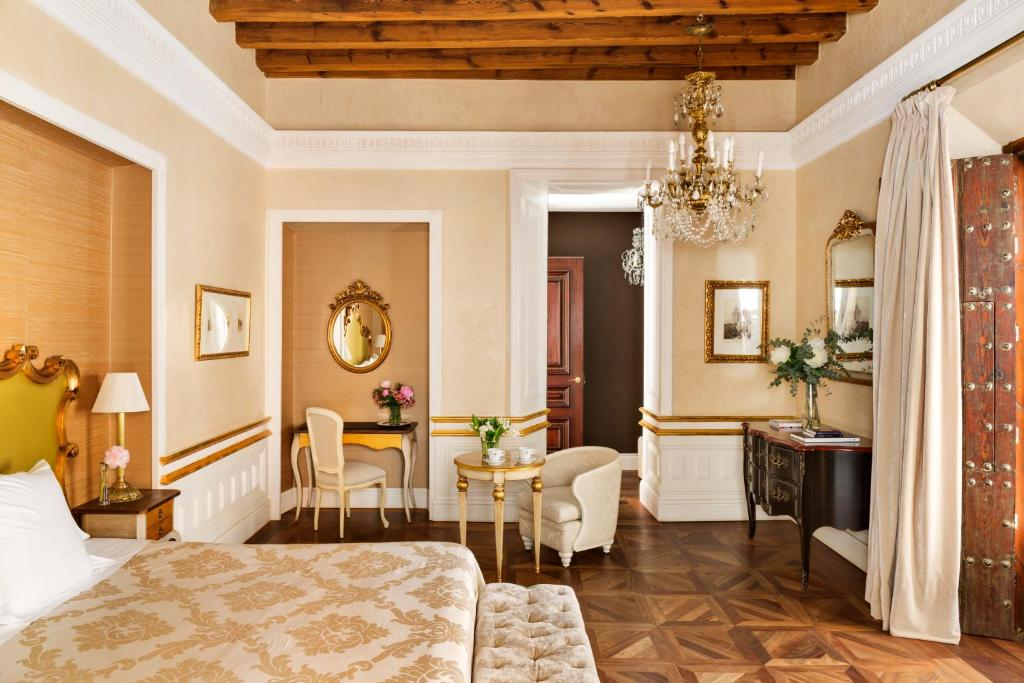
Set in a converted mansion, Casa 1800 is a study in proportion and restraint. The public spaces feel like a private drawing room where guests are left to their own reveries: a small library, a shaded courtyard and a rooftop that offers a softer, residential view of the cathedral. Rooms are characterful without being fussy, antique mirrors, patterned tiles and fresh florals create a lived-in elegance.
The service leans toward the personal: recommendations feel earned, breakfasts are composed with care, making it an ideal choice for travellers who prize congeniality over spectacle and prefer to explore the city on foot between quiet returns.
Hotel Doña María
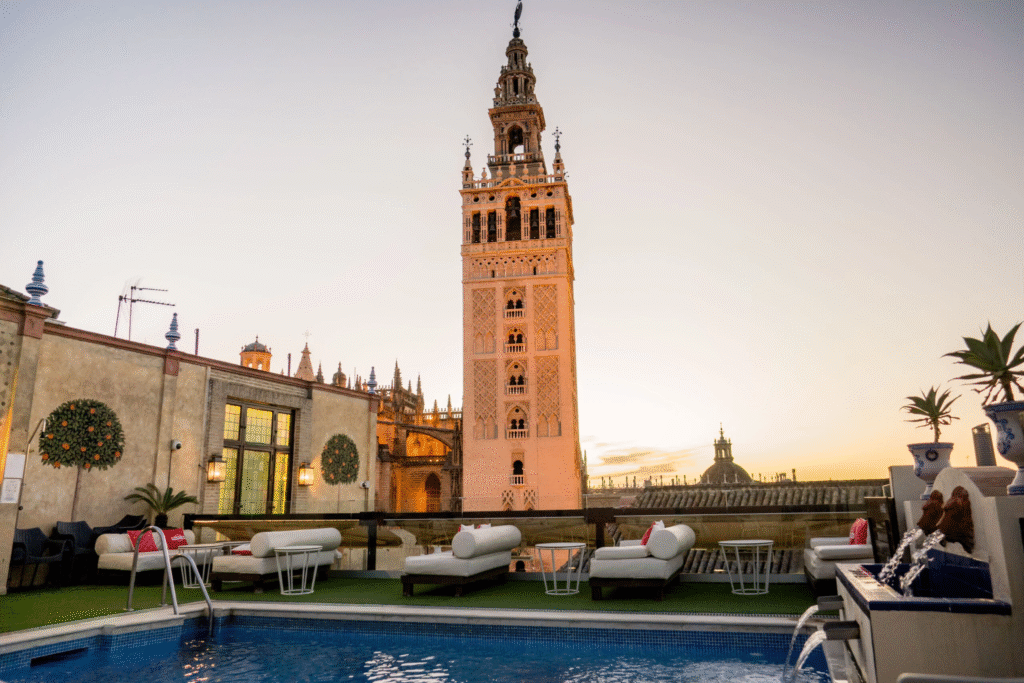
Doña María sits a step away from the cathedral, a generous, well-appointed hotel that balances value with charm. Interiors are comfortable and sunlit, with many rooms offering views of Seville’s rooftops and church spires. It’s not a boutique in the strictest sense, but what it lacks in singularity it makes up for in correctness: pleasant patios, an accessible rooftop bar and an honest, useful location for first-time visitors who wish to be at the geographic heart of the city. Consider it a pragmatic, pleasant home base from which to launch longer, more immersive local adventures.
Moving between these houses feels like a choreography of scale and mood: from Alfonso XIII’s ceremonial poise to Corral del Rey’s domestic ease, from EME’s rooftop dramatics to the calm intimacy of Fontecruz and Casa 1800. Each hotel interprets Seville’s architecture and social life in its own key, offering a different tempo and a different lens through which to read the city.
In the end, staying in Seville is less about checking monuments off a list and more about attending to the way light hits tile, how citrus perfume arrives at dusk, and how a city can feel like a layered conversation you are finally able to join. These hotels are the best places to listen.