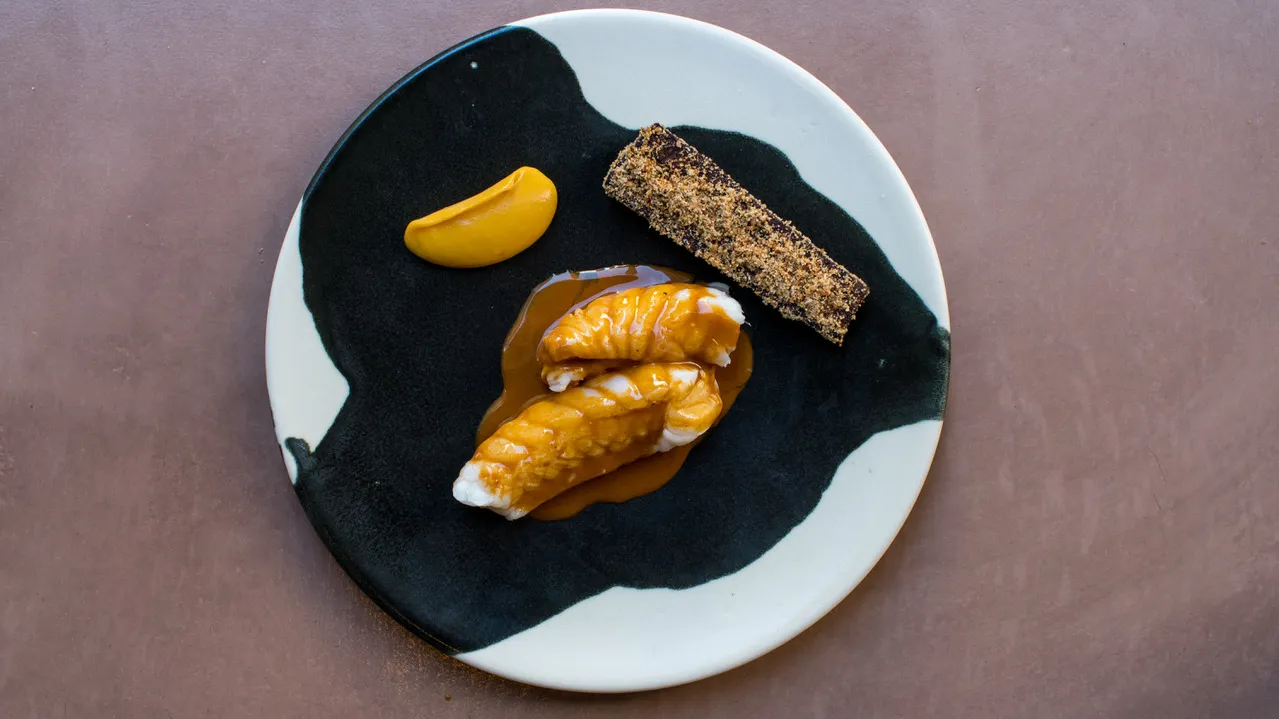
In a city that reinvents itself every six months, it takes something exceptional to feel genuinely new. London is not short of tasting menus, not short of chefs with opinions, and certainly not short of restaurants promising “innovation.” But very few places manage to feel conceptually rigorous, aesthetically coherent and gastronomically thrilling all at once.
Ikoyi, now settled into its new home at 180 The Strand, does exactly that. This is not just a restaurant relocation; it is a statement of intent. Larger, more architecturally confident and operating with the assuredness of a two-Michelin-star institution that knows its worth, Ikoyi has evolved from cult favourite into one of the capital’s most compelling dining experiences.
A Setting That Mirrors the Menu: Controlled, Sculptural, Unapologetic
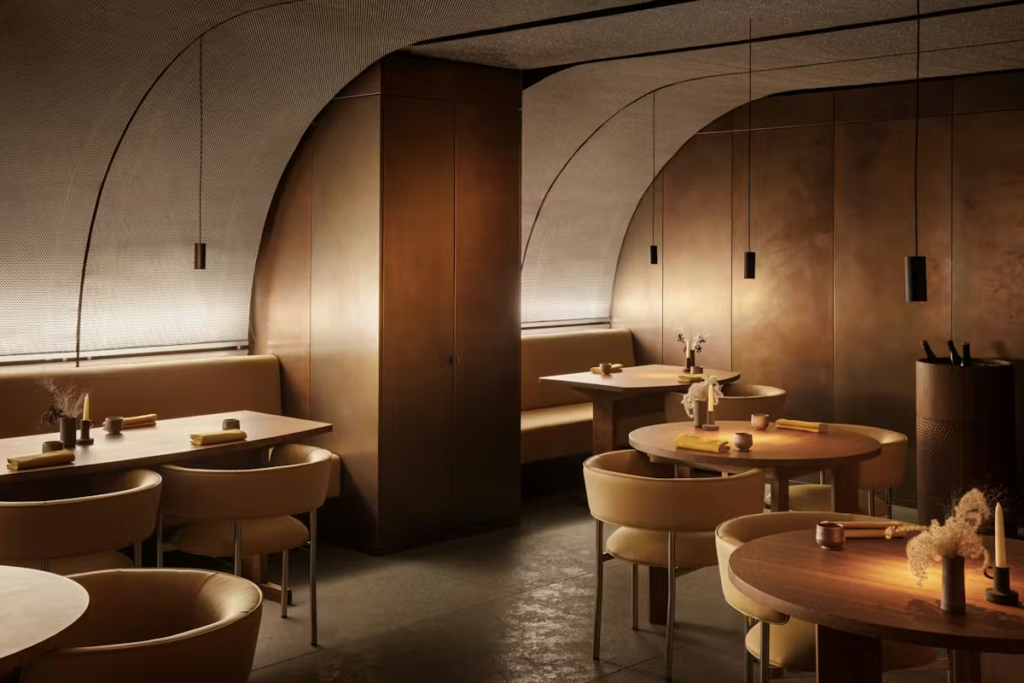
The move from St James’s to 180 The Strand feels symbolically correct. This building, home to fashion houses, art installations and creative disruptors, provides the ideal backdrop for a restaurant that refuses to sit inside neat geographical boxes.
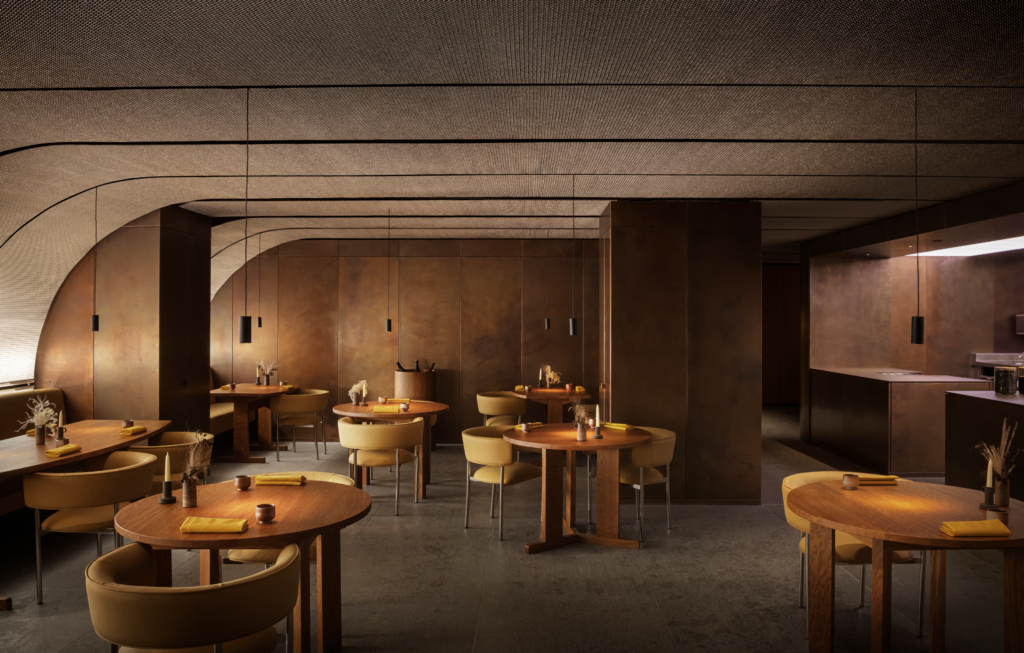
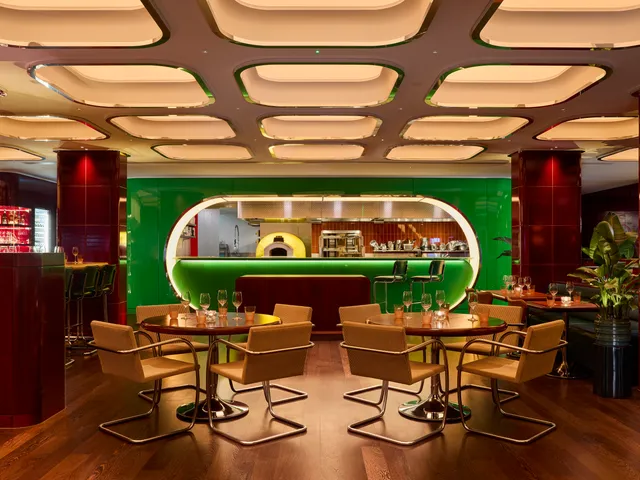
The dining room is a masterclass in restrained drama. Curved walls soften the industrial shell of the building, while steel-mesh ceilings and copper-toned finishes introduce texture and warmth. The palette leans into oxidised metals, muted yellows and earthy pinks, creating a glow that flatters both plate and patron. Nothing here is ornamental for the sake of it. The architecture feels intentional, cohesive, quietly powerful.
Tables are generously spaced, allowing privacy without isolation. The lighting is low enough to feel seductive yet sharp enough to properly admire the plating. The acoustics are thoughtful; even on a busy evening, the room hums rather than shouts. This is not a dining room chasing Instagram. It is a dining room designed for concentration.
For those who appreciate interiors as much as ingredients, Ikoyi’s new home is as carefully constructed as its tasting menu.
A Philosophy That Refuses to Be Simplified
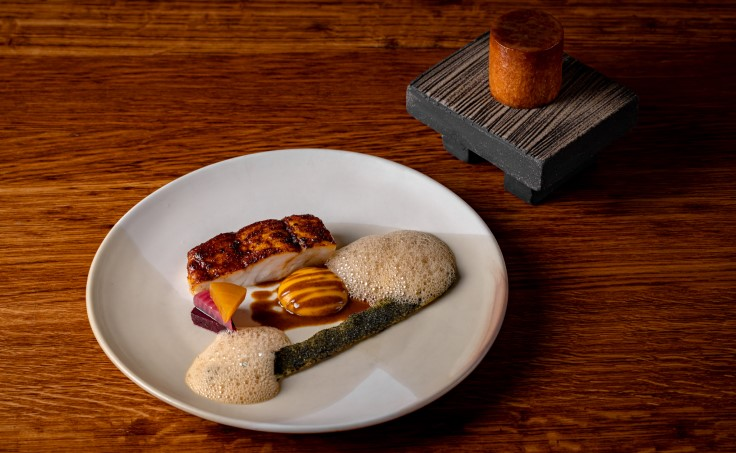
Ikoyi’s name references a neighbourhood in Lagos, but anyone expecting a traditional West African restaurant will quickly realise that authenticity is not the objective. Chef Jeremy Chan has been clear: the aim is not to replicate but to reinterpret, not to anchor dishes to a single country but to explore flavour through a global spice lens.
West African ingredients and spice frameworks form the backbone, yet British hyper-seasonal produce drives the structure. Line-caught fish, responsibly sourced meats and vegetables at their peak are treated as the canvas. Spice is the brush.
There is no à la carte safety net. You surrender to a blind tasting menu that shifts with the seasons. For some diners, that might feel daunting. For those who value a strong point of view, it is liberating.
Ikoyi is not here to please everyone. It is here to articulate a singular culinary language.
The Tasting Menu: Precision, Power and Perfect Restraint

The open kitchen operates like a quiet laboratory. There is no shouting, no flamboyant gestures for effect. Instead, there is choreography and focus.
One of Ikoyi’s most talked-about creations is its reinterpretation of jollof rice. It arrives subtly theatrical, often beneath a whisper of smoke, with grilled lobster placed on top and a lobster custard so silken it seems almost impossible. The dish nods to a West African staple while simultaneously dismantling and rebuilding it into something entirely new. The spice is layered rather than aggressive; heat blooms gradually, then retreats.
The plantain course, a recurring favourite among regulars, continues to evolve. Currently, it is lacquered and paired with roasted peanut and a spiced efo emulsion that delivers sweetness, fat and heat in a balance so calibrated it feels engineered. The dish is indulgent yet refined, satisfying without heaviness.
What distinguishes Ikoyi’s menu is not just creativity but discipline. Plates are architectural, with negative space respected. Garnishes serve a purpose. Textures are in constant dialogue: crisp against custard, char against silk, bitterness softened by sweetness.
If you are fortunate enough to dine in the six-seat private dining area, the experience acquires an added layer of elegance. Courses are presented on a nearly invisible turntable integrated into the table itself, creating a fluid, almost theatrical reveal. It is subtle and clever without feeling gimmicky.
Desserts, often personally presented by Jeremy Chan, maintain the same philosophy of control. Sweetness is measured. Flavour is layered. There is no sugar overload to finish; instead, the final courses leave you alert and reflective.
You walk out stimulated rather than stuffed, which in London’s fine dining scene is a rare luxury.
Innovation Without Theatrics
Innovation is a word thrown around too casually. In many restaurants, it manifests as shock value: unexpected ferments, outlandish pairings, dishes designed more for social media than for palate.
Ikoyi’s innovation is cerebral rather than sensational. It lies in the calibration of spice, in how heat is manipulated to build complexity without domination. It lies in the ability to reinterpret cultural references without diluting them or turning them into caricature.
You may not recognise every ingredient immediately, and that is part of the point. The menu invites curiosity. It expects you to engage.
And yet, for all its intellectual rigour, the food never feels cold or academic. There is generosity in the flavour. There is pleasure in every bite.
Sustainability, Without Self-Congratulation
Like many serious kitchens in London, Ikoyi prioritises local and hyper-seasonal sourcing. Fish are line-caught, meat is responsibly raised, and produce is selected at peak ripeness.
What is refreshing is the absence of virtue signalling. Sustainability is embedded, not advertised. There are no lengthy manifestos printed on the menu. Instead, responsibility is treated as a given, not a marketing strategy.
It is a quietly confident approach that mirrors the rest of the restaurant’s ethos.
Verdict: Demanding, Distinctive and Worth It
Ikoyi is not a comfort restaurant. It will not soothe you with predictable flavours or nostalgic familiarity. It demands attention. It rewards curiosity.
For diners who appreciate minimalist interiors, architectural plating and flavour that pushes boundaries without collapsing into chaos, it is one of London’s most compelling tables. It is refined without being polite, bold without being brash, and intellectually challenging without losing sight of pleasure.
Is it London’s most innovative restaurant? In a city saturated with talent, that is a bold claim. But few establishments operate with such a clear, uncompromising vision. Fewer still manage to evolve consistently while maintaining identity.
Ikoyi does both.
If you want to understand where serious London dining is heading; and you prefer your luxury served with edge, intelligence and just a touch of sass; this is where you book.