There is a smell to the place before you have even changed into your robe. Something grape-adjacent, warm and faintly medicinal, as if the building has been marinating in its own philosophy since 1999. I stood in the entrance for a moment, still in my shoes, coat over one arm, not quite ready to begin. A woman in a white uniform appeared silently, took my coat, and handed me a glass of water infused with something I could not identify but immediately wanted a litre of to take home. This, I thought, is a place that has done this before.
Half an hour south of Bordeaux, the entrance to the estate appears at a country road junction with zero drama. No signs declaring greatness. No imposing gates. Just a turn, a gravel path, a lake, and a scatter of golden stone buildings that have the settled air of somewhere that has never needed to try very hard. The Vinothérapie Spa belongs to Les Sources de Caudalie, which sits on the 78-hectare grounds of a Grand Cru Classé estate whose vines run almost to the spa building itself. The Caudalie skincare brand was born here in 1995 when Mathilde Thomas and her husband Bertrand sat down with a Bordeaux pharmacologist who had been examining the seed waste from the harvest. He had found polyphenols of extraordinary antioxidant potency in the discarded grape seeds, more powerful against free radicals than almost anything else in a cosmetics chemist’s arsenal. In 1999 they opened the spa, charged hot spring water drawn from 540 metres below the estate with every useful compound of the vine, and waited to see if it worked. Twenty-five years later, the waiting room is consistently full.
Stone, timber, and the barrel-shaped tub I am not embarrassed about

The spa building is the kind of space that makes you feel immediately calmer without being able to explain precisely why. Stone and timber, warm-toned and deliberate, opening at its centre onto a large indoor pool that takes in a soft green light from the vineyard outside. The barrel-shaped hot tub at one end is an architectural joke that also happens to be genuinely excellent, and I got in it on my first afternoon and stayed for forty minutes, which I am reporting factually and without apology. The hammam is serious, properly steamed and scented rather than the tepid compromise you find in hotels that consider the hammam a box to tick. The sauna is uncompromisingly hot. The six treatment rooms are quiet in a way that suggests real architectural intention rather than thin walls and crossed fingers.
The ritual, and why the sequence matters
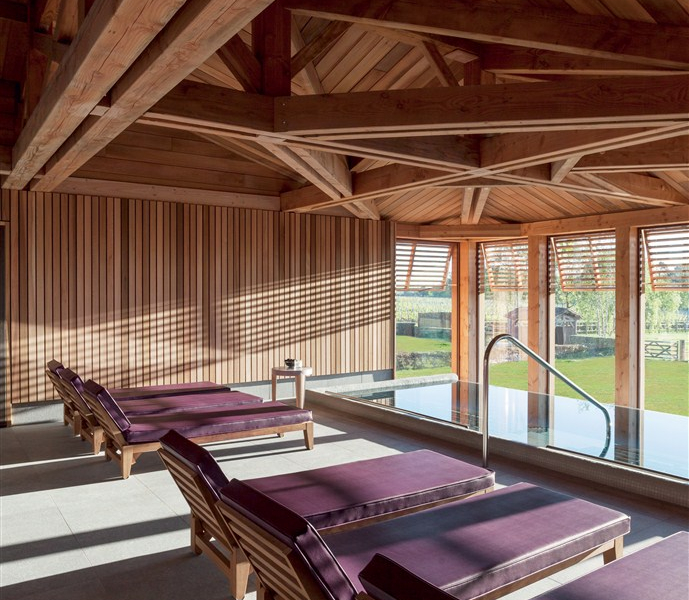
What I had come for was the Ritual of the Vines, which runs across two half-days and takes you through the vinotherapy philosophy in its most complete form. It begins with a grape marc bath: the pulp and skin residue from the harvest suspended in hot spring water, creating a dark, faintly gritty soak that is warmer and denser than a standard bath and leaves the skin with an immediate softness you notice the moment you dry off. That is the prologue.
The Crushed Cabernet Scrub is the chapter that stays with you longest, and not only for the right reasons, at least initially. A warm paste of crushed grape seeds, honey, and brown sugar goes on with a vigour that I, a person who considers herself reasonably unbothered, found briefly startling. My therapist worked in firm, deliberate circles from the shoulders down, pausing over the areas that clearly needed the most work and not diplomatically pretending otherwise. By the time she reached my shins I had revised my definition of a luxury treatment to include the possibility of mild alarm. Then the paste came off, and the skin underneath was so soft and so smoothed of everything it had been before that I lay there for a moment just touching my own forearm in mild disbelief.
The Vinothérapie warm oil massage that follows is specifically designed to work with skin that has just been through the scrub, and you understand this within the first five minutes. The grape seed oil, cold-pressed and rich in linoleic acid, sinks in rather than sitting on the surface, and the therapist used a long stroke down the back that I felt in my shoulders two hours later as a specific, located loosening of something I had not known was tight. The massage is not gentle. It is not meant to be. It is meant to do something, and it did.
The facial, and the stones I am still thinking about
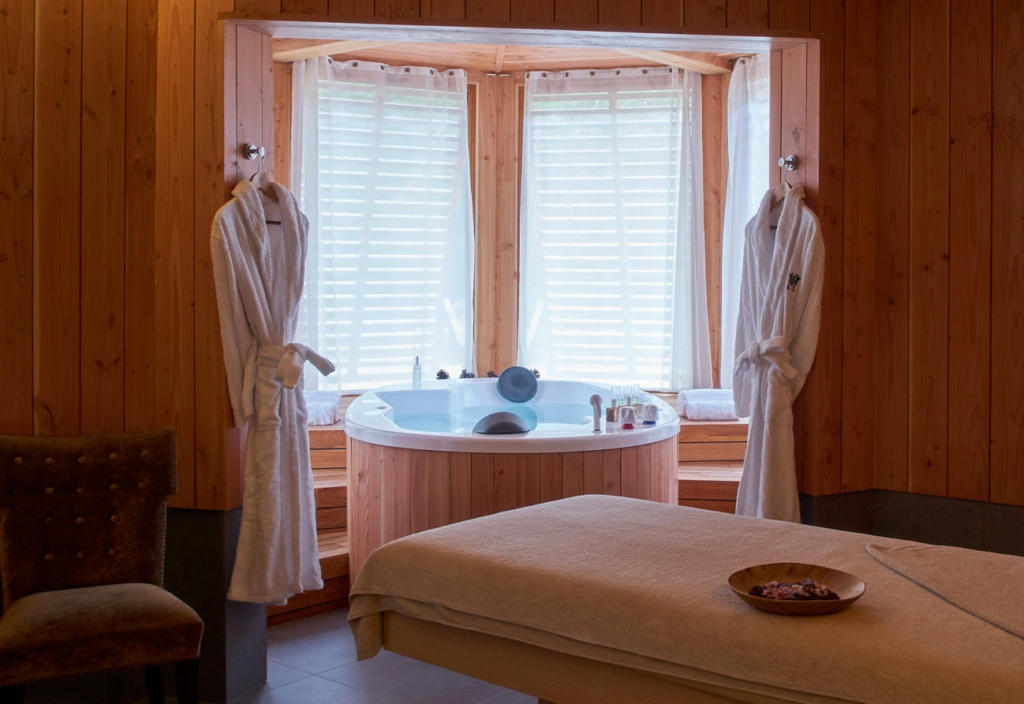
My therapist for the facial was called Claire, and she had the particular quality of someone who finds skincare genuinely interesting rather than professionally obligatory. This is a distinction you can feel within about thirty seconds of the consultation. She asked about my skin not as a preliminary formality but with real curiosity, touching my jaw and forehead and noting things I had not noticed myself. Then she explained what she was going to do and why, which took longer than most therapists allow themselves, and which I found I did not want her to stop.
The Vinothérapie facial is built around two hero ingredients. Viniferine, extracted from grapevine sap, works on radiance and pigmentation with an efficacy shown to significantly outperform vitamin C. The grape seed polyphenols work against oxidative ageing, fighting the free radicals that break down collagen and elastin at a cellular level. I have been told variations of this story at spa counters across three continents and usually nod along pleasantly while remaining internally agnostic. Here, because the products were developed from this specific harvest on this specific estate by people who were genuinely trying to solve a problem rather than create a marketing narrative, the conviction behind it lands differently. Claire did not pitch me. She just knew what she was doing and did it.
The triple cleanse took longer than I expected and felt more thorough than any I have received elsewhere. A glycolic peel followed, applied with a small brush in strokes so precise they felt like drawing. Then a mask, then the sequence I have described to everyone who has asked about this trip: alternating hot and cold stones applied across the face. The hot stone opens the skin. The cold stone contracts it. The movement crosses the forehead, the jawline, the orbital bone, the neck, and produces a sensation that is simultaneously a tightening and a flooding warmth. Collagen stimulation through thermal contrast, Claire explained. I barely heard her. I was thinking about nothing except the stones, which is the point.
When she handed me the mirror at the end, my skin looked like an earlier and better-rested version of itself. I say this understanding it is exactly what every spa review says. I say it anyway because it was still true four days later when I had long stopped being the kind of person who looks in mirrors.
The timetable I initially resented and then completely understood
Les Sources de Caudalie gives you a schedule. A suggested sequence of treatment slots with rest periods built between them, spread across two half-days. My instinct on receiving it was mild irritation. I had not come to the south of France to be handed a timetable. By the second afternoon I had revised this position entirely. The twenty minutes between treatments, lying on a reclined chair in the relaxation room with a pot of herbal tea doing nothing whatsoever, is not the filler between the interesting parts. It is the integration. The scrub needs time to settle before the massage begins. The oil needs time to absorb before the facial touches the face. The timetable is the spa’s way of saying: this is a process, not a service, and you will respect the sequence or you will not get the result. Coming from the place that invented the category it operates in, I found I was genuinely happy to comply. I also found that twenty minutes of doing nothing is, in the right room, one of the most pleasurable experiences available.
What to do in between
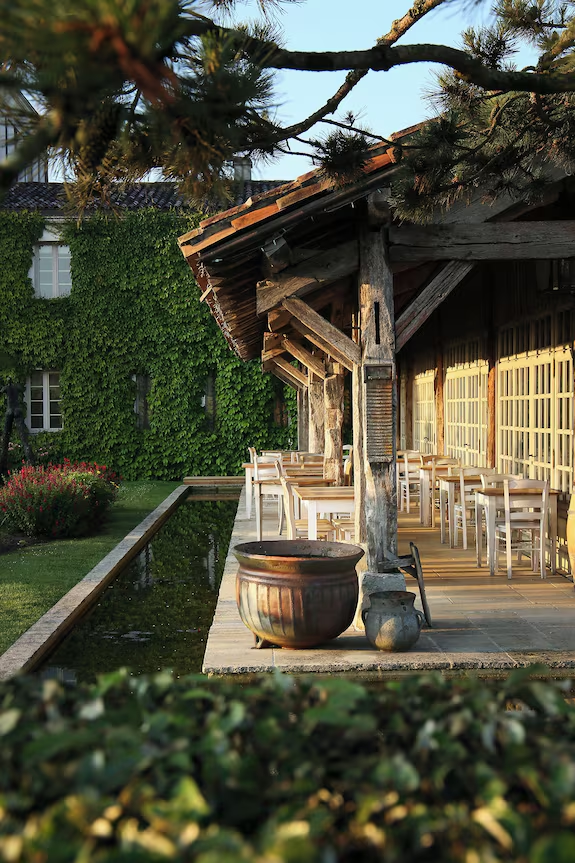
The property rewards staying rather than visiting for the day. My room sat above the lake with views of the water and the grounds from the bed and from a bath I spent time in that I will not be itemising. The gardens are serious, well-maintained, and genuinely worth walking rather than just photographing from the terrace. There is cycling through the estate on mornings before treatment sessions, which I did and which calibrated my appetite and my mood for the afternoon in ways I recommend without reservation. La Grand’Vigne, the estate’s two-Michelin-starred restaurant, served me food of real intelligence on both evenings. La Table du Lavoir, the more casual option, had a confit pork rib that I thought about ordering twice. I did not. I still think about it.
The coherence of Les Sources de Caudalie is its rarest quality, and the one hardest to replicate. The treatments and the territory work together. The schedule and the surroundings work together. The Crushed Cabernet Scrub and the forty-minute soak that follows and the twenty minutes of nothing in the relaxation lounge and the walk back through the grounds in the early evening all work together. That is what twenty-five years of doing one thing very well actually looks like. Including, from the first moment, the smell at the door.
Practical information Vinothérapie Spa at Les Sources de Caudalie, Chemin de Smith Haut Lafitte, 33650 Martillac, France. Hotel rooms from approximately €400 per night. Spa treatments from €130; the Ritual of the Vines from €465; the Cure Luxe from €840. Day spa access available to non-hotel guests. Bordeaux-Mérignac Airport is 20 minutes by car. TGV from Paris Montparnasse to Bordeaux takes approximately two hours.

