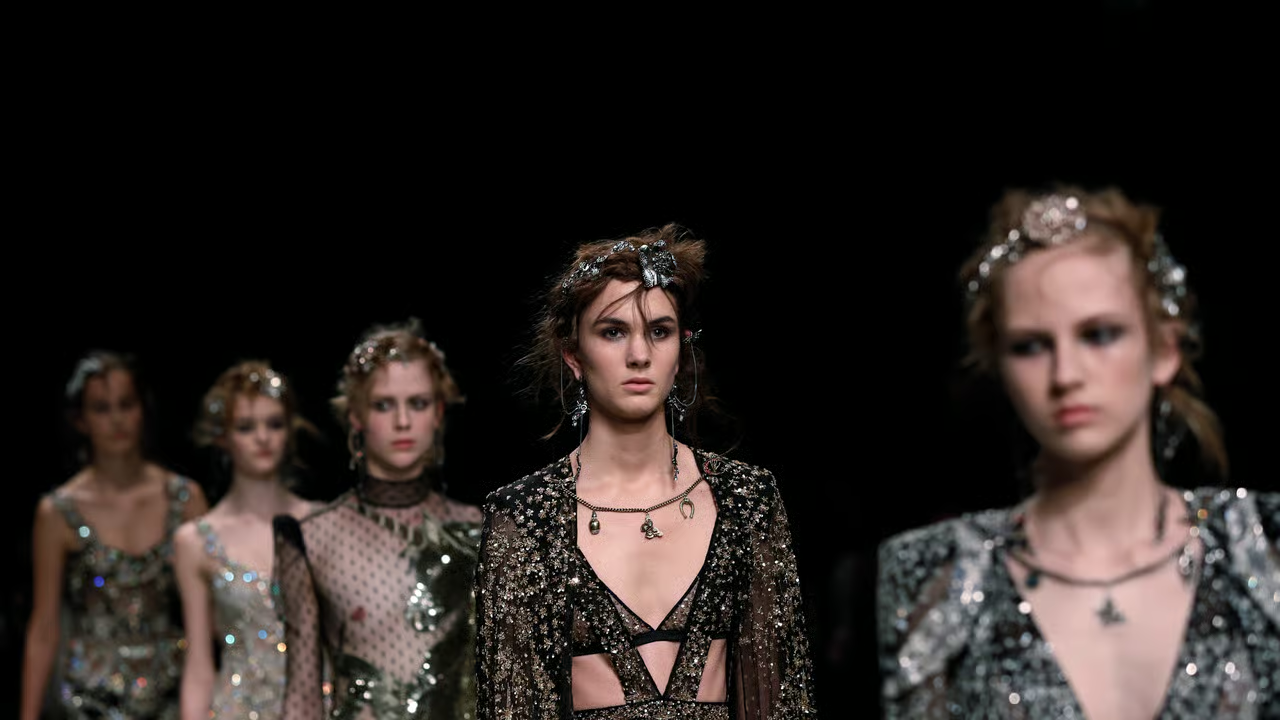
Twenty five years after Alexander McQueen decamped for Paris, the house that helped build London’s reputation as a fashion capital returns to reclaim its throne this September.
Every fashion capital has a story about the one that got away. London’s is Alexander McQueen, and for twenty five years it has stayed an open wound nobody in British fashion quite got over. On 20 September, the house finally comes home. Not for a one-night stunt under a dome in Shoreditch, not for a private event nobody outside the industry hears about, but on the actual official London Fashion Week schedule, in daylight, for anyone who can get a seat.
It has taken a new chief executive, five seasons of a successor finding his footing, and a fashion capital increasingly anxious about its own relevance to get here. Whatever combination of reasons pushed it through, London gets its king back for a season. Possibly for good. Nobody involved is saying which yet.
Industry chatter around the announcement has been building for weeks, the sort of low hum that precedes a genuinely significant booking rather than a routine schedule update. Buyers are already asking whether seats will be harder to secure than usual. Editors who normally split their September between London and Paris are rearranging travel to make sure they are in the room for this one. None of that guarantees the show itself will live up to the anticipation. It does confirm the industry has been waiting for exactly this kind of news.
The King Who Left For Paris

Lee Alexander McQueen built the house in 1992 out of raw talent and a willingness to shock, staging shows in London that critics still reference as some of the most theatrical the city has ever seen. He was the designer who turned a catwalk into something closer to performance art than a trade presentation, who made audiences flinch and then buy tickets to the next one anyway. London loved him for it, and for a decade he was proof that the city could produce a designer with the same ambition as anyone in Paris or Milan.
Then in 2001 he left. The move to Paris Fashion Week was, at the time, simply where the industry’s biggest names showed, and McQueen wanted to be judged against them directly rather than celebrated as London’s most exciting export. It made sense commercially. It also meant the city lost the designer most responsible for making it matter on the global stage, and London Fashion Week has spent the years since trying to fill a hole that never quite closed.
That’s the part that gets lost in most of the coverage this week. This isn’t just one house rejoining a schedule. It’s the return of the designer whose absence effectively defined what London Fashion Week became for the next two and a half decades: a city that discovers talent brilliantly and then, more often than not, watches it graduate somewhere else. Central Saint Martins keeps producing the designers everyone wants to poach. London keeps being the place people leave once they’re good enough to matter. McQueen’s departure in 2001 was the first and loudest version of that story, and every version since has echoed it a little.
The Long Regency: Burton, Then McGirr
Sarah Burton spent 27 years at the house, first as an assistant to Lee McQueen and later as his successor after his death in 2010, steering the brand through Kate Middleton’s wedding dress and more than a decade of ready to wear before stepping down in 2023. Her final show for the house, staged in London rather than Paris, put the spring/summer 2023 collection under a vast glass dome at the Old Royal Naval College in Greenwich, an off-schedule event called First Sight that felt, at the time, like a farewell letter to the city rather than a genuine return.
Seán McGirr took over that October. The Irish designer arrived with the unglamorous job of following one of British fashion’s most respected tenures, and has spent four seasons since quietly rebuilding the house’s identity through the archive, pulling apart Lee McQueen’s original tailoring and occasionwear and putting it back together as something recognisably his own rather than a museum piece. September will be his fifth collection for the house, and the first time he has shown it in the city that made McQueen a name worth inheriting.
What Happens On 20 September
The show lands on a Sunday, with both womenswear and menswear on the same runway, a combined presentation that signals confidence rather than caution. Expect the tailoring McGirr has leaned on since his first collection, sharpened further, alongside the occasionwear that has become his most consistent signature, pieces built for a specific kind of drama rather than quiet daywear. The house has described the collection as a continued exploration of McQueen’s archive, which by now reads less like a creative constraint and more like McGirr finally being fluent in a language that wasn’t originally his.
Whether the show leans into spectacle in the way Lee McQueen’s original London shows did, or plays it straighter for an industry crowd that has seen enough theatrics from other houses this year, is the actual open question worth showing up for.
A New Chief Executive Makes His First Move
Gianfranco D’Attis joined Alexander McQueen as chief executive on 3 June, and was barely a few weeks into the job when the London announcement landed. He called the city the place “where our story began,” a line that could read as either genuinely felt or carefully briefed, and probably works as both. What matters more is the timing. McQueen is owned by Kering, which has spent the past year restructuring several of its houses from the ground up, and a homecoming show scheduled within weeks of a new chief executive’s arrival is not the kind of thing that happens by accident. Somebody at Kering wanted London to be the first real statement D’Attis made in the role, and chose the loudest possible way to make it.
Why London Has Been Waiting For This
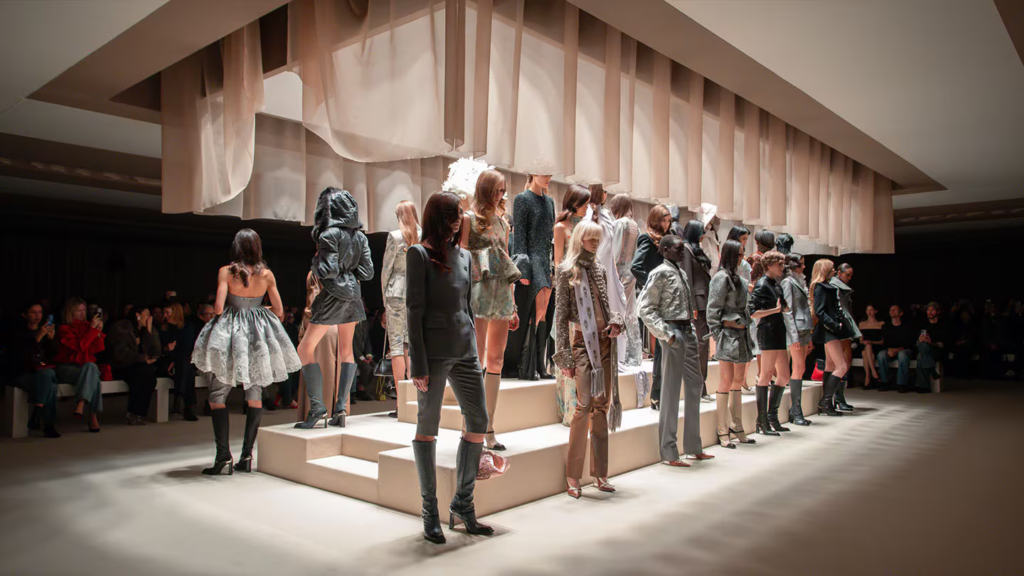
London Fashion Week has spent the last decade watching its biggest names quietly relocate. McQueen went first, then Stella McCartney, then Victoria Beckham, each decision leaving London to lean harder on Burberry, Erdem and Simone Rocha to carry a schedule that increasingly felt like the warm-up act before Paris. Every season brought the same conversation among editors and buyers: was London still a fashion capital in its own right, or a launchpad for talent that eventually left for somewhere bigger.
Laura Weir became chief executive of the British Fashion Council in 2025 having said getting McQueen back was one of her earliest ambitions in the job, and has spent her time in the role adjusting entry requirements and fee structures to widen who shows on the official schedule. Landing McQueen is the validation that approach needed. She has called the return a statement of confidence in British creativity, and for an organisation that has spent years being asked hard questions about London’s relevance, a headline booking like this buys real credibility, not just column inches.
It also changes the calculation for everyone else on the schedule. A stronger, more talked about London Fashion Week is good news for the smaller British labels who show every season without the guaranteed press pack that follows a house like McQueen, and good news for the department store buyers who have been quietly asking whether it’s still worth flying in for London at all when Paris starts a few days later. One high profile return doesn’t fix a decade of houses leaving. It does buy the schedule something it has been short of for years: a reason for the room to actually fill up.
Homecoming, Or Just A Visit?
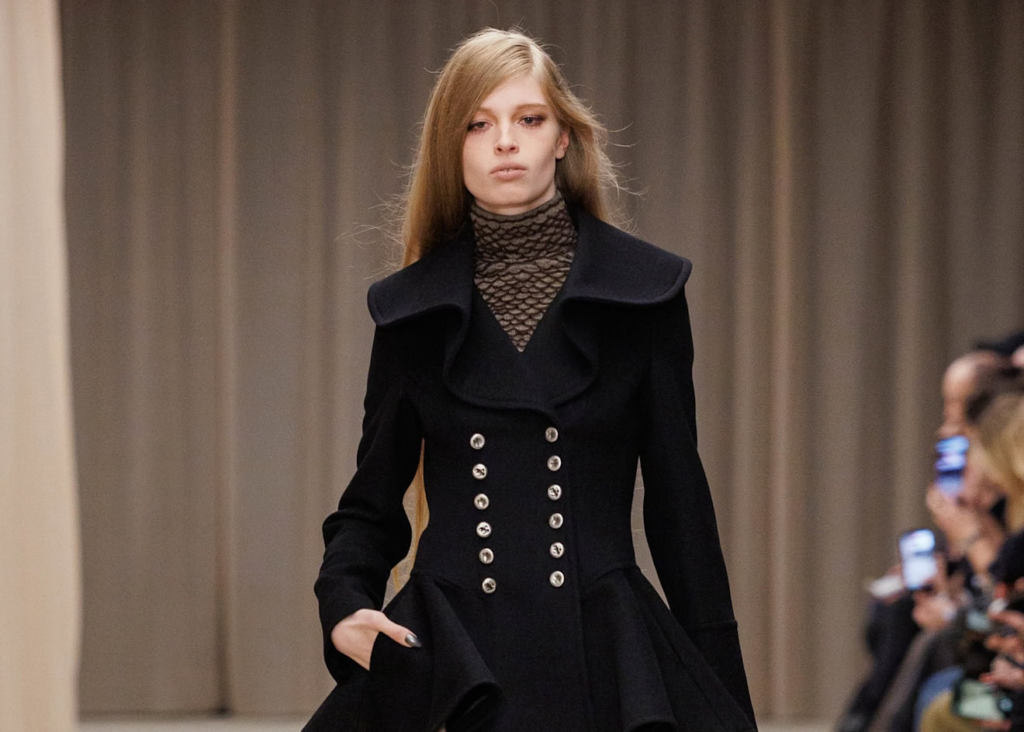
McQueen has done this before, and it is worth remembering how those visits ended. In 2021 the house staged an off-schedule show under a transparent dome perched on top of a car park in East London. A year later came Burton’s Greenwich finale. Both times, the following season’s show went straight back to Paris. There is no guarantee 20 September plays out any differently, and nobody at the house has confirmed whether this is a genuine relocation or a one-off tied to a new chief executive wanting a splashy first move.
What is different this time is the context. Kering’s restructuring means every decision about where and how its houses show is being reconsidered from scratch, and a single well-received show in London could plausibly tip future seasons back this way, especially if it draws the international press and buyers that Paris usually claims by default. Equally, if September proves to be a one-off, it will still be remembered as the show that reminded everyone what London was capable of hosting when it had the right name on the invite.
Book The Hotel First
Whatever happens next season, this is the show to plan a September London trip around. Hotels across Mayfair and Soho already fill up fast during fashion week, and a McQueen homecoming on the official schedule is the kind of booking that pulls in press, buyers and a much bigger crowd of people who simply want to say they were in the room. Restaurants near the venue tend to book out within days of the location being confirmed, and anyone hoping to build a long weekend around the show should treat late September like peak season, because for one week, that is exactly what it will be.
London has spent twenty five years being the fashion capital that lost its most talented son to Paris. On 20 September, at least for one afternoon, he comes home.