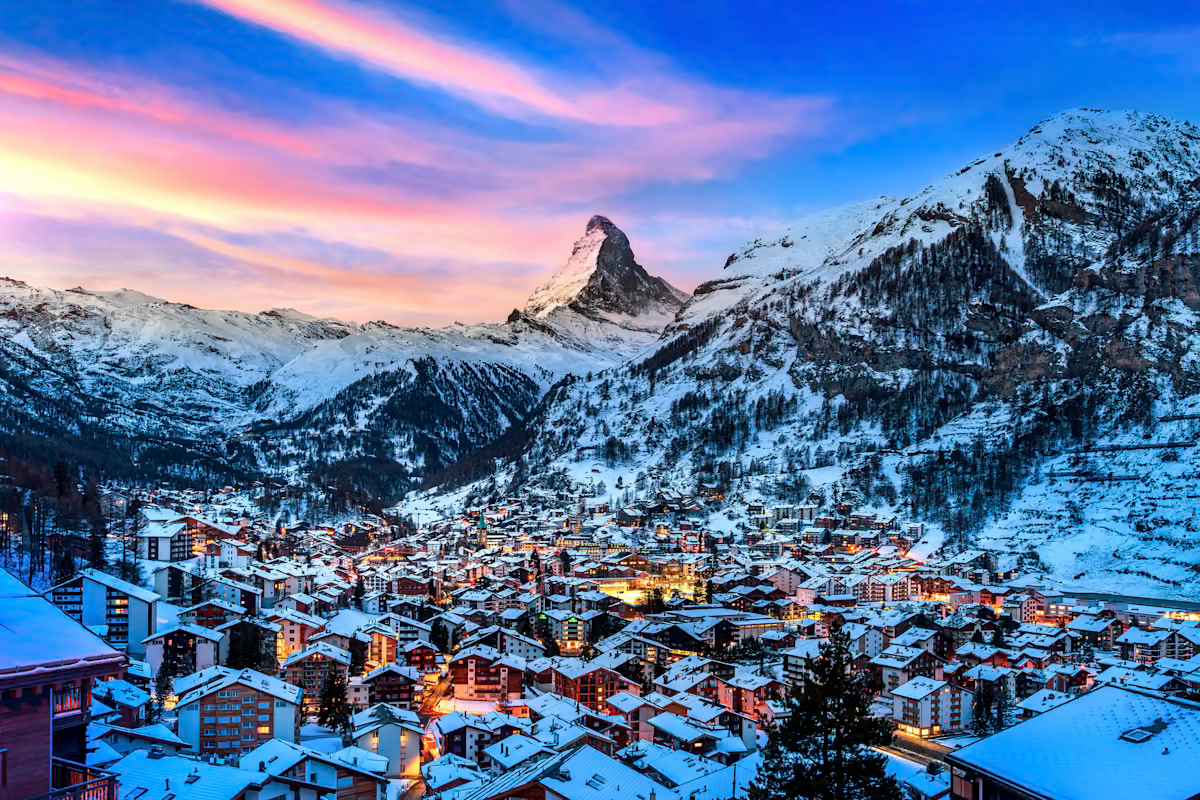
From Courchevel’s Jardin Alpin to the frozen lakes of the Engadin, these are the five resorts that still define luxury skiing. For each one we’ve picked the hotels worth booking, worked out what your ski hire and lift pass will cost, and found the best things to do once the lifts close.
Every autumn the same question lands in our inbox: where should we ski this year? It depends whether you want the biggest ski area or the most beautiful one, and whether you like a village that goes quiet by nine or a promenade made for being seen. Above all, it depends on where you sleep, because in the Alps the hotel shapes the whole trip.
The 2026/27 season has real news in it. Cortina has had its Olympic makeover, Courchevel has a Rosewood, and Swiss lift prices keep rising. Here are the five domains we’d book now, with five hotels in each, what you’ll pay to get on the mountain, and how to spend the hours off it.
1. Courchevel 1850, France
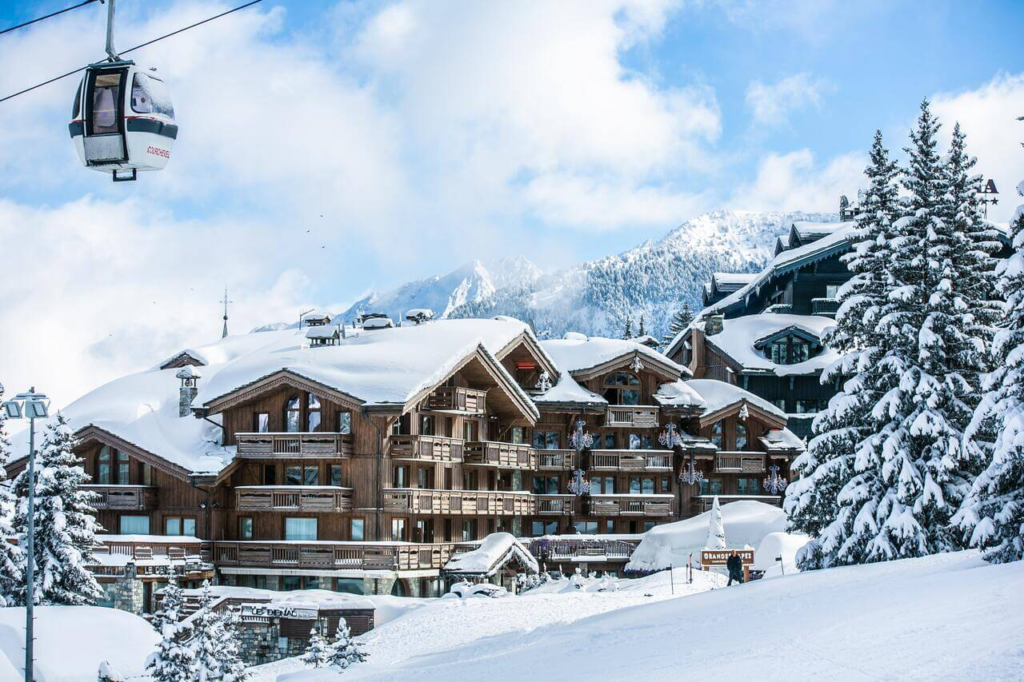
Best for: the world’s largest ski area, and the best room service on it
Ski area: Les 3 Vallées, 600 km of linked pistes
Season: early December 2026 to mid-April 2027
Courchevel is still the benchmark. No other resort matches it for five-star hotels, Michelin stars per square metre, or how easily you get from piste to boutique. More than 20 five-star hotels cluster here, nearly all of them in 1850 itself. Below them lies Les 3 Vallées, so you can ski to Méribel for lunch and Val Thorens for the afternoon and still be back for your massage.
Where to stay
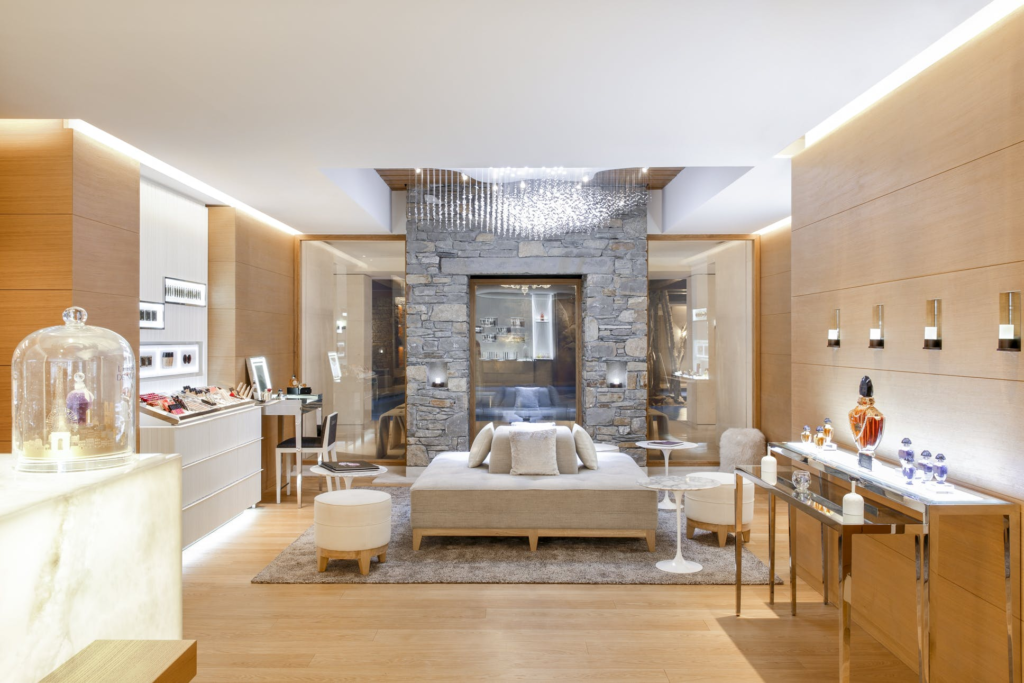
LVMH’s first Maison is still the standard every hotel in the Jardin Alpin gets measured against. It’s ski-in, ski-out and intimate, and the staff seem to know what you want before you do. The Guerlain spa fixes tired legs, and the gastronomic restaurant is one of the hardest tables to get in the Alps. Book early. Very early.
Rosewood Courchevel Le Jardin Alpin
The newest name in 1850 opened in December 2025, so this is its second winter. Tristan Auer designed the interiors as an eclectic, 1960s-tinged chalet, with 51 rooms and suites, including three private houses. Chef Gioia Baek’s SALTO brings an Italian accent to dinner. The Asaya spa has a Deep Alpine Massage you can only get here, built for legs that have skied all day. Rooms start from €2,300 a night.
This is Courchevel at its most theatrical: a fairytale chalet with painted ceilings, costumed staff and one of the best children’s programmes in the resort. It sits right on the Jardin Alpin piste and makes no apology for its maximalism. If you want the full Alpine fantasy, this is it.
L’Apogée Courchevel
Oetker Collection’s chalet-palace stands on the site of the old Olympic ski jump. Its suites are among the most generous in the resort, and it’s ski-in, ski-out. This season it feels new again: Kelly Wearstler has redesigned the dining spaces, her first hotel project in Europe.
Le K2 Palace
Higher up in the Bellecôte quarter, Le K2 Palace feels like a private hamlet of timber and stone, with the slopes at the door. It’s warm, good with families, and made for long, unhurried evenings.
One to watch: Monaco’s SBM group is turning the former Palace des Neiges into Monte-Carlo One Courchevel, which aims to open this winter. Raffles has also confirmed a 50-key hotel in 1850 for the 2028 season.
Ski hire and lift passes
Courchevel’s lift passes are the most reasonable in this guide. Last season a high-season adult day on Les 3 Vallées cost €81.80, and six days cost €409. The resort’s six-for-five offer applies to both the Courchevel Valley and 3 Vallées six-day passes.
Premium ski-and-boot packs in 1850 usually cost around €60 to €90 a day if you walk in. Booking online ahead can save you up to 45%. Most five-star hotels have a rental shop on site that fits your boots and has your skis waiting at the piste each morning, so you never carry a thing.
What to do off the slopes
- Aquamotion. Courchevel’s big water and wellness centre in Le Praz has pools, a lazy river and treatment rooms. It’s perfect on a white-out day.
- Fly from the altiport. The resort has its own mountain airport, and a scenic flight over Mont Blanc and the Vanoise is unforgettable.
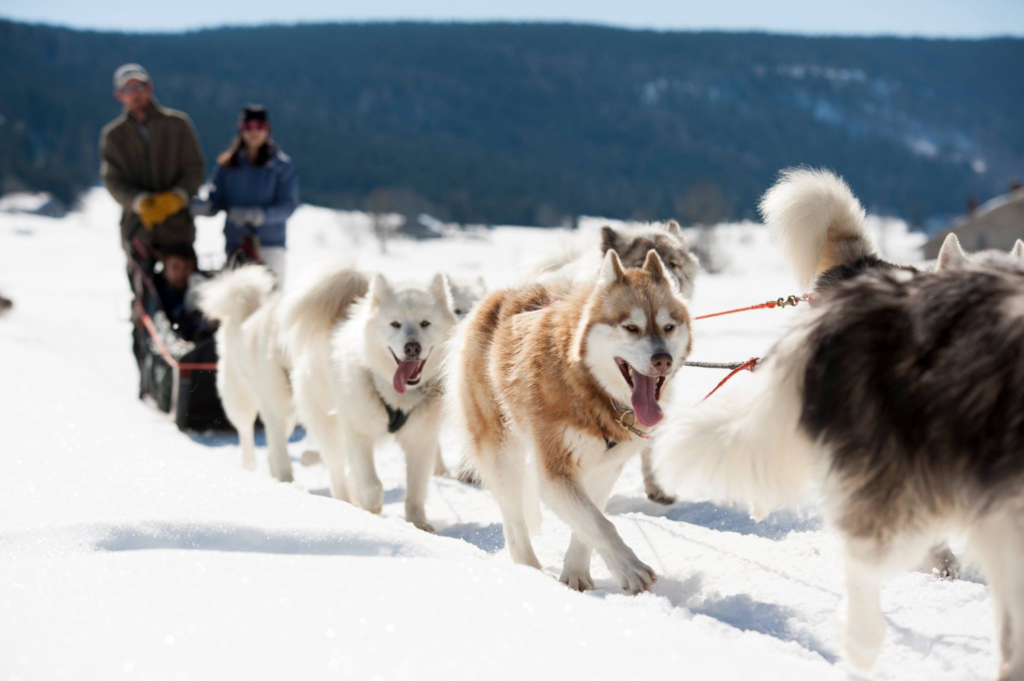
- Dog sledding and snowshoeing in the forests around La Tania and Le Praz, the quiet side of the valley.
- Shopping in 1850. The boutiques along Rue du Rocher rival Avenue Montaigne. Even if you’re only browsing, it’s part of the experience.
- Long mountain lunches. Book a terrace table in the Jardin Alpin and let the afternoon slide.
2. Zermatt, Switzerland
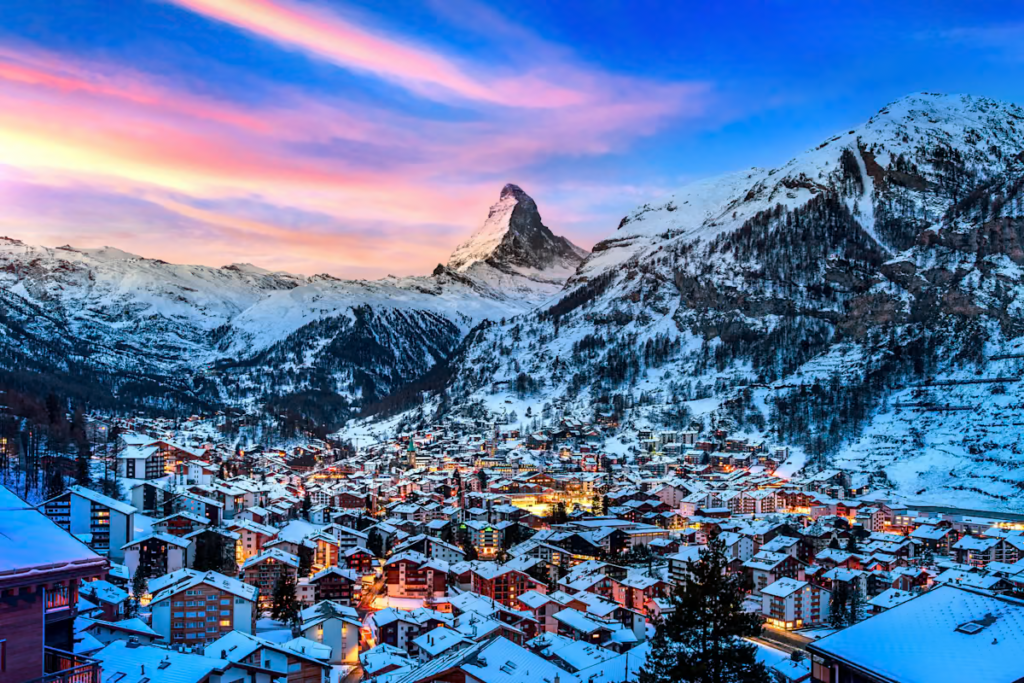
Best for: the Matterhorn, car-free calm and skiing across the border into Italy
Ski area: Matterhorn Ski Paradise, around 360 km including Cervinia
Season: year-round glacier skiing; main winter season late November to early May
Zermatt makes you stop halfway down a run just to look. The car-free village sits below the most famous mountain in the world, and the ski area climbs to the glacier before crossing into Breuil-Cervinia. That means breakfast in Switzerland and pasta in Italy. Skiers agree it’s special: Zermatt has topped the Best Ski Resort Report for the fifth time, with the highest overall satisfaction score of any ski area.
Where to stay
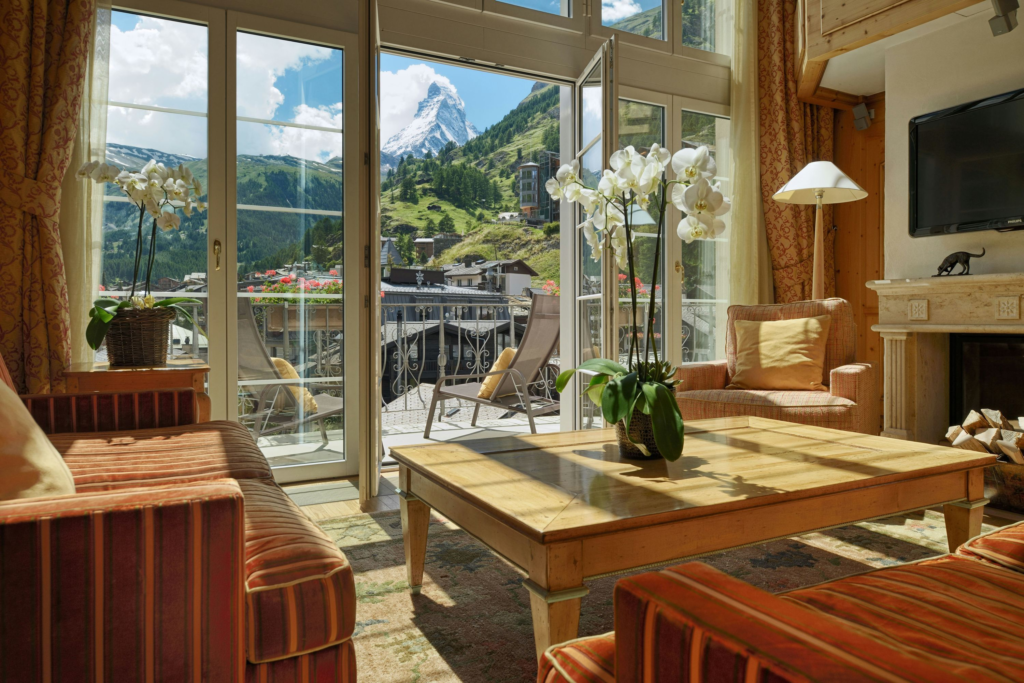
The grande dame of the village sits on the main street, a few steps from the station, and has looked after guests since the mid-19th century. It’s classic Swiss hospitality: polished wood, generous suites and a large spa. Nothing about it is fashionable, and that’s exactly the appeal.
The Omnia
This is the design lover’s choice. The Omnia sits on a rocky outcrop above the village, and you reach it through a tunnel and a lift cut into the cliff. The modernist rooms are clean and calm, with the Matterhorn framed in the windows. Small, discreet and quietly excellent.
Riffelalp Resort 2222m
Ride the Gornergrat railway up through the snow and you arrive at one of the highest five-star hotels in the Alps. The heated outdoor pool facing the Matterhorn is the picture everyone takes home. At night the day-trippers leave and the mountain is yours.
CERVO Mountain Resort
This cluster of chalets beside the Sunnegga funicular is Zermatt’s younger, more relaxed take on luxury. It’s ski-in, ski-out, with a serious wellness offer and interiors in natural wood and felt. It’s ideal for couples and groups of friends who want comfort without the formality.
Grand Hotel Zermatterhof
The other historic five-star on the Bahnhofstrasse is gracious and old-school, and everything simply works. It’s a good choice for a first visit, central enough to walk everywhere.
A note on the Ritz-Carlton: it was announced for 2026 and still appears in older guides. Recent reports say a 2026 opening is very unlikely, so don’t plan around it.
Ski hire and lift passes
Zermatt prices its passes dynamically, so buy yours as soon as your dates are fixed. For 2026/27 an adult day starts at CHF 88, and peak days cost far more. The international pass that includes Cervinia costs more again. Switzerland is the expensive end of the Alps: a Bank Cler and BAK Economics study found the cost of a ski holiday there (pass, lessons and rental) rose by about 6% on 2025.
Premium ski hire in Zermatt usually costs CHF 50 to CHF 80 a day. Several shops near the Matterhorn Glacier Paradise station rent overnight lockers, so you don’t have to carry skis through the village. A private instructor or guide costs from around CHF 610 for a full day.
What to do off the slopes
- The Gornergrat railway. This rack railway has run since 1898 and climbs to 3,089m with the Matterhorn in view the whole way. Go at sunrise if you can.
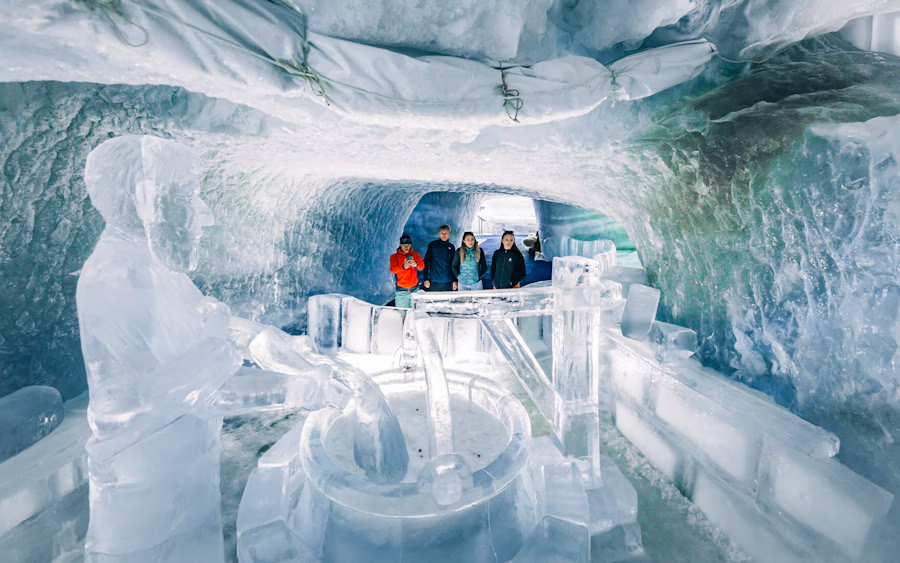
- Matterhorn Glacier Paradise. Europe’s highest cable car station has a Glacier Palace carved into the ice and views across to Mont Blanc.
- Heliskiing. Zermatt is one of the few Swiss resorts with landing zones. Always go with a certified mountain guide.
- Ski to Italy for lunch. Cross the Theodul Pass into Cervinia, eat pasta in the sun, then ski home. Check the last lift times carefully.
- The Matterhorn Museum. It tells the story of the first ascent in 1865 and its tragic descent. Moving and surprisingly intimate.
- Mountain hut lunches. The huts above Findeln are some of the best in the Alps. Book a sunny terrace and order the rösti.
3. St. Moritz, Switzerland
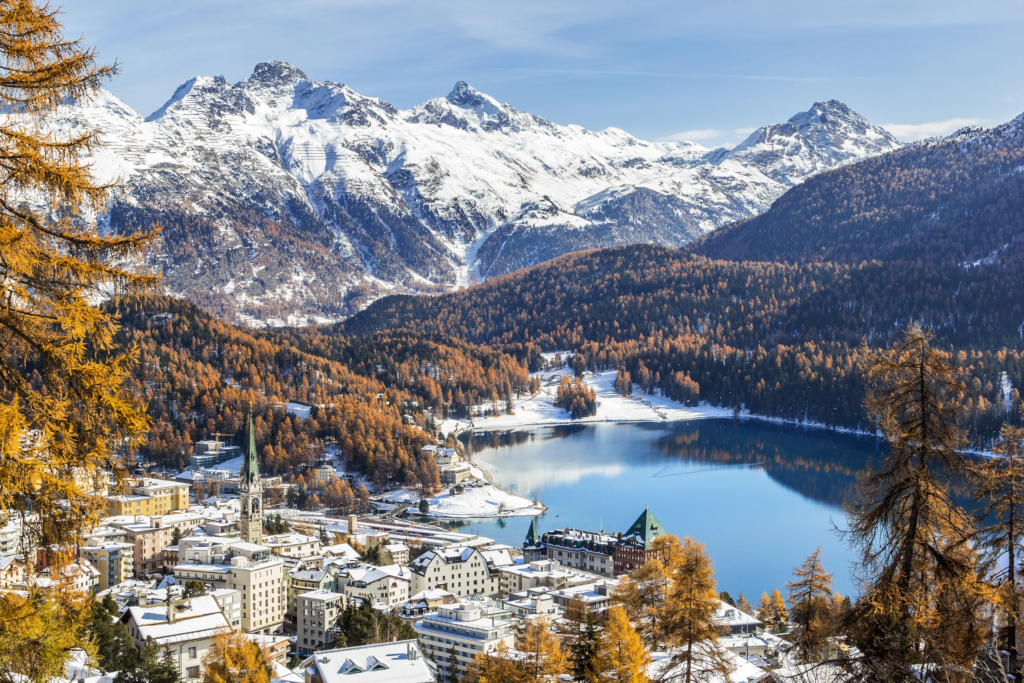
Best for: old-money glamour, frozen lakes and the original winter holiday
Ski area: Engadin St. Moritz, around 350 km across Corviglia, Corvatsch and Diavolezza
Season: late November 2026 to late March 2027
St. Moritz invented the winter holiday and has never let anyone forget it. The Engadin valley is wide, high and famously sunny, and its frozen lake turns into a racetrack, a polo ground and a promenade in turn. The skiing on Corviglia and Corvatsch is excellent, but St. Moritz has never been only about skiing. It’s about the whole choreography of the day.
Where to stay
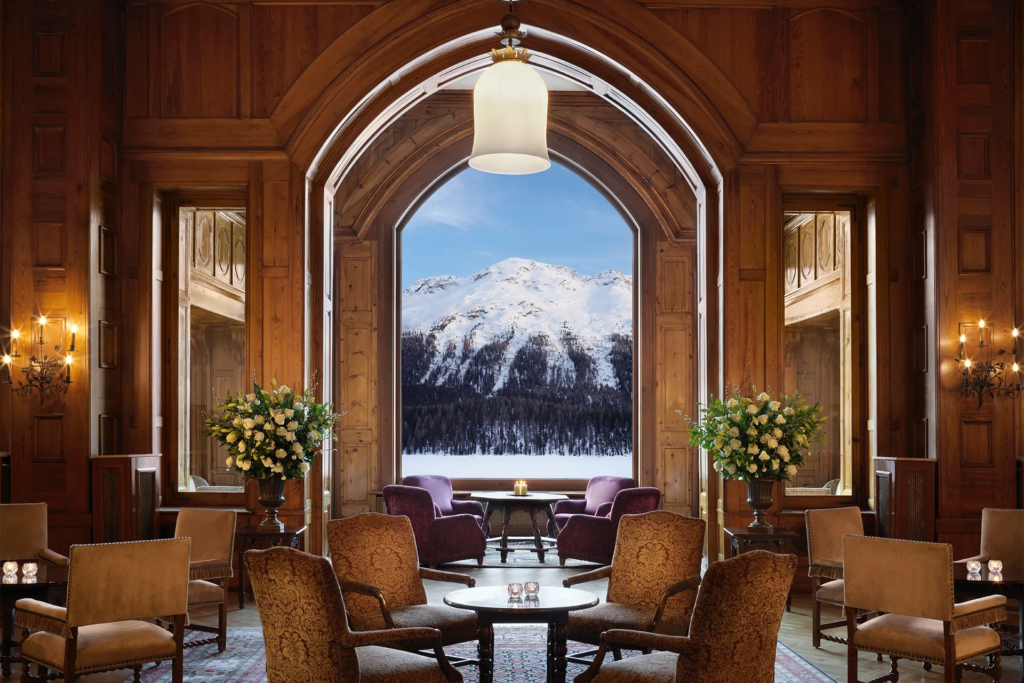
With its tower, its lake views and a guest book full of royals and film stars, Badrutt’s Palace is the symbol of St. Moritz. The service is formal but never stiff, and the dining is among the most serious in the valley, including IGNIV, Andreas Caminada’s sharing-style restaurant. Spend at least one evening in the lobby, even if you’re staying elsewhere.
Suvretta House
Set slightly apart in its own grounds on the edge of town, Suvretta House has something no rival can match: its own ski lift, running from its doorstep into Corviglia. It’s grand, family-friendly and wonderfully old-fashioned.
Kulm Hotel St. Moritz
Winter tourism in St. Moritz began at the Kulm in the 1850s, and the hotel sits beside the Cresta Run and the natural ice rink. The spa has been beautifully renovated, and the views over the lake are enormous. Historic without being dusty.
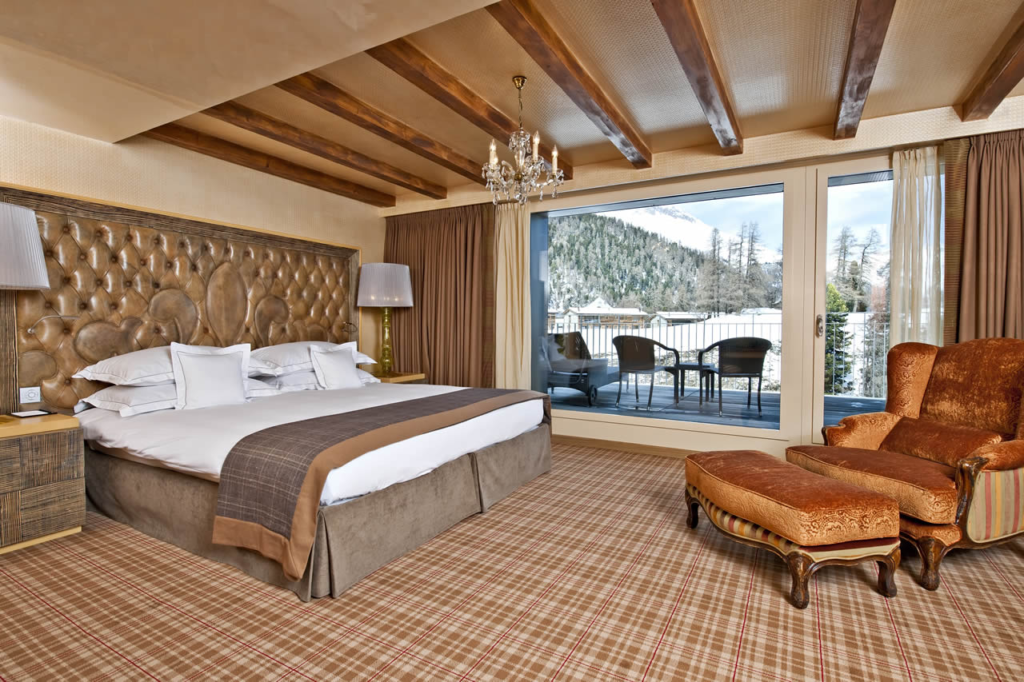
This all-suite hotel looks straight across the lake. It’s smaller than the palaces and more relaxed, almost like a private residence. The suites are huge, and the spa terrace may be the best seat in town.
Grand Hotel des Bains Kempinski
Down in St. Moritz Bad, near the Signal cable car, the hotel stands on the site of the village’s old mineral springs. It’s ideal for families and anyone who wants to be first up the mountain.
Ski hire and lift passes
St. Moritz uses a dynamic “Snow-Deal” pricing model, so early bookers win. On quiet dates an adult day starts at CHF 47, but at the busiest times it climbs above CHF 100. Prices have also risen faster here than almost anywhere in Switzerland, by more than 11% last season. If your hotel is part of the Sleep & Ski scheme, ask for the reduced rate.
Premium ski-and-boot packs usually cost CHF 50 to CHF 75 a day. Most of the palace hotels have their own ski room, with boot fitting and overnight boot warmers.
What to do off the slopes
- White Turf. On three Sundays in February, thoroughbreds race across the frozen lake. Go for the spectacle, the fur-wrapped crowd and some world-class people-watching.
- Snow Polo World Cup. In late January the lake hosts high-goal polo on snow. Very chic, very cold. Wear proper boots.
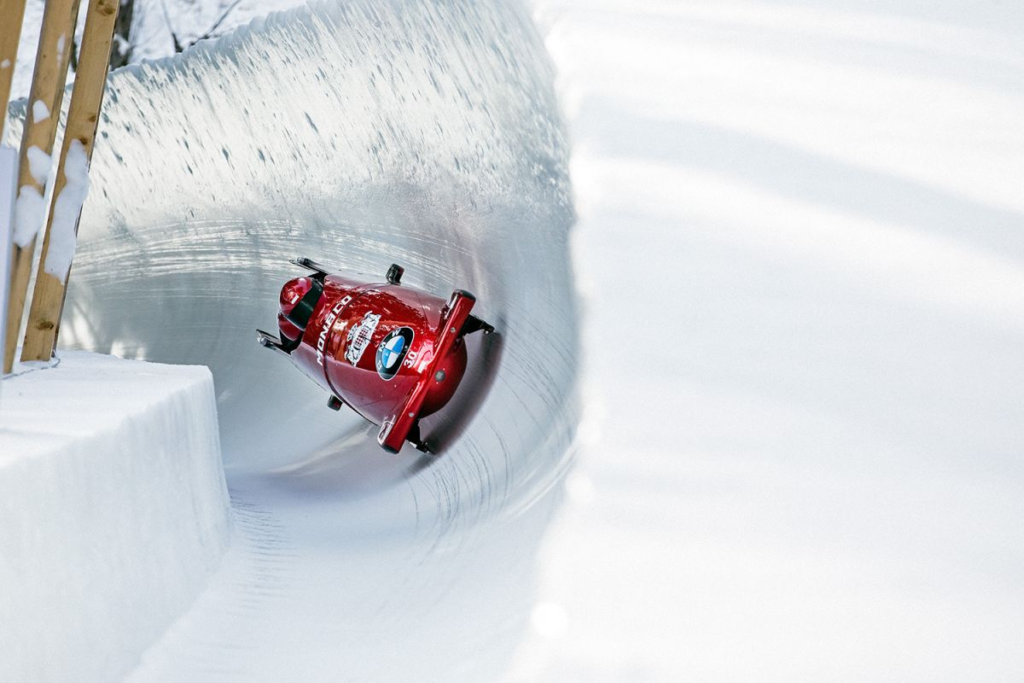
- Olympia Bob Run. Ride as a passenger down the world’s oldest natural ice bobsleigh track, rebuilt by hand every winter. It’s about 75 seconds of pure adrenaline.
- Muottas Muragl. Take the funicular up for the best sunset in the Engadin, then toboggan back down by moonlight.
- The Bernina Express. This UNESCO-listed railway crosses the Bernina Pass towards Italy, past glaciers and through spiral tunnels.
- Cross-country skiing. More than 200 km of groomed trails run along the frozen lakes. It’s the most elegant workout in the Alps.
- Segantini Museum. A small, almost sacred space devoted to the painter of the Engadin light.
4. Lech Zürs am Arlberg, Austria
Best for: deep snow, discreet luxury and royal-approved quiet
Ski area: Ski Arlberg, more than 300 km linking Lech, Zürs, St. Anton and Warth
Season: 2 December 2026 to 18 April 2027
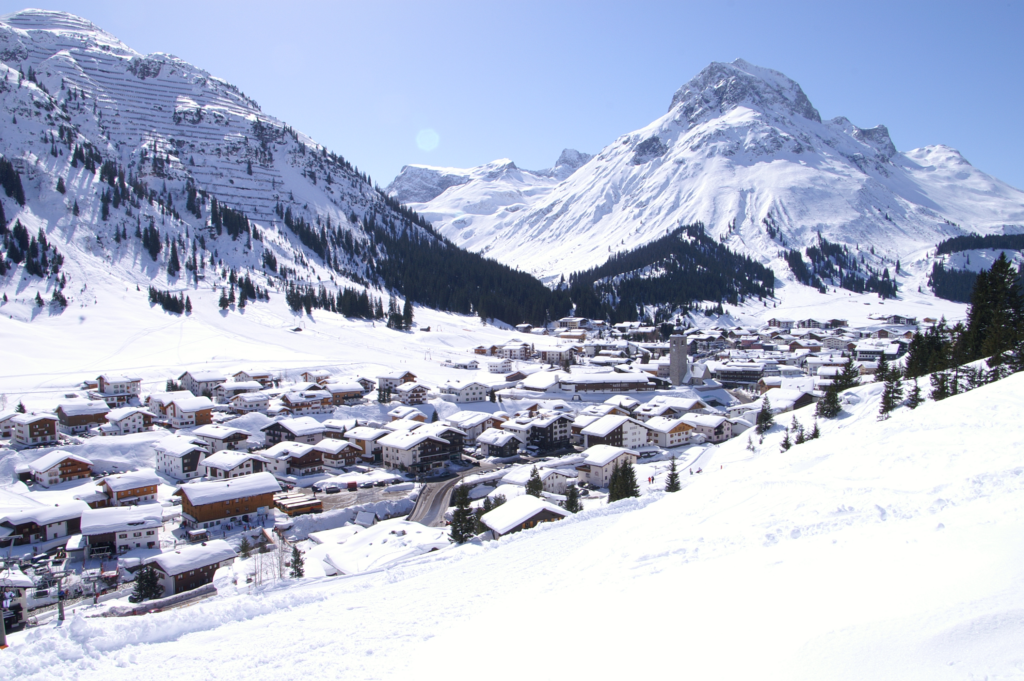
Lech never shouts. It’s a farming village of fewer than 2,000 people that happens to have some of Austria’s finest hotels, serious powder and a loyal, low-key crowd. Zürs averages around 10 metres of snow a winter and Lech around seven, and the Ski Arlberg pass links you to more than 300 km of skiing. This is family-run hospitality at its very best.
Where to stay
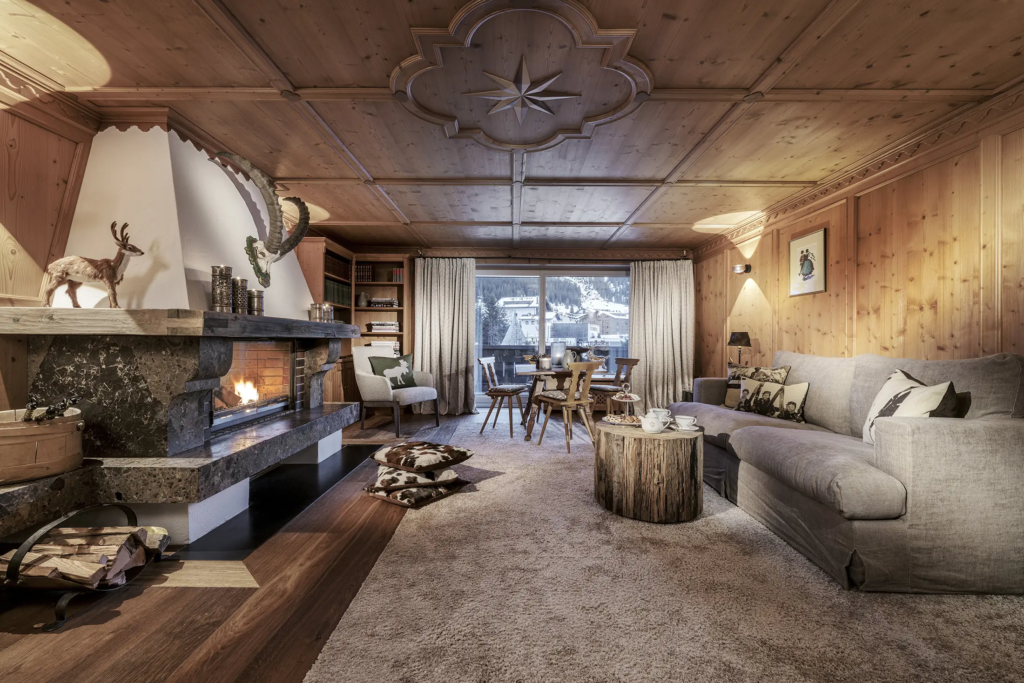
This family-owned five-star sits in the heart of the village, beside the river and the lifts. Expect a beautiful pool, thoughtful spa rituals, and the kind of warm, knowing service that brings guests back for the same week every year.
Almhof Schneider
For many regulars, this is the definitive Lech hotel. It’s ski-in, ski-out on the Schlegelkopf, with interiors that feel like a stylish private chalet and a dining room that takes Austrian classics seriously. Understated and beautifully run.
Gasthof Post Lech
The Post’s painted façade is one of the most photographed sights in the village. It’s a Relais & Châteaux member and feels like the home of a very elegant Austrian family, with antiques, wood-panelled stuben and an excellent spa.
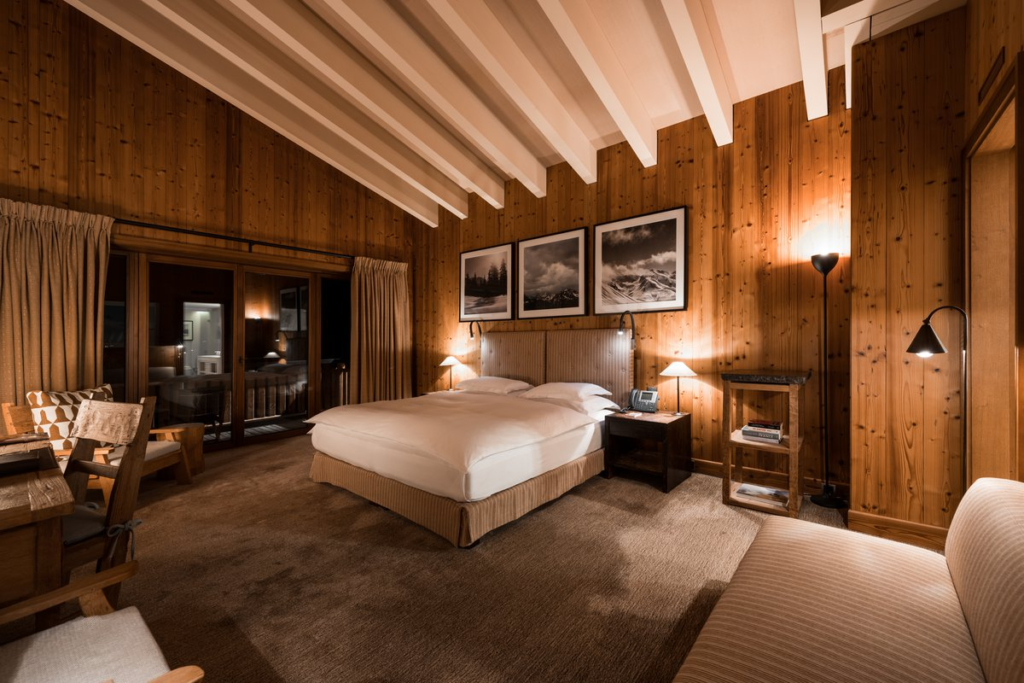
Small, slick and ski-in, ski-out, Aurelio feels like a design-led private chalet. There are only a handful of rooms plus a private residence, a very high staff-to-guest ratio and a superb spa. It’s the pick for anyone who wants to disappear for a week.
Thurnher’s Alpenhof, Zürs
Up the road in Zürs, the Alpenhof sits right on the slopes, so you’re clipping in from the door and back in time for the spa by mid-afternoon. Zürs is even quieter than Lech. In winter it’s essentially a collection of grand hotels gathered around the lifts.
Ski hire and lift passes
Official 2026/27 prices haven’t been published yet, but Ski Arlberg has shown a provisional peak adult day rate of €85. For six days, budget a little over €400.
In Lech, ski hire means Strolz. The family name is synonymous with premium rental and bespoke boot fitting, and its central shop has more than 900 ski lockers and a strong range of freeride and touring kit. Allow around €55 to €85 a day for a premium ski-and-boot set. Private instructors cost from about €450 to €550 a day.
What to do off the slopes
- Skyspace Lech. James Turrell’s light installation is built into the mountain above Oberlech and is one of the most unexpected art experiences in the Alps. Go at dawn or dusk.
- Der Weisse Ring. The 22 km ski circuit linking Lech, Zürs, Zug and Oberlech is a rite of passage. There’s a race on it every January if you’re feeling competitive.
- Heliskiing. Lech is one of very few places in Austria where heli-drops are allowed. Book a certified guide early in the season.
- The Oberlech toboggan run. A 1.2 km run winds down through the forest to Lech. It’s surprisingly fast and gloriously silly.
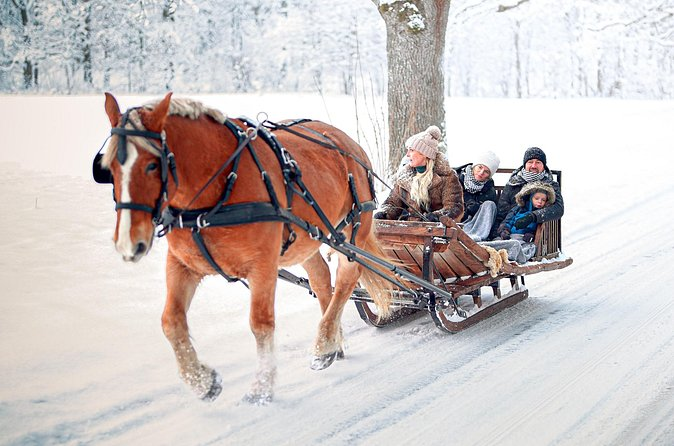
- A horse-drawn sleigh to Zug. Wrap up under blankets and glide through the snowy valley to dinner at one of its traditional inns.
- Cross-country skiing. There are 27 km of groomed trails, all free to use.
- Fine dining. For such a small village, Lech has a remarkable number of serious restaurants. Book your evenings before you arrive.
5. Cortina d’Ampezzo, Italy
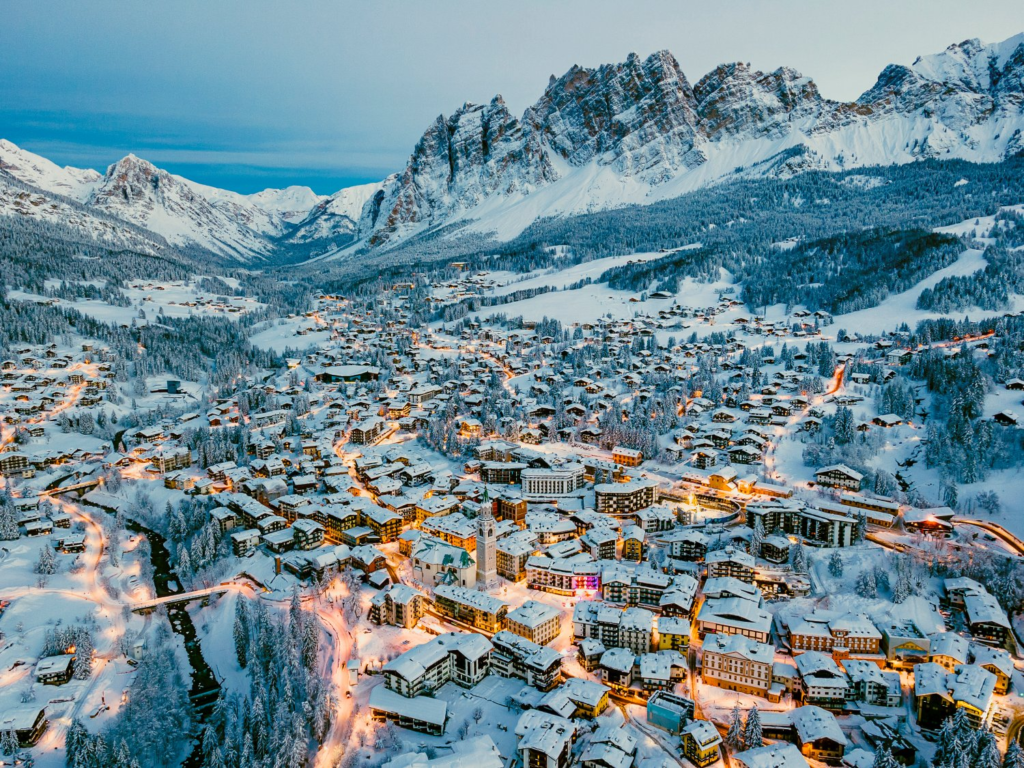
Best for: Olympic glamour, Dolomite drama and la dolce vita at 1,224m
Ski area: 120 km locally; around 1,200 km on the Dolomiti Superski pass
Season: early December 2026 to April 2027
After hosting the 2026 Winter Olympics, Cortina has woken up. Historic hotels have reopened, new five-stars are arriving, and Corso Italia looks sharper than it has in decades. The real star, though, is the setting: pink-tinged Dolomite peaks, UNESCO-listed and almost absurdly beautiful. With the Dolomiti Superski pass you can ski the Sella Ronda and beyond, but Cortina’s own slopes on Tofana, Faloria and Cinque Torri are worth a week on their own.
Where to stay
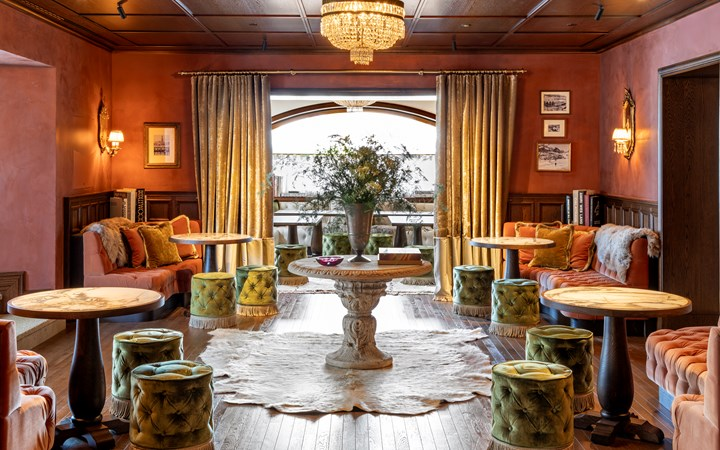
Founded in 1826, the Ancora is one of Cortina’s oldest hotels, and it sits right on Corso Italia, the town’s main street. It has been completely reimagined and is now a member of The Leading Hotels of the World, run by Egnazia Ospitalità Italiana. Step out of the door and you’re in the evening passeggiata.
Grand Hotel Ampezzo
Closed for more than 20 years, the Grand Hotel Ampezzo reopened in February 2026, just before the Games, under the DHOM Collection. The 1920s building keeps its cream and pale-blue façade. Inside are 70 rooms, a Royal Suite, the Ampezzino café, the Cucina restaurant and a Longevity Suite spa offering health check-ups and healthy-ageing treatments. It’s a smart pick if wellness matters as much as the skiing.
The First Cortina
This is the opening of the winter. Pavilions Hotels & Resorts has transformed the former Splendid Hotel Venezia into a 76-room five-star on Corso Italia, opening on 4 December 2026. It brings Zuma to the Dolomites along with a substantial new spa, so expect it to be the season’s most talked-about dinner reservation.
Grand Hotel Savoia Cortina d’Ampezzo, A Radisson Collection Hotel
The grande dame of the town centre was built in 1912 and still shows its Art Nouveau roots. It’s large, central and reliable, a good base for families and anyone who wants a big spa.
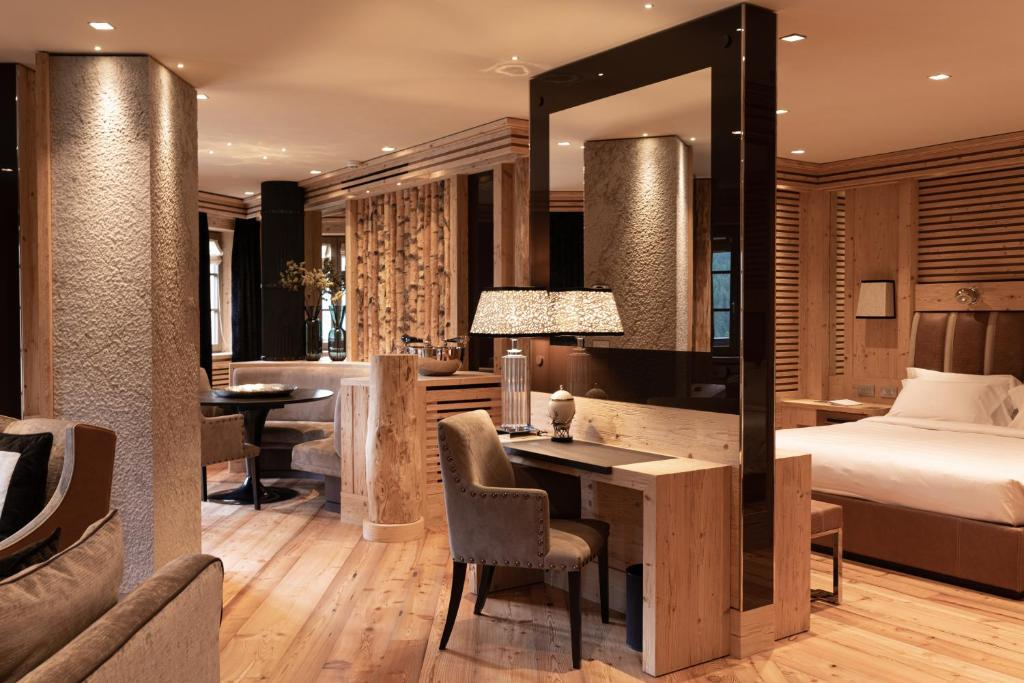
For something quieter, Rosapetra sits on the edge of town, a short drive from the lifts. Rooms are finished in natural stone and larch, and the spa looks straight out at the peaks. It’s intimate and calm, perfect once the Corso has seen enough of you.
One to watch: the legendary Hotel Cristallo is being reborn as Mandarin Oriental Cristallo, Cortina, redesigned by Herzog & de Meuron. Mandarin Oriental lists the opening as early 2027, so a late-season stay may be possible.
Ski hire and lift passes
Italy is the best value in the Alps this year. A high-season adult Dolomiti Superski day costs €89 for 2026/27, and six days cost €453, for access to around 1,200 km of pistes. The local Cortina pass is cheaper if you’re staying put. Buy online at least two days ahead to save 5%.
Ski hire in Cortina is the most expensive in Italy. A seven-day entry-level ski kit costs around €274, and premium or “VIP” packs run about €50 to €70 a day. If you’re skiing Tofana, the Freccia nel Cielo base station has its own rental shop and ski room, so you can leave your kit on the mountain overnight.
What to do off the slopes
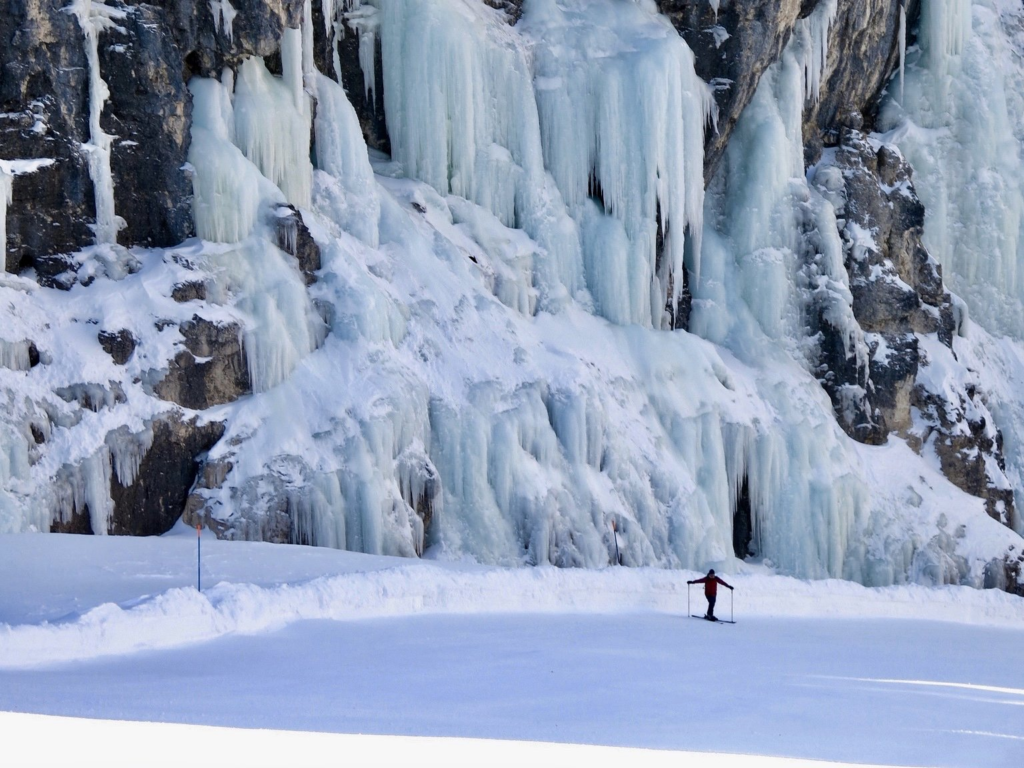
- The Cinque Torri open-air museum. First World War trenches and tunnels have been restored among the towers. Ski over, then have lunch at a rifugio with the view.
- The Hidden Valley. From Lagazuoi, ski the long, silent descent past frozen waterfalls to Armentarola, where horses tow you back to the lift. It’s one of the great ski days in Europe.
- Lagazuoi at sunrise. Ride the cable car up for a panorama over the Dolomites, ideally before the crowds.
- Corso Italia at dusk. The evening passeggiata is a Cortina institution: furs, dogs, espresso and window-shopping, now with new flagship boutiques since the Games.
- The Olympic ice stadium. Skate on the rink that hosted the 1956 Games and the 2026 curling competition.
- Dog sledding and snowshoeing in the Fanes-Senes-Braies Natural Park, for silence and wide white valleys.
- Rifugio lunches. Cortina’s mountain huts serve some of the best food on any mountain in the world. Order casunziei, the local beetroot-filled pasta, and take your time.
Which one is right for you?
- Choose Courchevel if you want the most terrain and the most polished service, and don’t mind paying for both.
- Choose Zermatt if the view matters more than anything, and you love the idea of skiing to Italy for lunch.
- Choose St. Moritz if your ideal ski holiday involves as much time on the frozen lake as on the slopes.
- Choose Lech Zürs if you want deep snow, discretion and a village that still feels like a village.
- Choose Cortina if you want the most beautiful mountains, the best food and the freshest hotel news of the season.
Whichever you choose, book three things early: your hotel, your lift pass (dynamic pricing punishes late buyers, especially in Switzerland) and your ski hire. Leave the rest to the mountain.