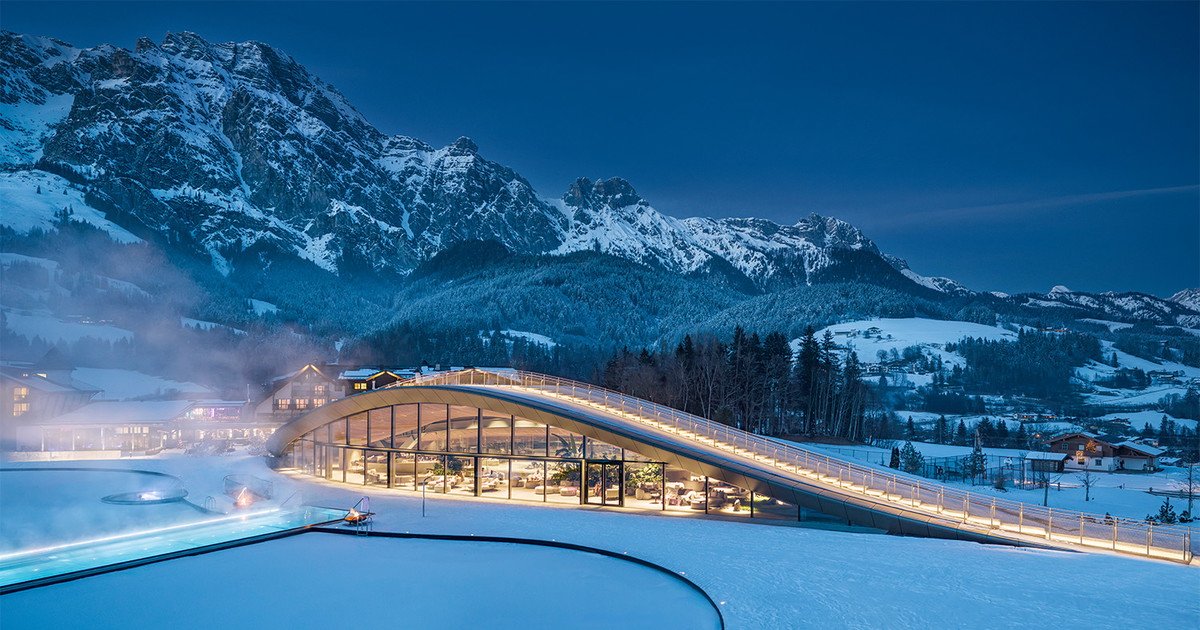
This winter’s most talked-about Alpine openings are selling saunas, cold plunges and longevity suites as hard as they sell the pistes. We look at why, and where to book if your idea of a perfect mountain day never involves a lift pass.
There is a particular kind of guest every Alpine hotel knows well. She arrives with a beautiful coat and no ski boots. While everyone else clatters out to the lifts at half past eight, she orders a second coffee, watches the light move across the peaks and books a massage for eleven. By the time the skiers stagger back at four, windburnt and starving, she has swum, read half a novel, sat in a sauna that smells of larch and had lunch on a sunny terrace.
For years she was an afterthought. Ski hotels were built around boot rooms, drying rooms and the shortest possible walk to the gondola. The spa, if there was one, was a basement with a small pool and a steam room that never quite worked.
Not any more. Walk through the openings lined up for the 2026 to 2027 season and something has shifted. The headline features are no longer just ski-in, ski-out access and a ski concierge. They are thousand-square-metre spas, Nordic bathing circuits, longevity programmes and treatment menus built around recovery. The non-skier has become the guest these hotels are designing for.
Why the Alps went soft
Part of the answer is simply who is travelling. Ski holidays used to be a family sport where everyone skied. Now they are more often a mixed group: one partner who lives for black runs and another who would rather be horizontal by the pool. Ski operator Ski Line noted this summer that couples increasingly choose the Alps even when only one of them plans to spend the day on the slopes, and that non-skiers once had little to do beyond shopping, cafés and woodland walks. Today, it argues, many resorts offer enough wellness to fill a whole holiday.
Part of it is commercial. Travel trade coverage of this winter’s pipeline points out that the newest mountain hotels package pools, spas, saunas, family spaces, restaurants and après bars alongside the rooms, partly because it gives them ways to earn beyond the bed. A guest who spends the day in the spa spends money in the spa.
And part of it is cultural. The broader wellness boom has reached the mountains, and the mountains turn out to be very good at it. Cold air, altitude, pine, hay, mineral water and long silent evenings were wellness ingredients long before anyone wrote them on a treatment menu. Alpine hay wraps, pine oil massages and herbal compresses have moved from folksy curiosity to signature ritual.
The result is a new generation of ski hotels where you could spend a week, never touch a ski and feel you had the best of the trip.
Courchevel: the grandest version
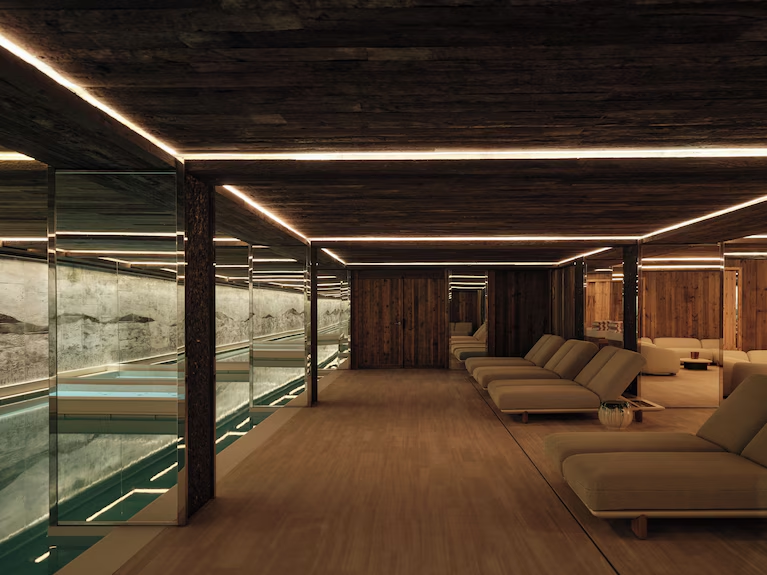
If you want to see how far the idea has travelled, start at the top. Rosewood Courchevel Le Jardin Alpin is the brand’s first winter resort, and it sits in a prime ski-in, ski-out spot in Courchevel 1850. SheerLuxe reports that it soft-launched in April and reopens in December for its first full season. Tristan Auer designed the 51 rooms and suites, which include three signature houses.
The skiing here is, of course, some of the best in the world. But read the hotel’s own pitch and the wellness story sits right alongside it. Food and spa are central, with Rosewood’s Asaya spa offering treatments designed specifically around recovery after a day on the mountain. The experiences menu includes sunrise coffee on La Saulire with Mont Blanc in view, and a First Track option that gets keen skiers onto the slopes before the lifts officially open. In other words, the hotel is built for both halves of the couple: the one who wants first tracks and the one who wants the coffee.
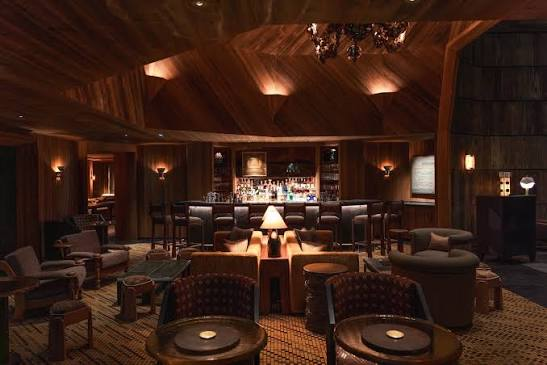
Next door in the Jardin Alpin, L’Apogée Courchevel has its own underground spa and a newly reimagined set of dining spaces by Kelly Wearstler, her first European hotel project. Wearstler has played raw stone against warm wood, which suits the long, lingering afternoons that non-skiers do best. And for anyone planning ahead, Raffles has confirmed its first Alpine resort in Courchevel 1850, due before the 2028 winter season, with 50 rooms and suites and interiors by Humbert & Poyet.
Cortina: longevity with a view
The Dolomites have always been a gentler, more Italian idea of a ski holiday. Lunch matters as much as the run before it. So it makes sense that Cortina d’Ampezzo, freshly polished after hosting the 2026 Winter Olympics, is where the spa-first idea has gone furthest.
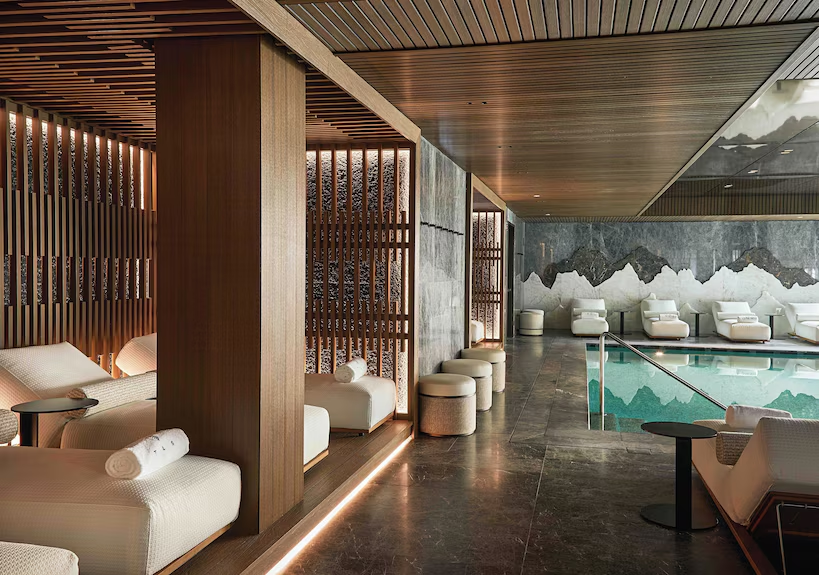
Grand Hotel Ampezzo reopened this summer a few steps from the Faloria cable car and Corso Italia, after a careful restoration of a historic Art Deco building. It has 70 rooms and suites, and its 1,000-square-metre spa is set to be one of the largest in the resort. The detail that caught our attention is the Longevity Suite, which focuses on biohacking and science-led approaches to healthy ageing. That is not a phrase you would have found in a Cortina brochure five years ago.
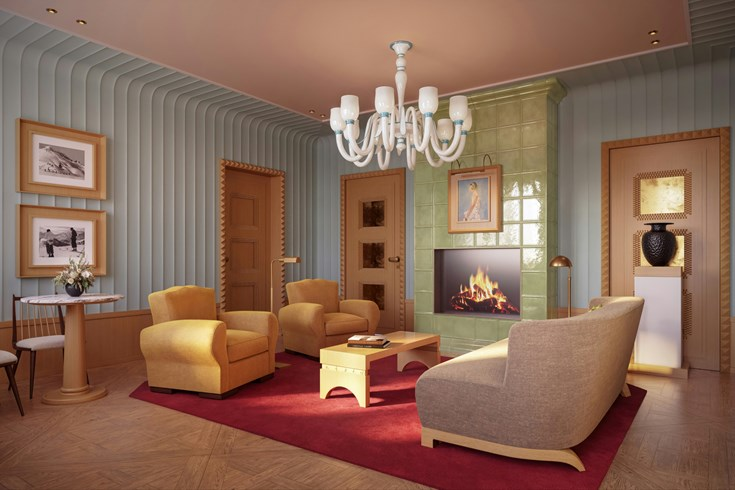
Up the hill, Le Graal Cortina opens in December with 30 rooms inside a 1920s building reworked by architect Achille Salvagni. Instead of dark panelling, the interiors use pale woods, natural marble and handmade stucco. The spa programme is built around restoration, longevity and stress recovery, and the list of things to do reads like a non-skier’s dream: sunrise hikes, snowshoeing, private mountain lunches, hot-air balloon flights over the peaks, horse-drawn sleigh rides, sunset aperitivo at Cinque Torri and e-bike rides along the old Dolomites railway route. Chef Giovanni Guarneri of Don Camillo in Ortigia oversees the food.
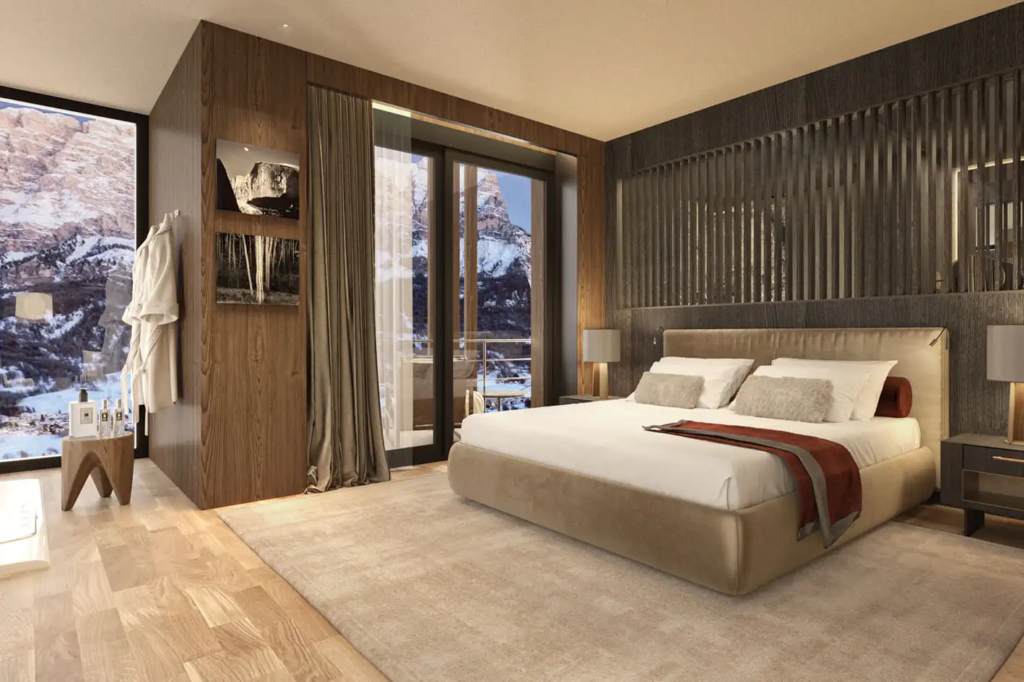
Then there is The First Cortina by The Pavilions, due in early December on Corso Italia in the town centre. Euronews reports 76 rooms and suites, some with their own private wellness facilities and mountain-view terraces, plus a REVĪVŌ Spa, a Zuma and an Italian restaurant. When your suite has its own spa, the case for leaving it gets weaker by the hour.
Verbier and the Swiss version
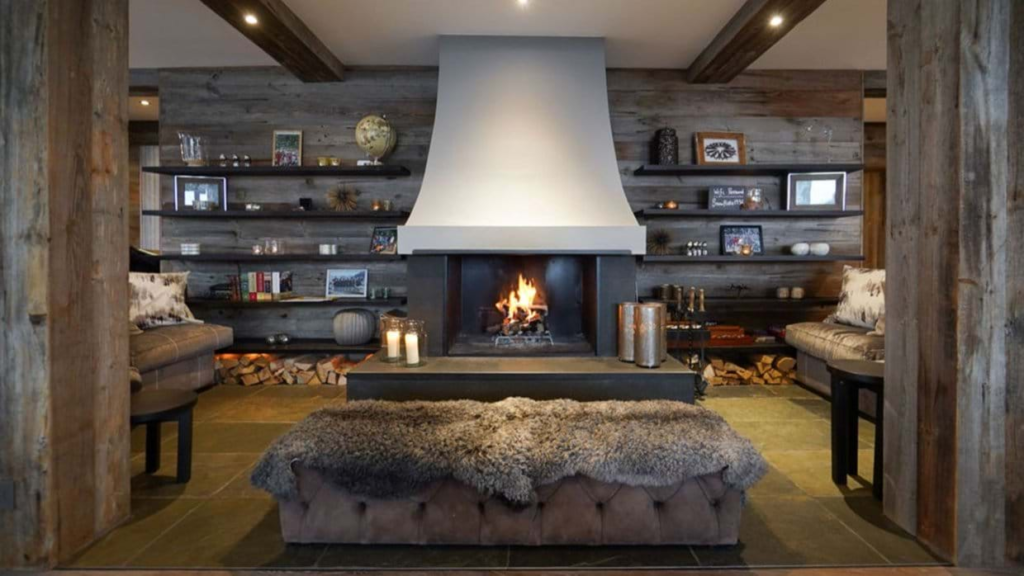
Switzerland does wellness with less fuss and more precision. In Verbier, The Ski Lodge opens in December with 36 rooms close to Place Centrale. The name suggests boots and goggles, but the spa is the real draw: an indoor pool, a cold plunge, a sauna, a hammam and a relaxation area. There is also a bar called The Listening Room, which tells you something about the kind of evening the hotel has in mind.
For something quieter, Le Central in the medieval village of Evolène, about two hours from Geneva, has just seven rooms and a spa among the mountains of the Val d’Hérens. The lounge has a library, a grand piano and a fireplace, and there is an honesty bar stocked with Valais wine. It is the sort of place where not skiing feels like the point rather than the compromise.
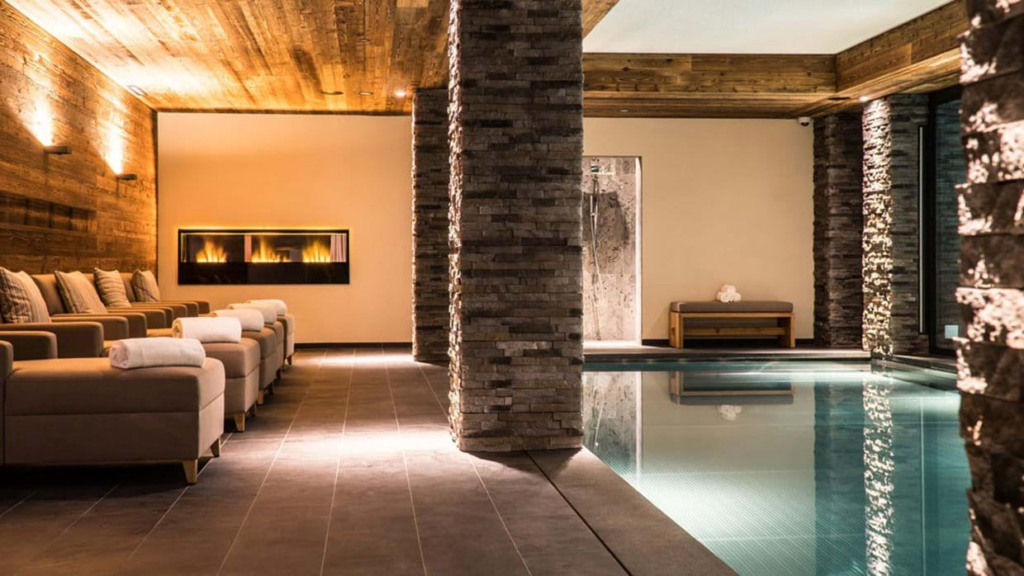
In car-free Saas-Fee, the family-run Capra sits at 1,800 metres among four glaciers. Its Peak Health Spa uses local Alpine ingredients, and there are daily yoga and pranayama classes. Skiers can book heli-skiing around the Matterhorn; everyone else can book a glacier hike or simply stay put.
Austria: the original spa nation
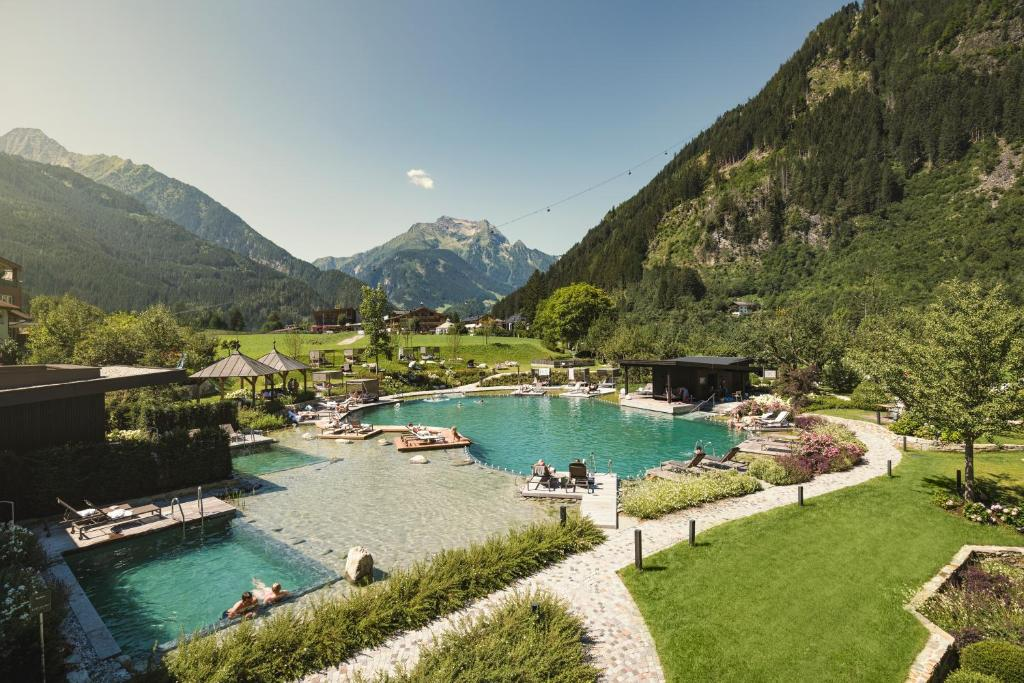
Austria has never needed persuading. Its idea of a ski hotel has long included a serious Wellnessbereich, and the new openings keep raising the bar.
The Green Resort in Uderns, in the Zillertal, opens in December with a 3,300-square-metre indoor and outdoor spa, including pools, saunas and steam baths. It sells a seven-night ski package with a six-day lift pass, but the spa footprint tells you where the hotel’s heart is.
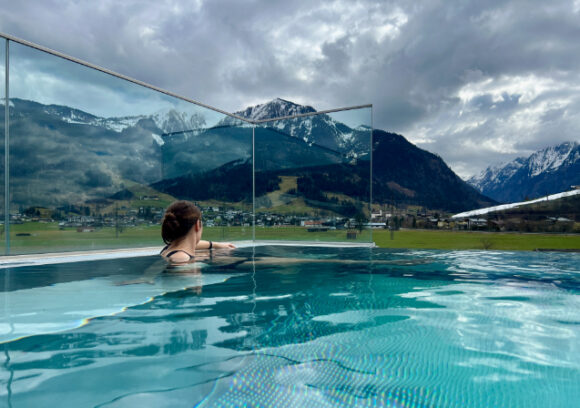
And if you want proof that a winter Alpine holiday can be built entirely around water, the long-established Tauern Spa near Zell am See has around 20,000 square metres of indoor and outdoor spa, with about a dozen pools and 13 saunas and steam rooms. Euronews named it one of the best Alpine bases for non-skiers, and it is hard to argue.
France beyond Courchevel
The French resorts are catching up fast. In Morzine, the former Les Airelles hotel returns in December as Garance Hotel & Spa, part of the Mont-Blanc Collection. It will have 65 rooms, a brasserie, a cocktail bar and dedicated spaces for children and teenagers, and its wellness area is planned to include a pool, a Nordic spa, treatment rooms and studios for yoga and fitness. For families where one parent skis with the children and the other does not, it is a neat solution.
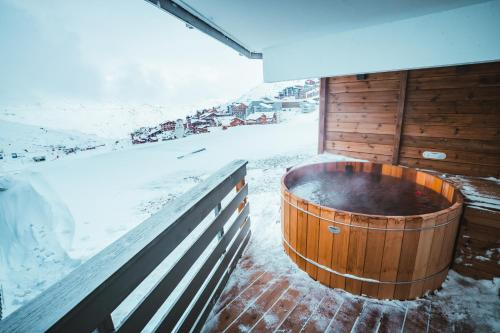
In Les Menuires, Fahrenheit Seven opens on 11 December on the ski front of the Preyerand district, with direct access to Les 3 Vallées and an indoor pool. And in Méribel, the rebuilt Chalet Pierre, one of the resort’s earliest chalets, now has a private wellness floor with an indoor hot tub, sauna, hammam and massage room, plus a private underground passage to further spa, gym and pool facilities next door.
What a spa-first ski day actually looks like
If you have never done the mountains this way, here is the rhythm we would suggest.
Morning. Let the skiers go. Breakfast late, by the window, and watch the first gondolas climb. Then walk. Most resorts now groom winter walking paths, and an hour on snowshoes or simply on foot in the cold sharpens the senses for everything that follows.
Late morning. Go into the spa while it is empty. This is the hour when the pool is yours and the sauna is silent. If the hotel offers a hot and cold circuit, do it properly: sauna, cold plunge, rest, repeat. Many of the new spas, from Verbier to Cortina, now treat contrast bathing as a centrepiece rather than an extra.
Lunch. Take a lift up anyway. You do not need skis to ride a gondola, and mountain restaurants are half the reason to be in the Alps. Sit on the terrace, order something rich and watch everyone else work for their lunch.
Afternoon. Book your treatment for around three, before the skiers flood back and the treatment rooms fill. Ask about local rituals. Hay wraps, pine and arnica oils and herbal compresses are worth trying at least once.
Evening. Meet the skiers at the bar, rested and smug. You have earned it.
How to choose
A few things are worth checking before you book.
Spa access for non-residents. Some hotels open their spa to outside guests in the afternoons, which can make it busy just when you want it. Ask whether there are resident-only hours.
Age rules. Several Alpine spas restrict children, which is either a blessing or a deal-breaker depending on who you are travelling with. Check before you assume.
Treatment availability. In peak weeks, the best therapists are booked well before you arrive. Reserve your treatments when you book the room, not when you check in.
The view from the pool. It sounds trivial. It is not. A pool with a window onto the mountains changes the whole experience.
Town or slope. Ski-in, ski-out sounds glamorous, but if you are not skiing, a hotel in the village centre may suit you better. Cortina’s Corso Italia and Verbier’s Place Centrale put shops, cafés and restaurants on your doorstep.
Opening dates. Several of these hotels are brand new. December openings can slip, so book with flexible terms if you are planning around a specific date.
The verdict
The best thing about this shift is not the size of the spas or the sophistication of the longevity menus. It is that the Alpine holiday has stopped asking everyone to be the same kind of person. The skier can still have first tracks and long lunches and the rush of a perfect descent. The non-skier no longer has to apologise for wanting snow, silence and a hot sauna instead.
If you have always loved the idea of the mountains in winter but dreaded the boot room, this is your season. Book the hotel with the pool that looks at the peaks, pack the good coat and leave the skis at home. Nobody will mind. In some of these hotels, they are counting on it.