From lagoon suites cut into black lava to a highland hideaway two glaciers deep, this is Iceland at its most beautiful and most deliberate. Our guide to doing it slowly, and doing it well.
There’s a moment on every first trip to Iceland when the scenery stops looking real. For some people it comes on the road out of Keflavík, when the land turns to moss-covered lava and the sky seems to start at your ankles. For others it happens later: a waterfall falling sideways in the wind, an iceberg the colour of sea glass sliding out to sea, or the northern lights suddenly moving over a hot pool at midnight. For me it was the silence. I was standing on a ridge in the highlands with nothing in view but steam, snow and rust-red mountains, and the only sound was my own breathing.
Iceland has spent the past decade turning that kind of moment into something you can actually plan a trip around. The country’s hotels have caught up with its landscapes. There are suites with their own private lagoons, design-led lodges in valleys that used to be reachable only by Super Jeep, and a new generation of geothermal spas that treat bathing as a ritual rather than a box to tick. Reykjavík now has a serious dining scene, with Michelin stars and tasting counters booked weeks ahead, and the north has quietly become the place to go for anyone who finds the south coast too busy.
This guide is for travellers who want Iceland done properly: fewer kilometres, more meaning, and a bed at the end of each day that’s worth looking forward to.
When to Go: Choosing Your Iceland
Iceland is really two countries, depending on the season, and the most important decision you’ll make is which one you want.
Summer (June to August) is the season of the midnight sun. The light hardly fades, the highland roads open, puffins nest on the cliffs and hiking trails that are snowbound for most of the year finally open up. It’s the best time for the Highlands, the Westfjords and long golden evenings that seem to go on forever. It’s also when prices peak and the famous stops on the south coast are at their most crowded.
Winter (November to March) belongs to the aurora and the ice. Days are short, sometimes only four or five hours of soft, pink-tinged light, but this is when the glacier ice caves of Vatnajökull become safe to enter, the northern lights are at their most frequent and the hot pools feel like a small miracle. Driving takes more care and more flexibility, so this is the season to hire a private guide or a driver.
The shoulder months, September to October and April to May, are the connoisseur’s choice. The aurora season runs from roughly September to April, so you can watch the lights from a warm pool while the roads are still easy and the crowds have gone home. Autumn in particular brings copper-coloured moss, early snow on the peaks and noticeably better hotel rates.
Wherever you go, pack for every season in a single afternoon. Bring a proper waterproof shell, merino layers and sturdy boots. Bring a swimsuit too, whatever the month, because you’ll use it more than anything else in your case.
Where to Stay in Iceland
Iceland’s luxury hotels are best treated as bases rather than one-night stops. The country is bigger than it looks, the weather sets its own timetable, and the best properties are designed for lingering. We’d suggest two or three hotels for a week-long trip, with at least two nights in each.
Reykjavík
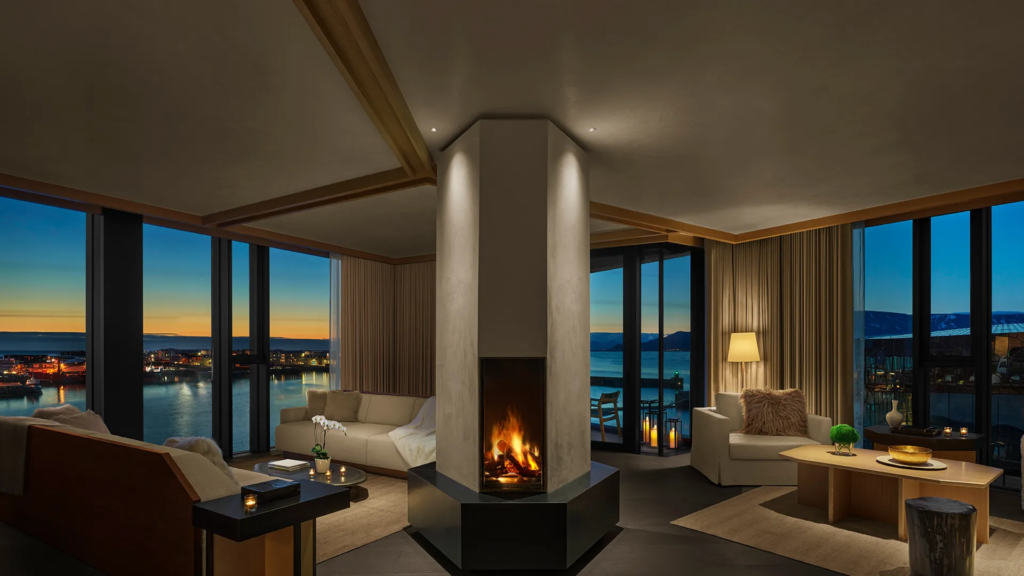
Iceland’s first true international luxury brand sits on the harbour beside Harpa concert hall, and it’s the city’s most polished address. Rooms are pared back and calm, done in pale oak, soft wool and stone, with floor-to-ceiling windows framing either the old harbour or Mount Esja across the bay. The spa is the place to go after a day of exploring, and the ground-floor restaurant, TIDES, has earned a place in the Michelin Guide for its fresh, ingredient-led Icelandic cooking. Ask for a high-floor ocean view, ideally a corner suite, and leave the curtains open. On a clear winter night the aurora sometimes appears right above the bay.
Rooms from around £350 a night, with the best value in the darker months.
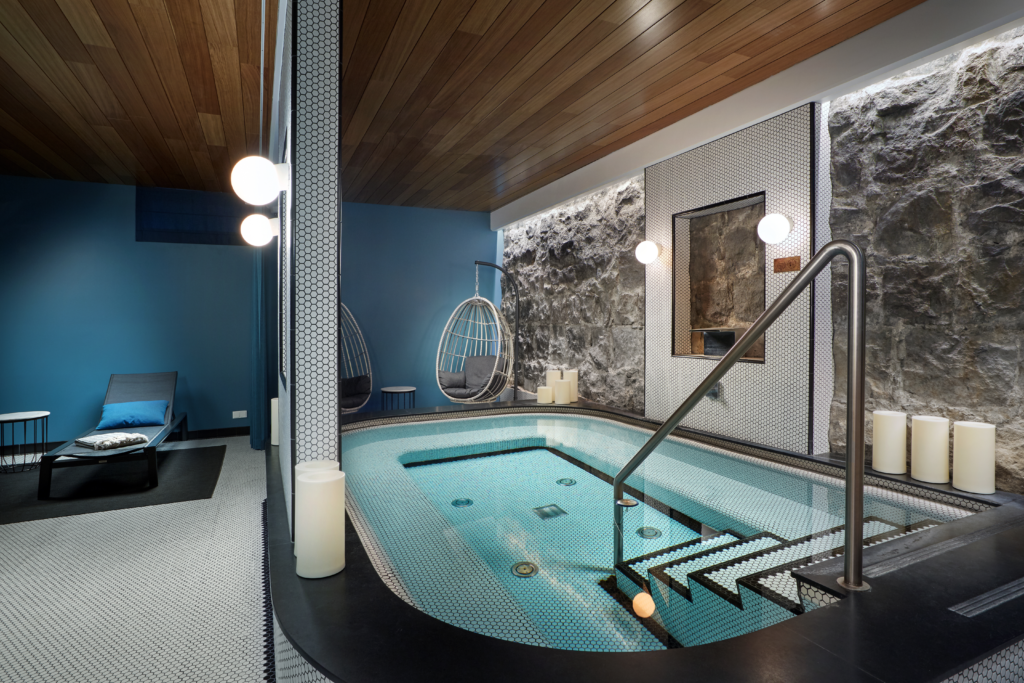
If the EDITION is sleek, Konsulat is soulful. It occupies what was once the city’s first high-end department store, in the heart of the old town, and keeps a sense of that heritage. There are rich textiles, a library feel and warm, low lighting that’s especially welcome in winter. It’s an excellent base for exploring Reykjavík on foot, with Laugavegur’s design boutiques, the cathedral and the city’s best restaurants all within an easy stroll.
Rooms from around £250 a night.
Reykjanes Peninsula
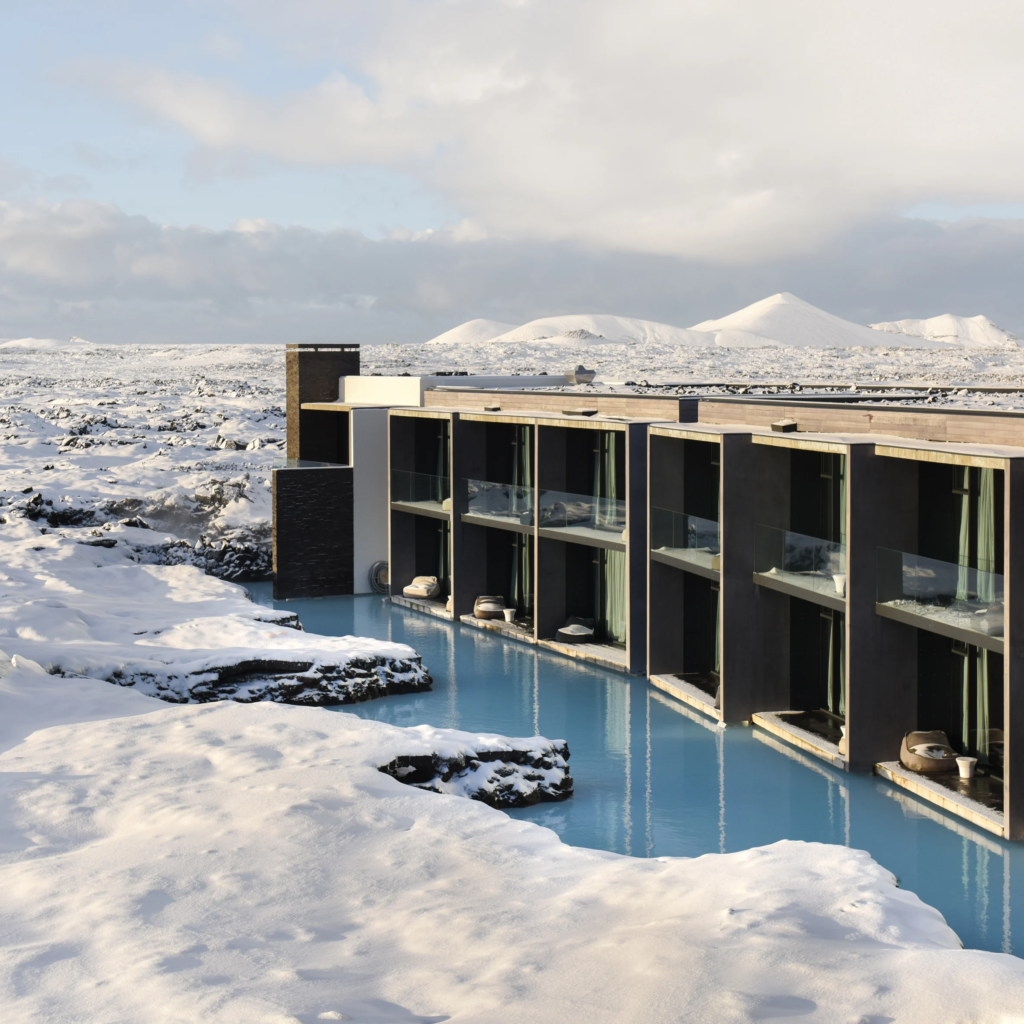
This is the one people dream about, and with good reason. The Retreat is built directly into an 800-year-old lava flow, and its 62 suites look out over milky-blue water and moss-covered rock. A stay includes access to the Blue Lagoon, the Blue Lagoon Ritual, the Retreat Spa and the hotel’s private Retreat Lagoon, which is quieter, more secluded and, for most guests, the real reason to book. Book the Lagoon Suite and you get a private stretch of geothermal water outside your own terrace. Floating there in the steam at midnight, looking up for the aurora, is one of the great hotel experiences anywhere in the world.
The spa itself is a sensory journey of underground corridors and lava-walled treatment rooms, with skincare made from the lagoon’s own silica, algae and minerals. Dinner at Moss, the hotel’s acclaimed fine-dining restaurant, is a long, quiet celebration of Icelandic produce, with views straight out over the lava.
One practical note. The Reykjanes Peninsula has been volcanically active since 2021, and the Blue Lagoon complex has closed temporarily during several eruptions. Protective barriers have held each time and the resort has reopened. Do check the live status before you travel, and book a flexible rate.
Suites from around £1,250 a night.
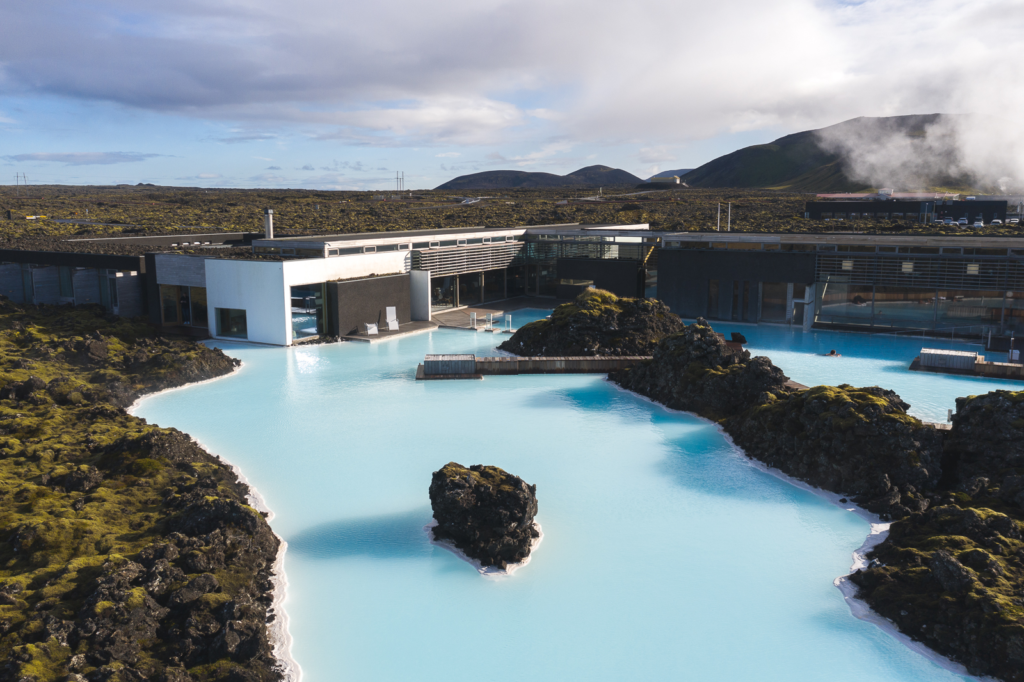
The Retreat’s quieter, more affordable sister sits a short walk from the main lagoon and has its own private silica lagoon for hotel guests. Rooms are simple and serene, with large windows facing the lava field. It’s ideal if you’d rather spend your budget on spa treatments than a suite.
Rooms from around £550 a night.
The Golden Circle and South Coast
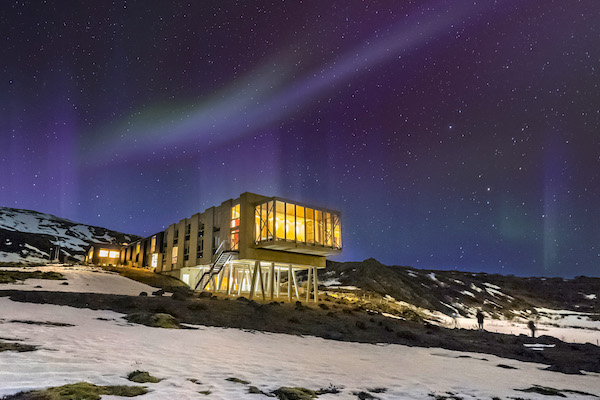
Set on stilts above a lava field at Nesjavellir, close to Þingvellir National Park, ION is one of Iceland’s most photographed hotels, and its outdoor geothermal pool is the reason. The pool juts out over the landscape, and on a clear night you can float there watching the sky for the aurora. Rooms are minimalist and warm, with recycled timber, wool throws and wide windows facing the mountains. It’s about 45 minutes from Reykjavík, which makes it a natural base for the Golden Circle, Silfra and the volcanic landscapes of Hengill.
Rooms from around £250 a night in low season.
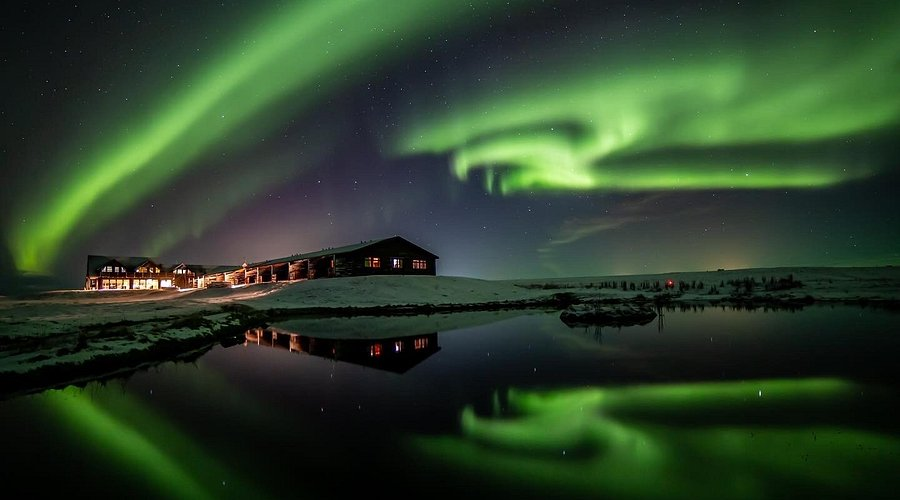
Hotel Rangá is a timber lodge in the farmland near Hella, and it was hunting the aurora before it became fashionable. It’s dark-sky country, there’s a private observatory on site, and the staff will happily knock on your door when the lights appear. The atmosphere is cosy and characterful, with themed suites, roaring fires and outdoor hot tubs by the river. It’s perfectly placed for Seljalandsfoss, Skógafoss and the black sands of Reynisfjara.
Rooms from around £350 a night.
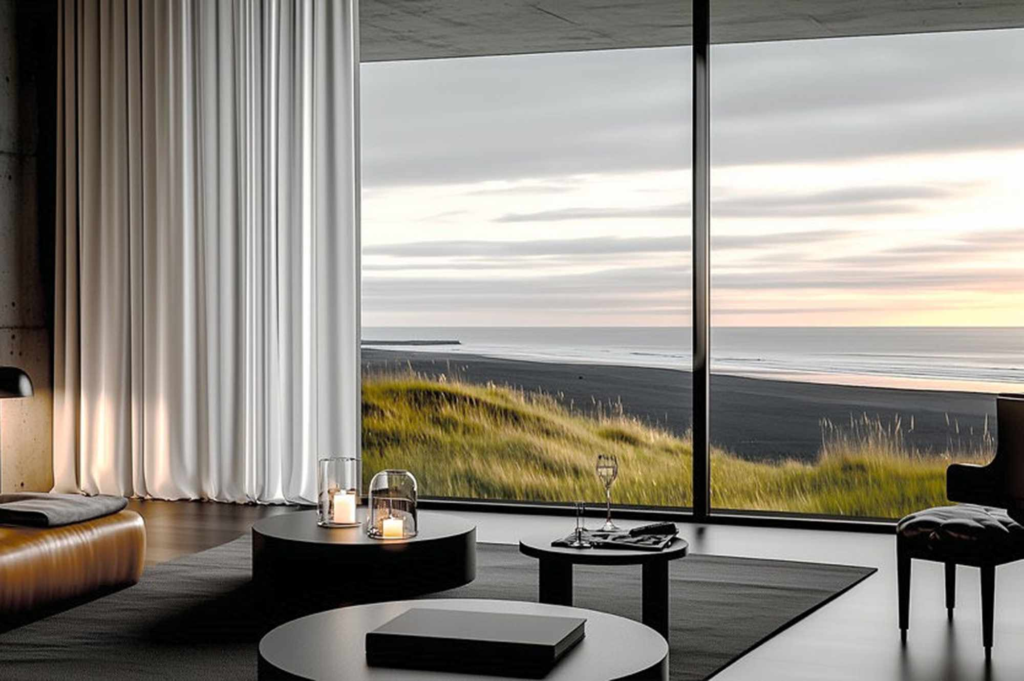
The newest name on the south coast opened in early 2026 on the Ölfus coastline, about an hour from Reykjavík, and it’s one of the very few hotels in Iceland set directly on a beach. Interiors are Scandinavian and restrained, with shades of lava stone, floor-to-ceiling glass and beds made for long sleeps. Watching the Atlantic roll onto black sand from your room is unforgettable, and the Nordic restaurant, ÓMUR, gives you good reason to stay in for dinner.
Rooms from around £200 a night, with suites added in spring 2026.
The Highlands
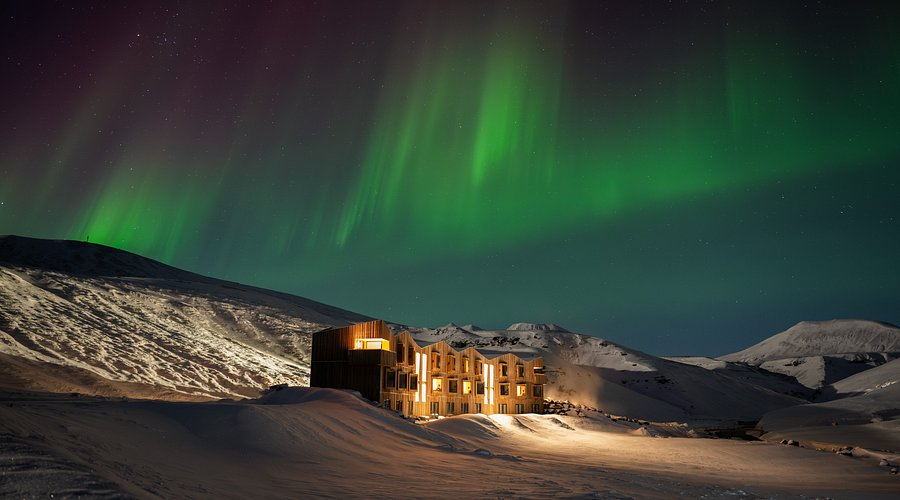
If one hotel captures where Icelandic luxury is heading, it’s this. Highland Base sits in the remote Kerlingarfjöll mountain range, right in the island’s empty centre, between two glaciers. Until recently this was a place for hardy campers. Now it has a hotel of quietly beautiful timber-clad buildings with angled windows, plus a cluster of A-frame lodges and the Highland Base Baths, a set of geothermal pools on the mountainside fed by the area’s natural springs.
The landscape around it is extraordinary. There are rhyolite mountains streaked with ochre, rust and mint green, steaming vents, fields of hissing hot springs and hiking trails that take you through all of it. In summer you can drive there with a 4×4 on the highland roads. In winter you arrive by Super Jeep, crossing a frozen interior that feels like the edge of the world. Rates include breakfast, the baths, guided stargazing, storytelling and a daily activity, which makes this the most immersive stay in the country for the price.
Rooms from around £350 a night in winter, rising to around £450 in summer.
The North
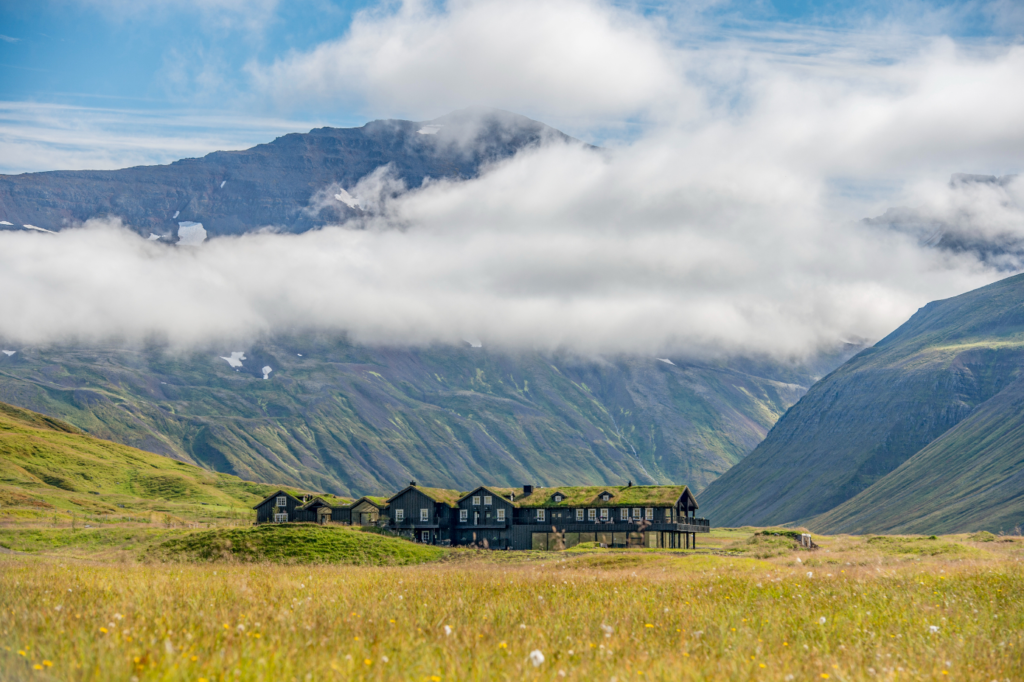
Deplar Farm is Iceland’s most exclusive hideaway, and arguably one of the most remarkable lodges in Europe. It’s a converted sheep farm in the Fljót valley on the Troll Peninsula, its turf-roofed buildings tucked into the hillside, and it has only 13 rooms. The experience is all-inclusive, so meals, guides and daily adventures are all taken care of. In summer that might mean sea kayaking, hiking, fishing or whale watching under the midnight sun. In winter there’s heli-skiing straight from the farm and evenings in the heated outdoor pool watching the aurora. The spa is excellent too, with massages and facials designed to restore windswept skin and tired muscles.
It’s a once-in-a-lifetime price, but it’s also a once-in-a-lifetime experience: completely private, deeply comfortable and wonderfully wild.
From around £2,950 a night for two, all-inclusive.
Akureyri Skáld Hotel, Curio Collection by Hilton
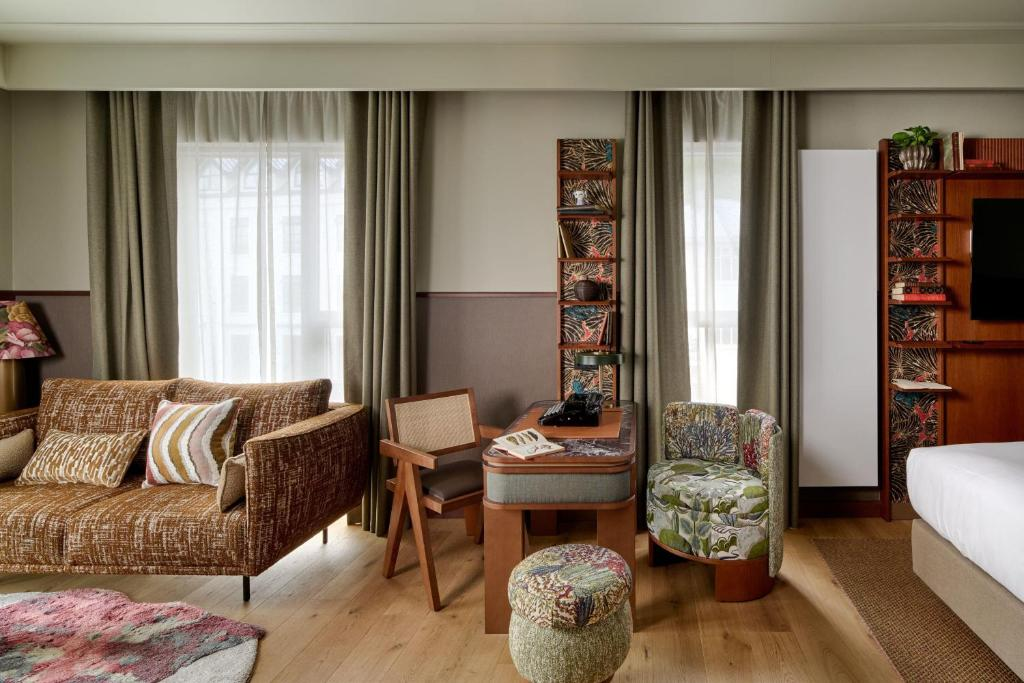
The north’s capital has finally got a luxury hotel to match its growing reputation. The Skáld is Hilton’s first countryside luxury property in Iceland, with 70 rooms near Akureyri, and it has been taking bookings from autumn 2026. Its literary name and cultural focus fit a city known for its galleries, botanical gardens and easy access to the Forest Lagoon, Mývatn and the whale-watching harbour at Húsavík.
The Lagoons: Iceland’s Greatest Ritual
Bathing is the heart of Icelandic life. Locals meet in neighbourhood pools the way Parisians meet in cafés, and no trip is complete without spending some time in geothermal water. The good news is that the choice has never been better.
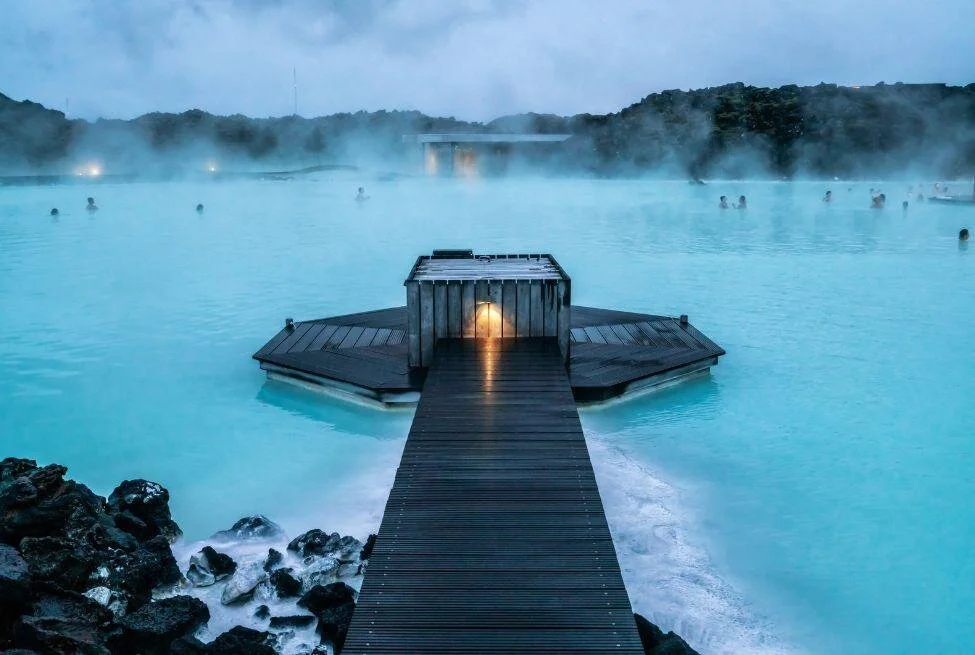
Blue Lagoon is the icon, and it’s worth experiencing once. The water is a cloudy turquoise, the silica mud masks really do leave your skin glowing, and the setting in a black lava field is unlike anywhere else. Go early in the morning or late in the evening, when the crowds thin and the steam seems to swallow everything. Standard entry starts from around £60. If you want the full experience without staying at The Retreat, the Retreat Spa day pass gives you a private changing suite, the Retreat Lagoon and the Blue Lagoon Ritual. It starts from around £520 per changing room for two.
Sky Lagoon, on the coast at Kópavogur and just 15 minutes from central Reykjavík, is the one I’d send most people to first. The infinity edge seems to pour straight into the North Atlantic, and the seven-step Skjól ritual is a beautifully paced sequence: warm lagoon, cold plunge, a sauna with a sea view, a cool mist, a body scrub, steam and a final shower. It’s for over-12s only, so it’s peaceful. Entry is from around £80. Book the Sér pass for a private changing room.
Hvammsvík Hot Springs, about 45 minutes north of Reykjavík on the Hvalfjörður fjord, is the wildest of the new generation. It has eight natural pools of different sizes and temperatures, set right on the shoreline of a 1,200-year-old farm estate. Some pools rise and fall with the tide, there’s no fixed ritual, and you’ll often see seals in the water nearby. It’s the most natural experience of all the lagoons and my personal favourite. Entry is from around £65, with daily numbers capped and no children under ten.
Further afield, keep an eye on three newer names. Laugarás Lagoon opened on the Golden Circle in late 2025. Fontana at Laugarvatn reopened in summer 2026 after a major expansion. In the north, Earth Lagoon Mývatn (formerly Mývatn Nature Baths) has added a swim-in steam cave. The Forest Lagoon near Akureyri is set among birch and pine above the fjord, and GeoSea in Húsavík offers sea-water pools on a clifftop. If you time it right, you can watch whales from the water.
What to Do in Iceland
Walk Between Two Continents at Þingvellir
The Golden Circle is the classic first day out of Reykjavík, and it really is worth doing. The key is doing it at the right time. Start at Þingvellir National Park as soon as it gets light. This is where the North American and Eurasian tectonic plates are pulling apart, and also where Iceland’s parliament first met in 930 AD. Walk through the Almannagjá gorge before the coaches arrive, and the scale of it will stay with you.
From there, carry on to the Geysir geothermal area, where Strokkur erupts every few minutes, then on to Gullfoss, a two-tier waterfall that thunders into a canyon. In winter it’s partly frozen in sculptural ice, and it’s one of the most beautiful sights in the country.
Snorkel in Silfra
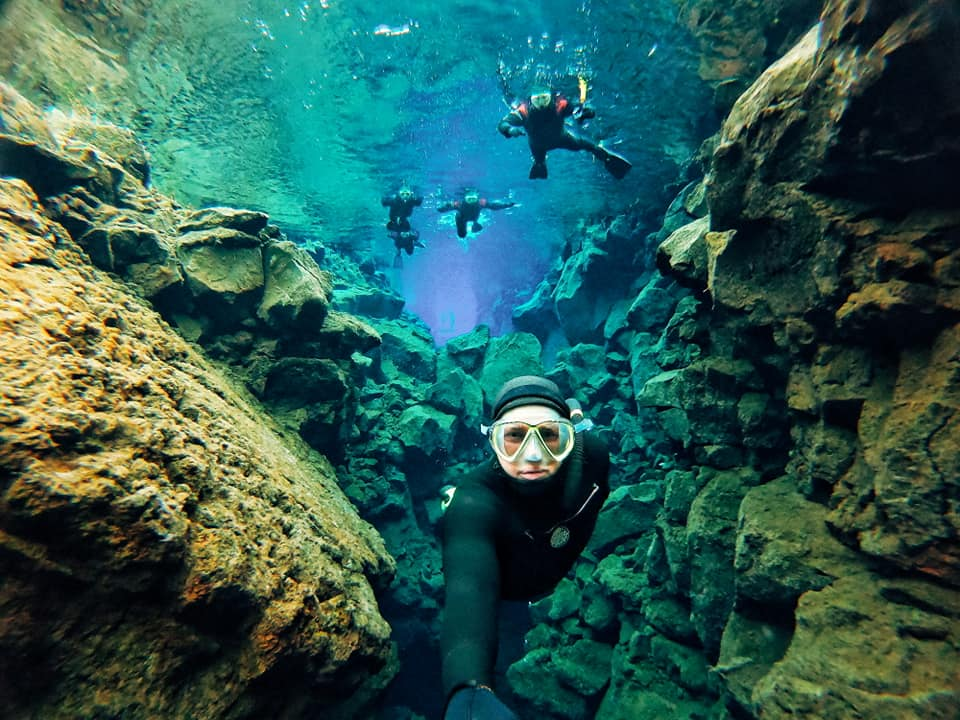
In the same national park there’s a fissure filled with glacial meltwater that has been filtered through lava rock for decades. The result is some of the clearest water on earth, with visibility often over 100 metres. Snorkelling or diving in Silfra in a drysuit means floating between two continents, over sapphire-blue depths, in water that’s around two degrees all year. It’s surreal, completely silent and far easier than it sounds. A guided tour handles everything, and you’ll want a hot pool afterwards.
Drive the South Coast
The south coast is Iceland’s greatest hits, and it’s best enjoyed slowly over two or three days. There’s Seljalandsfoss, where you can walk behind the falling water, and Skógafoss, a wall of white water with a staircase to the top. At Reynisfjara the black sand beach is framed by basalt columns and sea stacks. Treat the waves with real respect here, because they’re notoriously unpredictable. Then there’s the moss-covered lava of Eldhraun, which looks like a velvet sea of green.
Further east, Jökulsárlón Glacier Lagoon is the coast’s finest moment. Icebergs break off Breiðamerkurjökull glacier and drift slowly towards the sea, some milky white, some an almost unreal electric blue. Just across the road, on Diamond Beach, chunks of ice wash up on the black sand and shine like scattered jewels, especially at sunrise. It’s one of the most photographed places in Iceland, and one of the very few that lives up to it.
Hike a Glacier
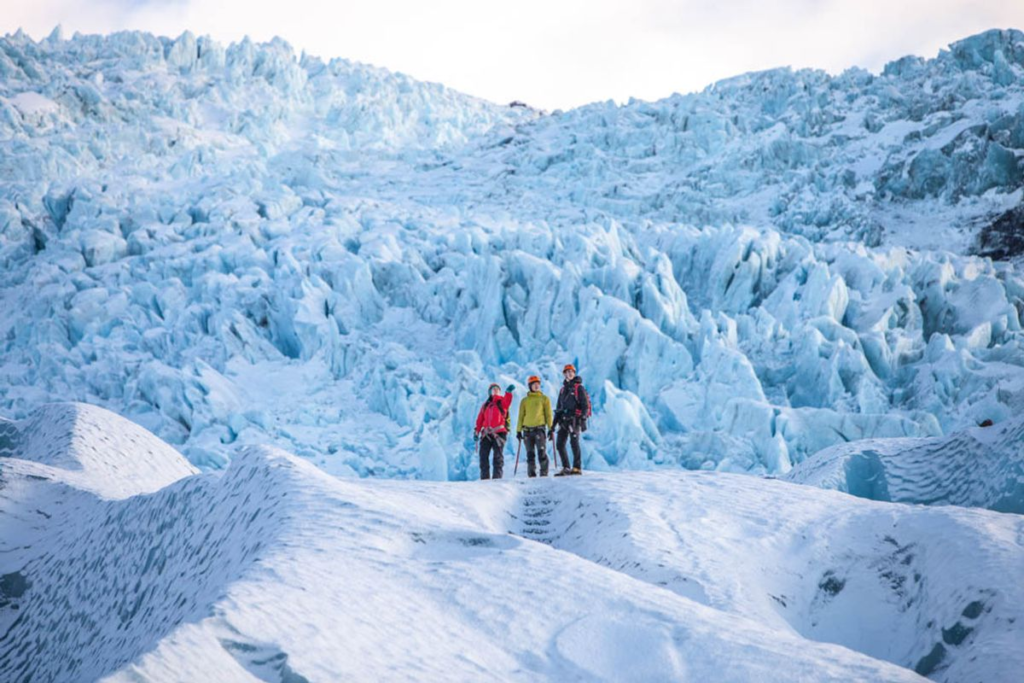
You don’t need to be a mountaineer to walk on ice. Guided glacier hikes on Sólheimajökull, on the south coast, or in Skaftafell take you onto the glacier with crampons and an ice axe, past crevasses, blue-ice ridges and moulins carved by meltwater. It’s a properly exhilarating half day, and a reminder of how quickly these landscapes are changing.
Ride an Icelandic Horse
Icelandic horses are small, sturdy, endlessly charming and descended from the horses the Vikings brought over more than a thousand years ago. They’re the only breed with the tölt, a smooth fifth gait that feels almost like gliding. A ride through lava fields or along a black beach is a lovely way to slow down, and it’s suitable for complete beginners. Many farms around Reykjavík and the south offer private rides.
Explore Snæfellsnes, Iceland in Miniature
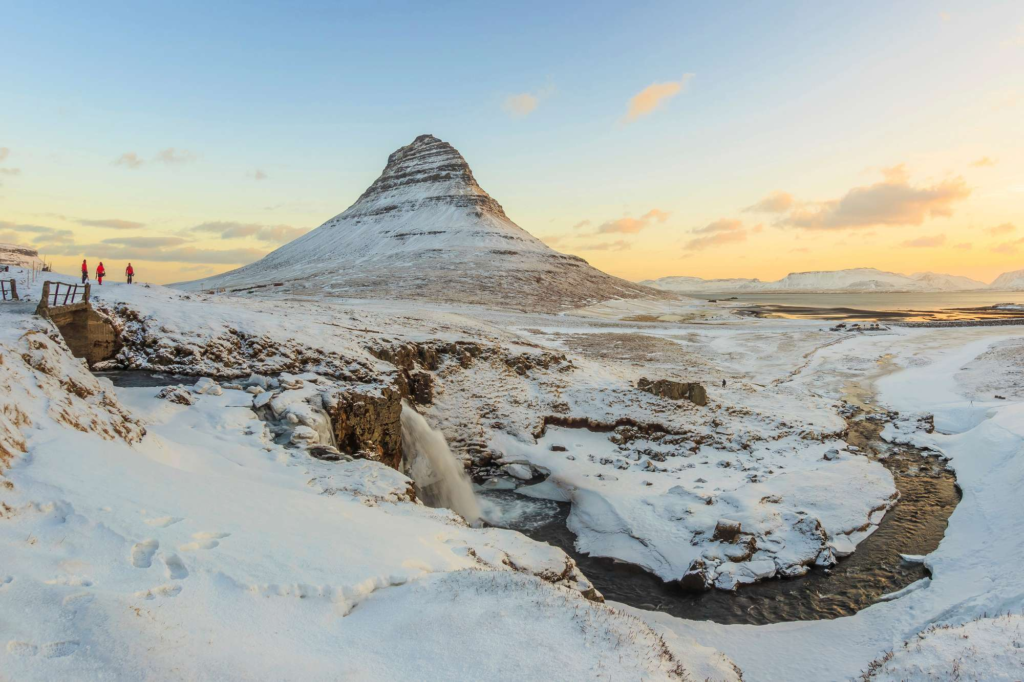
Two hours north of Reykjavík, the Snæfellsnes Peninsula packs almost every Icelandic landscape into one compact loop. There are black churches and golden beaches, lava fields, seal colonies and Kirkjufell, the cone-shaped mountain with its waterfall that you’ll already know from photographs. The whole peninsula sits under the Snæfellsjökull glacier, the setting for Jules Verne’s Journey to the Centre of the Earth. It’s a perfect two-day detour, and far quieter than the south coast.
Discover the Highlands
In summer, the interior opens up and Iceland reveals its wildest side. Landmannalaugar is famous for its multicoloured rhyolite mountains and natural hot river. Þórsmörk is a glacial valley of birch forest and braided rivers. Kerlingarfjöll is all steaming vents and painted peaks. None of these places are reachable in a standard hire car, so go with a Super Jeep guide or base yourself at Highland Base. These are the landscapes most visitors never see, and they’re the ones you’ll talk about for years.
Go Whale Watching in the North
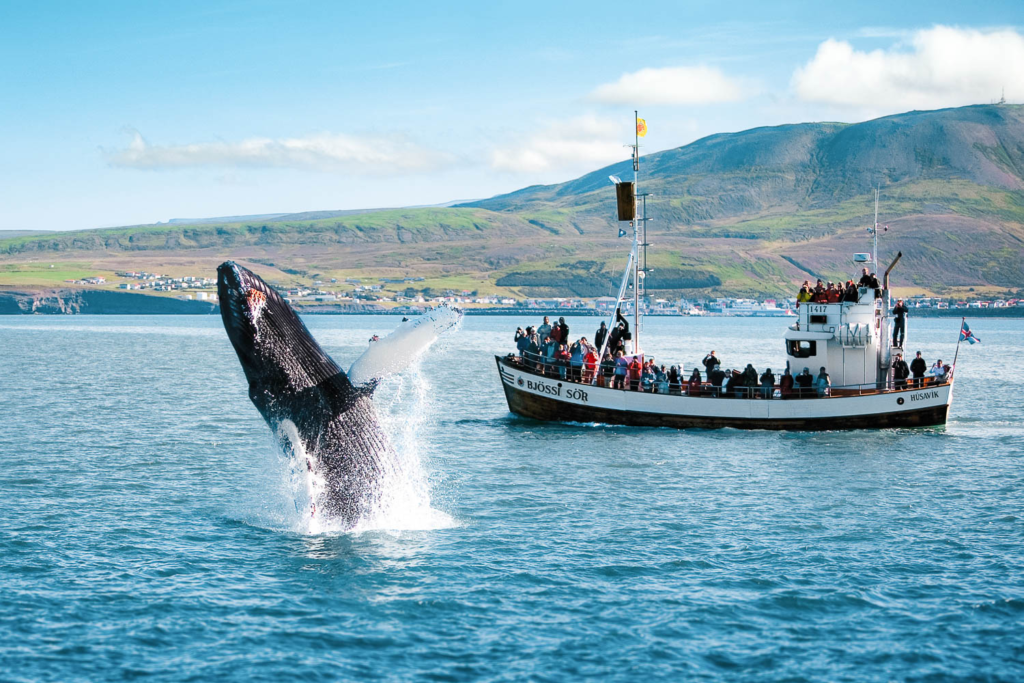
Húsavík is often called the whale-watching capital of Europe. Humpbacks, minke whales, dolphins and, if you’re lucky, blue whales feed in Skjálfandi Bay in the summer months. Go on a quiet electric or traditional oak boat, wrap up warm and keep your eyes on the water. When a humpback breaches a few metres away, the whole boat goes completely silent.
Spend a Day in Reykjavík
Iceland’s capital is small, colourful and full of character, and it’s worth giving it a full day rather than just treating it as an arrival point. Start at Hallgrímskirkja, whose basalt-inspired façade has become a symbol of the city, and take the lift to the top for views over the coloured rooftops. Walk down Skólavörðustígur towards the harbour, stopping at design shops for Icelandic wool, ceramics and contemporary fashion. Then visit Harpa concert hall, whose glass façade breaks the light into ever-changing colours.
For culture, Reykjavík Art Museum’s Hafnarhús branch shows bold contemporary work. Marshallhúsið, a former herring factory on the harbour, now holds some of the city’s most interesting galleries. And do as the locals do: spend an hour at one of the city’s public pools, such as Sundhöllin or Vesturbæjarlaug. It’s the best way to see Icelandic life from the inside, and one of the cheapest luxuries in the country.
The Unforgettable Experiences
These are the moments worth building a whole trip around.
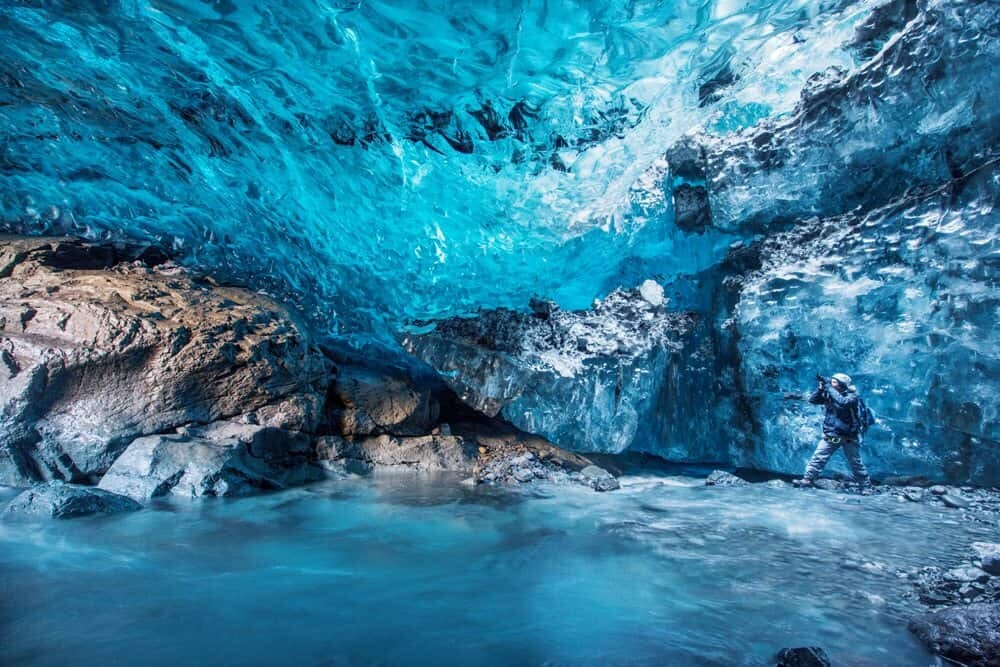
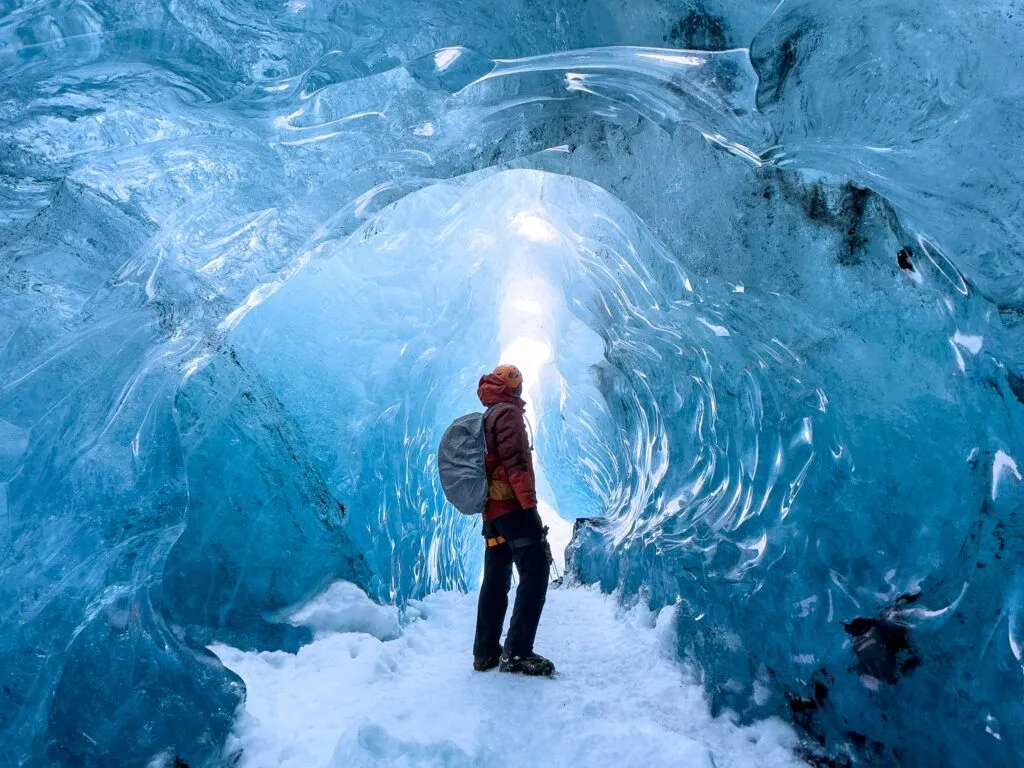
Enter an ice cave inside Vatnajökull. From roughly November to March, the meltwater channels under Europe’s largest glacier freeze into caves of astonishing blue ice. Walking inside one feels like being inside a gemstone. The walls ripple with layers of ancient ice and the light glows sapphire and turquoise. Every winter the caves form differently, so no two seasons are the same. Go with a specialist guide from the Jökulsárlón area, and book a private tour if you can, so you get the cave to yourself.
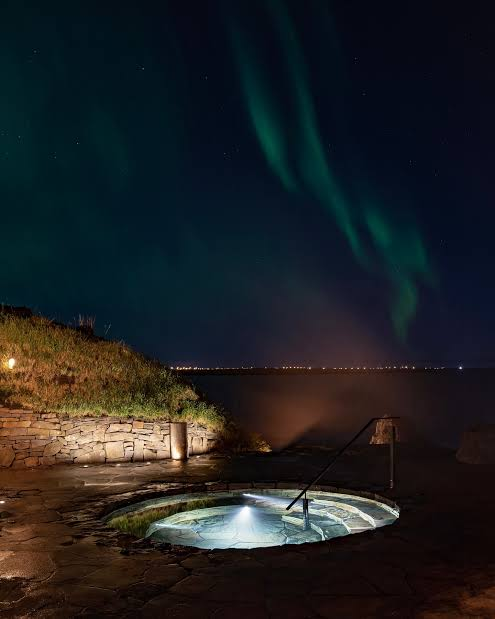
Watch the northern lights from a hot pool. You can see the aurora from a car park or a viewpoint, but watching it from warm geothermal water is a different thing entirely. The cold air on your face, the steam rising, and green and violet light rippling overhead combine into a kind of perfect sensory overload. The Retreat Lagoon, ION’s outdoor pool, the Highland Base Baths and Deplar Farm’s heated pool are among the best places in the country to do it. Clear, dark nights between September and April give you the best chance.
Fly over an active volcanic landscape. A helicopter flight over the Reykjanes Peninsula, where fresh lava fields have been forming since 2021, shows you Iceland at its rawest and newest. You’ll see black lava still steaming in places, craters, fissures and the coastline beyond. If there’s an eruption during your trip, flights may take you over glowing lava itself, subject to safety restrictions. It’s the most dramatic way to understand that this island is still being made.
Stay up under the midnight sun. In June, the sun barely sets. A hike or a drive at 1am, in the golden light of a sunset that turns straight into sunrise, is unforgettable. The Westfjords and the north are particularly magical at this time of year, and everything feels a little enchanted.
Take a private Super Jeep into the interior. Iceland’s monster-truck Super Jeeps, with their giant tyres and expert drivers, can cross rivers, snowfields and lava tracks that no ordinary vehicle could manage. A private day with a driver-guide in the highlands or on a glacier means you go where you want, stop when you like and hear local stories along the way. It’s the most luxurious way to see the wilder side of the country.
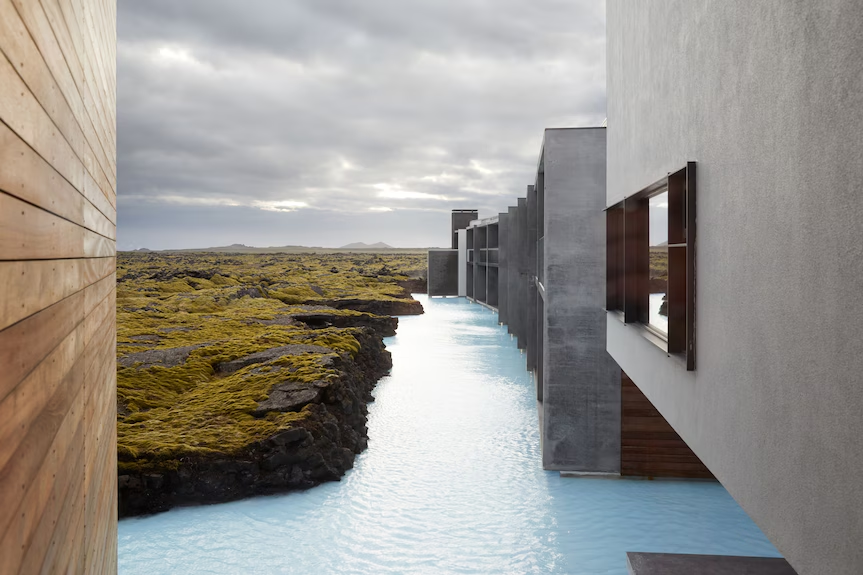
Have a lagoon to yourself at The Retreat. Book a Lagoon Suite, run yourself a bath in your own stretch of geothermal water at midnight, and watch the steam drift over the lava under a dark sky. If you only splurge once in Iceland, make it this.
Where to Eat
Icelandic cooking has been transformed by a generation of chefs who look to the island’s own larder: lamb that grazes wild on mountain herbs, line-caught cod and langoustine, Arctic char, wild berries, skyr, seaweed, and rye bread baked slowly in geothermal ground. Reservations at the best tables go fast, so book as soon as your dates are set.
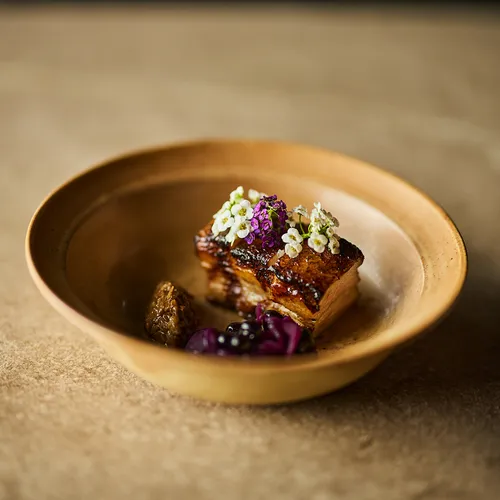
Dill was the first restaurant in Iceland to win a Michelin star, and it holds one again in the 2026 guide. Chef Gunnar Karl Gíslason’s long tasting menu is a quiet, considered meditation on Icelandic produce, with fermenting, smoking and foraging all in play. It’s still the benchmark.
ÓX is the most intimate starred meal in Reykjavík. It’s a tasting counter with barely more than a dozen seats, hidden behind another restaurant, and dinner starts in a retro lounge inspired by the homes of the chef’s grandmothers. The experience is personal, playful and deeply rooted in Icelandic tradition. It’s also one of the hardest tables in the country to book.
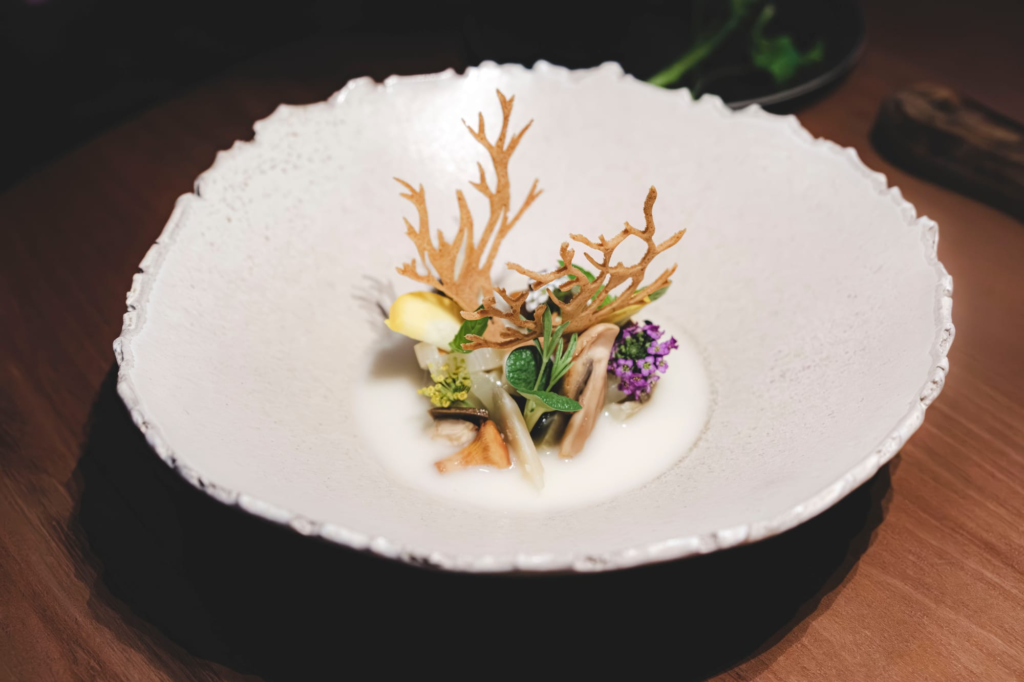
Moss, at The Retreat at Blue Lagoon, serves a seasonal tasting menu with sweeping views over the lava fields. Book the kitchen’s table for a front-row view of the chefs at work. It’s worth the drive from Reykjavík, even if you’re not staying at the hotel.
Matur og Drykkur reinvents traditional Icelandic dishes with real wit and is recommended in the Michelin Guide. Think cod’s head, smoked lamb and old-fashioned recipes made thoroughly modern. Hosiló is a tiny, relaxed spot with a short, ever-changing menu, and it’s where Reykjavík’s own food lovers go. TIDES at the EDITION is ideal for a polished seafood dinner beside the harbour.
Outside the capital, look out for farm-to-table restaurants in the countryside, often run in converted barns or greenhouses. Friðheimar, a tomato farm on the Golden Circle, serves lunch among the vines and is a wonderfully cosy stop on a winter day.
A note on etiquette: service is included in Iceland, and tipping isn’t expected.
Practical Notes for a Smooth Trip
Getting around. For summer road trips, a 4×4 gives you the most flexibility. In winter we’d recommend a private driver or guided tours, because the weather changes fast and roads can close at short notice. Always check road and weather conditions before setting off each day.
How long to stay. Five days is enough for Reykjavík, the Golden Circle, the south coast and a lagoon or two. Seven to ten days lets you add the Highlands, the north or Snæfellsnes without rushing. Resist the temptation to drive the entire Ring Road in a week. Iceland rewards depth far more than distance.
Budget. Iceland is expensive, and luxury Iceland even more so. The good news is that the country’s best experiences, from the landscapes and waterfalls to beaches and public pools, are free or very cheap. Spend your money on the hotels and the guided experiences you can’t do alone, and the rest takes care of itself.
Volcanic activity. Eruptions on the Reykjanes Peninsula have been fairly frequent since 2021, but they’re generally localised and well managed, and Keflavík airport has kept operating normally throughout. The affected area is small, and the rest of the country is unaffected. Book flexible rates for anything near Grindavík and the Blue Lagoon, and check the official updates before you go.
What to pack. Waterproof outer layers, warm merino base layers, a woollen hat, gloves, good walking boots, a swimsuit and a good eye mask for summer. In winter, add microspikes for icy paths. And bring a reusable water bottle: Icelandic tap water is some of the purest in the world.
The Last Word
Iceland is a country that changes the way you see things. It makes you notice light, weather and silence, and how small you are next to a glacier. The joy of travelling here now is that you no longer have to choose between wilderness and comfort. You can spend the day on a glacier and the evening in a lava-walled spa, cross a frozen highland plateau and fall asleep under the aurora in a beautiful room.
Go slowly. Leave space for the weather to change your plans, because it will. And make sure, at least once, that you’re lying in warm water under a dark sky when the lights begin to move. That’s the moment you’ll come home talking about.