I didn’t believe in acupuncture. Then Josh read my pulse and sent me home with a knee that had stopped hurting.
There are people who have always known about acupuncture, who have grown up with it, who consider it as unremarkable as paracetamol. I am not one of those people. I arrived at The HVN on Knightsbridge with the particular mix of curiosity and cautious optimism that belongs to first-timers who have heard enough from enough people to finally stop putting it off. What I hadn’t accounted for was leaving with the urge to book three more sessions before I’d even reached the pavement.
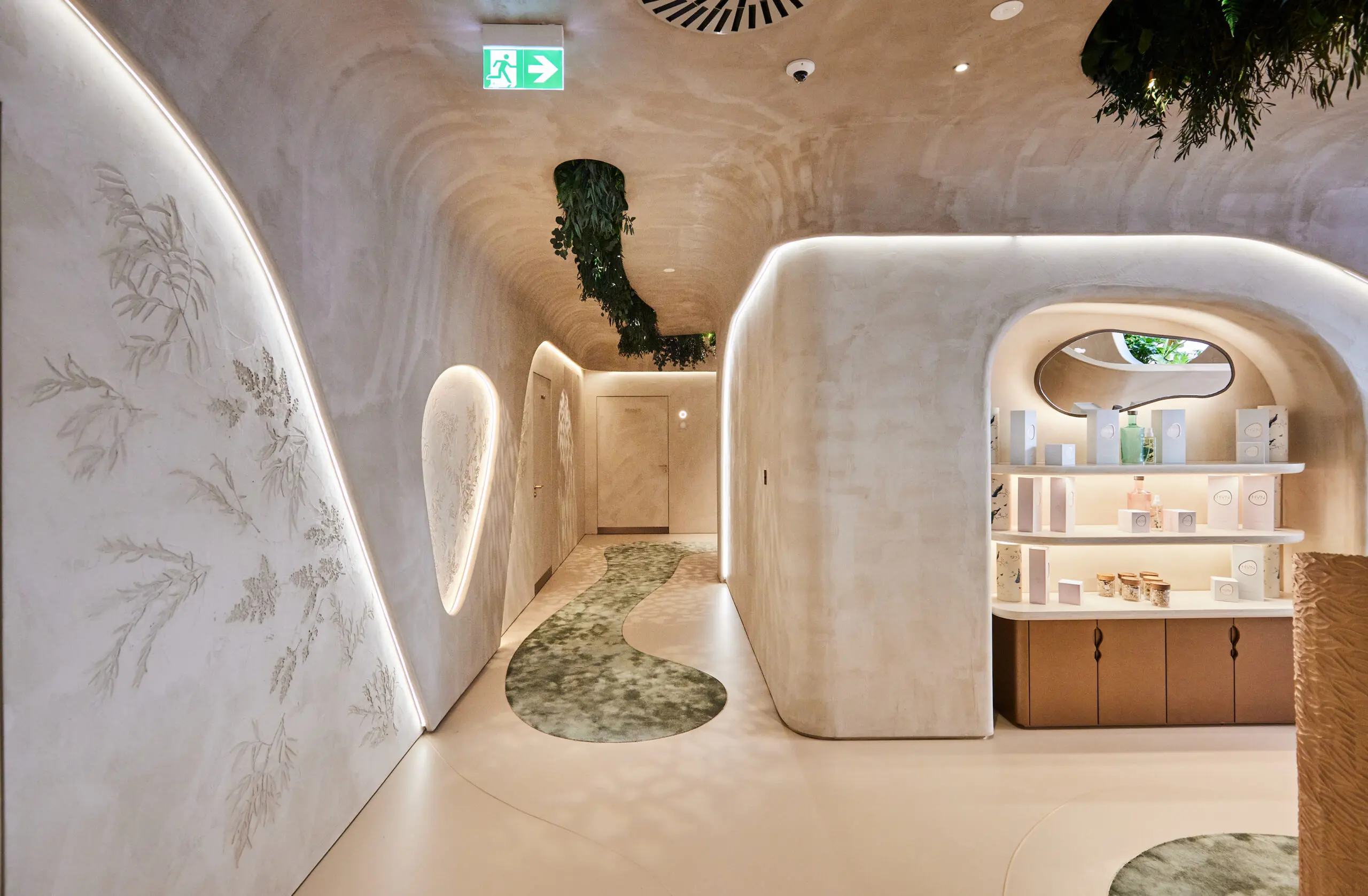
The HVN, pronounced “haven”, which tells you everything, sits at 57-63 Knightsbridge behind a Grade II listed facade that gives nothing away. Inside, the logic is different entirely. The interiors draw from Shinrin-Yoku, the Japanese practice of forest bathing, and the effect is felt immediately: real foliage, circadian lighting that shifts like sun through a canopy, a woody grounding scent fed through the whole space. The team moves quietly. I noticed my shoulders drop somewhere between the entrance and the desk, before a single word had been exchanged. The HVN has understood that arriving at a treatment already half-relaxed makes what follows land differently, and has built an environment that does that work without making a fuss about it.
Thirty minutes that shifted how I understood my own body
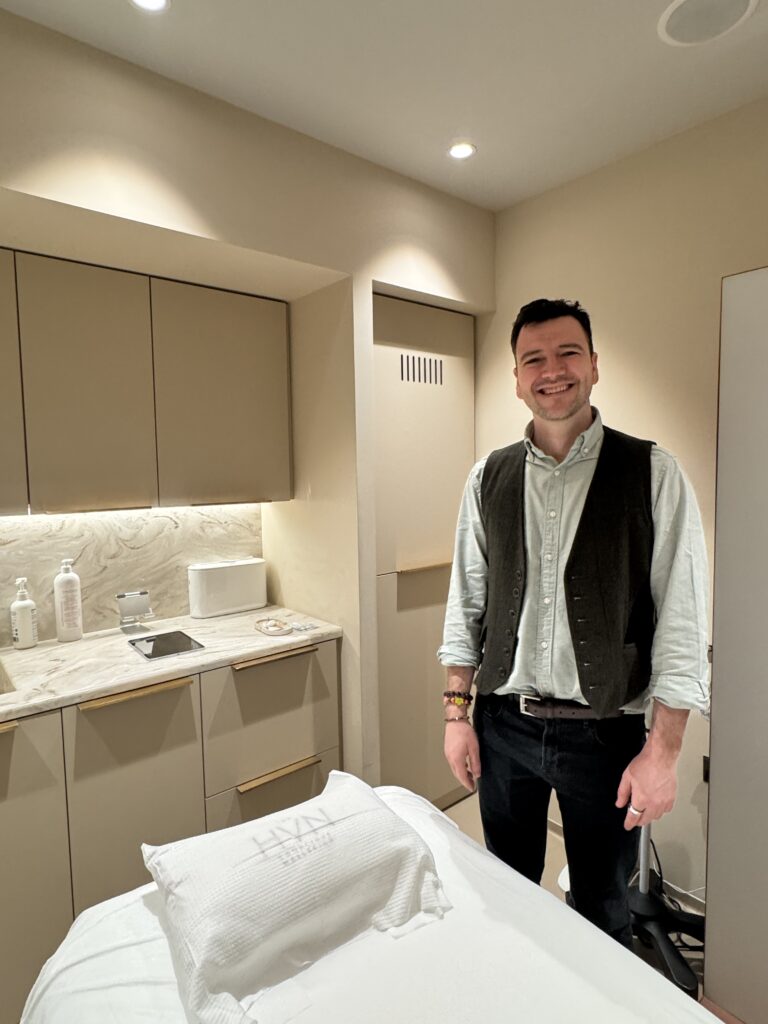
Josh, a first-class honours graduate from the International College of Oriental Medicine with a practice spanning musculoskeletal pain, women’s health, mental health, fertility, and classical acupuncture, doesn’t begin with the needles. He begins with a conversation. A real one, unhurried and curious, that ran close to thirty minutes. He wanted to know about sleep, stress, where energy seemed to go fastest, what I’d actually come in hoping to address. He listened in the way that people do when they’re building a picture, not ticking boxes.
What I hadn’t expected was the BaZi chart. Drawing on Chinese astrology and the Five Elements framework to map constitutional tendencies and health vulnerabilities across a lifetime, it positions the body not as a set of isolated symptoms but as something shaped by longer-running patterns. Josh walked me through mine with care. It wasn’t a script. He had looked at it beforehand and pointed to areas worth watching over time, framing it as useful information rather than a verdict.
What stays with me from that part of the session is the quality of his enthusiasm. He talks about Traditional Chinese Medicine the way people talk about something they’re still actively discovering, not a practitioner delivering a pitch but someone genuinely absorbed by a subject. He teaches as well as treats, and that shows in the way he explains things: precise without being cold, engaged without being a lot. By the time we’d finished talking, I understood more about how TCM actually works than I’d ever managed to gather from reading about it. The idea that the body runs on channels of energy, that imbalances in those channels show up as physical and emotional symptoms, that a practitioner can read them through the pulse had always felt abstract. That afternoon, it didn’t.
The twelve channels
The pulse reading has no real Western equivalent. Josh placed three fingers on each of my wrists in sequence, working through the positions that correspond to the twelve main channels of energy in the body. He was quiet, concentrated, listening. It took several minutes.
He found weakness in the kidney energy. In TCM, the kidneys hold the body’s deepest reserves, the vitality that stress draws down when it has already burnt through the surface supply. Josh said this kind of depletion is common in people carrying sustained stress without adequate recovery. That it tends to show up as a low-grade fatigue that never quite clears, a sense of operating slightly under capacity so familiar it no longer feels like a problem. He wasn’t alarming about it. He simply said what he’d found, explained why it made sense, and described what he planned to do.
For anyone starting acupuncture for the first time, or working on something specific, he recommends three sessions back to back, then one monthly. The first three let the body build on each treatment before the effects dissipate and the monthly sessions keep that work going. He explained the reasoning rather than just issuing the instruction, which made it feel like advice rather than upselling.
The needles, and what actually happens
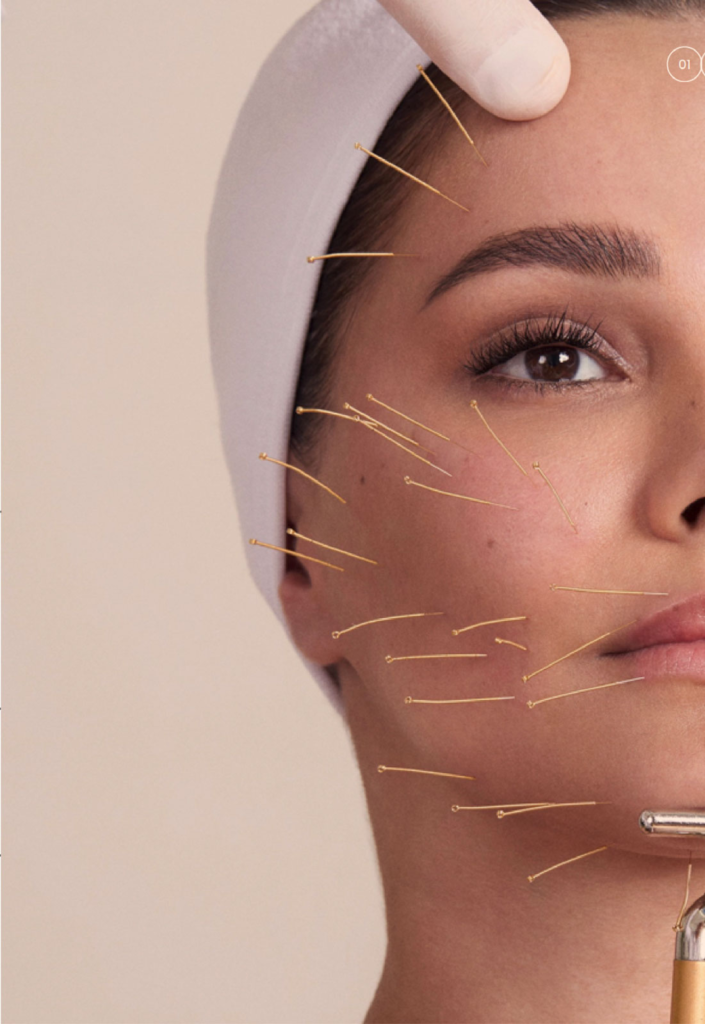
Needles in the wrists, ankles, and along the legs. I’d been curious about this part. Enough converted friends had told me it was nothing like I was imagining. They were right. There was no pain. At one point, the faintest whisper of sensation, somewhere between a pinprick and an awareness of pressure, that was gone before I’d fully registered it.
What came next was harder to describe. Lying still, I became aware of something in my body adjusting, a quality of circulation opening, something that had been running tight beginning to loosen. It wasn’t dramatic. It was quiet, internal, quite unlike anything I’d felt in a treatment before. The closest I can get is the body organising itself, channels finding their level. Whether that framing holds up scientifically, something was happening. I could feel it clearly.
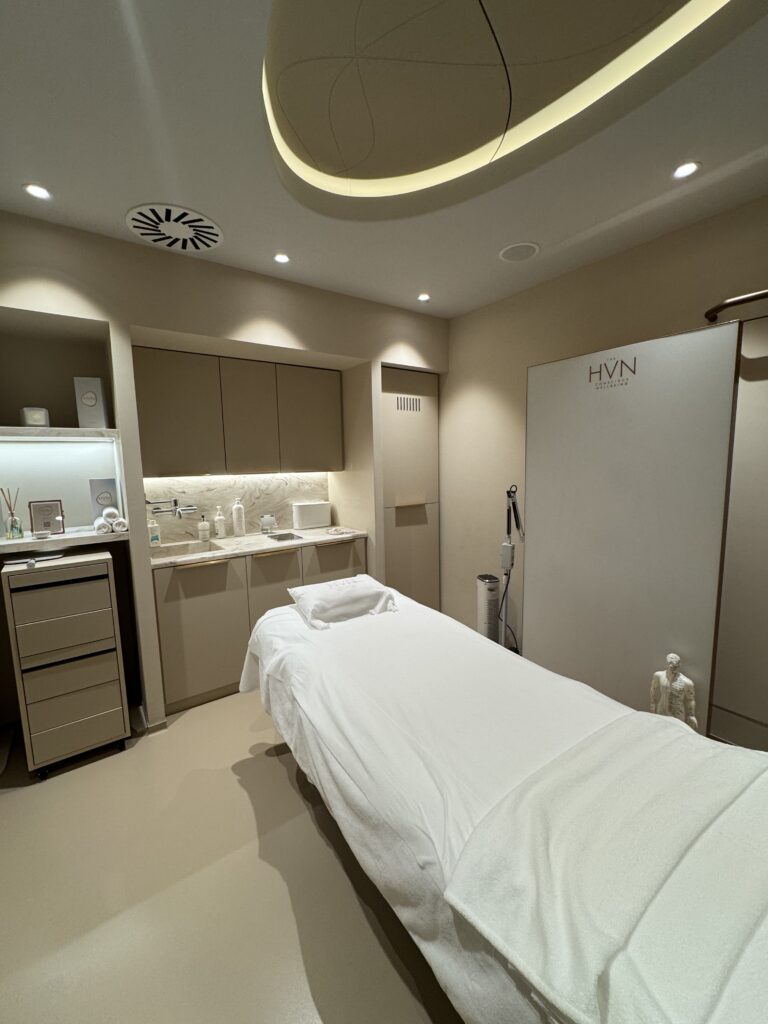
I was there for twenty to thirty minutes. Josh checked in briefly and otherwise left me to the quiet. The room was still, and the atmosphere The HVN has built in its public spaces carried through into the treatment room. No sense of the clock. No awareness of the city. The nearest comparison I have is the deepest point of a meditation, when the body has genuinely let go, except that it arrived without any effort on my part.
What Josh explained, and why it mattered
He narrated every step before he took it. Where each needle was going and why. Which channel it addressed and what it was expected to do. That kind of ongoing explanation could feel clinical or intrusive from the wrong person. From Josh it did two things at once: it was practically reassuring in that I knew exactly what was happening to my body, and it was genuinely interesting. I left not just having had a treatment but having learned something about how I work. That combination of care and knowledge worn lightly is not something you find everywhere.
His practice sits where classical TCM meets evidence-led modern acupuncture. He treats root causes as well as immediate symptoms, building a picture of the person in front of him rather than pattern-matching to a complaint. The BaZi chart, the pulse diagnosis, the long conversation at the start, none of it is window dressing. All of it feeds into what he does with the needles.
Leaving with more than I came in with
I hadn’t mentioned my knee. It had been bothering me for weeks, not acutely, just persistently, the low-level ache that becomes wallpaper. I only noticed it was gone when I stepped back onto Knightsbridge. Not reduced. Gone. That kind of result, unrequested, specific, and immediate, is what makes people evangelical about acupuncture in a way that can be hard to take seriously until you’ve experienced it yourself. I arrived genuinely open but quietly unconvinced. I left a convert.
There was also something else harder to name, a clarity I carried out that I hadn’t walked in with. The quality of mental organisation I associate with a very good night’s sleep, or finishing a long swim. Things feeling settled. It’s the kind of effect that resists precise attribution, which is probably why it takes experiencing it to believe it’s real.
The HVN is one of my favourite wellness spaces in London, and I say that as someone who has spent a fair amount of time in wellness spaces across the city. It doesn’t perform luxury. It doesn’t need to. What it has is a team that is genuinely good, not just credentialled but actually excellent in practice, and a space that treats the quality of your experience as seriously as the treatment itself. In a city full of options, that particular combination of environment, expertise, and quality of attention is far rarer than it should be.
I’ll be back for the second session. And the third.