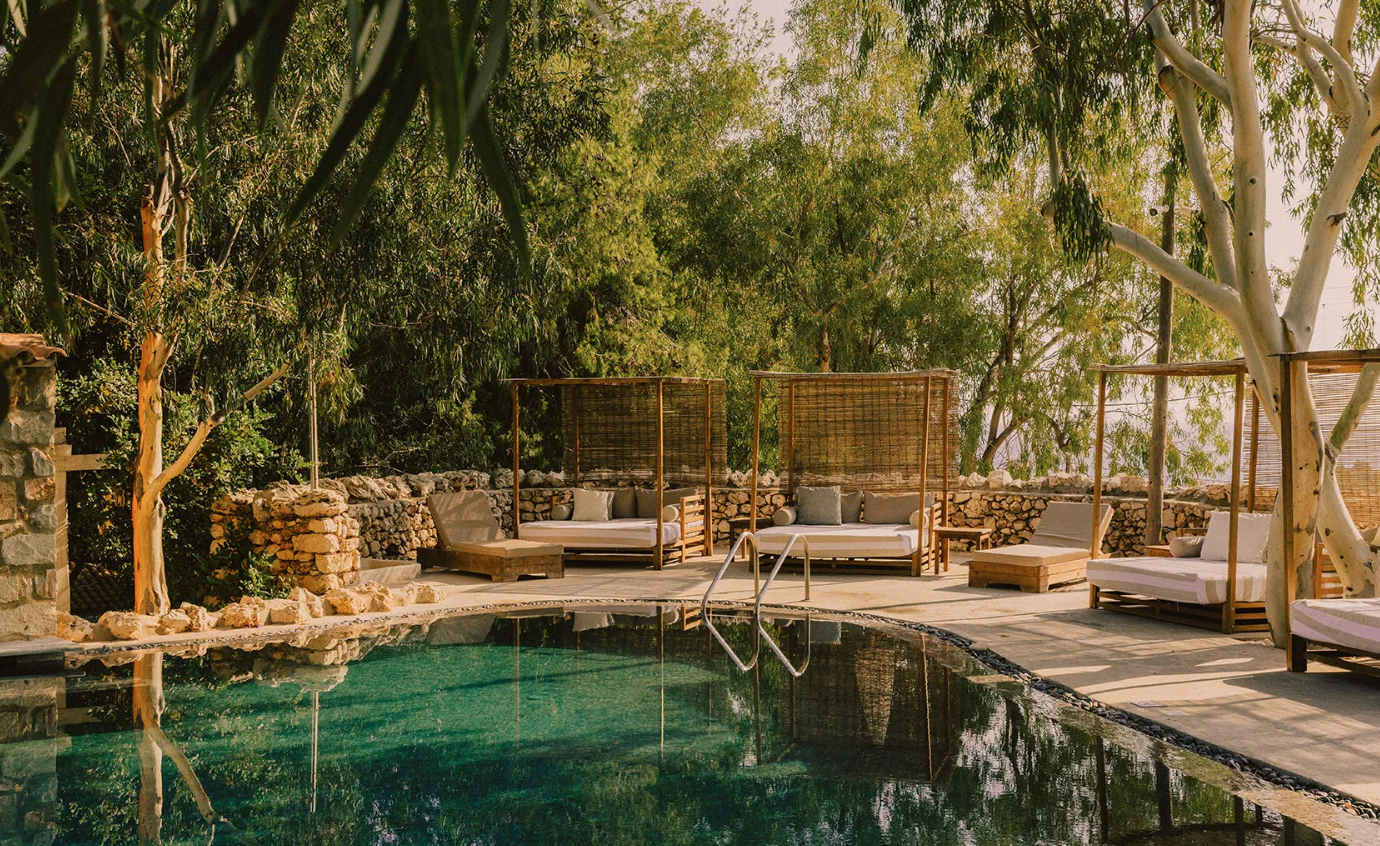
Arriving at Peligoni Club feels a little like slipping into a private postcard. The road down from the hill offers glimpses of the Ionian spreading out in an indifferent, cobalt hush; then the club reveals itself as a cluster of whitewashed terraces, sun-bleached timber and low-slung architecture that leans into the cliff rather than pretending to conquer it. On a first evening, with grapefruit-coloured light folding into the sea, the place hums with a casual, well-bred energy: widely scattered laughter, the clink of glasses, and a soundtrack that moves from languid balearic to something more celebratory as the sun sinks.
Verdict in one line: Peligoni is a clubby, design-conscious retreat for those who want their island escape to be equal parts barefoot sophistication and sociable theatre.
Design and First Impressions
There is an easy coherence to the aesthetic here. The architecture nods to Cycladic logic but with a less canonical, more relaxed hand: shallow arches, timber pergolas, cushions in faded indigo and terracotta, and a palette that reads like a travel-worn shirt. It is the sort of place that feels intentionally unshowy, where sun-bleached wood and raw plaster look like decisions rather than defaults. Rooms and villas are scaled for views and lounging: terraces that invite long cups of coffee and longer conversations, sofas that slope so you can nap and still watch the sea. Landscaping is minimal but thoughtful; aromatic herbs and potted citrus give the terraces a lived-in Mediterranean scent. The overall effect is one of unforced elegance, the kind that makes you slow your shoulders and let the island hour do the work.
Setting the decor

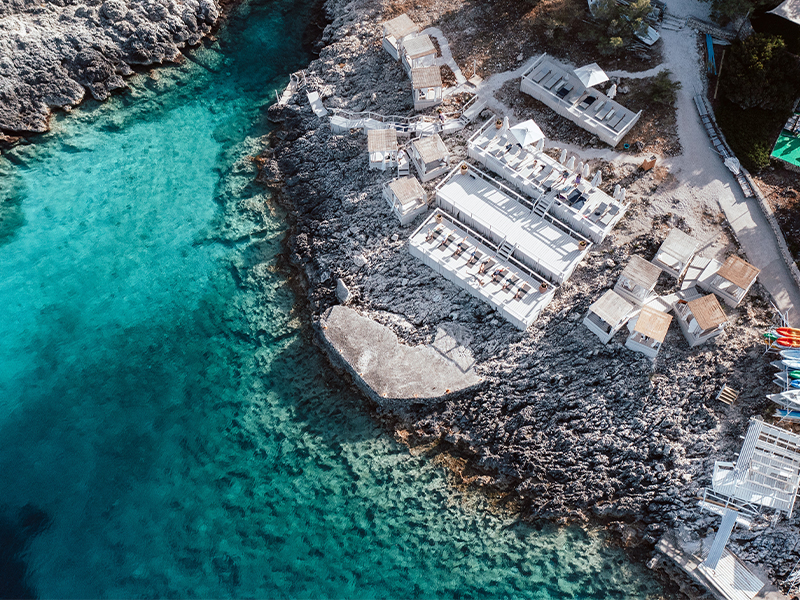
Peligoni’s appeal is not a single, showy amenity. It is a collection of experiences arranged for pleasure. There is a clifftop beach club that drops down to clear water, where cabanas and loungers are set in clusters and the food swings between rustic Greek plates and lighter, grill-focused fare. Boat excursions leave from a small marina and slice past secret coves, promising swimming and snorkelling in water that reads like glass. For those staying on the property, villas and suites range from intimate to generous; some offer private pools and all open onto terraces that feel purpose-built for long, easy days. The social calendar: sunset DJ sets, communal dining nights and occasional live music; gives the club a pulse without becoming overbearing.
What can you expect:
What it is like to live here for a week is different from how it looks in photographs. Morning is spacious and leisurely; staff serve coffee with a smile and breakfast that leans to wood-fired breads, tart yogurt and seasonal fruit. Days are modular. You can hardly resist the beach club, where the water is shallow and forgiving, or renting a boat to explore the coastline where the island’s geology is at its most theatrical. Food performs exactly as you hope: fresh fish simply dressed, salads that are luminous with local olive oil, and small plates that pair well with the effortless wine list. Service finds a rhythm between warm attentiveness and letting guests be. Nights are convivial without feeling staged; tables are placed so that strangers can become companions and good dinners extend into slow, shared conversations.
The Wow Factor
There are moments here that settle into memory. The first is the sunset from the main terrace where the sky fractures into bands of mauve and saffron and everyone; no matter how indifferent, how private; seems to look up. Another is the intimacy of the bay below, which is at once private and inviting: you step from a wooden platform into water that promptly sculpts the light, and for an hour or two you feel exquisitely small in a very beautiful world. The club’s informal programming is strikingly well judged. A late-afternoon DJ set does not turn the space into a nightclub; instead it lends a slow-build warmth to the hour leading into dinner. Small details; soft throws on cooler evenings, carefully chosen ceramics on the tables, staff who anticipate a need before you name it; add up to an experience that feels both curated and human.
What could be better
No place is perfect and Peligoni’s character makes certain compromises inevitable. The very features that give it charm; its clustered terraces, stepped pathways and cliff-side geometry; mean it is not well suited to those with limited mobility. During peak season the convivial atmosphere can verge on noisier than some guests might prefer; privacy here tends to be social rather than hermetic. If you want discreet, buttoned-up five-star service with an obsessive attention to ritual and minutiae, this is not your ideal. The design ethos leans toward relaxed rusticity rather than immaculate gloss, so you will find raw edges and practicalities: outdoor furniture with weathered patina, doors that creak in a pleasingly timeworn way. These are aesthetic choices as much as maintenance notes; whether they charm or annoy will depend on your appetite for authentic, lived-in style.
Who Will Love Peligoni and Why
This is a place for people who travel in groups, who like the idea of serendipity in their evenings and who value social design as much as a good bed. Couples who want sunset drama, groups of friends who prize a strong beach day and a lively evening, and families who appreciate communal spaces for shared moments will all find material here. The club’s tone is aspirational but not intimidating; it rewards sociable travellers who enjoy meeting others and who like to balance private downtime with organized opportunities for fun. If you prefer your travel to be both comfortably stylish and conversational, Peligoni is pitched to your tastes.
Conclusion
Staying at Peligoni is to choose a particular rhythm: slow mornings, sunlit afternoons, and evenings that invite conversation and gentle revelry. It does not trumpet exclusivity with velvet ropes; rather it cultivates a clubby warmth that makes you feel welcomed into a ritual of good food, better views, and communal ease. For travellers who want their island respite to be sculpted by design but softened by human scale, Peligoni offers a persuasive argument. It is not a place that insists on being photographed so much as remembered, and that small insistence—on experience over exhibition; may be the reason you find yourself planning a return before you have even left.