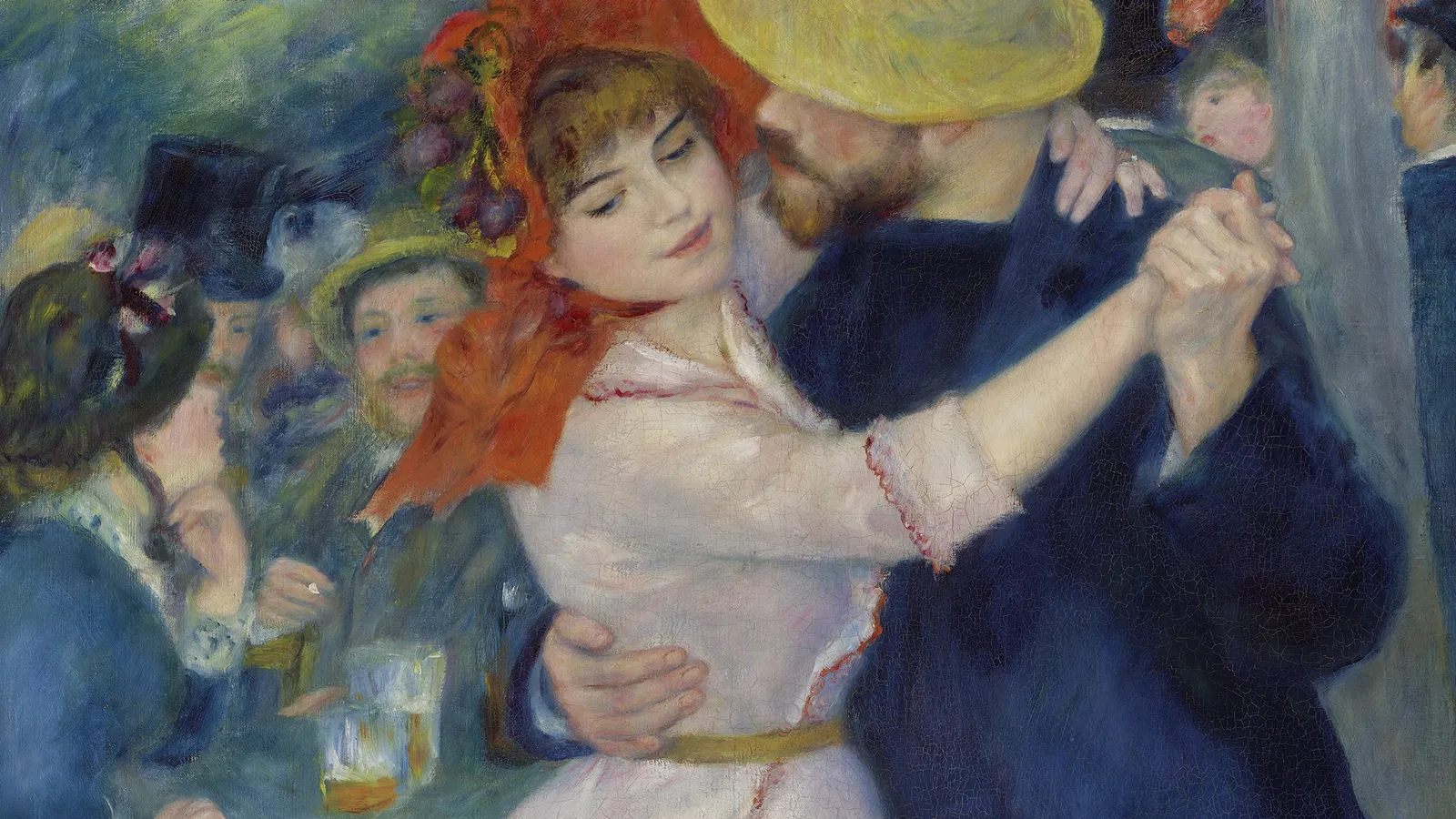
Renoir and Love brings 45 works and the UK debut of Bal au Moulin de la Galette to the National Gallery, and advance sales have already broken the Gallery’s record.
Renoir and Love opens with a painter who looks thoroughly unimpressed. The self-portrait that greets you, painted around 1875, shows Pierre-Auguste Renoir hollow-eyed and half-swallowed by a muddy brown ground. This is the man behind the picnics and the parasols? I stood in front of it longer than I expected to, partly out of surprise and partly because it works so well as a trick. You walk in braced for sweetness and get a sulk instead.
A sulking host and a six-room guest list
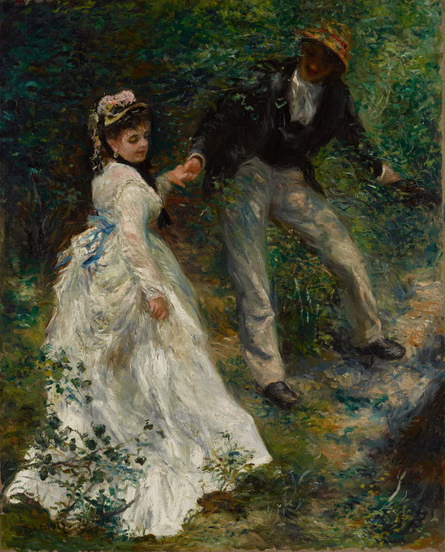
The timing is no accident. This is the most significant exhibition of Renoir’s work in the UK for 20 years, and the first devoted to him at the National Gallery since 2007. London has clearly been waiting. More than 22,000 tickets were booked within weeks of sales opening, a new advance-booking record for the Gallery that left the 2024 Van Gogh blockbuster far behind. After an hour in the rooms, I understood the queue.
For all that noise, the show itself is small. It has six rooms hung roughly in order, covering the two decades from the mid-1860s to the mid-1880s, with 45 works on loan from collections across the world. The exhibition is organised with the Musée d’Orsay and the Museum of Fine Arts, Boston. I like the restraint. Nobody is trying to wear you out before the good part.
The good part arrives quickly. By the second room the palette has lifted, the brushwork has loosened, and the light starts to pool on the canvases like spilled wine. Earlier pictures, such as the 1866 Mother Antony’s Tavern, show an artist still finding his footing. Here he finds it.
The wall that Bal au Moulin de la Galette deserves
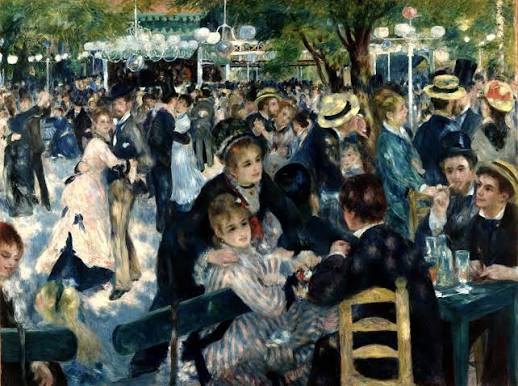
Then comes the painting everyone has come for. Bal au Moulin de la Galette (1876) has a wall to itself, which feels correct. It is making its UK debut exactly 150 years after it was painted, travelling from the Musée d’Orsay.
I had assumed I knew it. Everyone does. It has been on so many tote bags that the real thing should have been spoiled for me. It was not. Up close, it is the opposite of a postcard. The trees seem to move, the dresses swish, and individual conversations separate themselves from the crowd, each person caught halfway through a sentence or a glance. Reproductions flatten all of that. Go and stand in front of it.
Two dances and a painter changing his mind
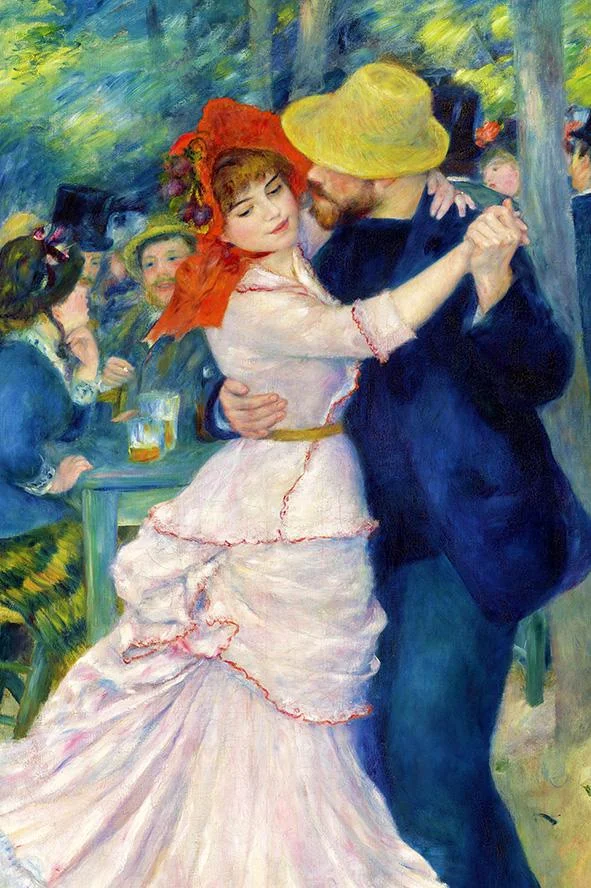
Two monumental canvases from 1883, Dance at Bougival and Dance in the Country, hang side by side with their couples caught mid-turn. They look like the party continuing. They are actually the moment Renoir starts to retreat from the shimmering extremes of Impressionism, with firmer edges and smoother, more sculpted figures. He had been looking hard at the Renaissance.
The Gallery’s own The Umbrellas sits right on that fault line. Reworked over several years, it carries both styles at once, and I found myself hunting for the exact point where one gives way to the other. I never found the seam, which is the best compliment I can pay it. The Great Bathers (1884 to 1887) commits fully to the new direction. Critics were unkind about that at the time. I am less sure they were wrong than the wall text would like me to be, but I admired the nerve.
Aline, Pierre and the Madonna question
The Family room slows everything down. Children beam from the canvases, all rosy cheeks and sunlit legs, often tucked among greenery. Motherhood (1885) shows Renoir’s wife, Aline Charigot, nursing their first son, Pierre, and it gives her the gravity and tenderness of a Madonna. After a room full of flirting and waltzing, it lands quietly and rather hard. Love here is not a dance. It is someone feeding a baby.
The last room asks you to sit down
The final room, Intimacy, is the one I would defend to anyone who wanted more fireworks. Familiar faces return, friends sit together, and their conversations stay out of earshot. Now and then a sitter looks straight out at you, as though you have walked in on something. After all the boating and dancing, there is a surprising pleasure in stillness.
This is a lovely argument for pulling Renoir out of the Impressionist group photograph, where he is usually lined up beside Monet, Degas and Pissarro. Alone, he turns out to be a painter who darkens, brightens, loosens and tightens, and who eventually argues with the very movement he helped invent. Leave time to circle back to the self-portrait on your way out. He looks a little less miserable the second time.
Practical information
Where: The National Gallery, Trafalgar Square, London WC2N 5DN (Sainsbury Wing)
When: 3 October 2026 to 31 January 2027
Tickets: £20 off-peak (Sunday to Thursday); £25 Friday and Saturday, and every day during the first two weeks. Under 18s go free, and Members go free. With advance sales running at record levels, book ahead.
Pay What You Wish: Each Friday evening from 23 October 2026 to 15 January 2027, you can pay from £1 upwards.
Book: nationalgallery.org.uk/exhibitions/renoir-and-love