Ibiza’s cult Mediterranean restaurant has moved into a former bank in St James’s. Between a smoky eel, an octopus as soft as butter and an oregano ice cream I’m still thinking about, it makes a good case against its critics.
Somewhere between the octopus and the oregano ice cream, our waiter stopped describing the food and started telling us where it came from. Which farm sent the beetroot. Why the ricotta is infused in-house. How the bar team makes its own spirits downstairs instead of buying them in. It was a weekday lunchtime in St James’s, the part of London where gentlemen’s shirtmakers and wine merchants have done things the same way for two centuries. And here was a restaurant from Ibiza explaining its sourcing with the passion most places keep for their wine list.
Jul’s London has been one of the most argued-about openings of the year. Some London critics have been severe about it. Its regulars are fiercely loyal. I went in with an open mind and an empty stomach, and I came out persuaded.
A bank vault that forgot to be serious
You arrive at 11 Waterloo Place, a handsome stone building just off Pall Mall that used to be the National Bank of Egypt. Outside, it is all heritage columns and the midday bustle of SW1. Step inside and the daylight drops away. Someone has turned the lights down and taken the formality out.
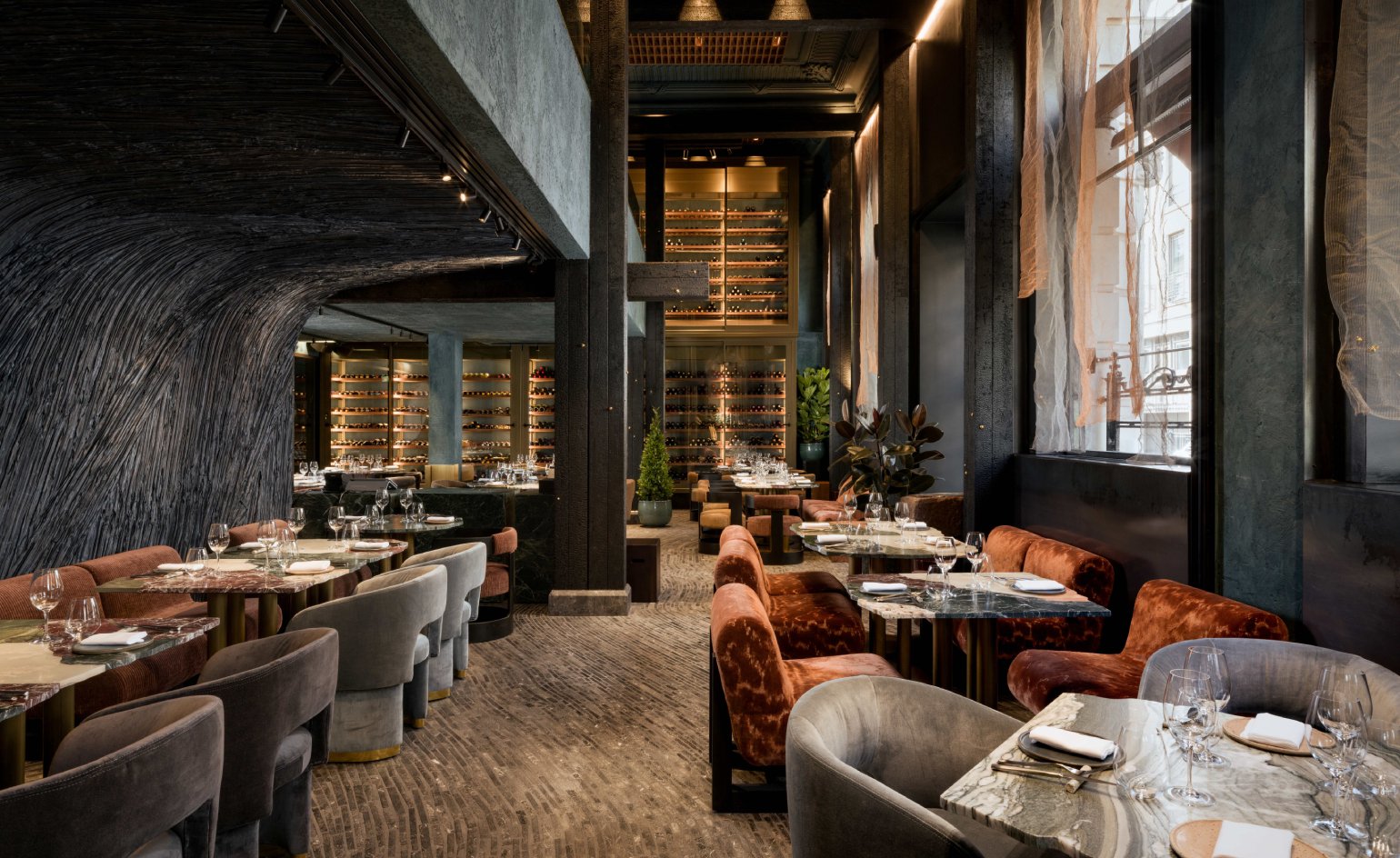
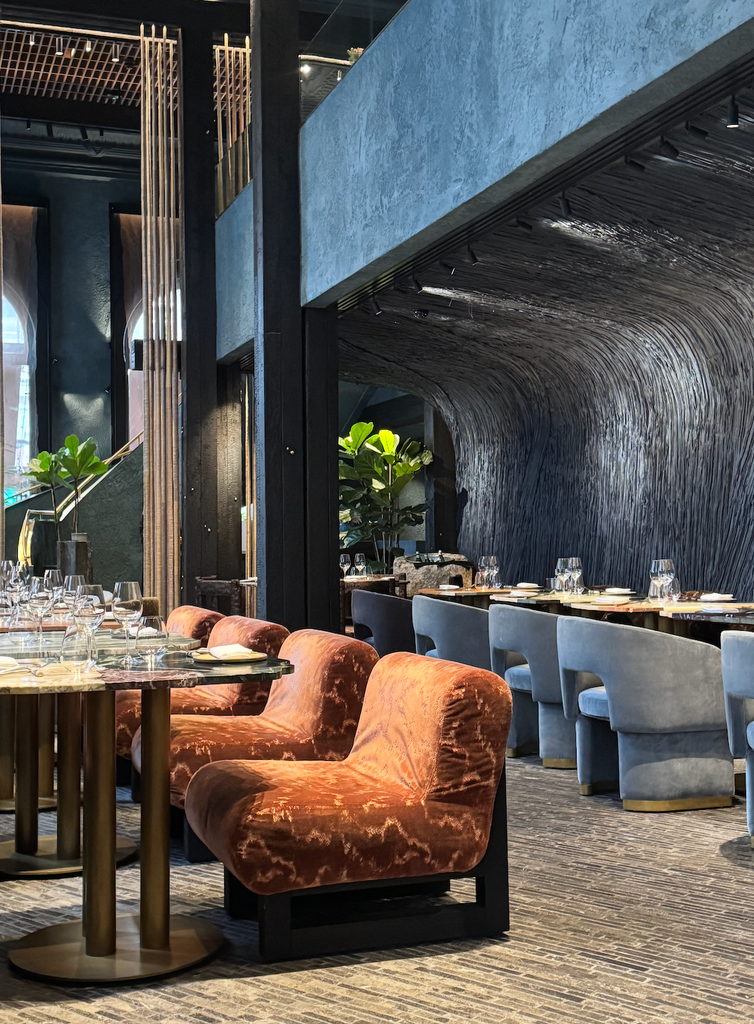
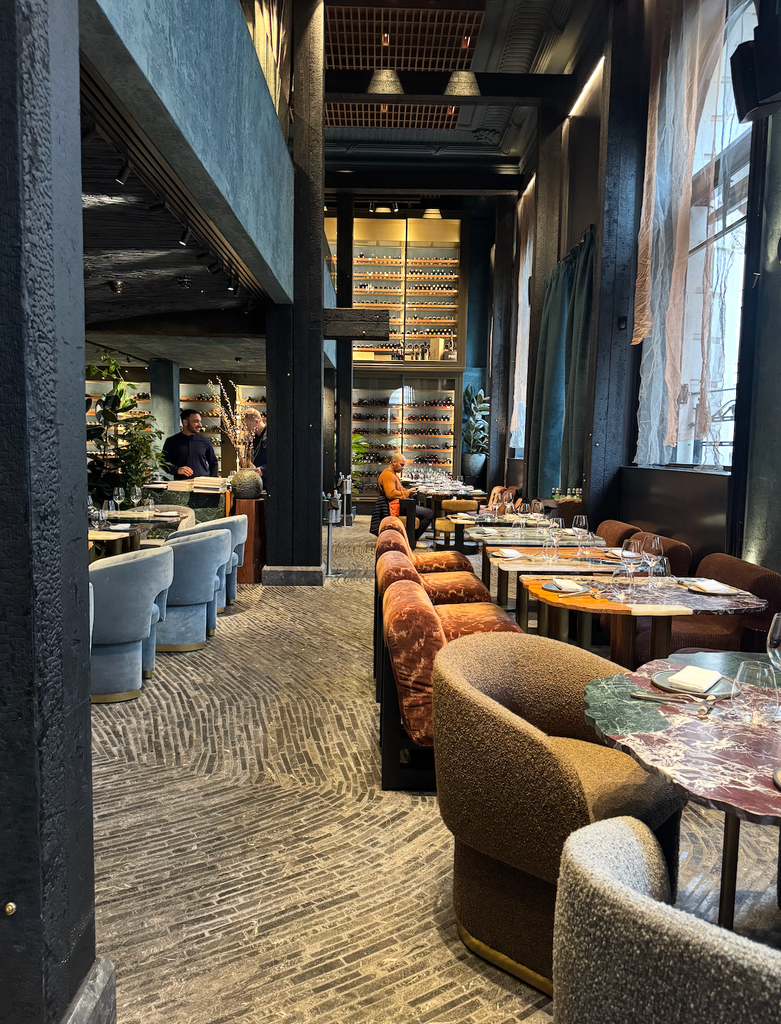
The room is dramatic in a way you rarely see in London. Veined marble and textured stone wrap around you, and the floor is scorched wood, dark and warm. The lighting stays low and amber even at lunchtime, so leaving the grey London afternoon behind feels like slipping into a Greek island cave for a couple of hours. Ceilings soar, a mezzanine looks down over the main floor, and a 6.5-metre glass wine wall rises through the centre of the room.
The wine wall gets the attention, but my favourite design choice was the kitchen. It sits behind glass, open to the dining room, so from our table I could watch the chefs plating, searing and finishing each dish. In a postcode that runs on discretion, it’s a bold move. It says the kitchen has nothing to hide, and over the course of lunch, it proved it didn’t. I love a restaurant that lets you see the work. It changes how you taste the food. You stop thinking of a dish as something that simply appears and start thinking of it as something someone made, minutes ago, for you.
The lunch crowd was very St James’s with a little Balearic polish. Two men in very good suits were quietly closing a deal over the bread. Three friends were clearly turning lunch into an afternoon. A couple at the next table looked like they’d taken the day off for each other. Downstairs is No. 11, the cocktail bar that keeps going until 2am. At lunch it’s a quiet promise of what the room becomes after dark.
Ibiza in the blood, London on the plate
Jul’s began in Ibiza in 2018, founded by Greek chef Christos Fotos with Jem Akyuz and his son Ilhan. The group has since opened Humain by Jul’s in Athens, and in Ibiza it runs its own two-hectare organic farm. That last detail matters, because the London kitchen has carried over the same philosophy. Rather than flying in Aegean produce, it works with farms around London, and the menu follows the seasons.
The cooking is Greek at heart and Mediterranean in reach, with modern technique and plenty of drama on the plate. You’ll find familiar anchors on the menu: a Greek salad with carob rusk, flatbread topped with slow-cooked lamb, grilled fish. Next to them sit more opulent plates of wagyu, charred octopus and lobster risotto.
This is where the critics have pushed back. Their argument is that the kitchen does too much: too many layers, too many twists, not enough of the simple purity that makes Mediterranean food so good. I understand the concern on paper. At the table, though, most of the twists I tasted earned their place. A few didn’t, and I’ll get to those. But a restaurant that takes risks will sometimes miss, and I’d rather eat at that table than at one that plays safe.
A cocktail menu that reads like a mood board
Our waiter recommended we start with the cocktails, and he was clearly proud of them. Downstairs, No. 11 is run by bar directors Vasilis Sgouromallis and Dimitris Karapanos, and it works almost like a laboratory, with its own distillation equipment. The team infuses and makes many of its own spirits and bases in-house. It’s the same mindset as the kitchen, just poured into a glass.
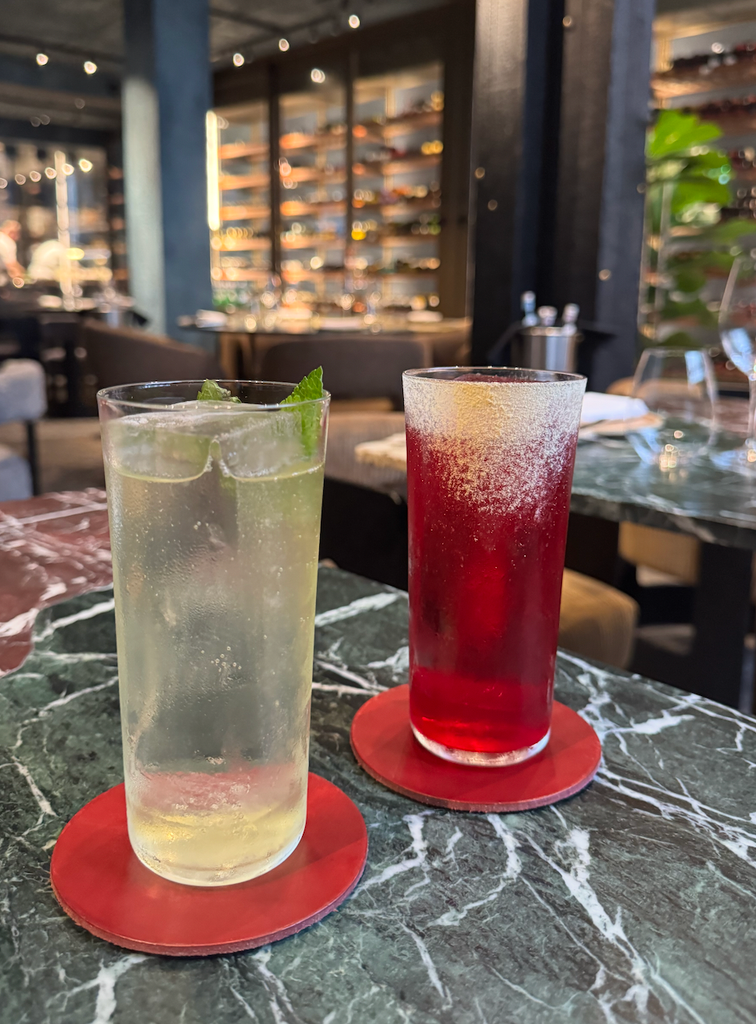
Lunch opened with the Ambrosia Spritz, the house welcome drink. It’s light and bright, a glass of sunshine that sets the mood before you’ve even opened the menu, and it’s just right in the middle of the day. The Arcadian Fizz did a similar job, its fresh mint cutting through a gentle sweetness. Both were a lovely, clean way to start a meal.
The menu is organised by mood, which I found charming and genuinely helpful. There are drinks for those who like things sweet, and drinks for those who like them bitter. Born Star sits firmly in the sweet camp. A plum cocktail was the surprise of the round: sweet but refreshing, with a combination of flavours I wasn’t used to and couldn’t quite place, which is exactly what you want from a bar that makes its own ingredients. On the bitter side, Symposium and Elysium both lean grown-up and complex.
The one I keep coming back to is the Milky Way. It brings together gin, tea and lychee, and it shouldn’t work as well as it does. The tea grounds it, the lychee lifts it, and it changes pace as you drink it, starting floral and finishing fresh. It’s the most interesting drink I’ve had in London this year.
Goat’s cheese that isn’t, and an eel I’d order twice
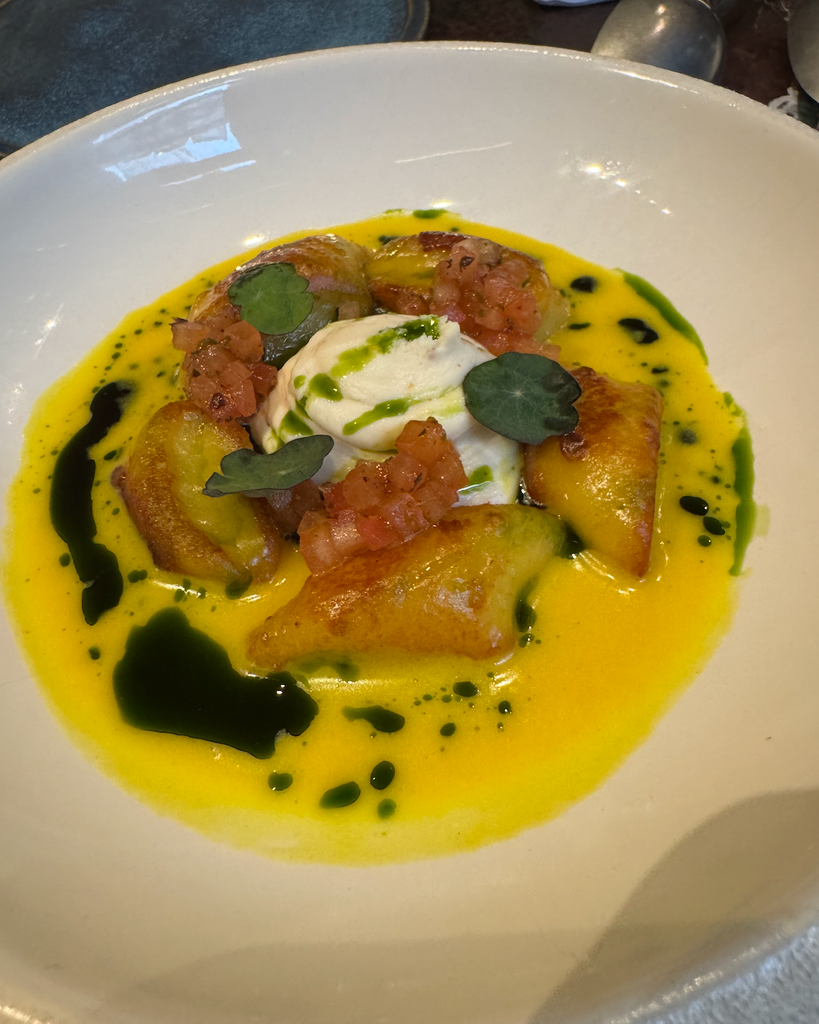
The starters set the tone for everything that followed: classic ingredients, handled with confidence and a bit of mischief.
The ricotta arrived first. It’s infused in-house, and the effect is curious and delicious. It tastes remarkably like goat’s cheese, with that gentle tang, but keeps ricotta’s soft, cloud-like texture. The sauce poured around it brings a welcome freshness, so a dish that could easily have felt heavy stays light. It’s the kind of plate you keep reaching back towards long after you meant to stop.
Then came the eel with beetroot, and this was where Jul’s won me over. The eel is smoked and served warm, with a deep, savoury smokiness that fills your mouth. Against it, the kitchen sets beetroot two ways, cooked and raw. The cooked beetroot brings an earthy sweetness that pairs beautifully with the smoke. The raw beetroot adds crunch, so every forkful has a contrast of textures. It’s a clever, thoughtful plate, and it’s exactly the kind of “fusion twist” critics complain about. It’s also the dish I’d send a friend for.
The octopus arrived like a sculpture
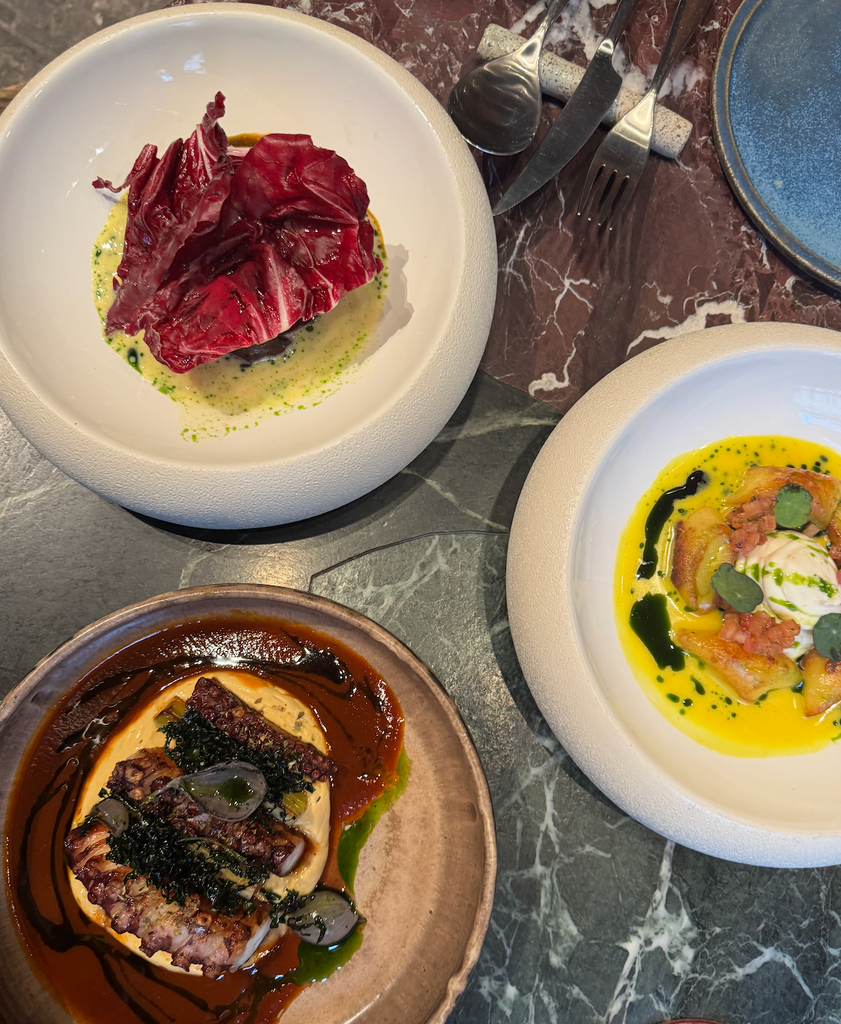
There’s a moment in every good meal when the whole table falls silent as a plate lands. At Jul’s, it was the octopus.
The presentation is extraordinary, the tentacle curled across the plate like something you’d expect in a gallery rather than a dining room. People at the next table turned to look. But the real surprise was the texture. Octopus is famously unforgiving: a few seconds too long and it turns to rubber. This was incredibly soft, almost creamy inside, with grilled, slightly charred edges. It was salty, faintly smoky and unctuous all the way through.
I’ve eaten a lot of octopus across the Mediterranean, from tavernas in the Cyclades to smart tables in Barcelona. This one belongs in that conversation. If you order a single dish at Jul’s, make it this one.
Sea bass worth the detour, cabbage that needed a lighter hand
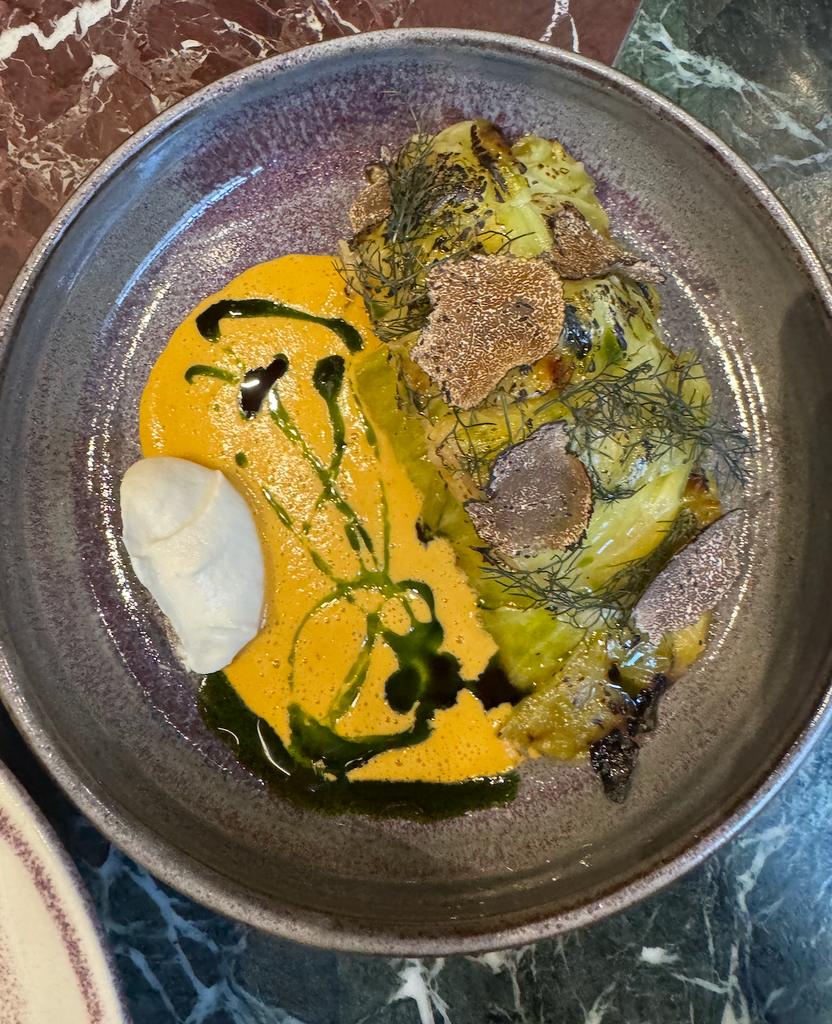
For mains, we chose sea bass and the chargrilled cabbage, a dish that has become something of a talking point.
The sea bass was the more accomplished of the two. The flesh was silky and fresh, with a richness that had nothing to do with butter and everything to do with careful cooking. Crisp vegetable leaves added crunch. A light, creamy sauce with a gentle acidity tied it all together. It was elegant, balanced and quietly confident. Nothing on the plate was there for show.
The cabbage was more of a mixed experience, and honesty matters here. The texture was lovely: crunchy, properly al dente, clearly marinated with care. The sauce leaned sweeter, a nice counterpoint, and the truffle brought an earthy depth that made it feel indulgent rather than virtuous. But it was a little too salty for me, and by the last few bites the salt was all I could taste. It’s the one moment in the meal where I could see the critics’ point: one element pushed a fraction too far. A lighter hand with the seasoning and this would be a very good vegetable dish. As it stands, it’s a good one with a flaw.
Oregano in the ice cream. Trust them.
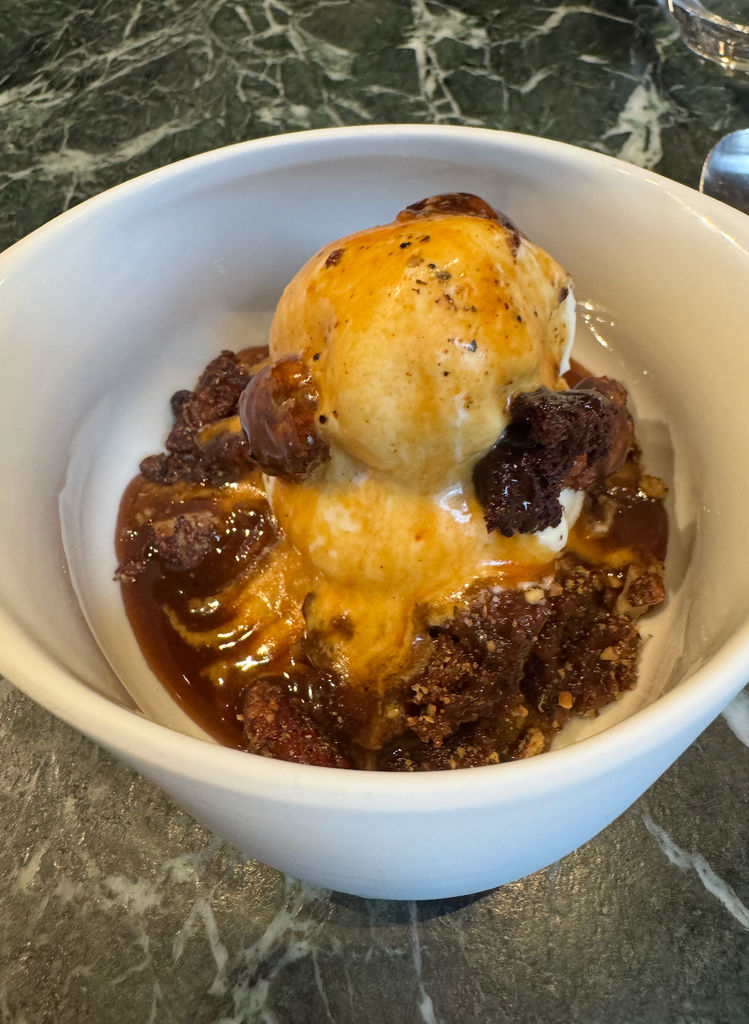
I almost didn’t order the sticky toffee pudding. It sounded like the most English thing on a Greek menu, and I wondered if it was there for the St James’s regulars. I’m very glad I did.
This is not your grandmother’s pudding. It’s warm with cinnamon and lifted by spiced orange, so the sweetness never gets heavy. On top sits a scattering of oregano, which sounds odd and tastes wonderful, a herbal note that cuts through the sugar. Caramelised pecans add crunch and a touch of sourness, just the right amount, keeping your palate awake.
Then there’s the oregano ice cream, made in-house. It’s the most daring thing on the plate and the most rewarding. Cool, creamy and gently herbal, it turns a comfort dessert into something new. It managed to be light and indulgent at the same time, which is rare, and it meant I went back out into the afternoon feeling pleasantly spoiled rather than ready for a nap. I loved the combination of flavours I’d never tasted together before, and I’d go back for this dessert alone.
Every plate came with a story
If the food divides opinion, the service shouldn’t. It was among the best I’ve had in London this year.
Our server walked us through the whole lunch, dish by dish. He told us where the ingredients came from, how each element was made and why the kitchen had paired things the way it had. None of it felt rehearsed. It felt like he was proud of the place and wanted us to love it as much as he did. When he recommended the cocktails at the start, it wasn’t upselling; he was right.
That pride runs through the whole restaurant. Jul’s clearly cares about choosing the best ingredients, and about making as much as possible itself, from the ricotta infusion to the ice cream to the spirits behind the bar. In a part of town where many restaurants rely on their address, it was refreshing to find one so keen to show its work. Hospitality was obviously at the heart of how the team works, and it gave a simple lunch real warmth.
Lunch is the smartest table in St James’s
Jul’s isn’t cheap, and it doesn’t pretend to be. Wine starts at around £60 a bottle, three-figure bottles fill much of the list, and dinner with drinks can easily reach £165 a head. At that price, the kitchen has to deliver every time, and the critics are right to hold it to that standard.
That’s what makes lunch such a good discovery. On weekdays, there’s a set menu at £29 for two courses or £39 for three, with a selection of dishes and desserts. Given the quality of the ingredients and the work behind each plate, that’s remarkable for St James’s. You get the same room, the same glass kitchen and the same pride in sourcing for a fraction of the evening bill. It’s the perfect choice for a client lunch, a long catch-up with a friend or a midweek treat that feels like a little holiday.
If you want to splurge, the à la carte menu is there too, and having seen the room at lunch, I can imagine exactly how it plays as a date night, with the lighting, the theatre of the dishes and No. 11 waiting downstairs. Whichever you choose, your companions will be impressed.
The verdict
Jul’s London isn’t a temple to quiet Greek cooking, and it doesn’t want to be. If you want a simple grilled fish and a horiatiki in a whitewashed taverna, there are better places for that. What Jul’s offers is something St James’s has lacked for too long: a restaurant with glamour, a sense of occasion and a kitchen confident enough to cook in full view of its guests.
Not every dish hits perfectly; the cabbage proved that. But the eel, the octopus and that remarkable dessert show what this kitchen can do when it gets it right, which, at our lunch, was most of the time. Add service that turns a meal into a story, and you have one of the most enjoyable new tables in London, at any hour.
The critics can keep debating. I’ll be back for the octopus.
Practical information
Address: Jul’s London, 11 Waterloo Place, St James’s, London SW1Y 4AU
Opening hours: Monday to Saturday, lunch from 12pm to 3pm and dinner from 6pm. Kitchen last orders around 10.30pm. No. 11 cocktail bar is open until 2am. Closed on Sundays.
Prices: Weekday set lunch from £29 for two courses or £39 for three. Pre-theatre menu from 5.30pm. À la carte dinner with drinks from around £165 per person. Wine from around £60 a bottle.
Book: Through julslondon.com or OpenTable. Private dining is available on the mezzanine and in No. 11, and the whole venue can be hired.
Getting there: Piccadilly Circus is the nearest Tube station, about a five-minute walk. Charing Cross and Green Park are also close.