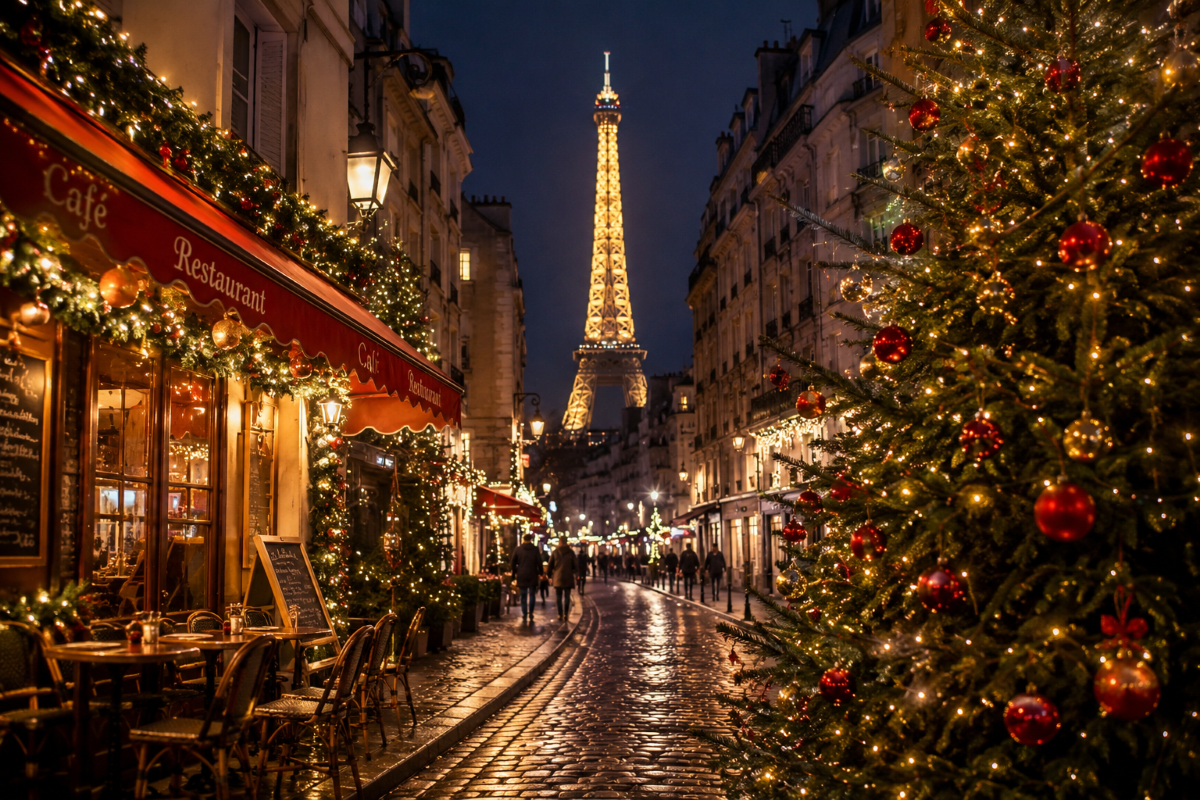
From the gilded palace trees to Midnight Mass beneath the restored vaults of Notre-Dame, this is Paris at its most romantic: lit up, wrapped up and well worth the trip.
At ten to five on a December afternoon, I stepped out from beneath the red awnings of avenue Montaigne just as the light went. It was the deep blue of a Paris winter dusk, the kind that only lasts about twenty minutes, and the avenue’s lights came on in one long wave. Further down, someone was roasting chestnuts over a brazier, and the smell drifted up the pavement and mixed with the cold. A woman in a camel coat stopped mid-stride to take a photograph. I did too. For me, that was the moment Paris at Christmas stopped being a cliché and became something I wanted to keep.
The city doesn’t so much decorate for the festive season as dress for it. The grand department stores on boulevard Haussmann turn their windows into small theatres. The palace hotels compete quietly over who has the most beautiful tree, the most extravagant bûche de Noël and the most enchanting courtyard. In the Tuileries, a market sets up between the clipped hedges. On the Île de la Cité, Notre-Dame celebrates another Christmas with its stone washed pale again and its bells ringing out over the Seine.
This year has more reasons to go than most. After a decade away, the Christmas market is back on the Champs-Élysées, with two hundred chalets in the gardens at the lower end of the avenue, under the same lights that made it famous. Two of the city’s most modern grand hotels, Cheval Blanc Paris and the Bulgari, were officially made palaces in 2026, which puts them in the same category as the Ritz and the George V. The Grand Palais has also brought back its vast skating rink under the glass roof of the Nef, one of the most cinematic places you can skate anywhere in Europe.
Paris in December is not a summer city in disguise. Days are short, mornings are grey and the cold gets into your bones by four o’clock. That’s the point. It’s a city made for long lunches, hot chocolate as thick as custard, afternoons in museums and evenings that begin at dusk and glow until late. Plan it well and it will be one of the most romantic trips of your life.
When to Go
Paris switches into festive mode from mid-November, and the season runs right through to the first days of January. Each part of that window offers a slightly different city.
Mid to late November is the opening act. The department store windows are unveiled, the palace hotels put up their trees, and the Champs-Élysées lights go on with a public ceremony and a sound-and-light show. Markets start to open and the city has an air of anticipation. Hotels are easier to book and restaurants still have tables. If you want the decorations without the crowds, this is your window.
Early to mid-December is the heart of the season, and my pick. Every market is open, every tree is lit, the Plaza Athénée courtyard has its ice rink, and the Grand Palais rink opens in mid-December. Paris is busy, especially at weekends around Haussmann, but it’s the atmosphere you came for. Midweek stays are calmer and often cheaper.
Christmas week has a quieter, more intimate charm. Many Parisians leave for the provinces, so the city empties a little and becomes unexpectedly peaceful. Christmas Eve is the big celebration in France, with the réveillon dinner and Midnight Mass, so book everything well ahead. Be aware that many restaurants and some museums close on 25 December.
Between Christmas and early January, the lights stay on, the markets wind down and the city has the soft, relaxed atmosphere of a long holiday. New Year’s Eve in Paris is lively, but the days afterwards are some of the most peaceful of the year.
The connoisseur’s pick: arrive on a Tuesday or Wednesday in the first ten days of December. You’ll get the full spectacle on weekday evenings, with the rinks open, the windows uncrowded and the best tables still in reach.
Pack a long wool coat, a cashmere scarf and gloves (you’ll need gloves on the ice), waterproof ankle boots that you can walk in all day, and one elegant outfit for dinner, because Paris dresses up in December.
Where to Stay
At Christmas, where you stay matters more than at any other time of year. With darkness by five o’clock, you’ll come back to your hotel between museums and dinner, and the great Paris hotels put enormous effort into the season. Book early: the best rooms for December are often gone by October.
The Seine and the Louvre
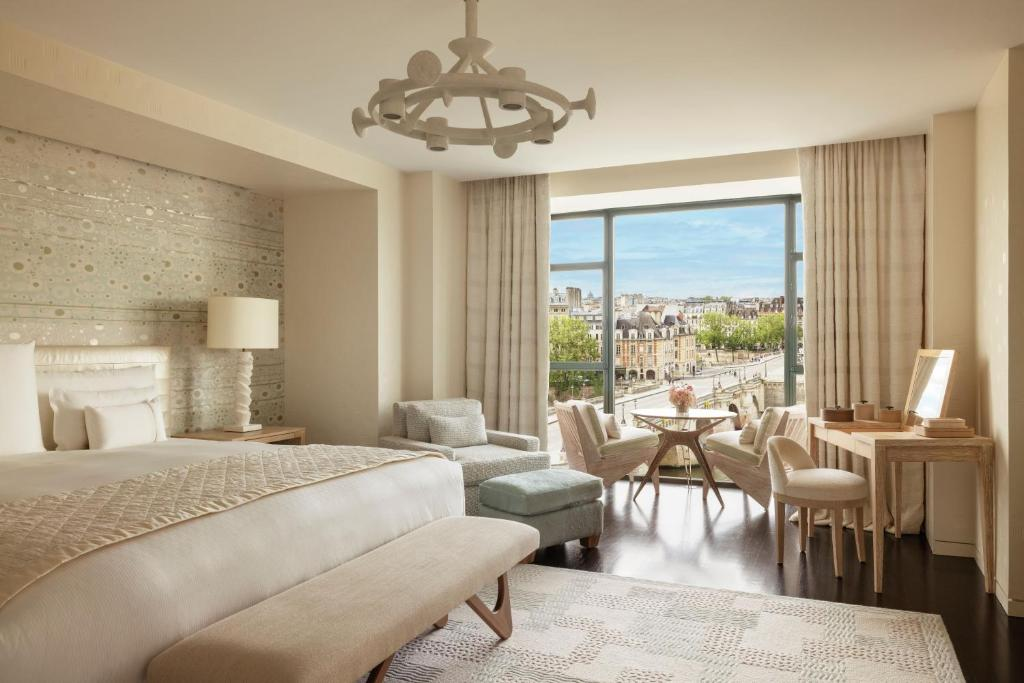
Cheval Blanc Paris is the most modern of the city’s grand hotels and, to my eye, the most beautiful at Christmas. It occupies the upper floors of the restored Samaritaine on the quai du Louvre, so every Seine-facing room looks out over the Pont Neuf, the Île de la Cité and, in the distance, the restored spires of Notre-Dame. The design by Peter Marino is warm and quietly sumptuous, with pale oak, deep sofas and art everywhere. Ask for a room or suite with a terrace facing the Seine: at dusk, as the bridges light up, you won’t want to leave. The Dior Spa is one of the finest in the city, with a long, calm pool for an early swim, and the dining is exceptional: Arnaud Donckele’s Plénitude holds three Michelin stars, and Hakuba, the omakase counter on the ground floor, earned its second star this year. Cheval Blanc was named an official palace in 2026, five years after opening. Rooms from around £2,500 a night in December.
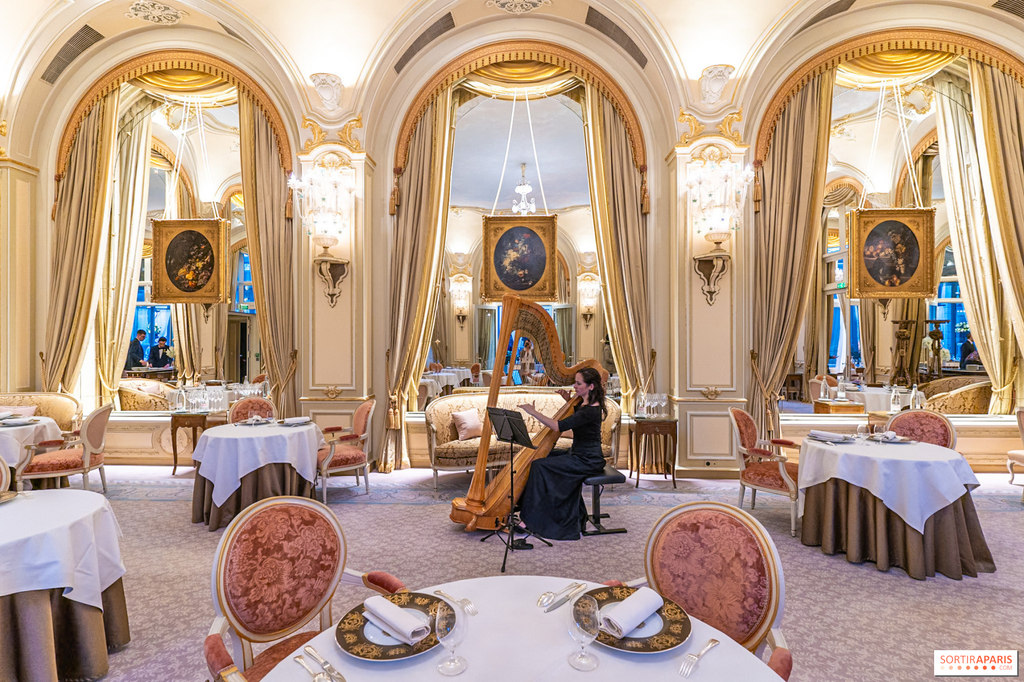
Ritz Paris is Christmas in its most classic form. On Place Vendôme, under the column and the gilded shopfronts of the jewellers, the Ritz builds its tree beside the grand staircase every year, and walking past it in the evening feels like stepping into an old film. The rooms are lavish in the best sense, with silk drapes, Louis XV furniture and marble bathrooms with gold swan taps. Ask for a room facing the Place Vendôme or the garden. The Chanel au Ritz spa and the pool, with its painted ceiling, are lovely refuges on a cold afternoon, and the Christmas tea in the Salon Proust, among the books and wood panelling, is one of the most romantic ways to spend a December afternoon in the city. Rooms from around £1,750 a night.
The Golden Triangle
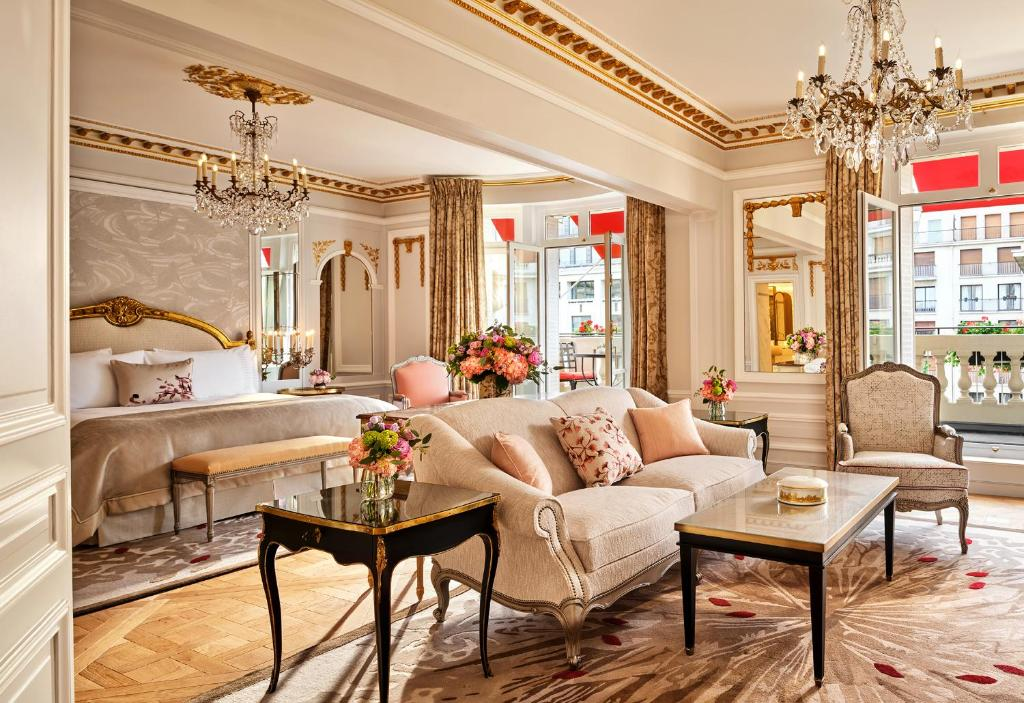
Hôtel Plaza Athénée is where Christmas feels the most cinematic. Its red awnings on avenue Montaigne are the backdrop for the avenue’s own festive lights, and every winter the courtyard (green with ivy in summer) becomes a small alpine world with a real ice rink and a wooden chalet. Afternoon tea by pastry chef Angelo Musa is the way in for families: guests who book a Christmas tea can skate afterwards. Ask for a room facing the avenue, so you can watch the lights from your window, or one overlooking the courtyard if you have children with you. The Dior Institut spa is small but wonderfully calm. Rooms from around £1,450 a night.
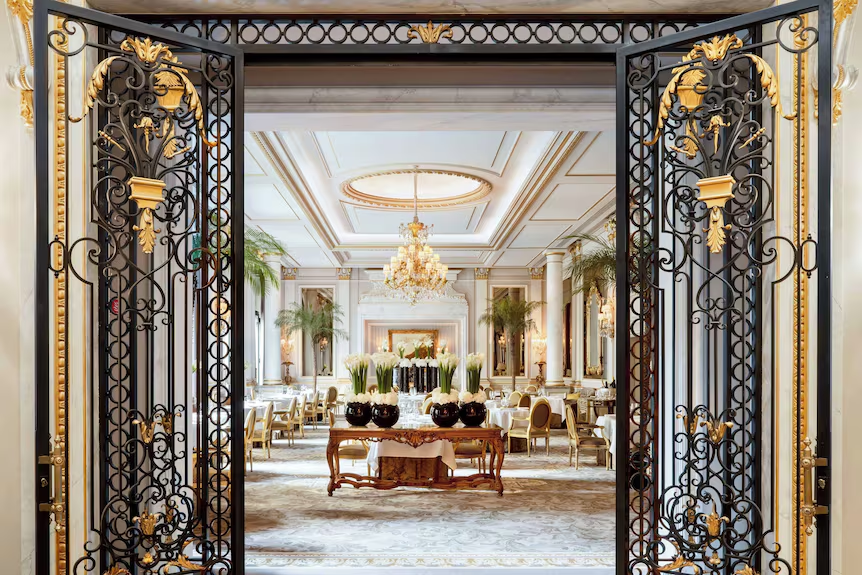
Four Seasons Hotel George V is famous for its flowers, and at Christmas its floral installations become something close to theatre: towering arrangements in the lobby and courtyard that people come from across the city to see. The hotel is grand and warm at once, with tapestries, chandeliers and a level of service that feels almost telepathic. Gastronomy here is serious: across Le Cinq, L’Orangerie and Le George, the hotel holds six Michelin stars, and Le Cinq is celebrating ten years at three stars under Christian Le Squer. Ask for a room with a terrace looking towards the Eiffel Tower. Rooms from around £1,700 a night.
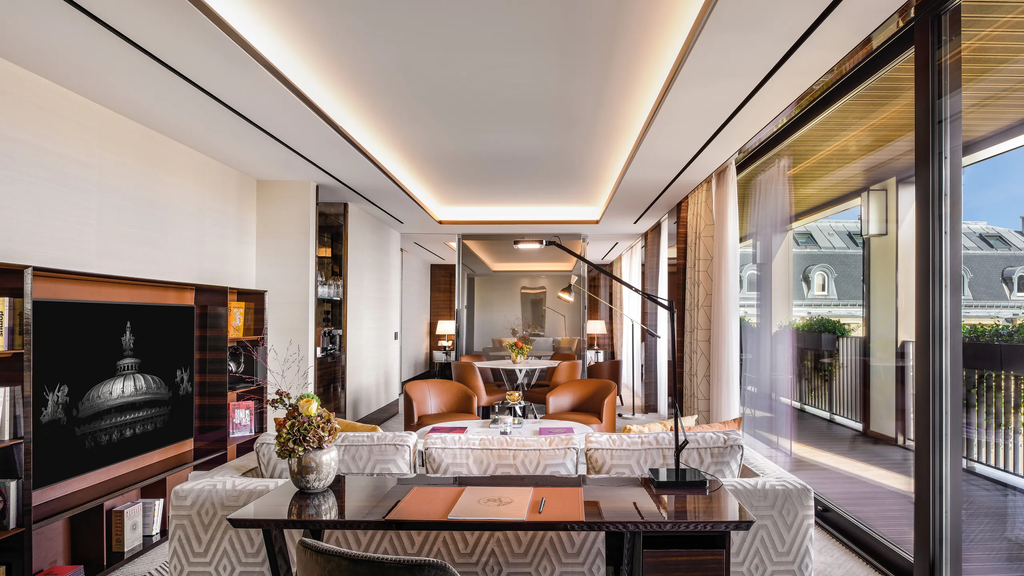
Bulgari Hotel Paris on avenue George V is the choice for travellers who prefer a contemporary, Italian sense of luxury. The hotel was made an official palace in 2026, and it’s one of the calmest addresses in the Golden Triangle. Rooms are generously proportioned, with dark wood, marble and a quiet, tailored elegance. The 1,300-square-metre spa, inspired by Roman baths, is the main draw in winter: a long pool lined in green and gold mosaic, followed by a treatment, is the best antidote to a day of walking in the cold. Rooms from around £1,900 a night.
Trocadéro
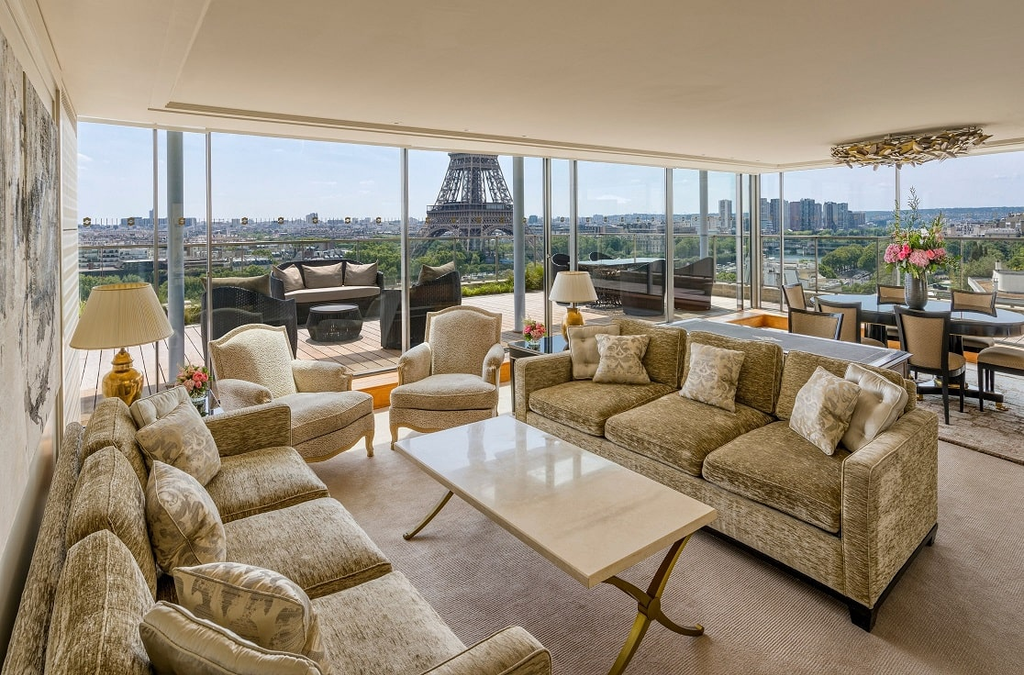
Shangri-La Paris is the place for Eiffel Tower views. Built as the private palace of Prince Roland Bonaparte on avenue d’Iéna, the hotel looks straight across the Seine to the tower, and at night, when it sparkles on the hour, the effect from a terrace room is breathtaking. Ask for an Eiffel Tower-view room or, if you’re celebrating, a suite with a terrace. At Christmas the lobby tree is extravagant, the indoor pool is a gentle refuge, and the hotel’s new all-day restaurant, Maison Roland, opened in May 2026 in the private garden. Shang Palace serves some of the best Cantonese cooking in Paris, which makes a welcome change after a week of rich French food. Rooms from around £1,150 a night.
The Marais
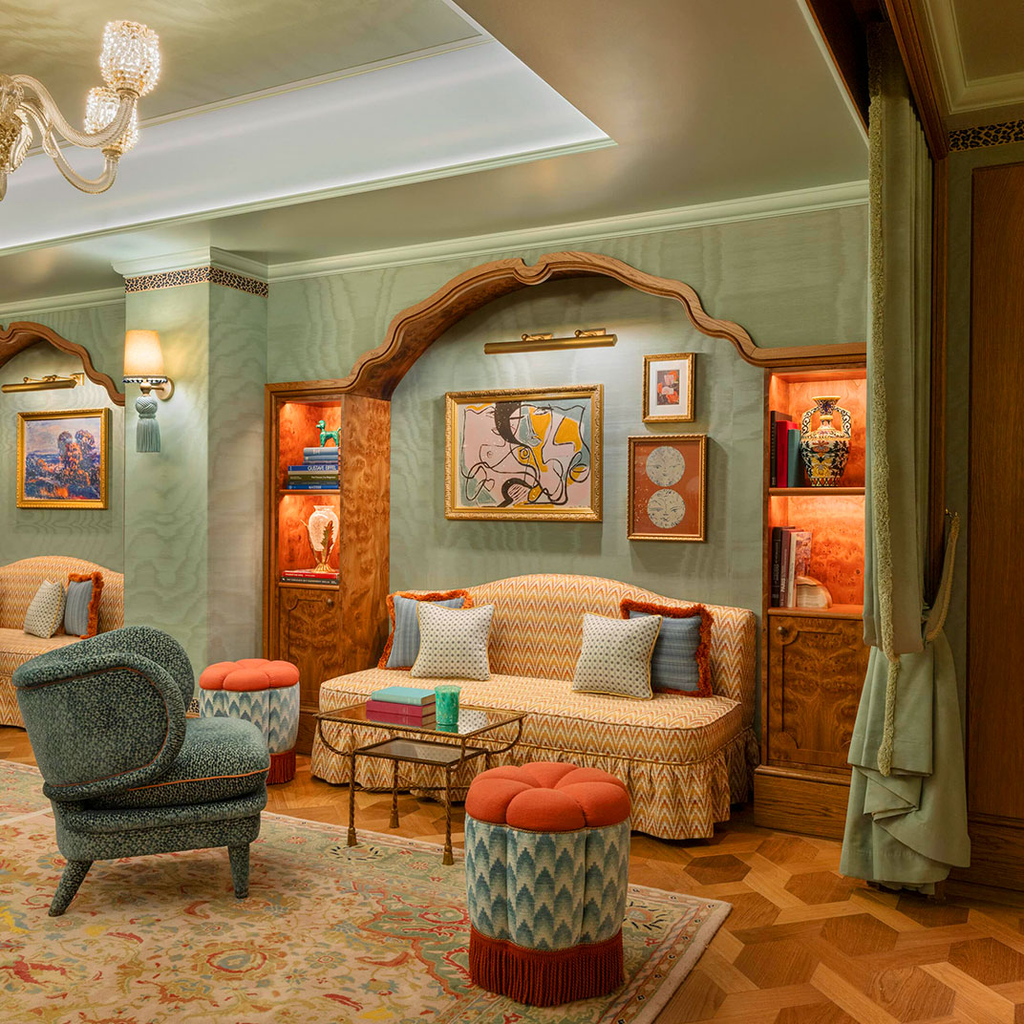
Le Grand Mazarin is my design-led pick and one of the most joyful hotels in the city. Interiors by Martin Brudnizki are a playful riot of colour, pattern, velvet and tapestry-printed walls, and the overall effect is like staying in the home of an eccentric, very generous friend. The Marais location is perfect for Christmas: you’re a short walk from the Hôtel de Ville market, Notre-Dame and the Place des Vosges. Downstairs, there’s a beautiful little swimming pool, and the restaurant, Boubalé, serves warm, generous cooking from Ashkenazi traditions that’s perfect for a cold evening. Rooms from around £480 a night.
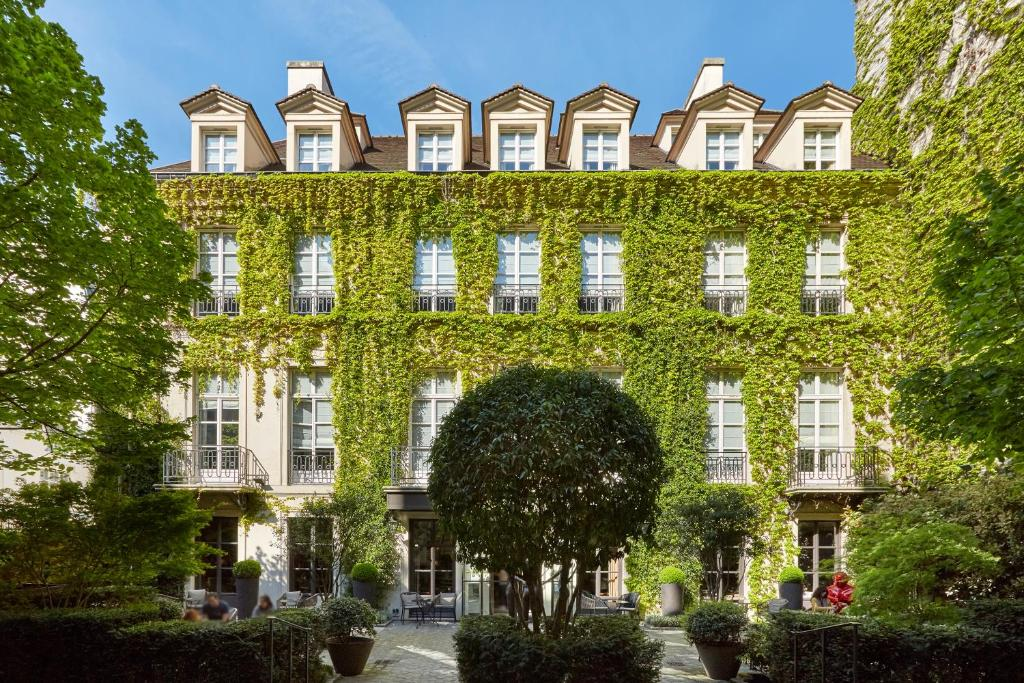
Le Pavillon de la Reine sits behind an ivy-covered courtyard on the Place des Vosges, and on a cold winter morning, with the arcades misty and the square still asleep, there’s nothing quite like it. It feels like a private country house in the middle of the city, with beams, open fires and quiet, dark-wood rooms. Ask for a room overlooking the garden courtyard. The small spa is a pleasant retreat. Rooms from around £520 a night.
Pigalle
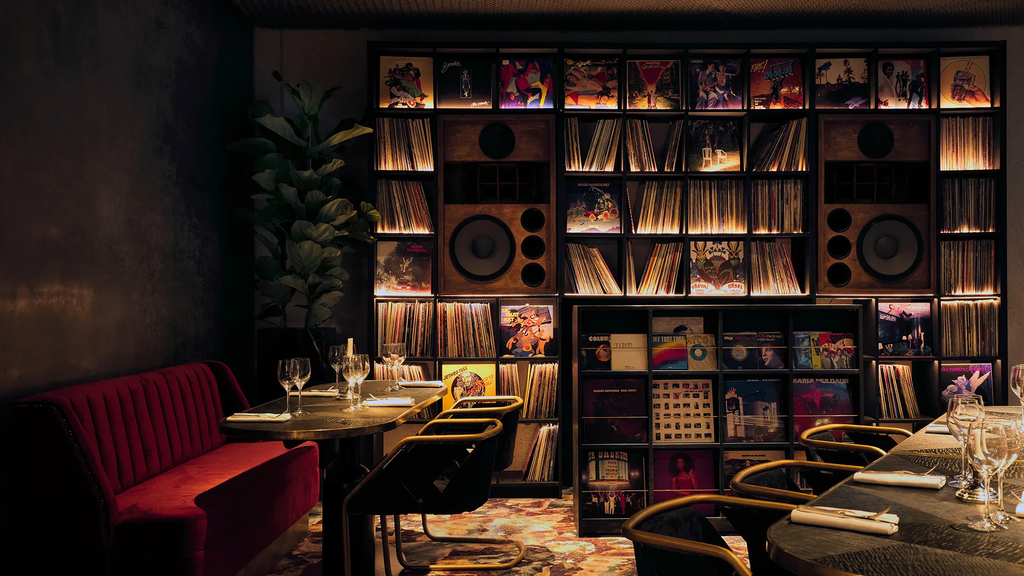
Bus Palladium is this year’s most exciting new opening. The legendary Pigalle rock venue, closed since 2022, reopened in April 2026 as a five-star boutique hotel with 35 rooms by Studio KO. The design is daring and very Parisian: cork walls, raw concrete ceilings and powder-pink carpets, plus a Dalí-inspired suite for those who like a statement. It’s the address for travellers who want to see a more creative, edgier side of Paris at Christmas, a short walk from Montmartre and its winter streets. Ask for the Dalí Suite if it’s available. Rooms from around £400 a night.
Lights, Windows and Markets: The Paris Christmas, Curated
The Christmas lights are Paris’s headline act, and each part of the city puts on its own show. Here’s how the big ones compare.
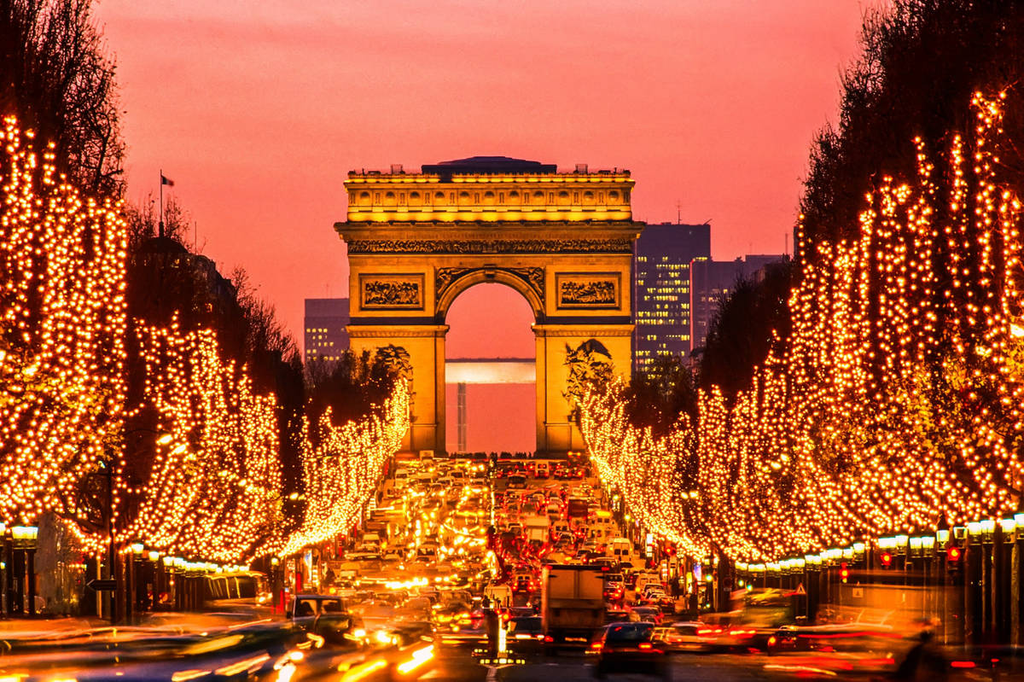
The Champs-Élysées is the main event. The lights go on in late November with a public ceremony and stay on into early January, glowing every evening from late afternoon. This year, for the first time in about a decade, the market is back too: two hundred chalets in the gardens at the lower end of the avenue, between the Place de la Concorde and the Rond-Point, from 22 November to 4 January. Entry is free. Go on a weekday evening, start at the Concorde and walk slowly uphill towards the Arc de Triomphe: the perspective, with the trees lit on both sides, is the image you’ll remember.
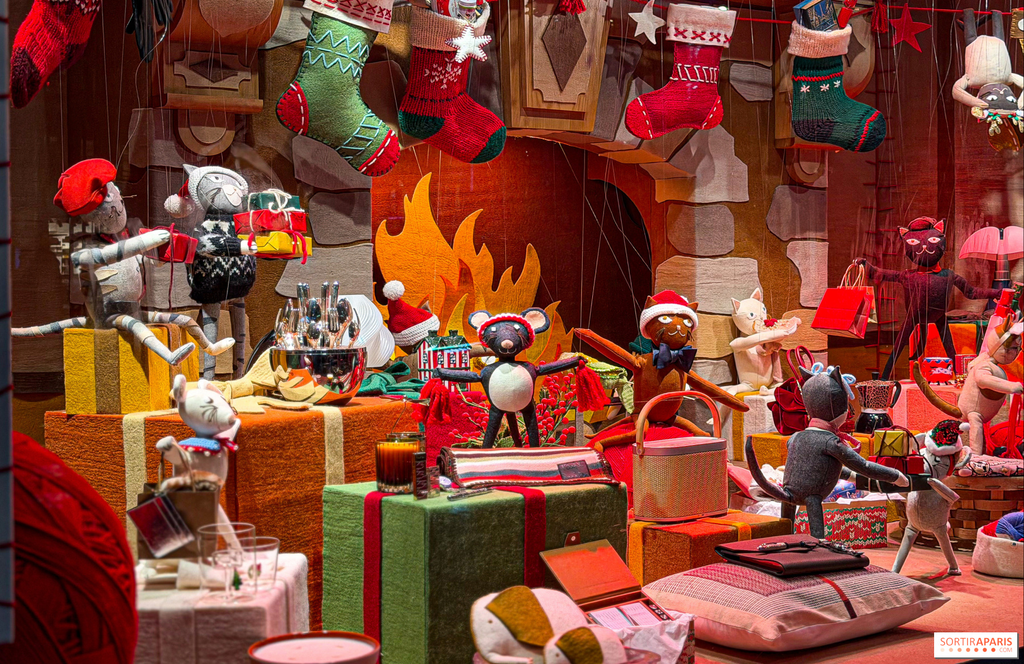
The Galeries Lafayette and Printemps windows on boulevard Haussmann are a Paris tradition as much as a shopping event. This year, the designer Jean-Charles de Castelbajac has created Galeries Lafayette’s Christmas, called “Au cœur de Noël”, with animated windows full of colour and a giant tree under the famous Art Nouveau dome. The windows run from 12 November to 5 January, and there’s a temporary ice rink on the roof with views over the city from 24 November. Next door, Printemps has a knitted Christmas theme. The windows are free to see. Come first thing in the morning, before the crowds, and go inside to look up at the dome.
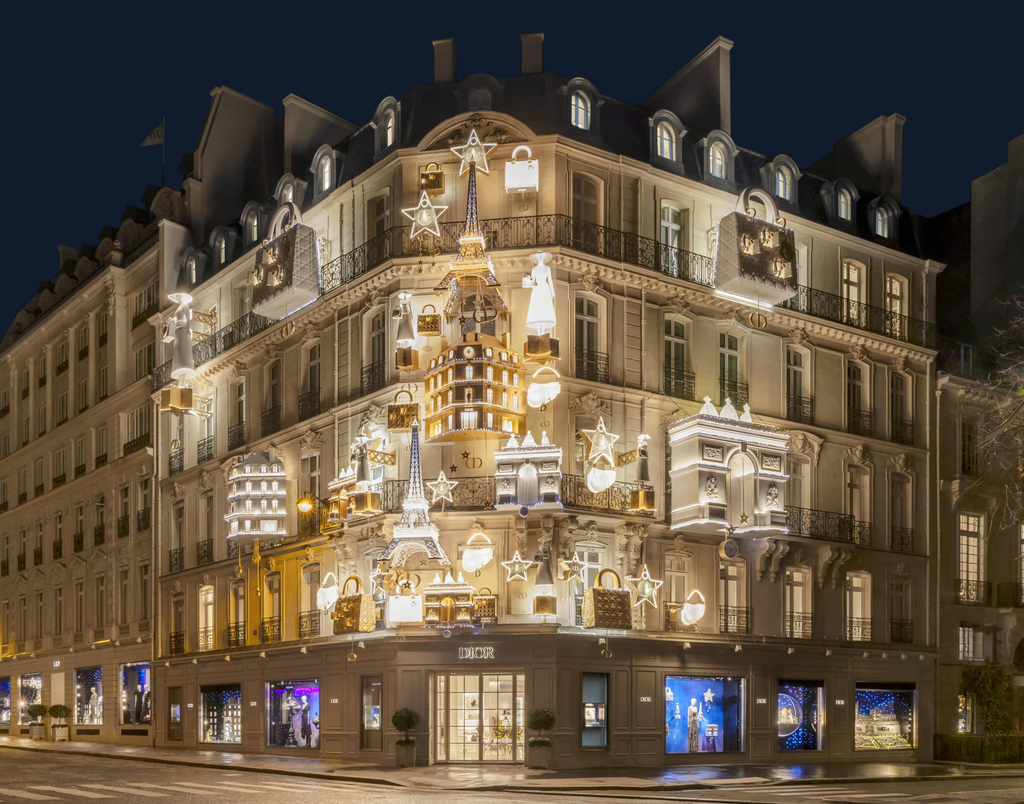
Avenue Montaigne is the most elegant of the lit streets. It’s shorter and quieter than the Champs-Élysées, lined with couture houses whose windows are dressed for the season, and it leads straight to the red awnings of the Plaza Athénée. It’s the most beautiful evening walk in the city.
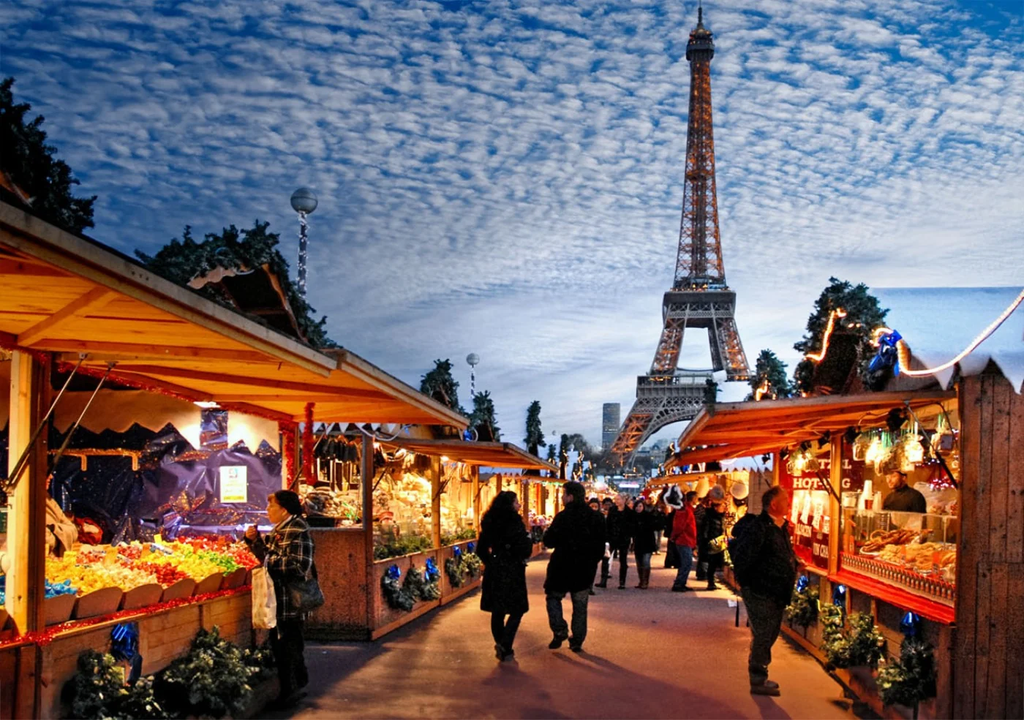
The markets vary a lot in character. The Tuileries market is the largest in the centre, with a big wheel and food stalls among the gardens. The little market in the Square René-Viviani, opposite Notre-Dame, runs from 26 November to 27 December and is the most charming in Paris: small, gentle and full of artisan producers, with the cathedral rising up behind the chalets. The Hôtel de Ville hosts a village with a carousel. For something more Alsatian, the market at the Gare de l’Est smells of gingerbread and spices. Entry to all of them is free; budget £5 to £15 for a hot chocolate, crêpe or a portion of raclette.
The palace hotels make up a parallel Christmas of their own. Even if you’re not staying, you can see the Ritz tree beside the staircase, the George V flowers and the Shangri-La lobby tree by booking a Christmas tea. These generally cost around £75 to £100 a person, and the Plaza Athénée’s festive teas this year are priced at €85 and €105 (around £74 and £91).
What to Do
Walk the Department Store Windows at Opening Time
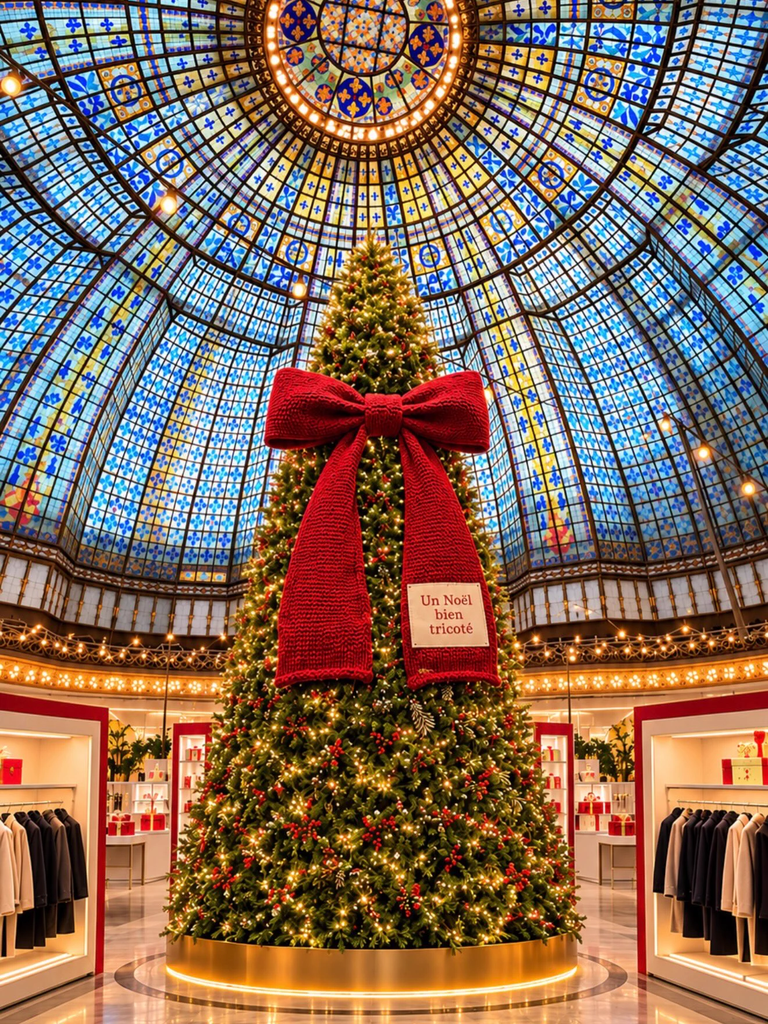
Galeries Lafayette and Printemps open their doors around ten o’clock, and the first hour is the time to see the windows properly. Children press their noses to the glass, the animations turn and clank, and the boulevard still feels like a city street rather than a queue. Go inside Galeries Lafayette to stand under the dome and look up at the tree, then take the escalators to the roof for the view across the zinc rooftops to the Opéra and the Eiffel Tower.
Notre-Dame and the Île de la Cité
Notre-Dame is free to visit, and booking a time slot in advance is now optional rather than essential. Even so, reserving a slot is wise in December. Inside, the restored limestone is almost luminous, and the rose windows glow even on a grey day. Afterwards, walk to the Sainte-Chapelle, five minutes away, where the stained glass covers almost every inch of the walls. Since January, entry for visitors from outside the EU has been €22 (about £19). Go late in the morning, when the low winter sun hits the glass at its most dramatic angle.
The Louvre, Early and Unhurried
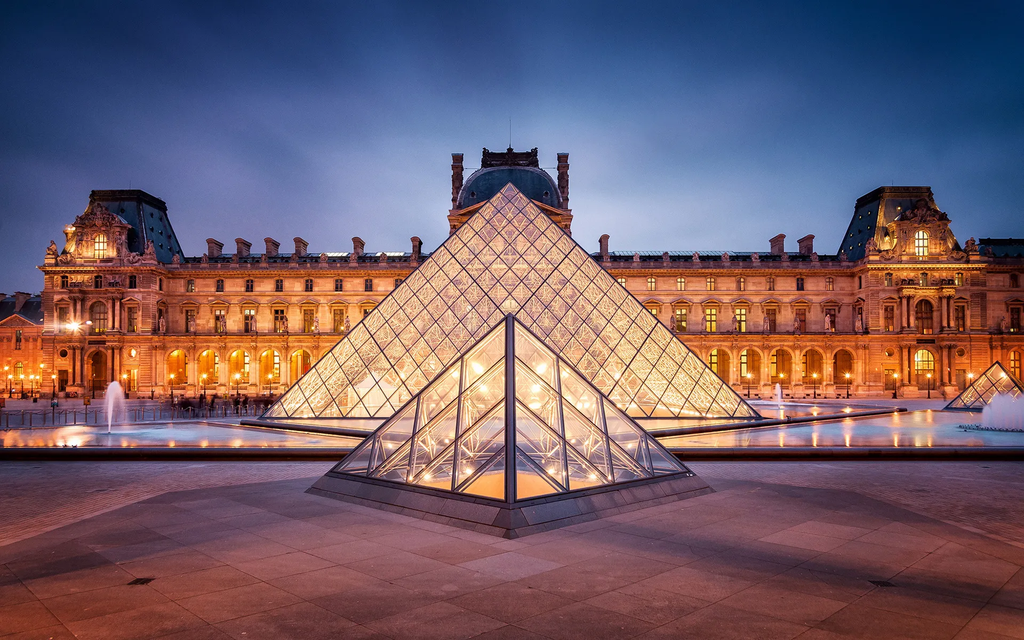
From January 2026, the Louvre raised its ticket price for most non-EU visitors, including those from the UK, to €32 (around £28). Book a timed entry for the first slot of the morning, head straight for the gallery you most want to see, then lose yourself in the quieter wings, such as the French paintings on the top floor or the Napoleon III apartments, which are particularly beautiful at Christmas with their red velvet and gilding. The museum is closed on Christmas Day and New Year’s Day. A private guide is worth every penny here.
Skate Beneath Glass at the Grand Palais
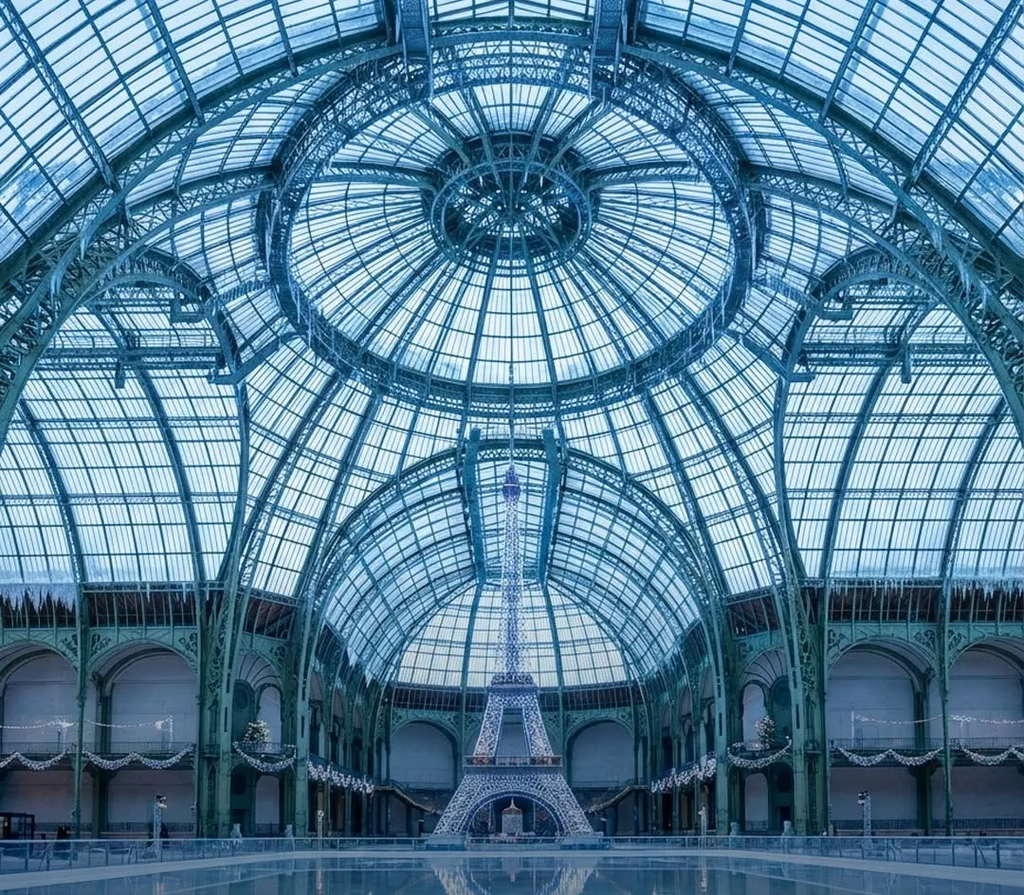
From mid-December to 6 January, the Nef of the Grand Palais becomes a vast 2,700-square-metre ice rink, billed as the largest indoor rink in the world. Skating under the steel and glass roof, with the winter light falling through, is one of Paris’s great seasonal experiences. Afternoon sessions are calmer for families, and evening sessions turn into a party with lights and music. Book ahead and bring gloves, which are compulsory on the ice.
Versailles in Winter
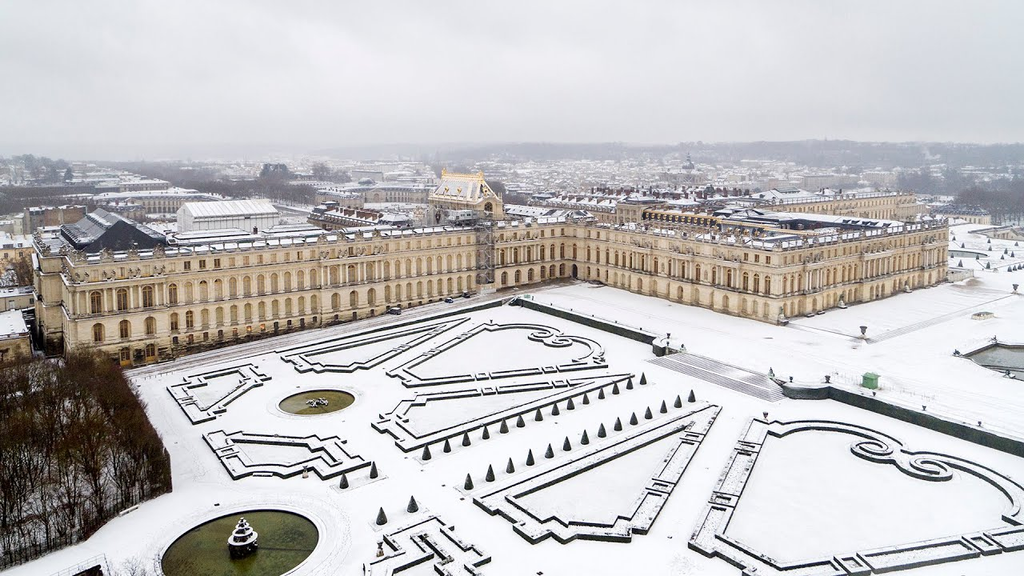
The palace is calmer in December than at any other time of year, and on a frosty morning the gardens, with their statues bare and fountains drained, have a melancholy beauty. Non-EU visitors now pay a higher rate for the all-day Passport ticket, up to €35 (around £30) in high season. Book the earliest entry and a private guide to the King’s apartments, then walk down to the Trianon estate in the afternoon. A chauffeured car from central Paris takes around forty minutes.
A Pâtisserie Pilgrimage
Christmas in Paris is measured in bûches de Noël, the elaborate yule logs that every great pâtissier and palace hotel reinvents each year. Walk from shop to shop and admire them in the windows, then book one tasting at a palace. Stop for hot chocolate at Angelina on rue de Rivoli, which is thick enough to stand a spoon in, or at Jacques Genin in the upper Marais, where the caramels are worth the detour on their own.
Montmartre in the Frost
On a cold, clear morning, Montmartre feels like a village. Climb up past the Bateau-Lavoir to the Place du Tertre before the painters set up, then down to the Sacré-Cœur, where the view over the rooftops of Paris is sharpest in the crisp winter air. The little market on Place des Abbesses is one of the most local in the city. Stay at Bus Palladium and you’re just at the foot of the hill.
The Seine at Dusk
At this time of year, the river is at its most beautiful at around half past four, when the sky turns violet and the lights come on along the quais. Book a private boat for an hour rather than a crowded tourist cruise: gliding under the Pont Neuf as Notre-Dame lights up is the most romantic hour you’ll spend in the city.
The Unforgettable Experiences
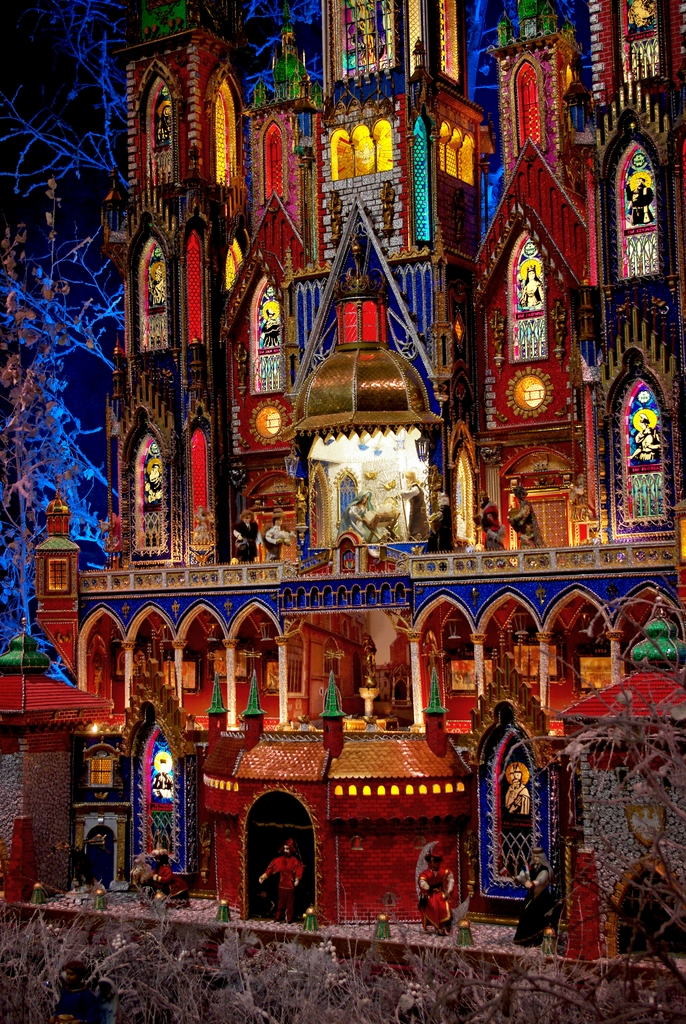
Midnight Mass at Notre-Dame. Whatever your faith, Christmas Eve at Notre-Dame is one of the most moving things you can do in Europe. The cathedral fills with three thousand people, the choir of the Maîtrise sings in the vigil before midnight, and the restored vaults ring with music that has been sung there for eight hundred years. Arrive very early: the doors usually open well before the service, and the queue on the parvis is part of the experience, with the cold and the expectation building in the dark.
Your first walk down the lit Champs-Élysées. Start at the Place de la Concorde just after dark, with the obelisk lit and the market chalets glowing in the gardens, and walk slowly towards the Arc de Triomphe. The trees on either side are wrapped in light, the traffic is a river of red and white, and at the top, the arch stands lit against the night sky. I’ve done it many times and it still gives me a lump in my throat.
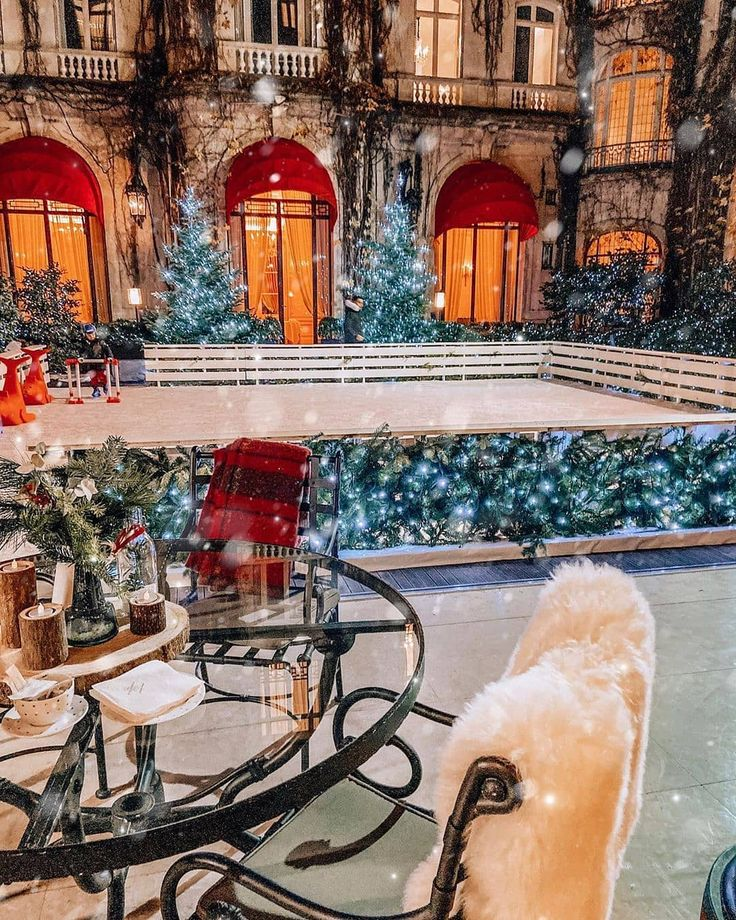
Skating in a palace courtyard. The ice rink in the Plaza Athénée’s courtyard is small, just under a hundred square metres of real ice, but the setting is extraordinary: fir trees dusted in white, the hotel’s red awnings above you, and the city’s most famous avenue just beyond the walls. Book the Christmas tea first, then step out onto the ice as the light fades. Children never forget it, and neither do adults.
Sunrise over the Seine from Cheval Blanc. In December the sun rises late, at around half past eight, which means even late sleepers can see it. From a Seine-facing terrace at Cheval Blanc, watch the sky turn pink behind the Île de la Cité, the bridges emerge from the mist and Notre-Dame’s spire catch the first light. Have breakfast sent up and eat it wrapped in a blanket on the terrace.
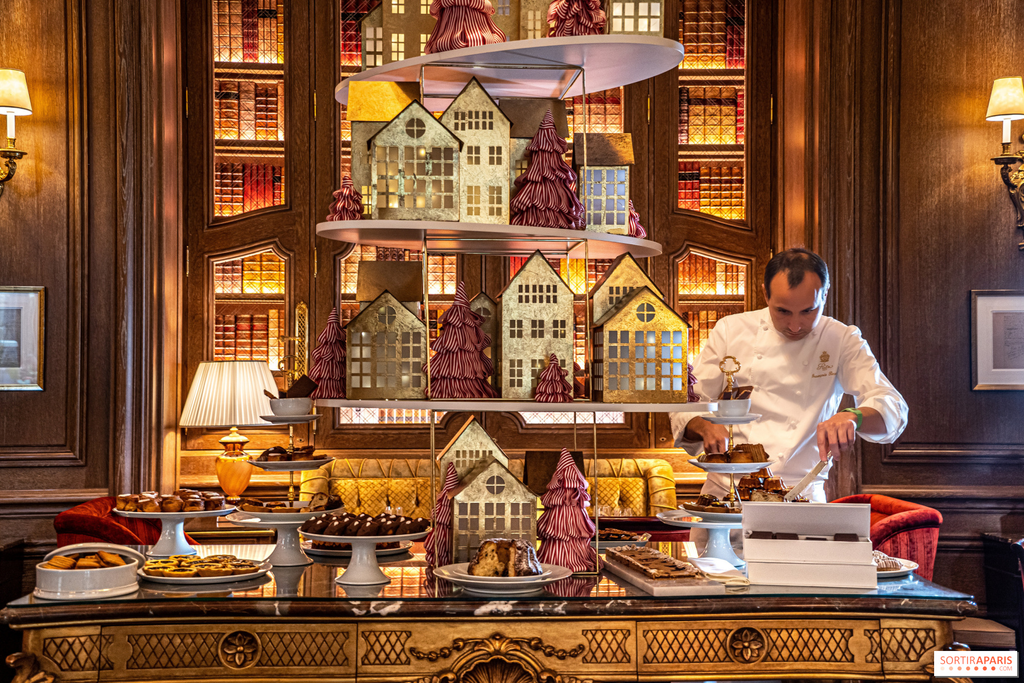
Tea beneath the Ritz tree. Book the Christmas tea in the Salon Proust on a dark, cold afternoon. The fire crackles, the pastries arrive on silver stands, and when you leave, you pass the tree beside the grand staircase, lit and glittering, before stepping out onto Place Vendôme, where the jewellers’ windows sparkle in the dark. It’s Paris at its most theatrical and most comforting.
The Eiffel Tower sparkle from your window. Every evening, on the hour, the Eiffel Tower bursts into thousands of glittering lights for five minutes. From an Eiffel Tower-view room at the Shangri-La, you’ll see it from the comfort of your bed, framed by the windows of a prince’s palace. Set an alarm for the last sparkle of the night.
Where to Eat
Paris is still the world capital of fine dining, and the 2026 Michelin Guide lists 127 starred restaurants in the city, nine of which hold three stars. December is the busiest month of the year for serious restaurants, so book four to six weeks ahead, and earlier for Christmas Eve and New Year’s Eve.
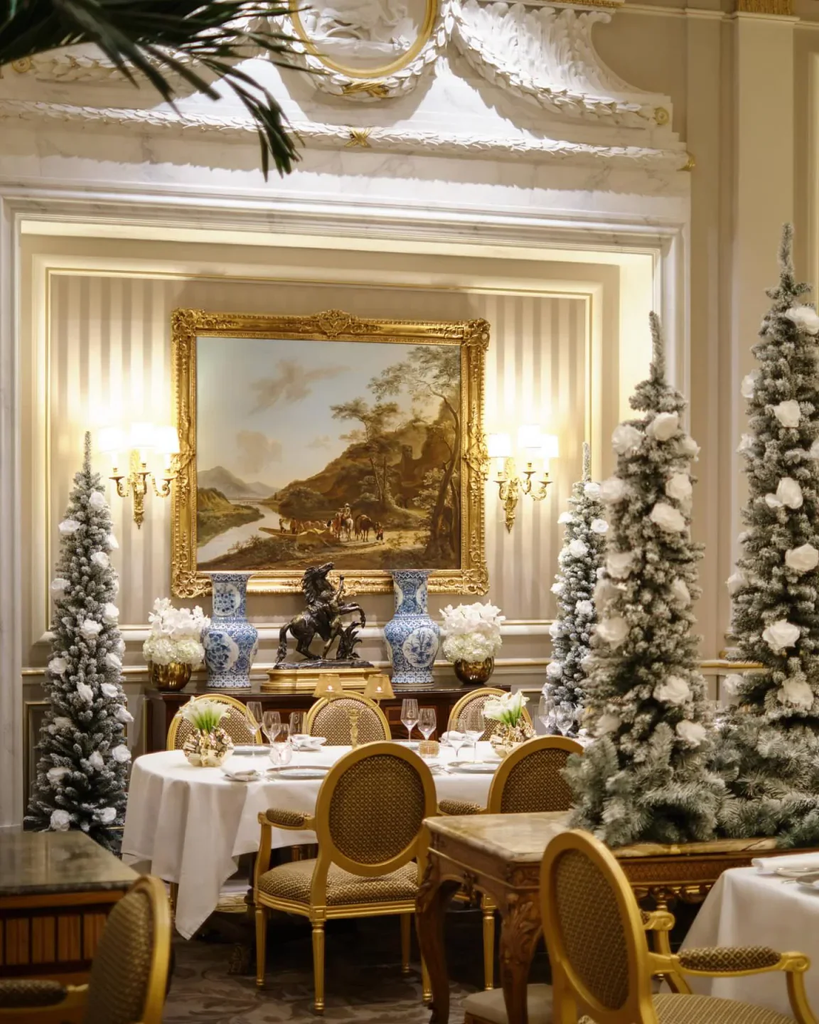
Le Cinq at the Four Seasons Hotel George V is the classic choice for a once-in-a-lifetime Paris dinner. Christian Le Squer’s cooking is precise and elegant, the dining room is grand in grey and gold, and the service is impeccable. It has just celebrated ten consecutive years at three stars.
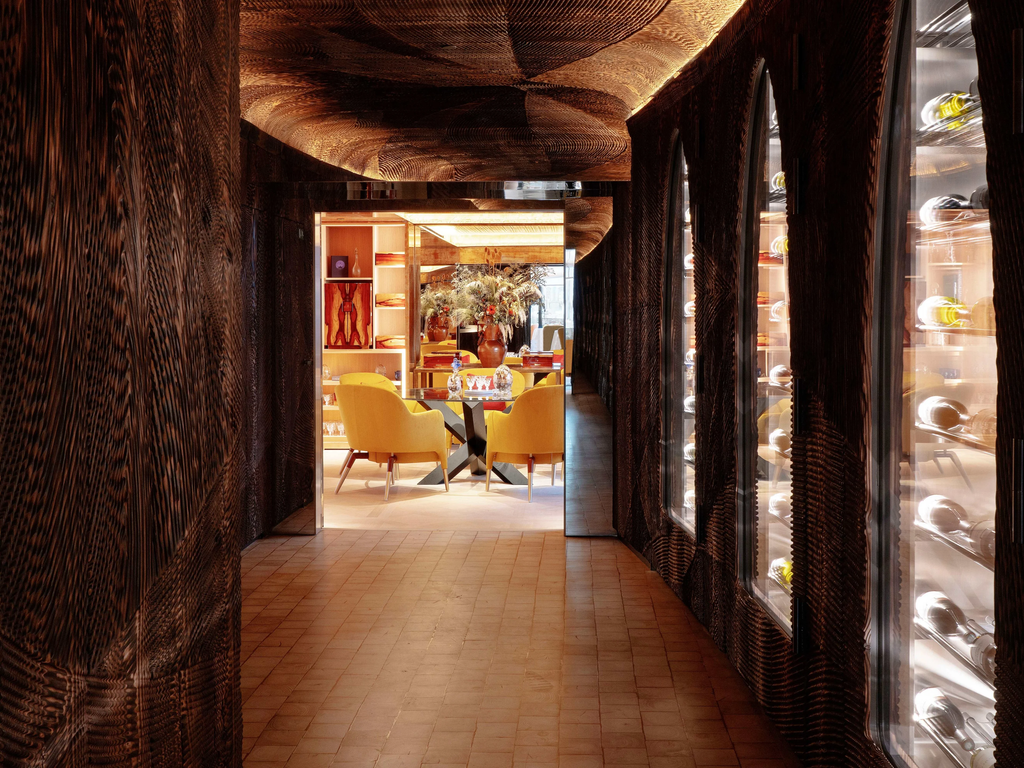
Plénitude at Cheval Blanc Paris, Arnaud Donckele’s three-star restaurant, is built around sauces, treated as an art form in their own right. It’s an intimate room with views of the Seine and a menu that feels both very French and completely new. Downstairs, Hakuba is a counter-style Japanese restaurant that earned its second star this year: book it for something precise, calm and unforgettable.
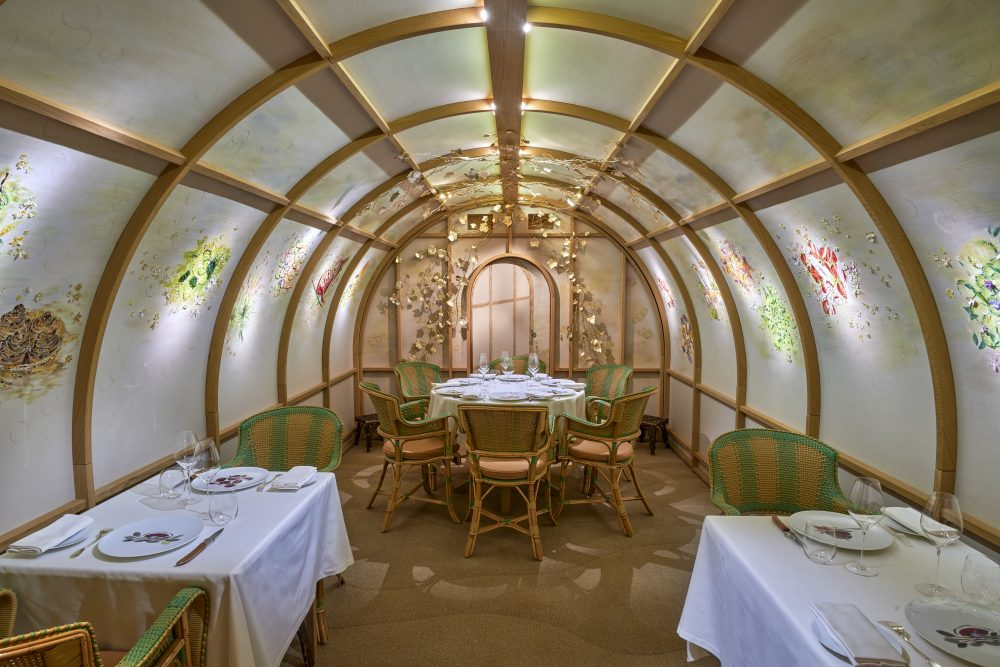
Arpège, Alain Passard’s restaurant on rue de Varenne, has held three stars for over thirty years and is famous for its vegetables, grown in his own gardens. In winter, the menu leans towards roots, squashes and earthy, beautifully simple cooking.
L’Ambroisie on the Place des Vosges lost its third star this year after more than three decades at the top, but it remains one of the most beautiful and old-fashioned dining rooms in Paris, with tapestries and flowers. For a classic French dinner after an evening walk under the arcades, it’s still very special.
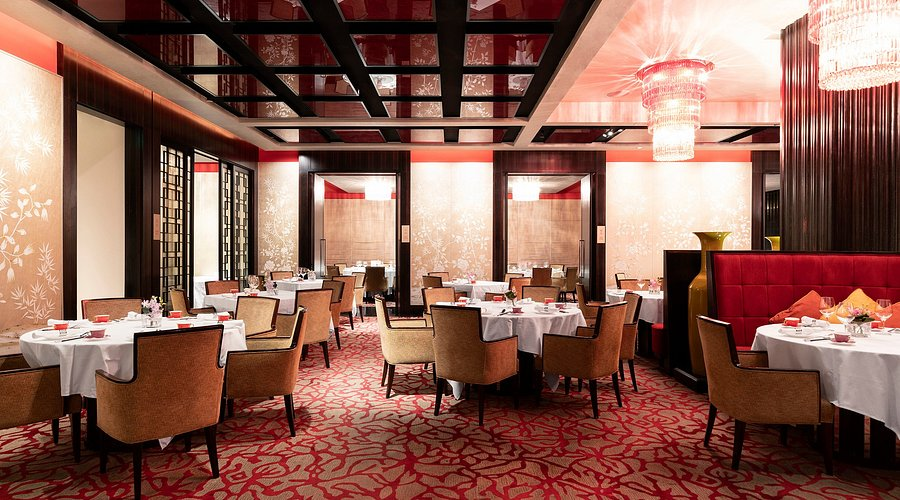
For something less formal, Shang Palace at the Shangri-La is the place for refined Cantonese food and dim sum, and Boubalé at Le Grand Mazarin serves warm, generous plates that are perfect on a cold night. For atmosphere, have lunch at Le Train Bleu at the Gare de Lyon, a Belle Époque dining room with painted ceilings and gilded mouldings that looks particularly magical in December.
Etiquette. Service is included in French restaurant bills by law, so tipping isn’t expected, though rounding up or leaving a few euros for good service is appreciated. Many restaurants close on 24 and 25 December or offer special set menus for the réveillon, so check before you book. Lunch is often the best way to experience a starred restaurant at a lower price. Dress smartly: Paris dresses up for dinner, especially in December.
Practical Notes
Getting there. The Eurostar from London St Pancras to the Gare du Nord takes around two hours and twenty minutes, and is by far the most elegant way to arrive. Business Premier gives you a meal, lounge access and a short, calm journey. Book early for December weekends.
Getting around. The Métro is fast and efficient, but at Christmas a private driver is worth the cost, especially in the evening, when you’ll want to go from dinner to a lit avenue without walking in the cold. Taxis are easy to book through the G7 app. Central Paris is very walkable, but distances add up in winter.
How long to stay. Three or four nights is ideal: enough time for the windows, a market or two, a museum each morning, a great dinner each night and a day trip to Versailles.
Budget. A luxury four-night stay for two, with a palace hotel, two starred dinners, teas, a private guide and Eurostar Business Premier, costs around £8,000 to £14,000. Staying in the Marais and choosing one starred lunch instead of dinner can bring that down considerably.
Tourist tax. Paris has one of the highest tourist taxes in Europe. In 2026, it costs €15.93 (around £14) per adult per night in a palace hotel, and €11.70 (around £10) in a five-star hotel. It’s added to your bill at the end of your stay.
Status and safety. Paris is safe, but pickpockets work the busiest markets, the Métro and the queues for the big monuments, so keep your bag closed and in front of you. Expect bag checks at the entrances to markets and department stores. Strikes do occasionally affect museums and transport, so check before you go. Many museums are closed on 25 December and 1 January.
What to pack. A warm wool coat, a scarf, gloves, waterproof boots, and an evening outfit for dinner and Midnight Mass. A compact umbrella is useful: December in Paris is more often damp than snowy.
The Last Word
On my last evening, I walked back along the quai from the Île de la Cité after dark. The bridges were lit, the river was black and still, and behind me, the bells of Notre-Dame began to ring for evening Mass. In the distance, the Eiffel Tower started to sparkle on the hour. I stopped on the Pont des Arts with my hands deep in my pockets and simply watched. Paris at Christmas isn’t really about the markets or the windows, beautiful as they are. It’s about those moments when the city, cold and glittering and completely itself, seems to put on a show just for you. Go once, and you’ll find yourself planning the next December before you’ve even caught your train home.