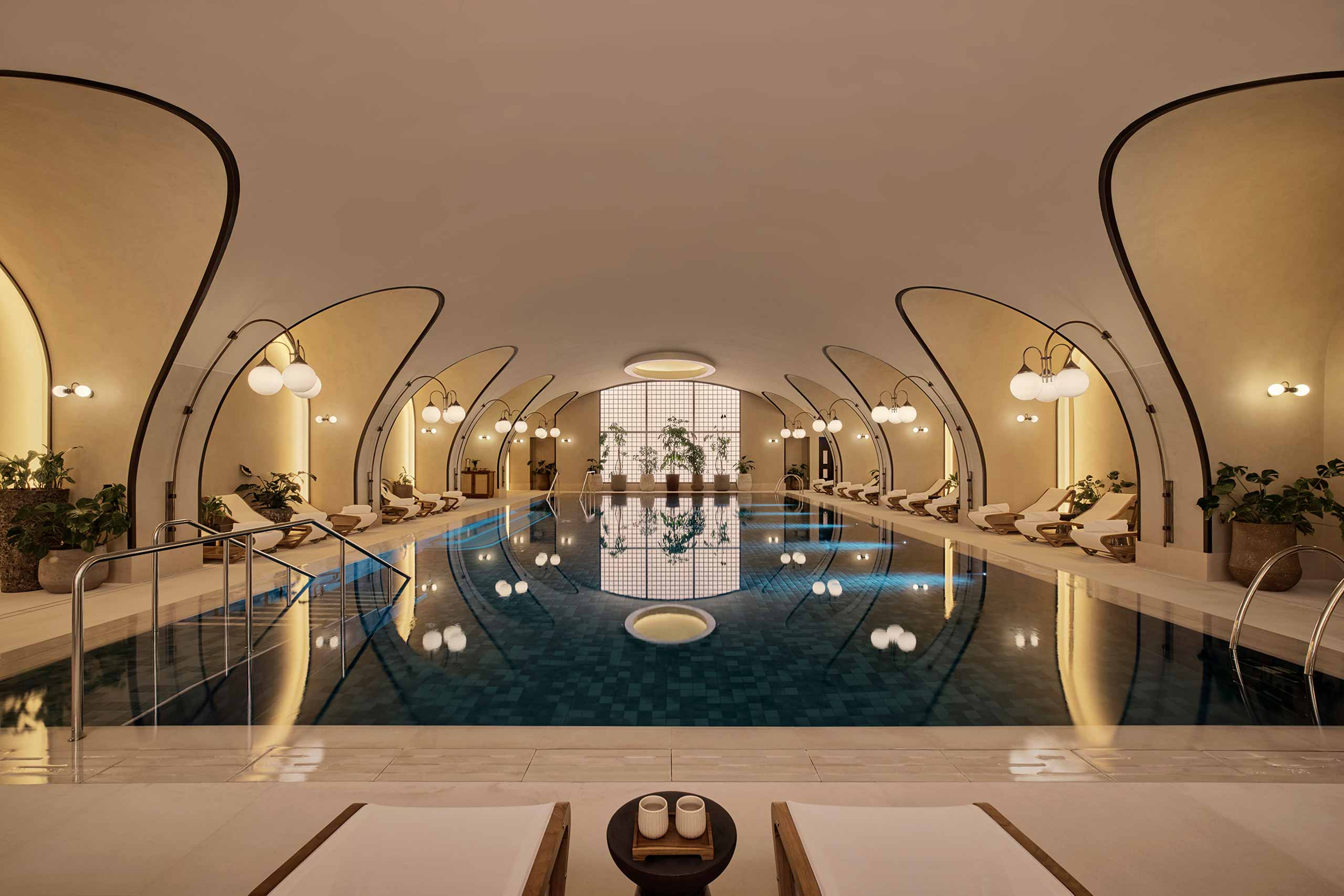
There is a particular moment that defines a good spa. It is not the scented towel or the ambient music, both of which have become so standardised they register as silence. It is the moment, usually about forty minutes into a treatment, when you stop running the list of things you need to do and simply stop. London, for most of its history, has not been especially good at engineering that moment.
The city’s relationship with rest has always been slightly suspicious, as though stopping were a failure of ambition rather than a basic requirement. What is changing in 2026, with more new spa openings than the capital has seen in a decade, is that the infrastructure has finally started to match the demand. Not all of it earns the billing. Some of it is genuinely extraordinary. What follows is the honest edit, ordered by what each address does best, so you can match the spa to what you actually need rather than what sounds impressive in a headline.
Six Senses London: for the full biohacking and clinical wellness experience
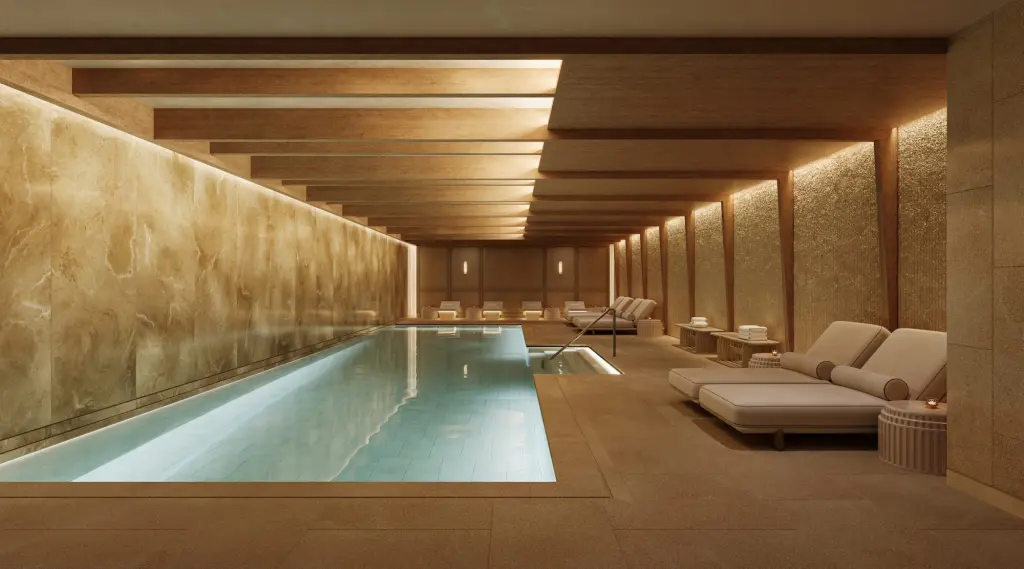
The spa at Six Senses London arrived after years of anticipation and a restoration of the Grade II-listed former Whiteley’s department store in Bayswater that cost considerably more than anyone has confirmed publicly. It is, by some margin, the most ambitious wellness facility London has ever housed in a hotel. At 25,000 square feet across a single underground floor, it operates less like a spa and more like a wellness city: a subterranean world of treatment rooms, each dedicated to a different practice, spreading outward beneath Queensway in a configuration that would feel labyrinthine if it were not so beautifully organised.
The entrance makes an impression before the first treatment begins. A chandelier-hung lobby with ceiling heights that feel architecturally improbable for a basement leads into a warren that contains rooms for flotation, cryotherapy, red-light therapy, hammam, contrast therapy, electromagnetic treatment, crystals, and a biohacking recovery lounge with AI-powered exercise bikes and electrical muscle stimulation machines. A recovery room screens time-lapse films of mushrooms by documentarian Louie Schwartzberg. The gym is fitted with 1930s-inspired hardwood panelling and leather equipment and is the most beautiful hotel gym in London, which is a low bar until you see it and recalibrate.
The Alchemy Bar is the single most distinctive element of the Six Senses offering and the thing most worth booking. It is an apothecary-style space where plant medicine specialists, working with seasonal British botanicals sourced from across the UK, conduct one-on-one consultations and then translate the findings into bespoke tinctures, hydrosols, teas, and supplements made to order. One workshop involves distilling the essence from magnolia leaves, freshly harvested in Sussex. The specialist at the bar works through your lifestyle, sleep patterns, and specific concerns before selecting extracts; the session ends with a small jar of something that smells of green stems and wet stone and which, depending on your inclination, either constitutes genuine plant medicine or a very well-executed ritual. Either way, it is an hour unlike anything else available in London.
Before any treatment, the spa encourages guests to take a wellness assessment with a practitioner, which tests 40 biomarkers and produces tailored treatment recommendations. The lymphatic body reset massage, which the assessment frequently recommends for stress-overloaded visitors, is gentle and genuinely effective. The De Mamiel products used across the treatment menu are formulated in collaboration with British skin health specialist Annee de Mamiel and are the most considered product partnership in any London hotel spa.
A note of transparency: the magnesium pool and several hydrothermal facilities experienced teething problems at launch in March 2026, with a leak discovered four weeks before opening. Reviews from the opening period document these closures. The facilities are confirmed as resolved; if you are visiting specifically for the thermal journey or the magnesium pool, call ahead to confirm availability. The Alchemy Bar and treatment rooms have been fully operational throughout.
Six Senses London, The Whiteley, Queensway, W2. Spa day access from £150. Treatments from £90. Hotel rooms from £1,125 per night. Book at sixsenses.com.
Cambridge House, Auberge Collection: for the most architecturally extraordinary new spa in London
Cambridge House on Piccadilly is opening later in 2026, and the spa is the reason to mark the date. The building it occupies is a Grade I-listed Georgian mansion commissioned by the 2nd Earl of Egremont in 1756, which has hosted Queen Victoria, served as the London residence of the Duke of Cambridge, and spent its most recent decades as the In and Out Military Club before the Reuben Brothers acquired it and handed it to Auberge Collection for transformation. Jean-Louis Deniot is overseeing the hotel’s design. Laura Gonzalez, whose work has a particular talent for warmth within formal architectural settings, is designing the spa.
The concept draws from Britain’s healing traditions and Roman bathhouse architecture, which is a more interesting reference point than the generic wellness language most hotel spas deploy. Practically, this means two heated swimming pools, extensive hydrotherapy facilities, seven treatment rooms, wet zones, heat rooms, a bathhouse, and a circular relaxation lounge with a fire pit at its centre. The wellness philosophy, which Auberge calls the Joy of Wellbeing, will be delivered through a master-in-residence programme and immersive sensory rooms using sight, sound, and scent. The spa occupies two floors, which in the context of a Georgian Piccadilly mansion means something considerably more dramatic than the word “double-level” usually implies.
The broader hotel is worth understanding as context. Major’s Grill, the flagship restaurant developed in collaboration with Major Food Group, the team behind Carbone and Torrisi, will occupy the Georgian ballroom. An open-air jasmine courtyard sits at the heart of the building. The spa is the counterpoint: a retreat within a social destination, designed for the recovery that follows the dinner rather than the replacement of it. The fire pit in the circular relaxation lounge is a specific and intelligent addition for a London winter afternoon. Book as soon as rates are confirmed.
Cambridge House, Auberge Collection, 94 Piccadilly, W1. Opening 2026. Rates to be confirmed. Check auberge.com for updates.
Waldorf Astoria London, Admiralty Arch, for the most extraordinary address in London, with a spa to match
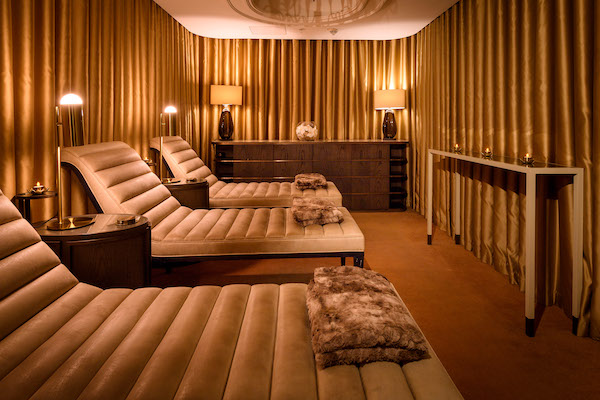
The spa at the Waldorf Astoria Admiralty Arch sits on level three of a building that occupies one of the most architecturally orchestrated positions in European city planning. Admiralty Arch closes the western end of The Mall, the processional corridor that runs from St James’s Park to Buckingham Palace and carries state processions, royal funerals, and the kind of ceremonial occasion London stages with practised ease. Checking in here means entering through a building that has housed Winston Churchill’s wartime office, served as the Naval Admiralty, and spent decades as one of the city’s most recognisable architectural landmarks.
The hotel has 100 individually designed rooms and suites, and the spa sits within a structure where preservation standards are among the most rigorous in England. The wellness sanctuary is smaller than Six Senses London but occupies a building of an entirely different scale of significance, and the combination of Clare Smyth’s Coreus restaurant on one floor and a spa on level three and Daniel Boulud’s rooftop Café Boulud above it creates a vertical experience of the building that rewards a two-night stay rather than a single visit. The subterranean bar, which pays specific homage to former residents Churchill and Ian Fleming through its design language, is worth the visit as a standalone experience after an evening treatment.
Specific treatment menu details for the spa have not been fully released at time of writing; the hotel opened in summer 2026 and pricing is being confirmed through booking channels. For the most current information, book through a Virtuoso-affiliated travel advisor, who will have access to pre-opening rates and room category details. Rates for rooms start from approximately £800 per night.
Waldorf Astoria London, Admiralty Arch, Admiralty Arch, The Mall, SW1. Book at hilton.com or through a Virtuoso advisor.
The Bulgari Spa: for the most beautiful pool in London and fifteen years of earned excellence
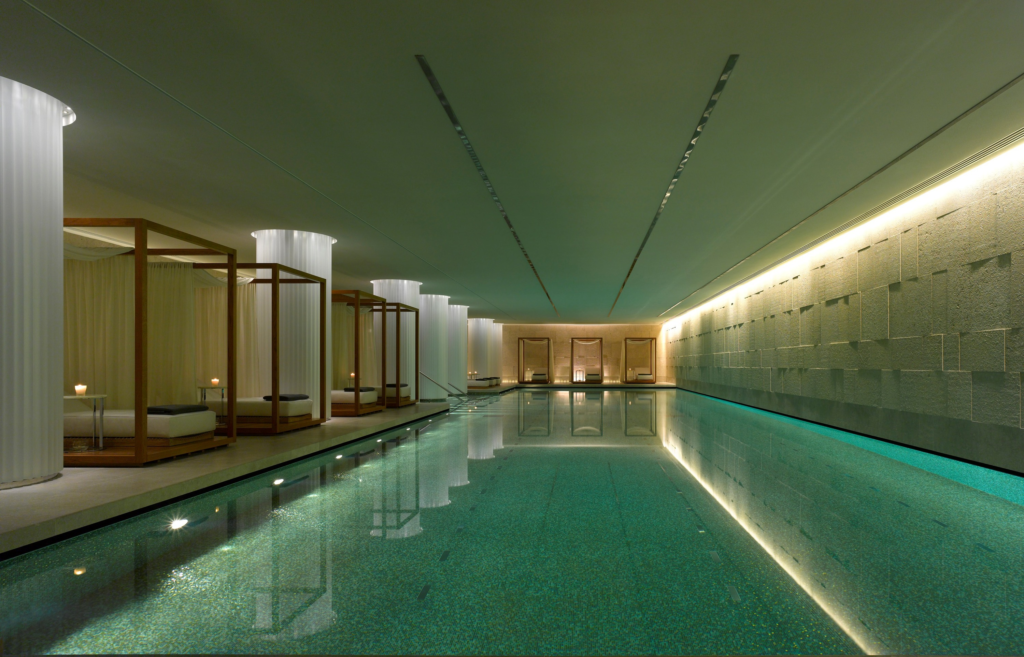
The Bulgari Spa in Knightsbridge opened in 2012 and has spent the fourteen years since doing exactly what it set out to do, without revision, without rebrand, and without generating the kind of press attention that newer openings receive. This consistency is the point. The 11-metre jet-stream pool in black Italian marble is the most beautiful swimming pool in any London hotel, and the claim withstands inspection even now that the city has considerably more competition for the title. The relaxation room, with its deep leather chairs and a quality of silence that feels engineered rather than accidental, is worth the visit before a single treatment has been booked.
ESPA treatments across the entire menu are reliable at a level that justifies the rates: the product quality is consistent, and the therapists work with the kind of precision that requires actual training rather than a two-day certification. The 30-minute express facials are better than they have any right to be. The rate for a spa day without a treatment starts at £80, which for the 11-metre pool, vitality pool, Finnish sauna, steam room, and ice experience is competitive against every comparable London offering. If you want to swim in extraordinary surroundings and then lie in silence for an hour without anyone suggesting biomarker testing, this remains the benchmark.
The Bulgari Spa, 171 Knightsbridge, SW7. Spa day from £80. Treatments from £85. Book at bulgarihotels.com.
The Corinthia Spa: for scale, early mornings, and a three-hour treatment that changes the calculation
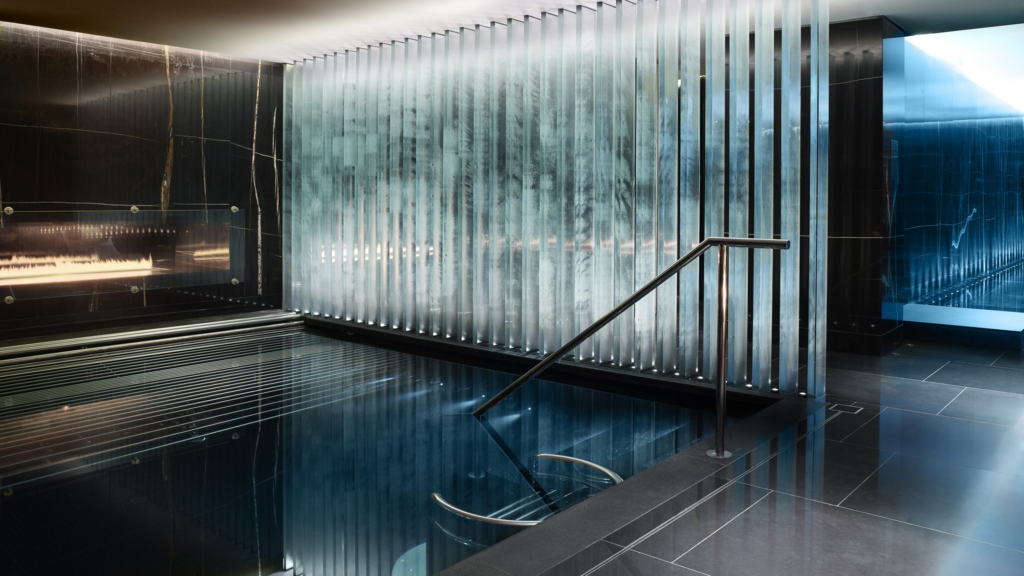
The Corinthia Spa in Westminster is the largest hotel spa in London by total footprint, and the advantage of that size becomes apparent the moment you arrive at 8am on a weekday, when the 17-metre pool and the surrounding thermal facilities are available in a way that is genuinely rare for a central London address. Three floors and 4,000 square metres encompass a thermal journey with Finnish sauna, steam room, ice fountain, and heated mosaic loungers; a vitality pool; movement studios; and a treatment menu of more than 60 options that includes some of the most rigorously developed anti-ageing facial protocols in the capital.
The signature Corinthia treatment is a three-hour bespoke full-body experience assembled from a diagnostic consultation. The therapist works through what your body specifically needs that day and builds the session accordingly, which produces an outcome that is materially different from booking a named treatment off a menu. It takes three hours and the afterglow, the specific quality of calm that arrives when someone has worked properly on your body, lasts noticeably longer than standard massage durations would suggest. The pool remains the headline: 17 metres, beautifully lit, warm, and at off-peak hours offering a level of tranquility that is effectively unobtainable in Zone 1 London for £95.
The Corinthia Spa, Whitehall Place, SW1A. Spa access from £95. Treatments from £100. Book at corinthia.com.
Bamford Wellness Spa, for the best treatment results per pound in the capital
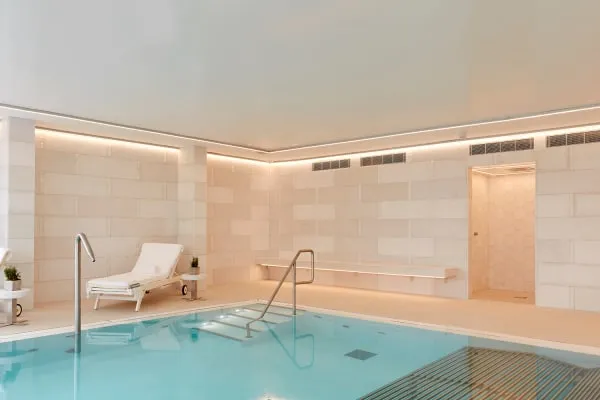
The Bamford Wellness Spa attached to No.5 Hertford Street in Mayfair does not have a 17-metre pool or a subterranean biohacking lounge. What it has is a seriousness about treatment outcomes that most hotel spas cannot match, and a product philosophy rooted in Carole Bamford’s organic farming background that produces results over spectacle. The space is small, dark-walled, warmly lit, with a heat suite containing sauna and steam and a treatment room roster that runs from a 30-minute back massage to a full-day programme.
The De Mamiel facial, which Bamford carries and executes with particular skill, is the treatment most worth planning a visit around: botanically formulated, deeply personalised to your skin’s current state rather than your skin type, and significantly more effective than most comparable facials at considerably higher prices elsewhere. The lymphatic drainage work here is the most effective in London for its price point, applying a technique that is less performative and more structural than the versions offered at larger hotel spas. The Nuori, Moss of the Isles, and Kloris products in the treatment menu are chosen for efficacy rather than brand recognition. That combination, a quiet room, good products, and therapists who know what they are doing, turns out to be sufficient.
Bamford Wellness Spa, 5 Hertford Street, W1J. Treatments from £95. Book at bamfordwellnessspa.com.
For clinical depth and biohacking breadth, Six Senses London is unmatched. For the most beautiful pool in the city, Bulgari. For early-morning scale and the best three-hour treatment in London, Corinthia. For treatment results without theatre, Bamford. For the most architecturally significant spa address in 2026, Waldorf Astoria Admiralty Arch. And for the Roman bathhouse with the fire pit in the Georgian mansion on Piccadilly, Cambridge House later this year. Book early on the last two. The list forms fast.