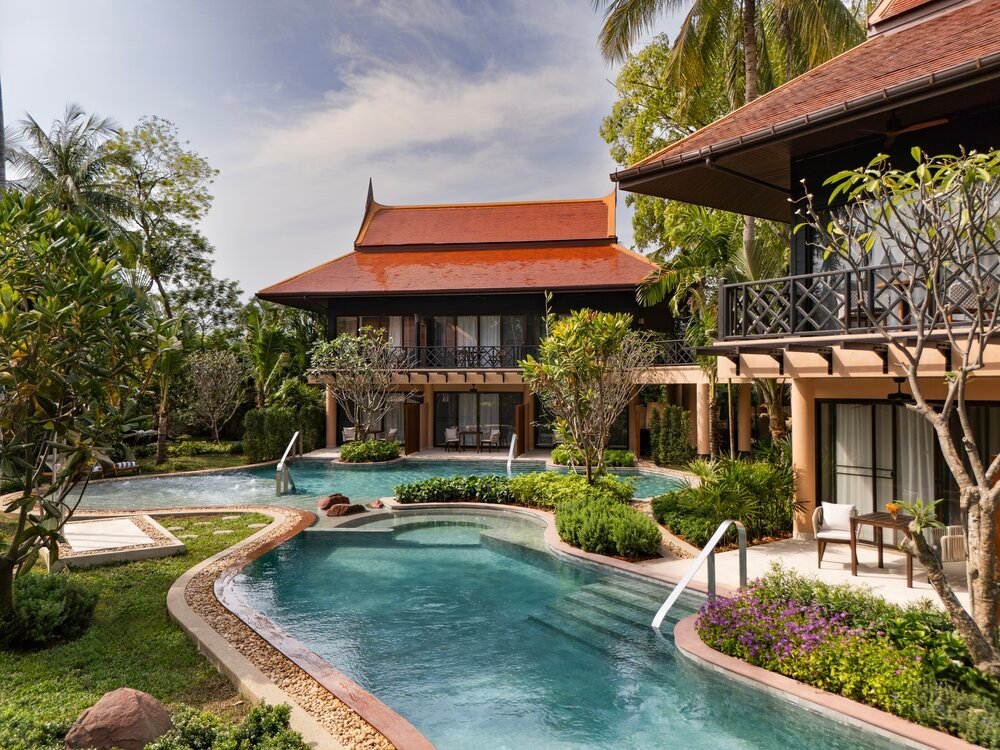
Every luxury hotel group has a first child, the property that taught it what it wanted to be. For Anantara, that child sits on a quiet stretch of the Gulf of Thailand coast, about three hours south of Bangkok, and it has just done something rare. It has torn itself apart, put itself back together and emerged with its character intact.
Opened in 2001 and relaunched on 1 November 2025 ahead of its 25th anniversary, Anantara Hua Hin Resort is the original blueprint for everything the brand became. Bill Bensley, the landscape-minded designer behind so many of the group’s best-loved addresses, drew it as an ancient Thai village set along the sand, with low rooflines, teak, water and a great deal of planting. A quarter of a century later, the village is still here. It simply has better plumbing, smarter dining and, for the first time, a swimming pool you can step into from your own terrace.
A village by the sea, rebuilt without losing its accent
Hua Hin has always been Thailand’s genteel seaside. The railway arrived at the start of the twentieth century, the royal family built summer palaces along the shore, and Bangkok society followed with its sunhats and its sea air. Klai Kangwon Palace, whose name translates as “far from worries”, still stands a short drive from the resort, which tells you most of what you need to know about the town’s temperament. This is not a place of beach clubs and thumping bass. It is a place to exhale.
The resort occupies 14 acres of tropical garden on Phetkasem Road, with direct beach access and a hushed arrival that sets the pace. Bensley’s village concept is the organising idea. Pathways wander rather than march, water appears where you do not expect it, and the buildings keep their heads below the canopy. Resorts of this age often feel tired by their third decade. This one has used the renovation to sharpen the plan rather than abandon it, even extending the original sea frontage so the beach stays within easy reach of the whole property.
There are 171 rooms and suites now, down from the 187 listed in earlier years, and the reduction shows in the space. The tone is contemporary Thai: warm timber, handwoven textures, soft lighting and a palette borrowed from the garden. It reads as calm rather than clever, which is exactly right for a destination whose main selling point is how little it asks of you.
The new Pool Access Rooms, and why they are the ones to book
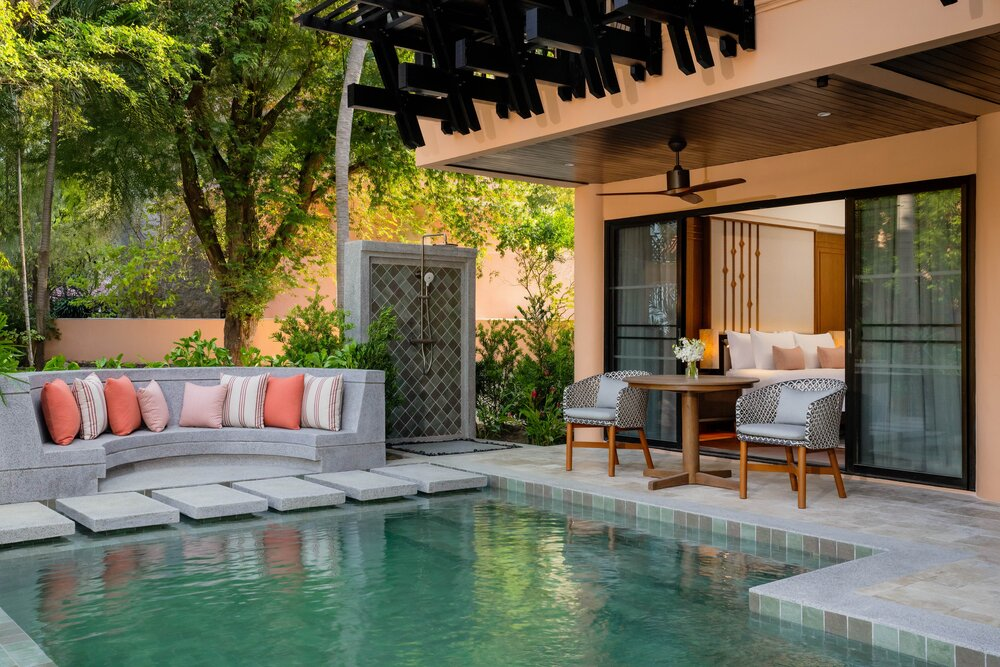
The headline addition is the Pool Access Room, a category that did not exist before the refit. The idea is simple and slightly addictive. Your terrace opens directly onto a shared pool, so the route from bed to water is a matter of a few steps and a towel. Coffee arrives on the terrace, the day’s first swim happens before anyone else is up, and nobody has to negotiate a lobby in wet feet.
Rooms measure between 32 and 36 square metres, which is generous for the category, and each comes with a private balcony or terrace. Garden, sea and pool views are all available. The details are the practical kind that make a long stay easier: a Nespresso machine, a rain shower, a minibar, an in-room safe, a 55-inch television and a yoga mat waiting in the room. That last touch tells you the resort expects you to use the mornings properly.
Step up to the suites and the scale changes entirely. They run from 64 to 124 square metres, with garden, lagoon or sea outlooks, and several have their own private pool. The Club Two Bedroom Family Pool Suite is the showpiece, built for multigenerational trips where everyone wants a door to close but nobody wants to be far away. Its terrazzo soaking tub is the detail worth lingering over, a cool, sculptural bath that feels a long way from the standard resort tub.
Club categories bring access to the Kasara Lounge, which is where the upgrade earns its money. Expect all-day refreshments, afternoon canapés between four and six, and the quiet luxury of late check-out. If you are travelling with children, or simply travelling slowly, that last perk is worth more than it sounds. Departure day at a beach resort is rarely graceful, and the extra hours make it so.
Himalayan salt bricks on the beach, and a breakfast built for lingering
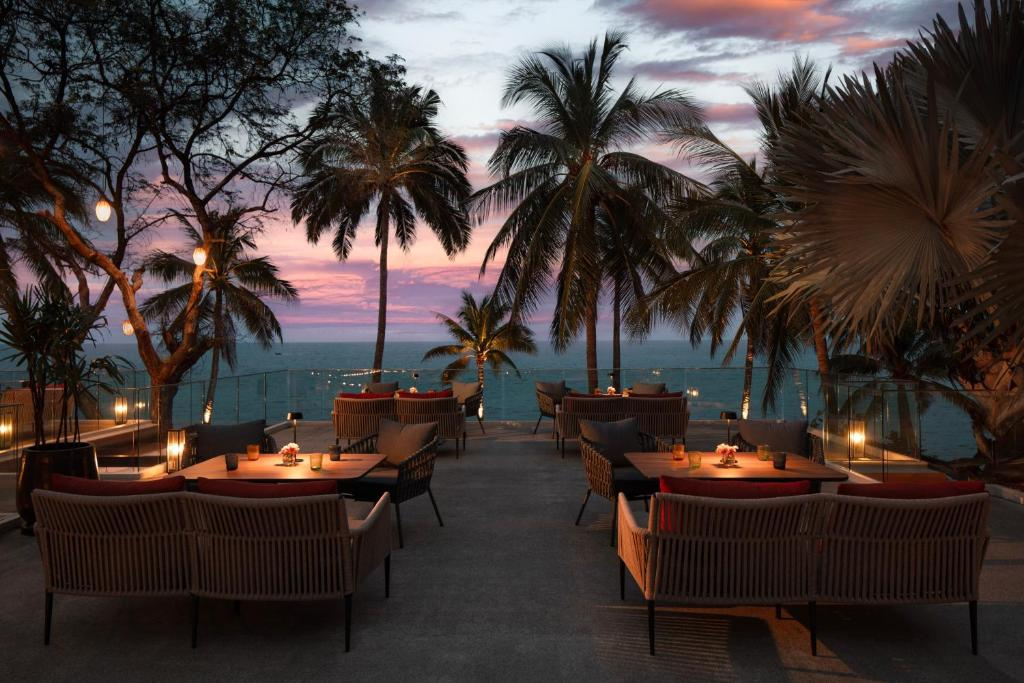
Dining was one of the main targets of the renovation, and the clearest statement is Sea Fire Salt, the beachfront restaurant that replaces the old seaside venue. Its calling card is cooking on Himalayan salt bricks, a technique that sears fish and shellfish while seasoning them gently from below. It suits the premium seafood and grilled specialities that dominate the menu. With 120 seats open from late morning until half past ten, it flexes from long lunches with bare feet to candlelit dinners with the Gulf going dark beyond the terrace.
The beachfront setting does most of the atmospheric work, but the kitchen deserves credit for restraint. Salt-brick cooking is a gimmick in the wrong hands. Here it is a way of letting good prawns and white fish taste of themselves, with sauces and sides kept bright and light for the heat. Order generously and share, and finish with something built around tropical fruit rather than anything heavy.
For Thai cooking at its most traditional, Rim Nam is the table to request. It is a small poolside room with just 34 seats, open only for dinner, and the intimacy is the point. Dishes arrive with the clean, layered balance that defines the best central Thai cooking, sweet against sour, herb against heat, and the setting among the gardens and water gives the whole evening a stage-set glow. Book ahead, because those 34 seats vanish quickly in high season.
Breakfast at Issara Café is a 160-seat affair, and it is the meal guests tend to write home about. The buffet runs from seven in the morning and stretches across Thai, Western and Asian dishes. Go early for the quiet, or late on a weekend, when service runs until eleven. Through the day, the swim-up bar at Loy Nam and the adults-only Lagoon Bar keep the poolside stocked with light bites and cold, fresh drinks.
Two pools, one rule: choose your volume
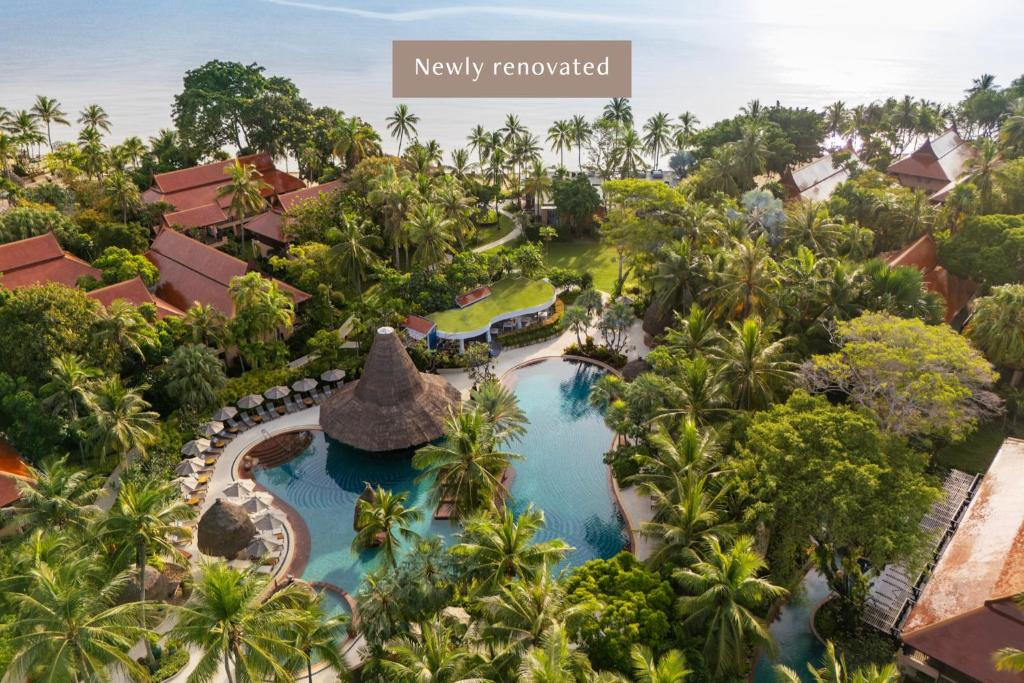
A smart refit gives different guests different ways to spend a day, and the pool layout is the best example. The main pool has been renovated for all ages, with room for splashing, floating and the general commotion of family life. The Lagoon pool is adults-only, framed by gardens and fringed with sun loungers, and it operates at a markedly lower volume. Couples and solo travellers can disappear there with a book for an entire afternoon.
The division is the secret to the resort’s broad appeal. It is genuinely good for children and genuinely restful for adults, two ambitions that most hotels promise and few deliver. Suite guests also receive lagoon privileges, which makes the quiet side even easier to enjoy.
Little Farmers, Muay Thai and the art of keeping everyone busy
Families are central to the new Anantara Hua Hin, and the facilities are more inventive than the usual kids’ club formula. The Little Farmer Kids Club offers creative play, storytelling and supervised activities through the day. Beside it, the Mini Farm lets younger guests meet animals and try hands-on farm tasks, a gentle antidote to screen time that makes for excellent photographs.
Older children and adults are well served by the Active Zone, a compound of sports facilities that includes a Muay Thai training court, tennis, pickleball, basketball, archery, rock climbing and a fully equipped gym. If you have ever wanted to try Thailand’s national sport in a safe, well-coached setting, a lesson here is a more memorable souvenir than anything from the night market. Fitness-minded readers who like their resorts to double as training grounds will find kindred spirits in our guide to luxury hotels that double as five-star gyms.
Cooking lovers should reserve the Thai cooking experience, though it needs booking at least two days ahead. It is the right kind of souvenir activity, because you leave knowing how to rebuild the flavours at home.
The spa, where the bathtubs are outdoors
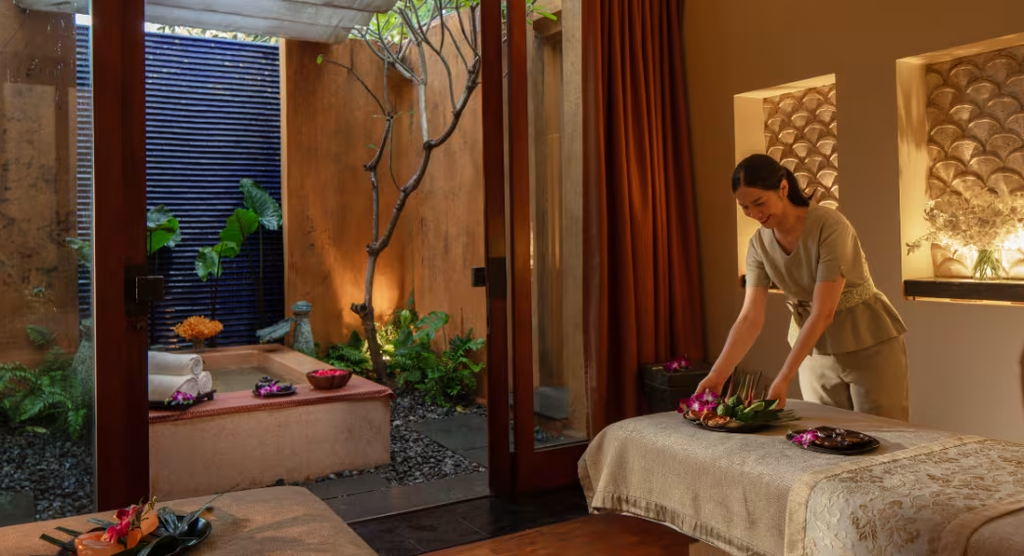
The award-winning Anantara Spa has the same village logic as the rest of the resort. There are six treatment suites, each with an al fresco soaking tub and rain shower, plus a traditional Thai massage sala and two steam rooms. The outdoor tubs are the detail to remember. Soaking beneath the open sky, with the garden dripping green around you, turns a standard spa visit into something closer to a ritual.
Thai massage is the obvious order, and the dedicated sala gives it the right context, with the unhurried, rhythmic pressure that distinguishes the real thing from its hotel imitations. If you prefer oil and stillness, ask for a longer aromatherapy treatment and finish in the steam room. The spa runs from ten until eight, so a late afternoon appointment, after the heat of the day has passed, works beautifully before dinner.
Wellness enthusiasts planning a longer Thai itinerary might also want to read about RAKxa Wellness and Medical Retreat, an island sanctuary near Bangkok, and our edit of spas worth travelling for.
Beyond the garden wall: palaces, caves and a night market
It would be easy never to leave, but the surroundings reward a day or two of exploration. The resort’s concierge arranges excursions to Hua Hin Night Market, the Khao Takiap viewpoint, Wat Huay Mongkol, Maruekkhathaiyawan Palace, Pa La U Waterfall and the hilltop Phra Nakhon Khiri Historical Park, so the cultural highlights of the region are all within a day’s reach. The Royal Hua Hin Golf Course, among the country’s oldest, sits minutes away for those who play.
The single best day out is Sam Roi Yot National Park, whose limestone peaks and coastal wetlands lie to the south. A full-day sailboat trip to Sam Roi Yot combines sea air with the park’s dramatic scenery, and it is rated highly by past travellers. It makes a pleasing contrast with the resort’s calm, a day of salt and wind before returning to your private pool.
Who it suits, and what to know before you go

Anantara Hua Hin Resort is a family resort with a conscience for adults, and that is its greatest strength. Multigenerational groups will love the suites and the Mini Farm. Couples will head for the Lagoon pool and the spa. Active travellers have an entire sports compound at their disposal. Those seeking a hip, late-night scene will be happier elsewhere, and the town itself is more charming than sophisticated.
The renovation has also reset the resort’s position. The Michelin Guide awards it a single Key, describing it as a very special stay, and the quality of the refit supports the claim. It succeeds because it understands its own history. Rather than chasing novelty, it has updated the things guests actually touch and use, from the rooms to the restaurants to the pools, and left the village spirit alone.
For a wider view of the country’s finest beds, our round-up of the most luxurious resorts in Thailand is a useful companion. And for anyone who likes a hotel with a story, there is something moving about staying at the place where an entire brand began.
Practical information
Rates: From approx. £190 per night for a room, with suites and private pool categories priced considerably higher. Direct-booking offers often add resort credit, daily breakfast and a spa massage.
How to book: Reserve through Anantara Hua Hin Resort online, or via the official Anantara website.
Getting there: The resort is at 43/1 Phetkasem Road, Hua Hin. Suvarnabhumi Airport in Bangkok is roughly a three-hour drive, and a private transfer can be arranged. Hua Hin Airport is about ten minutes away for domestic arrivals.