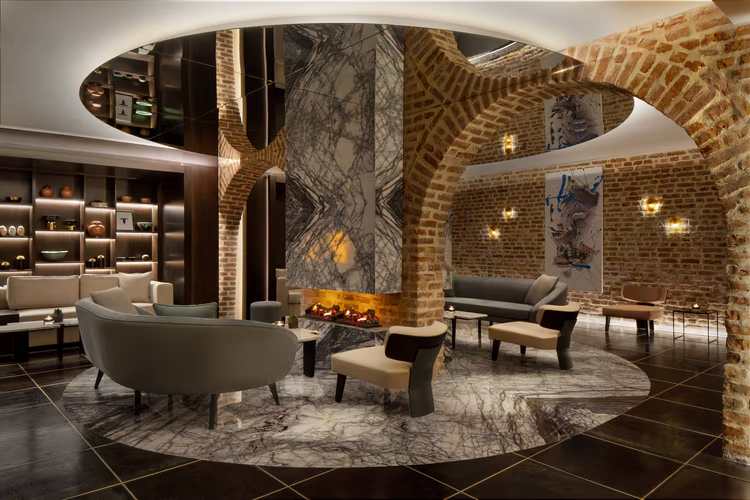
A former soap factory in Karaköy, a rooftop that takes in Galata Tower and Sultanahmet in one sweep, and a kitchen that cooks beautifully, as long as you don’t ask it to improvise.
Every good hotel keeps a secret, and this one’s is architectural. Step out of the lobby onto Mumhane street and you’re in the Karaköy of tiny restaurants with even tinier menus, tables set so close to the cobbles that I learnt to tuck my feet in whenever a car nosed its way through the crowd. Waiters weave between diners and scooters with plates held high. Someone is always laughing. Leave by the other side, onto Kemankeş street, and the city changes its clothes entirely: grander buildings, wider pavements, an international polish and prices to match. Same hotel. Two moods. By the end of my stay I had a ritual of choosing my door according to how I wanted the day to feel, and I suspect that’s exactly the point.
A soap factory, a white piano and a cat called Lokum
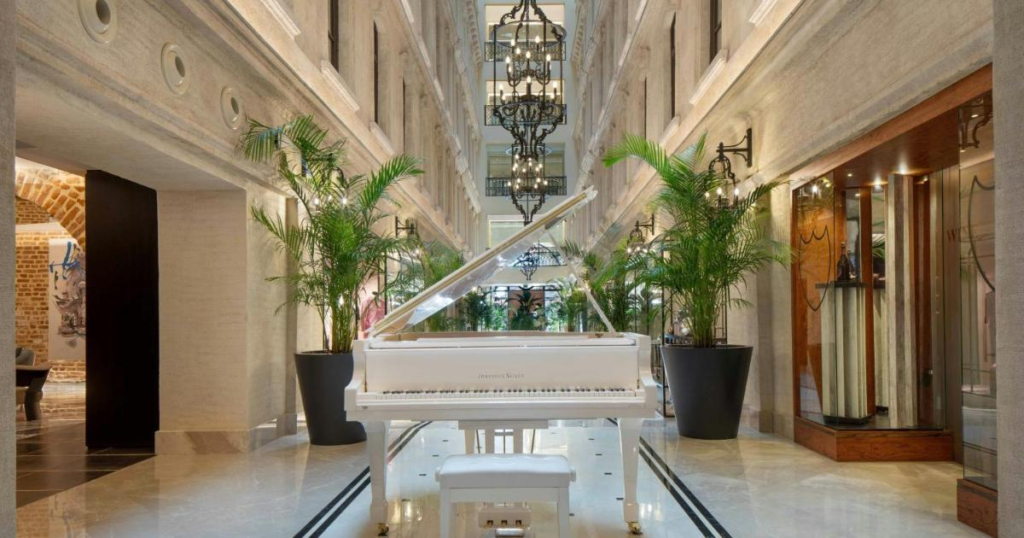
The building is the Veli Alemdar Han, designed by Italian architects as a soap factory almost two centuries ago and carefully restored before reopening as a hotel in 2019. The soap has long gone, sadly. I’d have loved a faint trace of it. In its place is a 35-metre atrium under a glass roof, with enormous chandeliers hanging above a white piano and a line of potted Areca palms whose green, grassy scent reached me before I reached the desk. Light pours down from above all day, and the effect is less hotel lobby than winter garden.
A glass of champagne arrived at check-in, which remains the correct way to begin anything. Service throughout was a touch formal, very smooth and genuinely warm: the house style of Marriott’s luxury brands, done properly. Nobody hovered, nobody fumbled, and requests were met with an easy confidence that made the whole place feel well run.
Then there are the residents. Ada, the hotel dog, can usually be found napping on the Mumhane side, unbothered by the traffic and the tourists photographing her. Lokum, the cat, prefers the more elegant Kemankeş entrance, which tells you everything about her. I spent an unreasonable amount of my stay wondering whether the two ever meet halfway in the atrium, and if so, who blinks first.
One suite, two views and the softest slippers I’ve ever worn
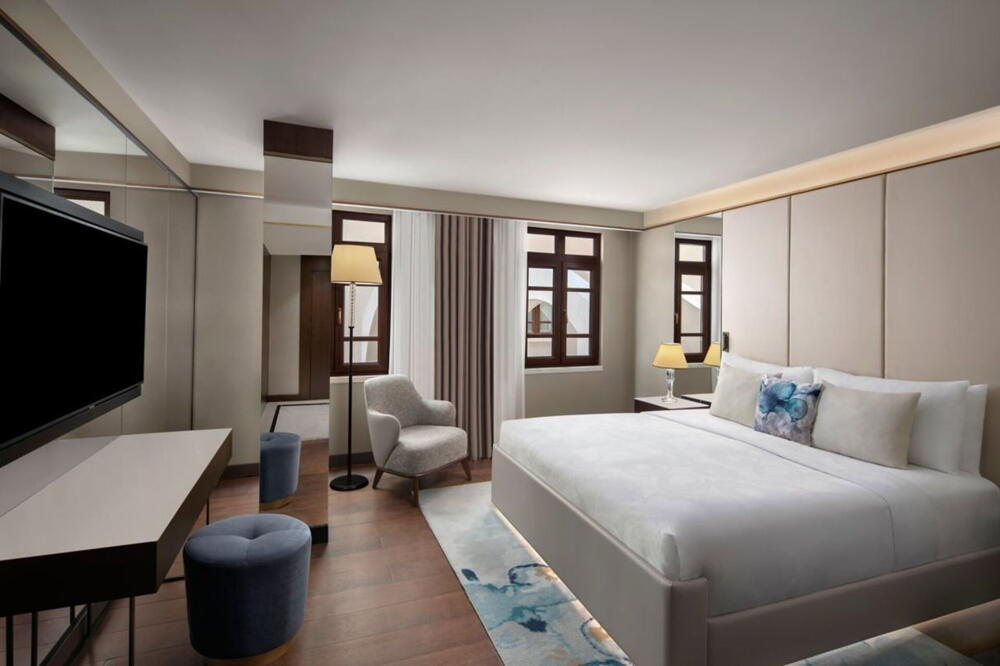
There are 130 rooms and suites, and mine was a Loft Suite flooded with light, the city spread out on one side and the Bosphorus glittering on the other. I woke on the first morning to ferries criss-crossing the water and decided, quite firmly, that I wasn’t leaving the window until coffee arrived.
The layout is the real luxury. A bedroom properly separated from the lounge means you can be dressing for dinner while someone else is still reading on the sofa, and a short hallway connects the two, opening onto a marble bathroom with twin vanities and Aromatherapy Associates toiletries. There’s an alcove bathtub too, more generous than I expected, though it sits squeezed into its corner like an afterthought. A tub that size deserved a better spot, ideally one with a view.
Dark woods keep the space warm, steel blue accents keep it sharp, and a floral carpet sits beneath large abstract paintings of Istanbul landmarks. You always know which city you’re in without the room shouting about it. A sense of place should be whispered, and here it is, a restraint that’s far harder to pull off than it looks.
Because this hotel serves business travellers as much as leisure guests, the interiors lean slightly corporate, and anyone hunting for a boutique feel or the last word in top-tier luxury won’t quite find it. I forgave that faster than I expected, largely thanks to the details. The in-room technology is intuitive enough that I never once reached for a manual. The indirect lighting softens beautifully at bedtime. And the slippers are so padded and cloud-like that I seriously considered smuggling them home.
A welcome tray of fresh fruit, baklava, olives, simit and za’atar was a lovely local gesture. My one gripe: it wasn’t tailored. Anyone who has flagged a dietary requirement before arrival will likely still find honey, cheese and dairy pralines in the mix, and I’ll never understand why hotels at this level still miss such an easy win. It’s an industry-wide blind spot, but that’s no excuse.
Galata Tower, Sultanahmet and the Bosphorus from one sofa
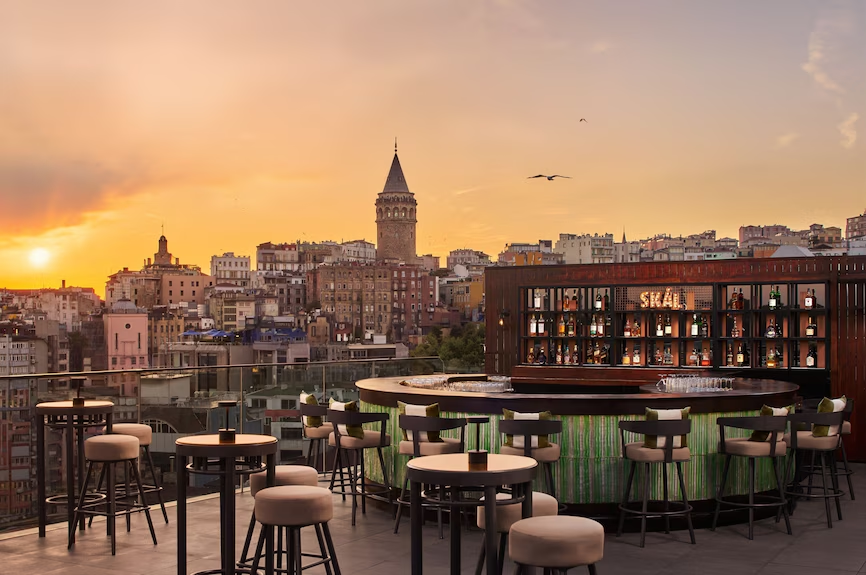
Sky Karaköy, the rooftop, is the hotel’s knockout. I settled into a low-slung sofa at sunset with Galata Tower on one side, the domes and minarets of Sultanahmet glinting across the water, and the Bosphorus running gold between them. I’ve seen Istanbul from a great many terraces. This is, I’m fairly sure, the best view in the city. Late at night the DJs take over, the cocktails get stronger and the crowd gets glossier, a mix of hotel guests, well-dressed locals and people who clearly heard about it from a friend. Come even if you’re sleeping elsewhere.
Downstairs, the choice is almost excessive. The Tea Lounge is where I’d retreat with a book in the afternoons. İOKİ Nau is a dim, moody Nikkei room that feels like a different hotel altogether. The wine cellar is small but properly immersive, far more intimate than hotel cellars usually manage. My favourite, though, was Skull & Bones, a wood-panelled cocktail bar with a mosaic skull set into the walls, spilling out onto the Mumhane cobbles. It’s slightly irreverent in the best way. Order the Dead Man Walking, take it outside and watch the street.
Octo cooks beautifully, until you ask it to bend
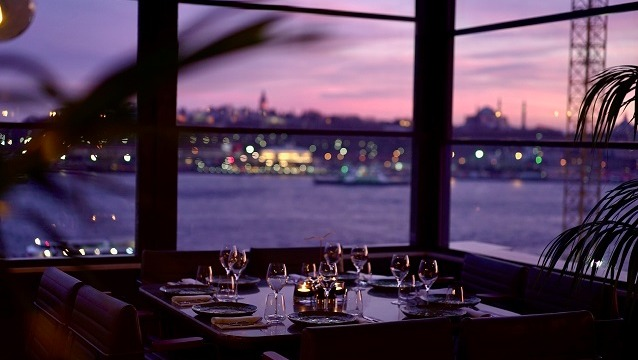
Octo is the fine-dining room, led by Executive Chef Şafak Erten, and its windows frame the same dramatic panorama as the roof. Remarkably, the food holds its own against it. My menu moved across the Eastern Mediterranean: smoky muhammara to start, then braised celeriac with fennel and quince, sweet and earthy at once. The signature artichoke with pearl couscous is made with ingredients sourced from a women’s cooperative, and you can taste the care in it. A cauliflower steak followed, so tender it practically dissolved, and a dark chocolate tart closed things out with real confidence. In a city where you can easily pay far more for far less, this was among the freshest, most elegant meals I’ve eaten in Istanbul.
The catch is the kitchen’s purity. Octo’s commitment to local sourcing is admirable, but it makes the menu rigid. Dishes adapted for dietary needs tend to lose ingredients rather than gain clever replacements, which leaves the plate lighter and less balanced than the original. The fix needn’t compromise the vision. Plant-based manti with yoghurt exists, and it’s delicious. A spiced lentil patty could stand in beautifully for a lamb kebab. With a little more openness, an already excellent restaurant could genuinely punch above its weight.
Breakfast was where this really showed. Options for anyone with a dietary requirement were thin, and off-menu requests turned into a long, confused back-and-forth. The suggestions offered ranged from potatoes cooked in milk to “something special” that turned out to be a standard avocado toast, served on gluten-free bread nobody had asked for, as though one requirement must mean all of them. A handful of solid options printed on the menu would solve it overnight. It could be so simple.
Blonde wood, gold leaf and a herbal tea that never ran dry
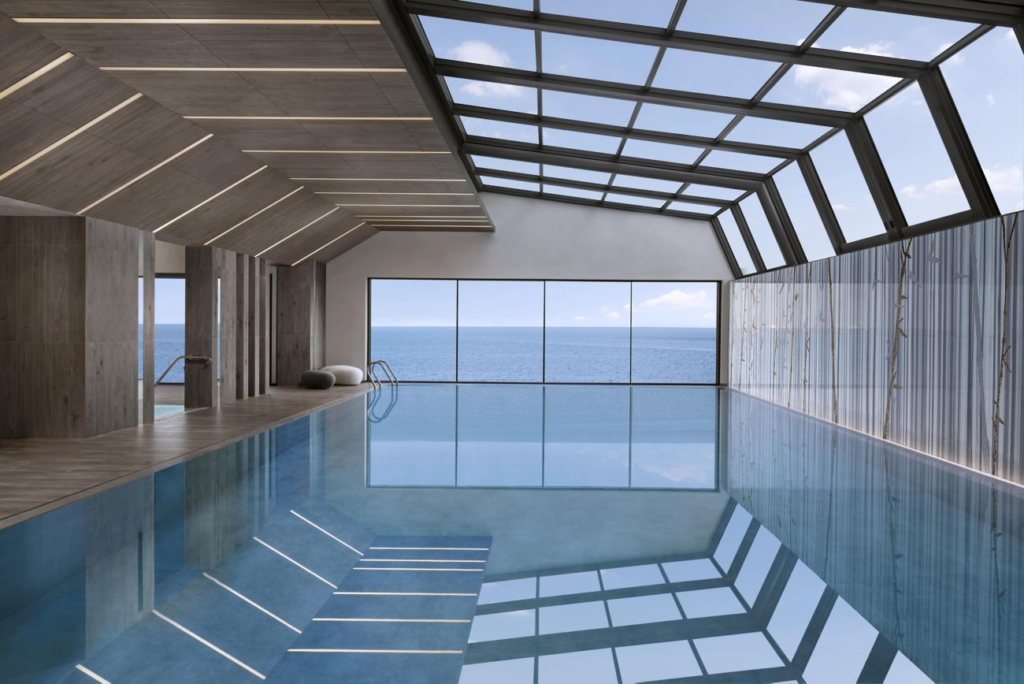
The spa is small but very pretty, all pale blonde wood with golden touches, and it has that hushed, slightly sleepy atmosphere I look for after a long day of walking. I drifted between the sauna and steam room for the best part of an hour, and every time I returned to my lounger, a member of the team had quietly topped up my herbal tea. That’s the kind of attention you remember. The gym runs around the clock for the disciplined. This isn’t a destination spa, but as a pocket of calm in one of the world’s most restless cities, it does its job beautifully.
The neighbourhood is the reason, and it’s changing fast
Karaköy is the real draw. Not long ago this was a slightly rundown maze of warehouses and workshops left over from its industrial years. A shoreline redevelopment worth billions has since turned it into one of Istanbul’s most exciting addresses, with tastemaking new museums, gallery spaces tucked into the backstreets and the old city’s great monuments within easy walking distance.
What I loved most was the tension. More than anywhere else in Istanbul, Karaköy feels ancient and brand new at once. You can spend the morning among Byzantine and Ottoman history, then wander into a backstreet art space that seems determined to question all of it. That energy flows straight through the hotel’s doors, bringing a mixed, creative crowd and a social buzz you’d normally associate with a small independent address rather than a JW Marriott. On nights when breakfast had let me down, it also meant some of the city’s best dining was a two-minute walk away.
The Karaköy ferry terminal is a short stroll from the lobby, and the crossing to Kadıköy on the Asian side is one of the great cheap thrills of Istanbul. Head for the produce market, where pickled vegetables are stacked in jewel-coloured pyramids and cats sleep on the canopies above the stalls. Nearby, the grand Haydarpaşa Station, long the city’s gateway to Anatolia, is due to reopen as a cultural centre and archaeological park after a 16-year restoration. Worth checking before you go.
Choose your door carefully here. Then choose the other one tomorrow.
PRACTICAL INFORMATION
Rates from: Around £300 a night for a double, room only, varying by season.
How to book: marriott.com
Getting there: Istanbul Airport (IST) is roughly 45 to 50 minutes by car; Sabiha Gökçen is a similar distance on the Asian side. Galata Tower and Galataport are about ten minutes on foot. Istanbul is GMT+3.