One session of needle-free skin tightening in Notting Hill, a lymphatic massage I wasn’t expecting, and a therapist who planned the whole treatment around my event the next day.
Somewhere between the sculpting massage and the serum tutorial, it dawned on me that I was going to leave this facial knowing more about my own skin than when I walked in. That was not the plan. I had come for a machine. I stayed, happily, for the education.
The machine in question is Exion, the radiofrequency treatment that has become the quiet favourite of anyone who wants firmer skin without needles or a week of recovery. It pairs monopolar radiofrequency with targeted ultrasound to warm the deeper layers of the face, which in turn encourages the skin to make more collagen, elastin and its own hyaluronic acid. I had read the science, skimmed the Reddit threads and booked at Young LDN on Westbourne Grove with a deadline in mind: I had an event the following day and no appetite for looking like I’d been through something.
A graffiti wall, a nail bar with screens, and not a white coat in sight
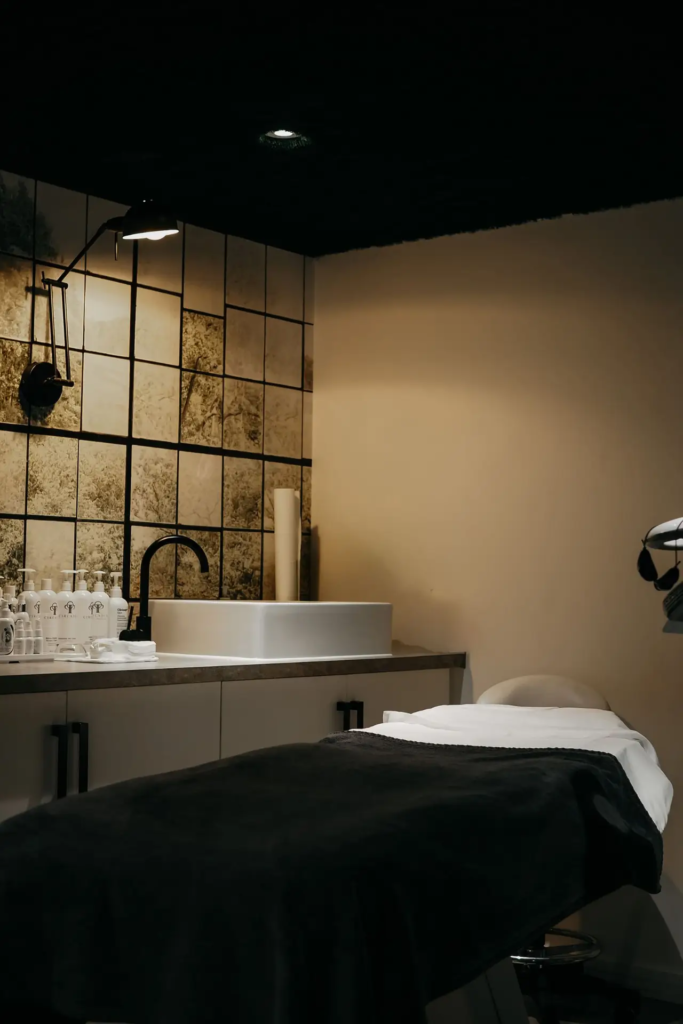
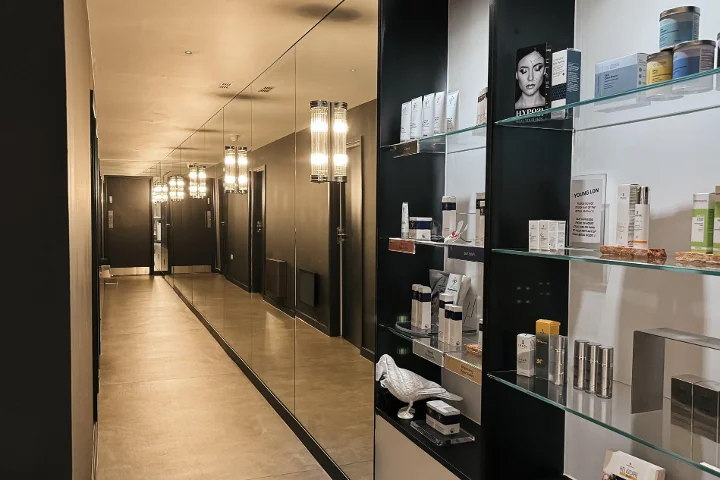
From the street, 228 Westbourne Grove looks composed and a little discreet. Inside, it spreads over two floors and behaves more like a very good social club than a medical practice. There is street art on the walls, which I enjoyed far more than I expected to, and manicure stations with screens built in, so you can catch up on a series while your nails dry. It is a place designed to make people under thirty feel welcome, and, it turns out, everyone over thirty too.
The reason is in the origin story. Sue Carroll founded the studio after trying to find specialist help for her teenage son’s hormonal acne and discovering that the choice was between cold clinics and charming salons without the expertise. She wanted both in one building. So the first clients were teenagers, treated for acne, congestion and redness and sent home with a proper lesson in skincare. Then, as Grace told me with a grin, their mothers began asking what they could have. The menu grew from there. Lasers, injectables, body contouring and facials now sit alongside each other, and the advanced technology lives in a space called The Lab.
You feel that history in the way people talk to you. Nobody performs expertise at you. They simply have it, and they share it.
She asked about my diary before she asked about my skin
Grace came to fetch me from the waiting area, and within a couple of minutes we were chatting like people who had met before. She is warm and unhurried, a talker in the most useful sense, and her first questions were not about pores. They were about my week. What was the event, what time, would there be photographs?
I told her I wanted to look rested, not flushed, and she built the appointment around that sentence. The order of the steps, the finishing products, the advice she gave me on the way out, all of it was chosen with the next day in mind. She told me exactly what my skin would do in the hours afterwards so I’d have no surprises. I have had treatments at much grander addresses where no one asked whether I had somewhere to be. This is what actually separates a good aesthetic clinic from an expensive one: someone who treats your calendar as part of the consultation.
The massage that came before the machine
I assumed the machine would come out straight away. It didn’t. Grace began with a lymphatic drainage and sculpting massage, working along my jaw, cheekbones and neck with a firm, steady pressure that felt far more like a proper treatment than a warm-up. The puffiness I’d woken up with eased, and my face felt lighter by the time she moved on.
She kept talking as she worked, and this is where the facial turned into something close to a masterclass. She explained what each movement was for, then moved on to how I should look after my skin between appointments. She named the serums she was using, told me what each was doing and showed me how they could fit into a routine at home without turning my bathroom into a laboratory. For someone who has bought a lot of skincare on the strength of packaging, having the logic explained properly was a relief.
A machine that reads your skin as it goes
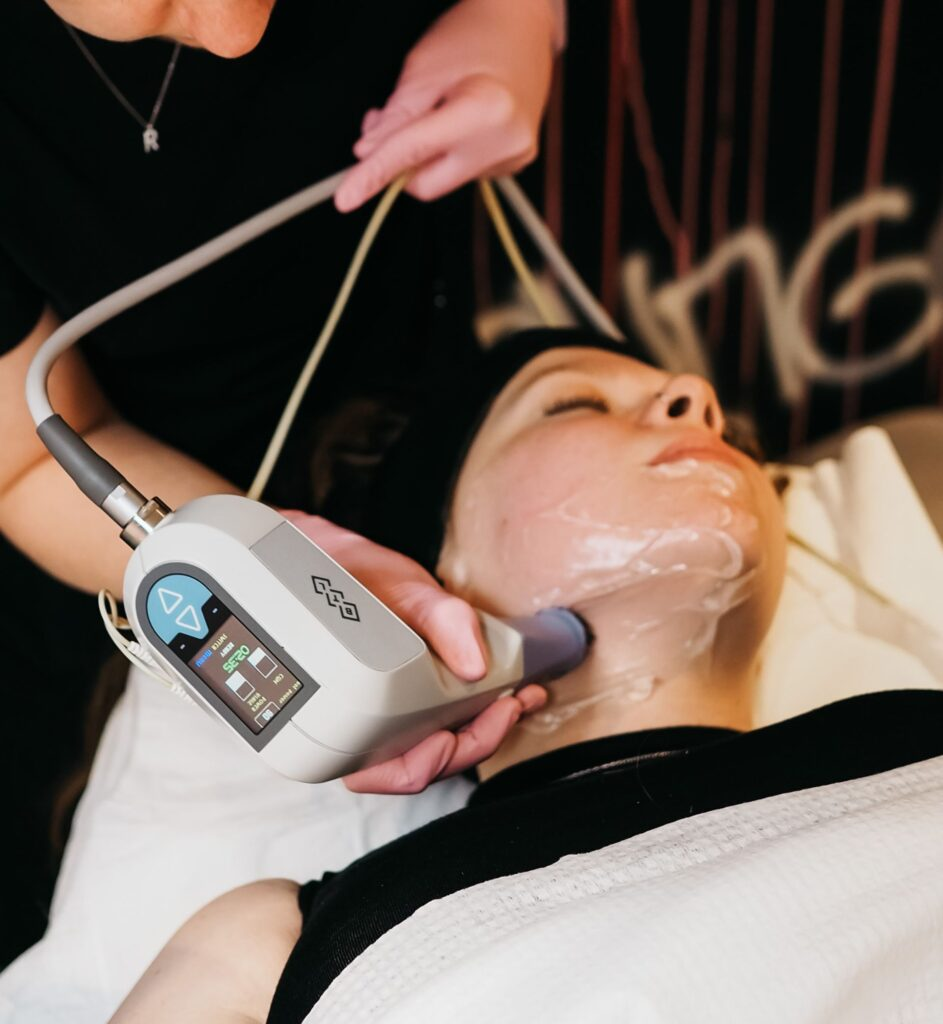
Then Grace showed me the device before using it, which I appreciated. Exion is an AI-assisted radiofrequency machine, and she explained that it monitors the temperature of the skin as the applicator moves, adjusting so the heat stays consistent from one area to the next. That is why it feels so controlled. You are not relying on a therapist’s judgement alone, and you are not being quietly overheated for the sake of results.
The treatment itself began with a careful cleanse, because the skin needs to be completely clear for the energy to travel evenly. A cool gel followed, and then the flat applicator started its slow, upward passes across my cheeks, jawline, forehead and around the eyes. I had braced myself for something sharp, because tightening treatments have a reputation. This was nothing like that. It felt like a warm stone resting on my face and travelling slowly, a deep heat that built and then eased as the device moved on. At some point I stopped answering Grace’s questions and simply lay there, which she took as a good sign.
A session at Young LDN can run from 30 to 75 minutes depending on what is being done. Mine fell comfortably within that. The applicator has cooling built in, which keeps the surface of the skin comfortable while the heat works beneath it. When the passes were done, the gel was wiped away and a soothing moisturiser went on, followed by a high-factor SPF. That last step matters. Freshly warmed skin should not meet daylight without protection.
Pink for a couple of hours, then simply rested
What did I look like when I left? Like someone who had just done a brisk walk. A light flush across the cheeks, some warmth, and a glow I’d describe as healthy rather than polished. Grace had said the redness would fade within a couple of hours, and it did. By the time I got home my skin looked calmer than when I’d arrived, slightly plumper, and noticeably less tired.
That immediate effect is worth understanding for what it is. Increased blood flow and surface hydration make skin look fresher almost straight away. The structural changes, meaning firmer skin, a sharper jawline and softer fine lines, are slower. The manufacturer’s figures, which Young LDN shares openly, point to up to an 85 per cent improvement in skin laxity and a 224 per cent increase in the skin’s natural hyaluronic acid. Those numbers come from the company that makes the device, so I treat them as encouraging rather than conclusive. What Grace was straightforward about is that the real change builds over about three months, as new collagen forms.
I went to my event the next day with skin that looked like mine on a good week. That was precisely the brief.
One session is a taster, not the whole meal
I should be plain about this. I have had one session. It was a lovely introduction and a good way to find out whether you enjoy the sensation, the team and the setting. It is not a course, and I won’t pretend it is.
Clinics generally recommend four to six sessions, spaced seven to fourteen days apart, so the skin’s collagen response stays active instead of drifting back to baseline. Young LDN’s own guidance leans towards a course of four. Results are commonly said to last somewhere between twelve and eighteen months afterwards, and plenty of people book a top-up every few months to maintain them. I haven’t lived through that arc yet, so I can’t tell you what my jawline looks like at month three. I plan to find out, and I’ll report back.
My honest view is this. The treatment is comfortable enough that a full course feels manageable, and a therapist like Grace makes the commitment easier. It is still an investment. Go in expecting gradual improvement, not a transformation by the weekend.
Laser for winter, sculpting for summer
One more thing Grace mentioned that made me trust the place. Young LDN’s year has a rhythm. Laser is the winter favourite, because skin is calmer and sun exposure is lower. Facials and sculpting come into their own in summer, when people want to look good in more light and less clothing. It is a small detail, but it shows a team that plans treatments around the calendar rather than selling whatever is in front of them.
Practical information
Where: Young LDN, 228 Westbourne Grove, Notting Hill, London.
Price: Exion Face sessions start from £260. A consultation costs £30 and is fully redeemable against the cost of your treatment.
Sessions: A course of four to six treatments, spaced seven to fourteen days apart, is generally recommended. Sessions run from 30 to 75 minutes with no downtime, though slight redness can last a few hours.
How to book: Via youngldn.com. Mention any upcoming events when you book and ask your therapist to plan around them.