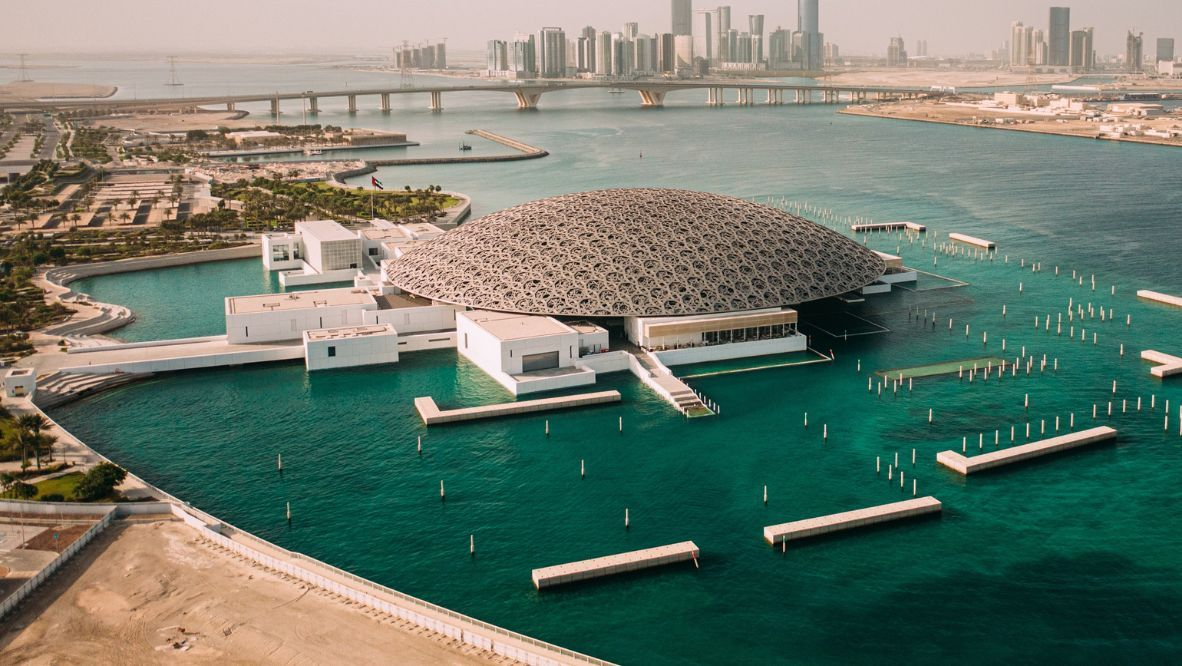
On 11 December, Guggenheim Abu Dhabi opens its doors, and one island will hold a Louvre, a national museum, a natural history museum, an immersive digital gallery and a Frank Gehry. The question is whether that makes a long weekend easy or exhausting.
For most of this century, a serious art weekend has meant choosing a city and accepting its logistics. Paris asks for advance booking and a good deal of walking. Florence asks you to pace yourself across a handful of crowded rooms. Bilbao, for Gehry devotees, has meant a dedicated flight and a single-building pilgrimage.
Saadiyat Island, a short drive from central Abu Dhabi, is proposing something else: one waterfront district where the buildings are the attraction and the distances between them are small. The Louvre Abu Dhabi has stood there since 11 November 2017. Natural History Museum Abu Dhabi opened on 22 November 2025, Zayed National Museum on 3 December 2025, and teamLab Phenomena Abu Dhabi earlier in 2025. The Guggenheim, announced in 2006 and delayed for years, now has its date.
That is a great deal of culture in one place, and most of it is new. The honest version of the story is not that Abu Dhabi has built a rival to Paris. It is that it has built something Paris cannot offer: a compact, climate-controlled, architecturally ambitious cluster designed to be visited in a single trip, with a beach at the end of the day.
This is the planning guide: what each museum actually offers, how the days fit together, where to stay and what to check before you book. Several details, from Guggenheim opening hours to its first exhibition, had not been published at the time of writing, and we say so where they matter.
Louvre Abu Dhabi: still the one to beat
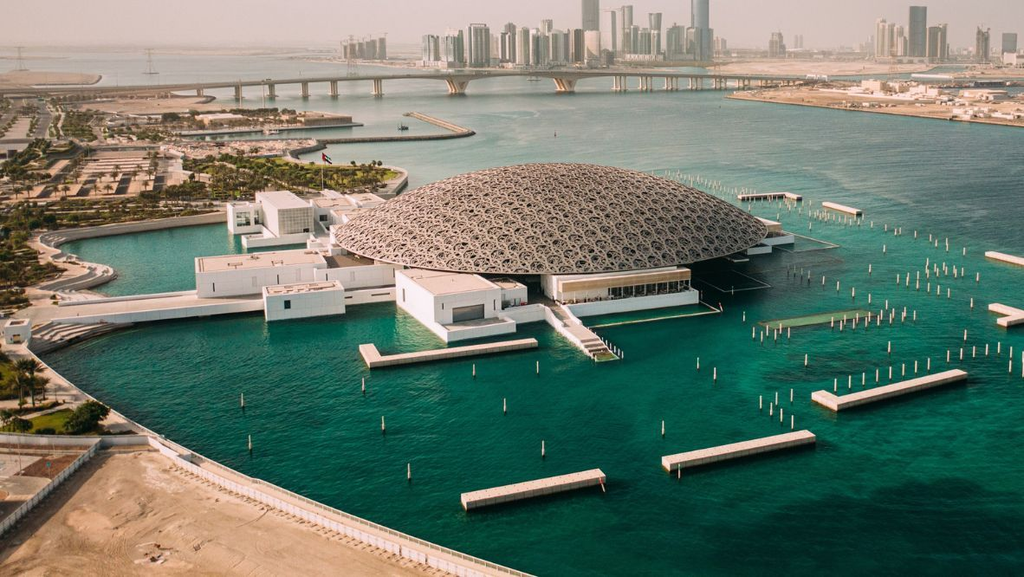
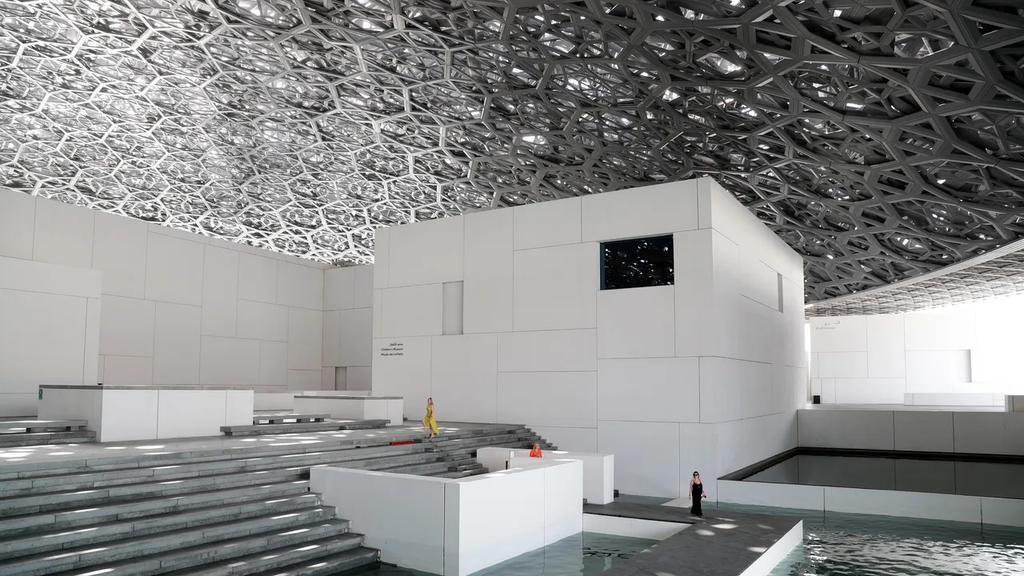
The Louvre Abu Dhabi remains the island’s anchor, and the reason is as much the building as the collection. Jean Nouvel’s dome, roughly 180 metres across, is built from interlocking layers of perforated steel and aluminium, so that daylight reaches the galleries below as a slow, shifting scatter of light often described as a rain of light. It is the rare museum roof that changes the way you see everything beneath it.
Under the dome, a cluster of white galleries sits on the water like a small island town. The permanent displays are arranged to link civilisations rather than march through them by period, so that a prehistoric object, a medieval manuscript and a modern canvas can share a room because they share a theme. That is a different pleasure from the Paris Louvre, which asks you to know what you came for. Here, the curators have done some of the thinking for you.
The collection spans antiquity to the present and includes names visitors will know, among them Van Gogh and Monet, alongside Magritte and Yves Klein. It is deliberately a museum of ideas rather than a single dynasty’s accumulated spoils, and it is easier to take in than most. Allow two to three hours for the permanent galleries, a little longer if a paid temporary exhibition is running or you want to linger at the waterside cafes.
The practical details are straightforward. Adult admission is AED 70 (about £15), and under-18s go free. Gallery hours differ between weekdays and weekends and shift around holidays, so check the museum’s own site before you plan the day. A Museums Pass, valid from 1 March 2026, links the Louvre with Zayed National Museum and Natural History Museum Abu Dhabi, and it is worth pricing against separate tickets if you plan to see all three.
Book a late-afternoon slot if you can. The dome is at its best as the sun drops, and the walk back along the waterfront is the closest thing Saadiyat has to a passeggiata.
Zayed National Museum and the Natural History Museum: the two newcomers
Two of the island’s newest buildings stand within a walk of the Louvre, linked by Al Masar Garden, a 600-metre path that runs from the coast between the Louvre and the Natural History Museum up to the entrance of Zayed National Museum.
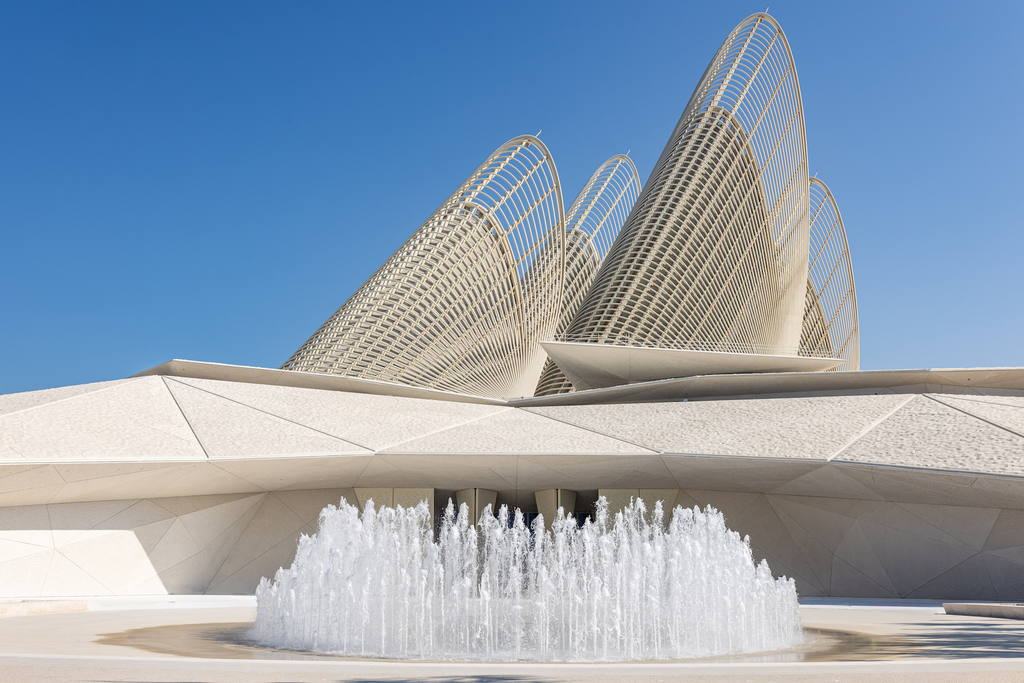
Zayed National Museum opened on 3 December 2025. Foster + Partners modelled the building on the wings of a falcon and topped it with five tall steel towers described as thermal chimneys, so that it reads from a distance as a piece of sculpture. Inside, six permanent galleries tell the story of the region and of Sheikh Zayed bin Sultan Al Nahyan, the UAE’s Founding Father, from deep prehistory through the Bronze Age, trade and the spread of Islam to the modern state. More than 1,500 objects were on display at opening, drawn from a collection of over 3,000, including the Abu Dhabi Pearl, rare folios from the Blue Quran and an 18-metre reconstruction of a Bronze Age Magan boat in the central atrium. It is also one of the first national museums to build sound and scent into its permanent experience.
For an art weekend, this is the museum that adds context. It will not give you a Monet, but it explains the place you are standing in, and that makes the Louvre more interesting by contrast. Adult admission is AED 70. Entry is timed, with arrivals starting at 10am and the final slot listed at 6pm, so book ahead. Modest dress is required, with shoulders and knees covered.
Natural History Museum Abu Dhabi, designed by Mecanoo to resemble rock formations, opened on 22 November 2025. It tells a 13.8-billion-year story, and its headline exhibits are Stan, the Tyrannosaurus rex skeleton, a 25-metre blue whale and a 1.3kg fragment of the Murchison meteorite, which is around seven billion years old. Visitors typically spend two to three hours inside, parking is free, and under-18s enter without charge.
Be honest with yourself about whether you want both. If the weekend is about art, Zayed National earns its place and the Natural History Museum is the one to cut or to give to the children. If you have only two days, we would keep the Louvre, Zayed and the Guggenheim, and treat the dinosaurs as optional.
teamLab Phenomena and the Guggenheim: the two that change the weekend
teamLab Phenomena Abu Dhabi is the island’s least traditional gallery and, for many visitors, its most memorable. Occupying 17,000 square metres beside the Natural History Museum, it is an immersive digital art space where light, sound and movement respond to the people moving through it. Its ticketing partner lists daily hours of 10am to 10pm from 1 May 2026, with last entry at 8.30pm, and a visit usually takes around two hours. Tickets start at about AED 150, so it is the priciest ticket on the island. Hours have varied between sources and seasons, so confirm before you go. This is where an evening slot earns its keep, because the other museums close earlier.
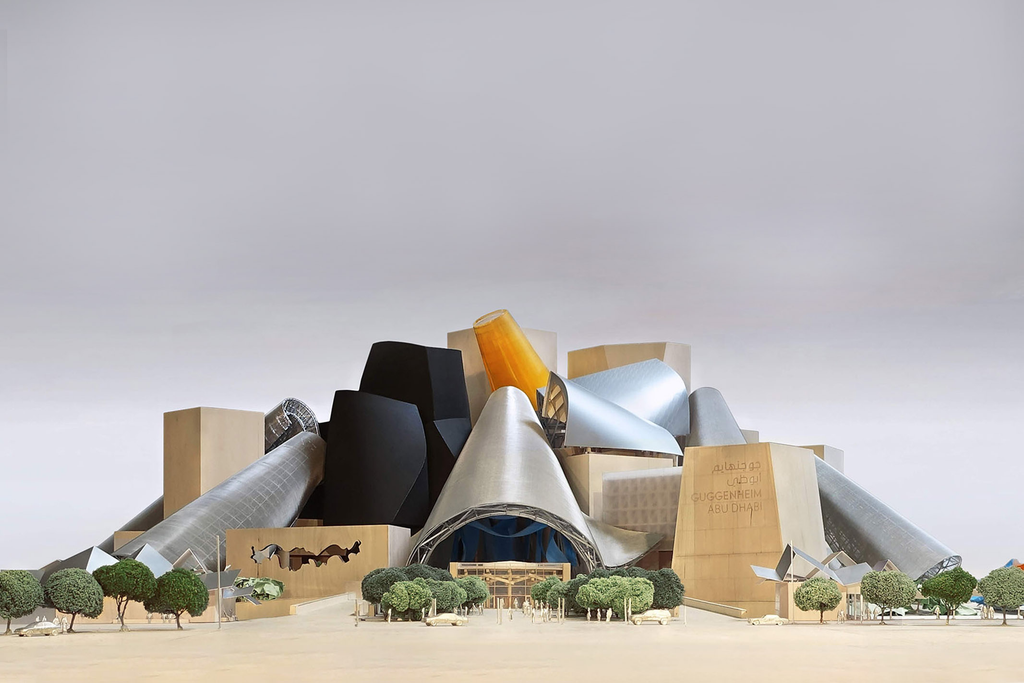
Guggenheim Abu Dhabi is the reason for the timing of this article. The Department of Culture and Tourism announced on 28 July 2026 that the museum will open to the public on Friday 11 December 2026. Designed by the late Frank Gehry, it is the fourth museum in the Guggenheim network, after New York, Venice and Bilbao, and the largest of them. The project was first announced in 2006, construction began in 2011, work paused for several years and resumed in 2019. Nearly two decades on, it has a date.
What we can say with confidence is limited, and it is worth being plain about that. Online tickets went on sale on 18 September 2026, with a full price reported at AED 70. As of mid-October, opening hours, any timed-entry system and the inaugural exhibition had not been announced; the department said the opening programme would follow in the coming months. Anyone planning a trip around the Guggenheim should treat the museum’s own website as the final word and should not build a rigid itinerary around a schedule that does not yet exist.
It is also worth remembering that opening weekends are rarely the best time to see a museum. Crowds are larger, teething problems are common and some galleries can be subject to change. The most relaxed visit will probably come a few weeks after 11 December, once the novelty has settled.
How to order the days
The island’s great advantage is that no two museums are more than a short drive apart, which frees you to sequence them by light and by opening hours rather than by geography. A three-night stay is the comfortable minimum, and it works like this.
Day one, arrival. Fly in, settle and save your energy. Non-stop flights from London take around seven hours, with Etihad operating several a day and British Airways due to return to the route with a daily Heathrow service from 25 October 2026. Keep the first evening for teamLab Phenomena, which stays open later than the museums and asks nothing of you but attention.
Day two, the long museum day. Start with Zayed National Museum when timed entry opens at 10am, while the galleries are quietest. Walk back along Al Masar Garden, have lunch, and then decide whether the Natural History Museum earns two or three hours. Move to the Louvre in the late afternoon, so that you arrive as the dome begins to glow.
Day three, the Guggenheim. Opening day, 11 December, falls on a Friday, so a Friday-to-Sunday trip would put you in the building in its first weekend. That is exciting and also the riskiest choice. A visit in January, once hours and the opening exhibition are settled, is likely to be more comfortable.
A few practical points are worth fixing in advance:
- Buy the Museums Pass if you will see two or three of the Louvre, Zayed and the Natural History Museum, and compare it with individual tickets.
- Book Zayed National in advance, because entry is timed.
- Dress modestly for Zayed, with shoulders and knees covered, and carry a light layer for the strongly air-conditioned galleries.
- Winter days are warm rather than hot, which makes the walk between sites pleasant at the cooler ends of the day.
- Frieze Abu Dhabi holds its first edition from 19 to 22 November, so the emirate’s art calendar is busy even before the Guggenheim opens.
Where to stay and eat
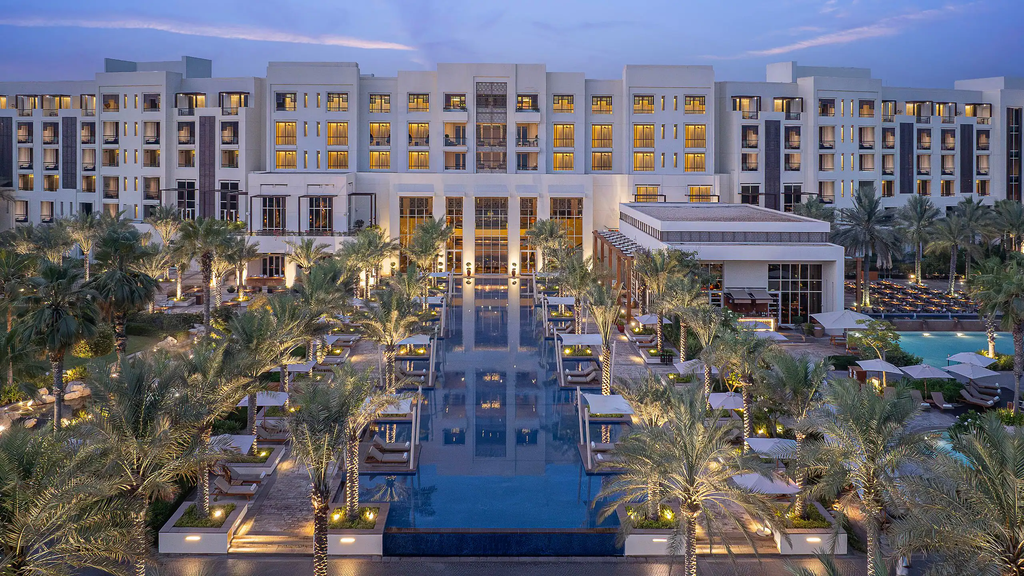
Staying on the island puts you minutes from the museums and a few steps from a protected nine-kilometre stretch of beach where hawksbill turtles still nest. Abu Dhabi’s tourism authority and hotel guides tend to sort the resorts by temperament, and the grouping holds up.
Park Hyatt Abu Dhabi Hotel and Villas is the quiet, private choice, set between the beach and the Saadiyat Beach Golf Club with dunes helping to screen it. It suits couples who want space and calm.
The St. Regis Saadiyat Island Resort is the classic beachfront luxury address, with 376 rooms and suites, private balconies and a strong dining offer. Published starting rates sit near AED 1,950 a night, and winter dates will cost more.
Jumeirah Saadiyat Island Resort is the relaxed, wellness-minded option. It scored 91 points in the 2026 La Liste Top Hotels ranking, and its published rates start at about AED 1,500 a night.
Saadiyat Rotana Resort and Villas and Rixos Premium Saadiyat Island are the family-friendly choices, which matters if the Natural History Museum is on the list.
If you would rather be in town, Rosewood Abu Dhabi and Four Seasons Hotel Abu Dhabi on Al Maryah Island are roughly 15 minutes from Saadiyat, trading the beach for the city skyline.
For eating, the sensible approach is to treat your hotel’s restaurants as the base and add the museums’ own cafes at lunch. December is peak season, so reserve dinner tables when you book the room. Saadiyat Public Beach is free to use for a nominal parking fee, which is a good option on a day when you want the sea without a resort bill.
Rates and availability for December are likely to move quickly once the Guggenheim date draws attention, so price the trip now rather than in November.
The verdict: easiest, yes, but not the deepest
Is Saadiyat the easiest art weekend in the world? On logistics, very probably. Five major institutions sit within a short drive of one another, the hotels are beside the beach, a pass links several of the tickets and the winter climate is kind. Nobody in Paris or Florence enjoys that combination.
It is a different question whether it is the best. Paris and Florence offer centuries of accumulated collections, the sense that a city has been making and arguing about art for a very long time, and the pleasure of stumbling on a masterpiece in a side chapel. Saadiyat offers none of that, and does not pretend to. What it offers is a curated, purpose-built district, strong on architecture and on context, and still finding its voice. The Louvre Abu Dhabi has a distinctive thesis. Zayed National has a story to tell. The Guggenheim has a name and a Gehry building, but its programme is the great unknown.
So the trip suits a particular traveller: someone who wants culture without friction, who enjoys architecture as much as paintings, who likes a beach at the end of the day and who is curious to see a new museum district while it is still new. It will suit less the traveller who wants an old city’s depth, or who dislikes planned, polished environments.
Our advice is to go once the Guggenheim has settled in, in January or February, and to give it three nights rather than two.
Before you book: check the travel advice. The Foreign, Commonwealth and Development Office advised against all but essential travel to the UAE for much of 2026 because of regional tensions, and removed that warning on 18 June 2026. It continues to describe the situation as unpredictable, and insurance can be affected if advice changes. Read the current GOV.UK advice for the United Arab Emirates before you pay a deposit, sign up for its alerts, and confirm that your insurance covers the trip.