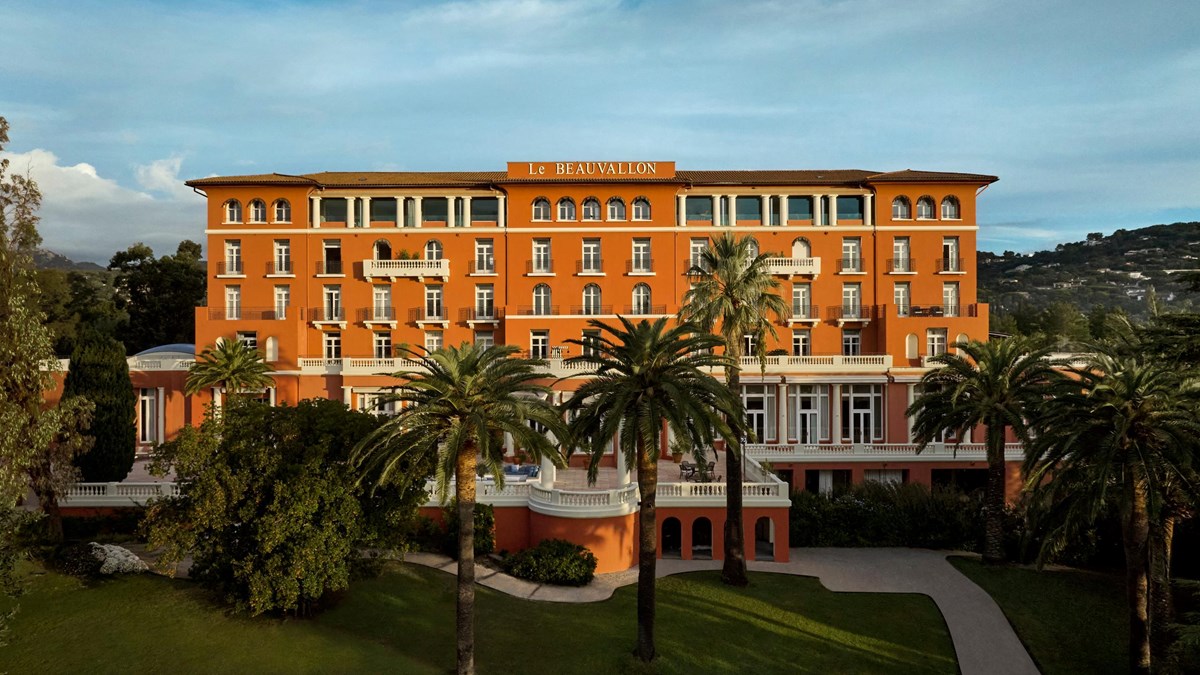
A Belle Époque palace, a Pritzker Prize pavilion in the garden, and Yannick Alléno at the beach club: the Côte d’Azur just raised the bar.
There is a particular moment, arriving by boat across the Gulf of Saint-Tropez at dusk, when the light does something to the water that no amount of Instagram preparation adequately conveys. The bay turns the colour of old gold. The yachts sit at anchor like punctuation marks in a sentence you’re not sure you understand yet. And ahead of you, rising through ten acres of palms and umbrella pines on a private hillside, is a Belle Époque palace that has been quietly accumulating history since 1914, and which has, as of April 2026, found arguably its finest chapter yet. I had been told to expect something special. I had not been told to expect this.
The boat journey from Saint-Tropez takes eight minutes. I spent most of it facing backwards, watching the port recede, thinking about how strange it is that the best way to arrive at a Riviera hotel in 2026 is the same way people arrived at everything in 1924. The speedboat is complimentary. The captain, Régis, seems genuinely delighted to be doing this job, which sets a tone. By the time we pulled up to the private pontoon and I stepped off onto COMO Le Beauvallon’s jetty, I had already decided I was not going to be in a hurry about anything for the next few days.
The Estate That Time Kept
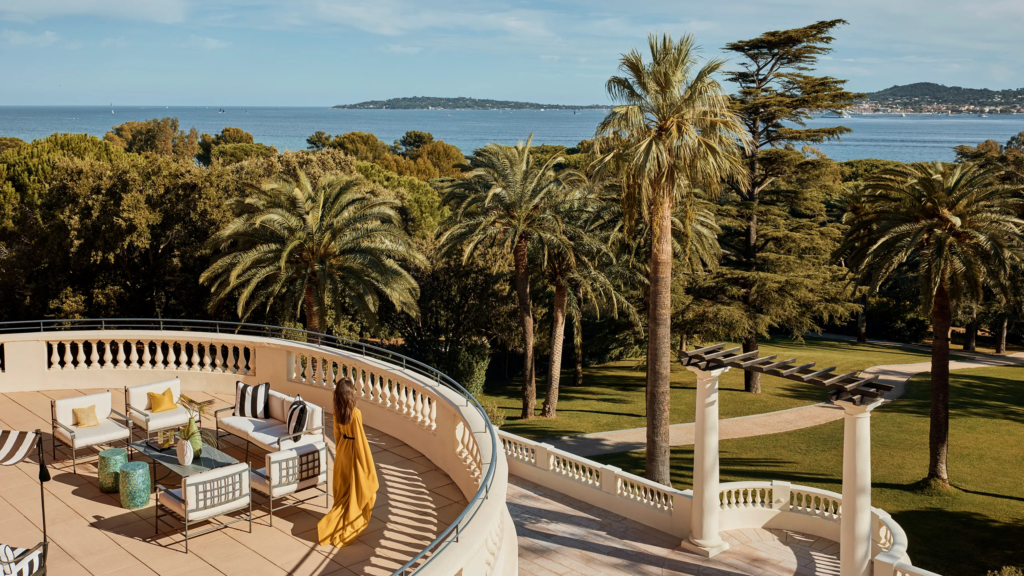
COMO Le Beauvallon does not feel like a hotel that has just opened. It feels like a hotel that has always been exactly like this, which is either a tribute to COMO’s instinct for restraint or to the bone structure of the original estate, or most likely both. The Belle Époque main building sits high on the hillside, creamy-faced and shuttered, surrounded by gardens that have clearly had a century to find their confidence. Palms lean at angles that suggest they have strong opinions about the light. Umbrella pines provide the kind of shade that feels earned. The ten acres unfold in terraces down toward the waterfront, and the overall impression is of a private estate that has generously agreed to let you stay.
Winston Churchill painted here. Audrey Hepburn slept here. Between 2008 and 2026, the property existed as an exclusive-use private estate, the sort of place hired for the gatherings that don’t end up on the internet. COMO Hotels and Resorts has now opened it properly, and in doing so has delivered something the Côte d’Azur was genuinely missing: a luxury hotel with the soul of a private house, the culinary ambition of a destination restaurant, and a wellness programme that isn’t an afterthought. I walked the gardens on my first evening before dinner, slightly dazed by the quality of it all, watching the light leave the bay by degrees.
There are 300 curated works of art dispersed through the grounds and interiors: sculptures that appear between the pines, canvases that earn their wall space without demanding to be noticed, rare objets that you find in alcoves and then think about for the rest of the day. The lobby lounge is anchored by a large-scale installation by Chinese artist Zheng Lu, a cascade of Chinese characters that reads differently depending on where you’re standing. I stood in several places. I’m still not sure I understood it, but I kept going back to look.
The Pool, the Pavilion, and the Case for Not Leaving
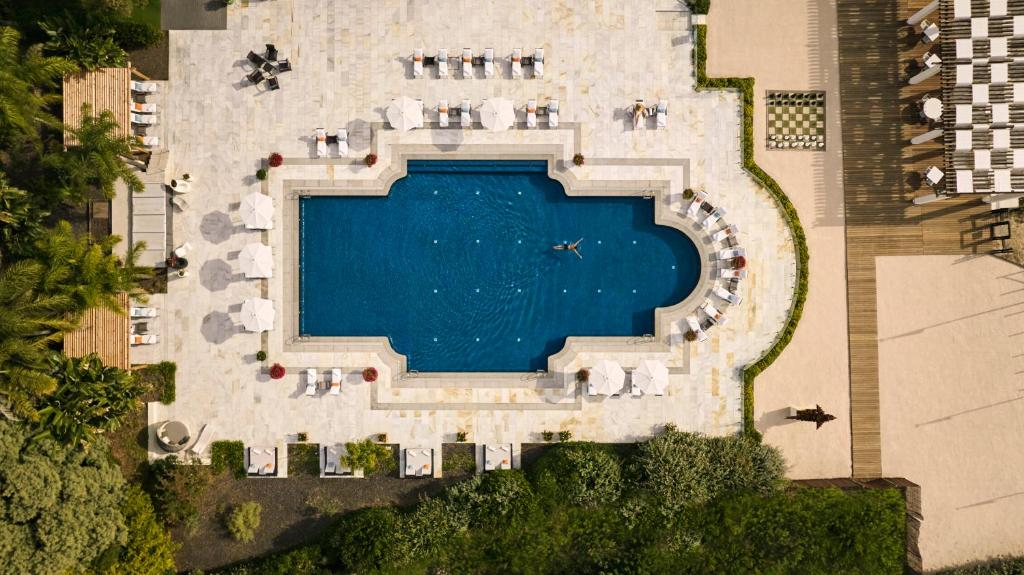
The 25-metre pool is tiled in silvery blue and green mosaic that makes the water look as though it has been siphoned directly from the bay below. I swam in it on my first morning before breakfast and again on my last afternoon, and both times the light was doing something slightly different and both times I stayed longer than I planned. The sunloungers are arranged without the competitive logic that defines so many Riviera pool decks. There is actual space between them. You are not required to have booked the previous December to secure one with a reasonable view.
At the edge of the bayside gardens, sitting between sky and water as though it grew there, is the 2002 Serpentine Gallery Summer Pavilion, designed by Pritzker Prize-winning architect Toyo Ito. It was relocated here from London piece by piece, which remains one of the more gloriously eccentric gestures I have encountered in hospitality. The structure is all curving steel and perforated geometry, and in the late afternoon it catches the Mediterranean light in a way that makes it look different every ten minutes. I ate a long lunch nearby and watched it change. It functions as a backdrop for private events, including weddings, which must be extraordinary, but it is equally extraordinary when it is simply sitting there being looked at.
The beach club is a short descent from the pool, and the private pontoon beyond it can accommodate yacht tenders for guests arriving or departing by sea. A second speedboat is available to take guests directly to the beaches of Ramatuelle and Pampelonne, which are a reasonable distance from Saint-Tropez and well worth the short journey. I went once, mid-week, and found Pampelonne exactly as advertised: beautiful, expensive, and busy in a way that made returning to the quiet of the estate feel like an act of genuine good fortune.
Rooms That Know What They’re Doing
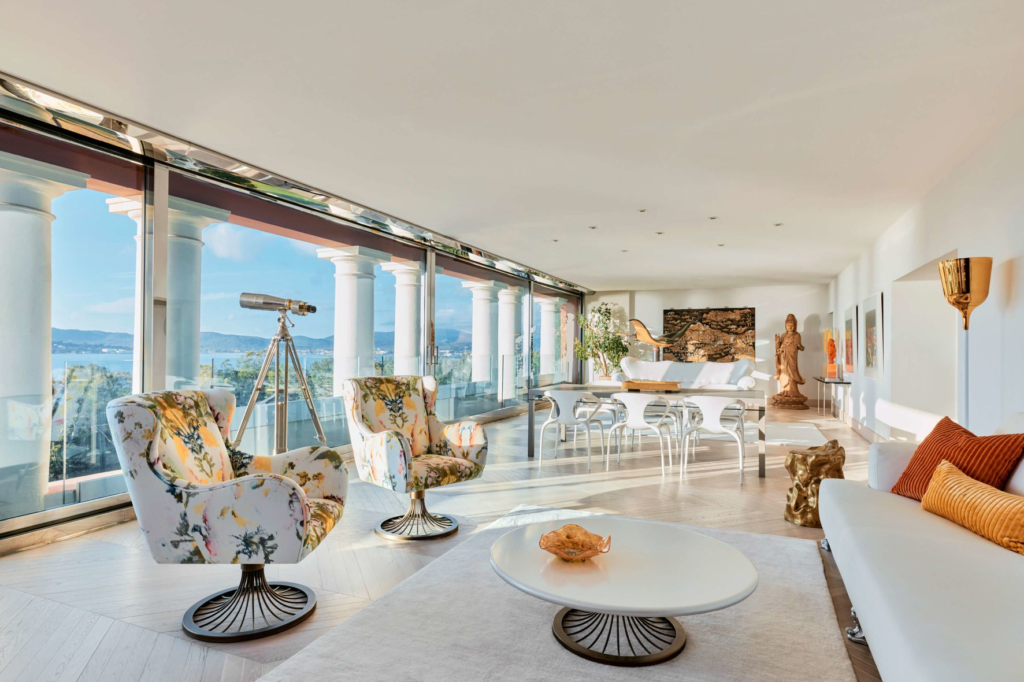
The 42 rooms and suites have been individually designed, and the individuality is real rather than cosmetic. My Junior Suite faced the Gulf, and the first thing I did upon entering was open the terrace doors and stand there for a while, because the view demanded it. The Gulf of Saint-Tropez in the early morning, before the tourist traffic has had a chance to accumulate, is genuinely arresting: still water, distant hills going blue at the edges, a handful of early yachts catching the light. I drank my coffee out there every morning and never quite got used to it.
The room itself was calm in the specific way that good hotels achieve when they resist the urge to over-decorate. A king-size bed with properly chosen linen. Pale walls and warm textures. A piece from the hotel’s art collection hung near the window, a small sculpture on the desk. The bathroom had the COMO Shambhala products, which smell of something botanical and precise, and a freestanding bathtub that I used on my second night with a glass of rosé from the corridor pantry. The corridor pantry deserves its own mention: a small, perpetually stocked station of snacks, soft drinks, and local treats, open at all hours, that does more for the feeling of being in a private house than almost any other single design decision. I raided it every time I passed.
Superior and Deluxe rooms look toward the Provençal hillsides rather than the sea, which sounds like a consolation prize until you see the hills in question: lavender-hued, pine-forested, genuinely beautiful. The COMO Suite at the top of the range has a panoramic Gulf view, a Jacuzzi, and a double shower that borders on architectural. Families are well served by the multi-room configurations, some of which include teepee beds for children that my travelling companion’s eight-year-old would have considered a reasonable justification for the entire trip.
Beauvallon Sur Mer and the Weight of Seventeen Stars
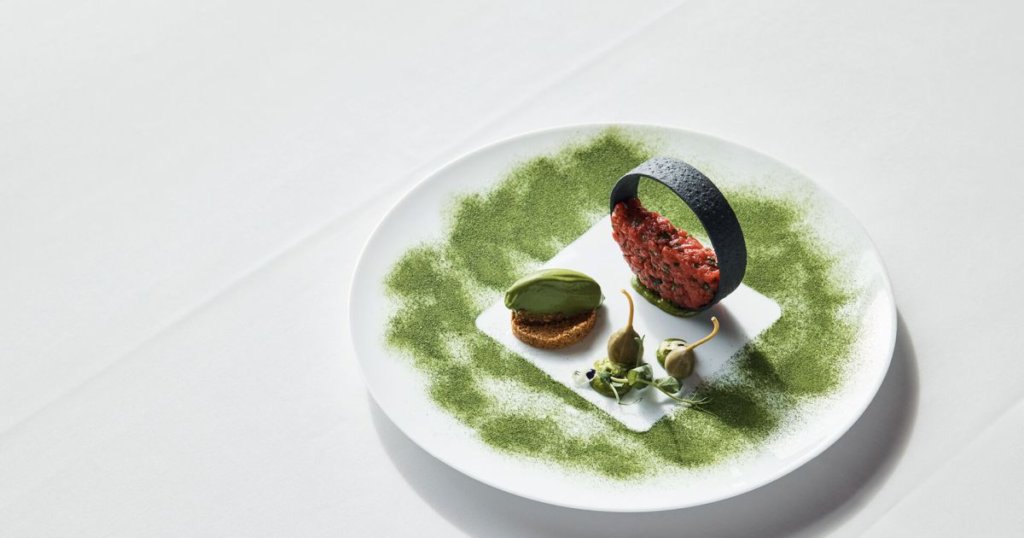
Yannick Alléno is, on any reasonable measure, the most decorated chef currently working. Seventeen Michelin stars across his global restaurants is not a number that invites qualification. The decision to make him culinary director of COMO Le Beauvallon’s beach club restaurant is, therefore, either an act of extraordinary confidence or a very large cheque, and the result of either is Beauvallon Sur Mer: a restaurant designed by French interior designer Dorothée Delaye that opens directly toward the water and serves food that takes Provençal produce seriously, draws on Asian culinary technique without becoming confused about where it is, and produces the kind of plates you take a photograph of before eating and then forget to post because you’ve already started eating.
I had lunch there on my first full day and dinner there on my last. At lunch, a ceviche of local fish arrived with something fermented and bright underneath it, and a langoustine dish came with what I can only describe as the memory of a bisque. At dinner, the lamb was Provençal in character and precise in execution, and the wine list, which leans heavily into the Var and Provence, offered enough to keep a serious drinker occupied without being overwhelming about it. The setting at dinner, with the bay going dark and the lights of Saint-Tropez scattered on the opposite shore, made the food taste even better than it probably needed to.
The Winter Garden in the main building serves all-day Mediterranean dining alongside the COMO Shambhala Kitchen menu, which is the group’s wellness-focused food programme: organic, clean, designed around balance rather than deprivation. I ate breakfast there each morning and ordered from the Shambhala menu more often than I expected to, which is the category’s highest possible accolade from someone who is generally suspicious of food described as nourishing. The eggs were excellent. The granola was better than it had any right to be. The terrace outside caught the morning sun at an angle that made lingering over a second coffee feel not just acceptable but necessary.
The bar and lounge, in the main building, is where the aperitivo hour happens, and it happens extremely well. I drank a Negroni on my second evening while watching the last light go off the hills, and the bar staff had the quality I value most in a good hotel bar: the ability to be present without being intrusive.
The Shambhala Retreat and the Afternoon I Stopped Being Tense
COMO Shambhala is a wellness concept with serious pedigree, anchored by its flagship estate in Bali and refined across the group’s global properties for decades. The treatment rooms at Le Beauvallon sit in the main building, and the approach is expert-led and hands-on in a way that distinguishes it from the ambient spa experience offered at most luxury hotels, where the focus is primarily on scented candles and soft music.
I went in for a massage on my second afternoon, a deep-tissue treatment that a therapist named Marie applied with the kind of considered precision that suggests she has actually studied anatomy rather than simply been trained to apply pressure in a sequential pattern. I came out approximately forty minutes later feeling like a different person, specifically a person with fewer opinions and more patience, which my travelling companion considered the best possible outcome of the entire trip. Daily yoga is offered on the terrace, and the fitness studio is well equipped without being the sort of gymnasium that makes you feel judged. The COMO Shambhala cuisine, available both in-room and in the Winter Garden, completes the picture: this is a property that takes wellness seriously without making wellness the point of being there.
The Eight-Minute Argument for Staying
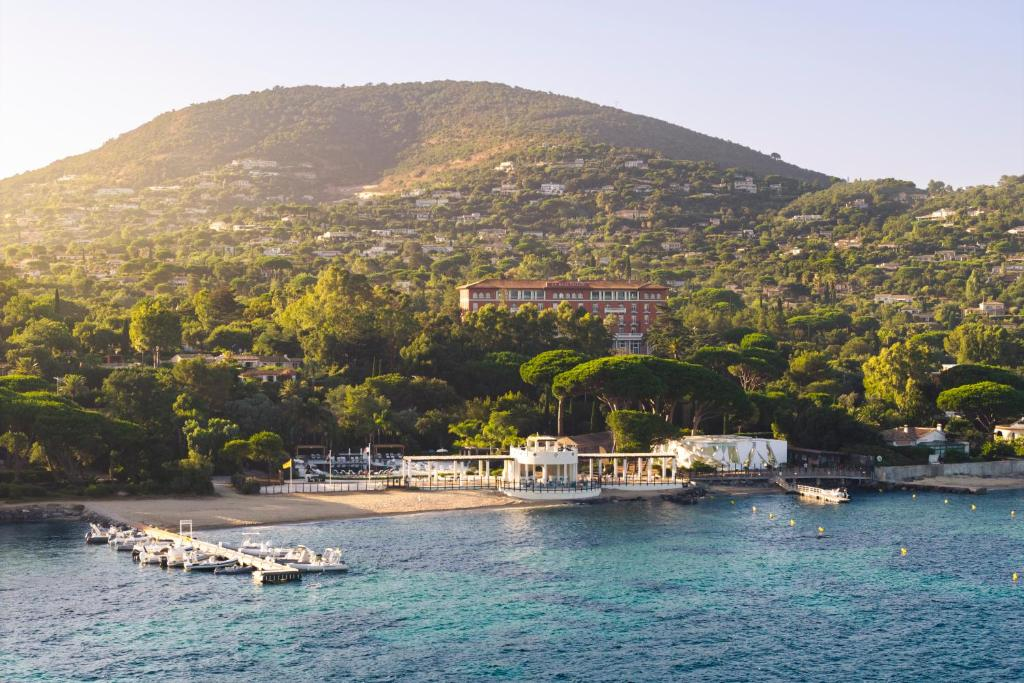
Saint-Tropez, from the hotel, is a speedboat ride away. This is simultaneously the property’s greatest convenience and its most persuasive argument for not going. The village in summer is everything it is famous for: beautiful, expensive, loud in the particular register of places where the very wealthy are having fun in public. I went twice. The first time I explored the market and the old port and ate moules somewhere reasonable and felt glad to have gone. The second time I bought a scarf and came straight back, which is probably what the hotel intended all along.
The boat back in the late afternoon, with the sun low over the water and the estate rising through its pines on the opposite shore, is one of those small travel experiences that stays with you. It takes eight minutes. I wished, each time, that it took longer.
Golf at the adjacent Club de Beauvallon is available for those who want it. Cycling routes and coastal walks extend through the surrounding landscape for those who don’t. The concierge arranged a private yacht charter for one afternoon that took us out along the coast to a series of coves that were, genuinely, empty: clear water, limestone cliffs, the particular silence of being far enough from the shore to hear nothing but the sea. It was the kind of afternoon that makes the rest of the year feel manageable.
A Word on the Service
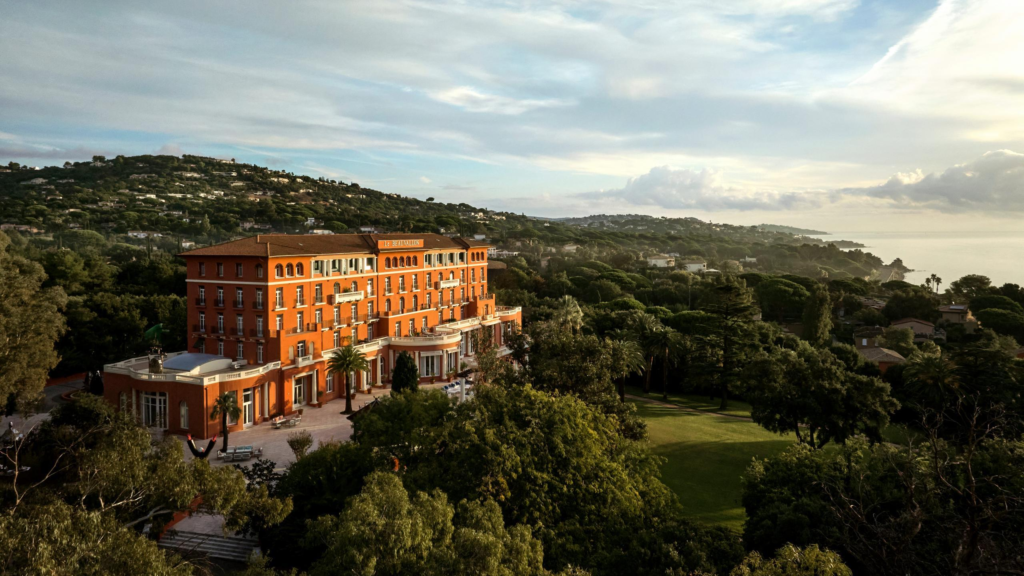
Good service at a Riviera hotel means something specific: attentive without being performative, personal without being presumptuous, available without hovering. The team at COMO Le Beauvallon have understood this. Nobody introduced themselves by their full name and career history. Nobody asked me how my day was going in a way that required a considered answer. Things happened when they were supposed to happen. Requests were met without making me feel as though I had inconvenienced anyone. At breakfast on my third morning, the person who brought my coffee remembered how I had taken it the previous two days without being asked. This is, in the end, what separates the hotels that are good from the ones you think about for months afterwards.
Practical Information
COMO Le Beauvallon is located on the Gulf of Saint-Tropez, between Grimaud and Sainte-Maxime, approximately 90 minutes from Nice Côte d’Azur Airport. Complimentary speedboat transfers to Saint-Tropez and to the beaches of Ramatuelle and Pampelonne run throughout the day. The hotel opened 24 April 2026.