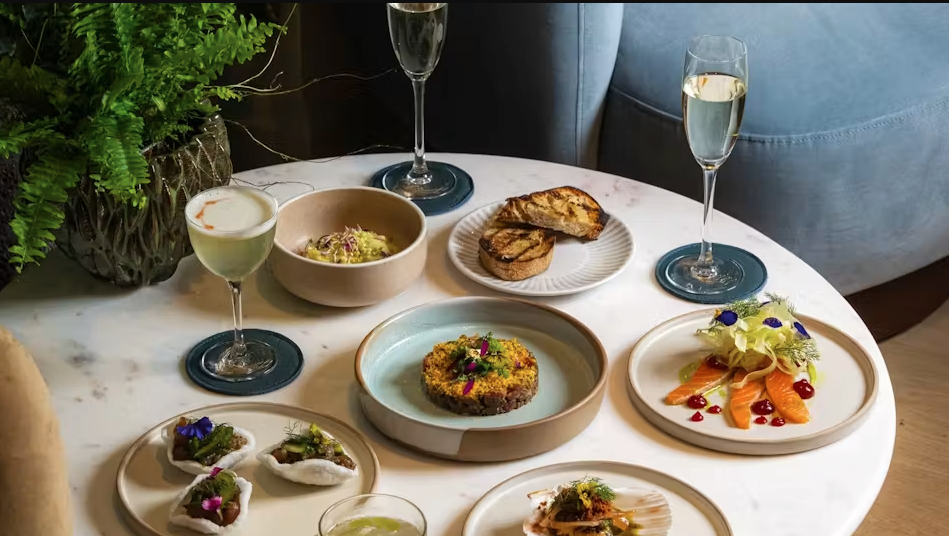
For much of the last three decades, Britain’s most ambitious restaurants sought validation elsewhere. French technique remained the benchmark of refinement, while the arrival of New Nordic cooking encouraged chefs to embrace foraging, fermentation and an almost monastic approach to presentation. British ingredients were celebrated, but British cooking itself often seemed reluctant to stand on its own terms.
That reluctance is beginning to disappear.
Across the country, a new generation of chefs is returning to recognisable British dishes, not to preserve them in aspic or reinvent them beyond recognition, but to demonstrate that they have always possessed the foundations of fine dining. The emphasis has shifted from novelty to craftsmanship, from elaborate technique to thoughtful execution. Alex Webb’s Orion belongs firmly to this new chapter.
Six years after winning MasterChef: The Professionals, Webb has chosen not to open a restaurant built around tasting menus or culinary theatre. Instead, his first solo venture is an elegant seafood restaurant that revisits familiar British flavours through the lens of classical French technique. It is an approach that feels remarkably self-assured.
A Restaurant Shaped by the Coast
Although situated among the handsome Victorian houses of Wimbledon Village, Orion feels as though it belongs closer to the shoreline. The dining room draws on the colours of the British coast without resorting to obvious maritime references. Muted blues sit alongside pale oak, textured plaster walls soften the light, and comfortable banquettes encourage diners to settle in rather than simply pass through. It is a room designed for long lunches rather than fleeting occasions.
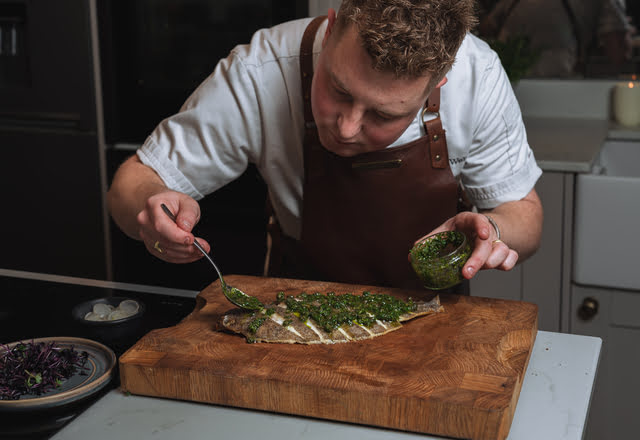
The open kitchen occupies the centre of the restaurant, providing movement and purpose without dominating the dining room. There is no sense of performance. Instead, the chefs work with quiet precision, while Webb himself moves comfortably between kitchen and tables, presenting the day’s specials with the enthusiasm of someone who remains personally invested in every plate leaving the pass.
Precision Before Performance
The meal opened with the Mountain Climb, a cocktail that immediately established the restaurant’s measured approach. Built around restrained bitterness rather than overt sweetness, it refreshed the palate without overwhelming it. It was composed with the same balance that would define much of the meal.
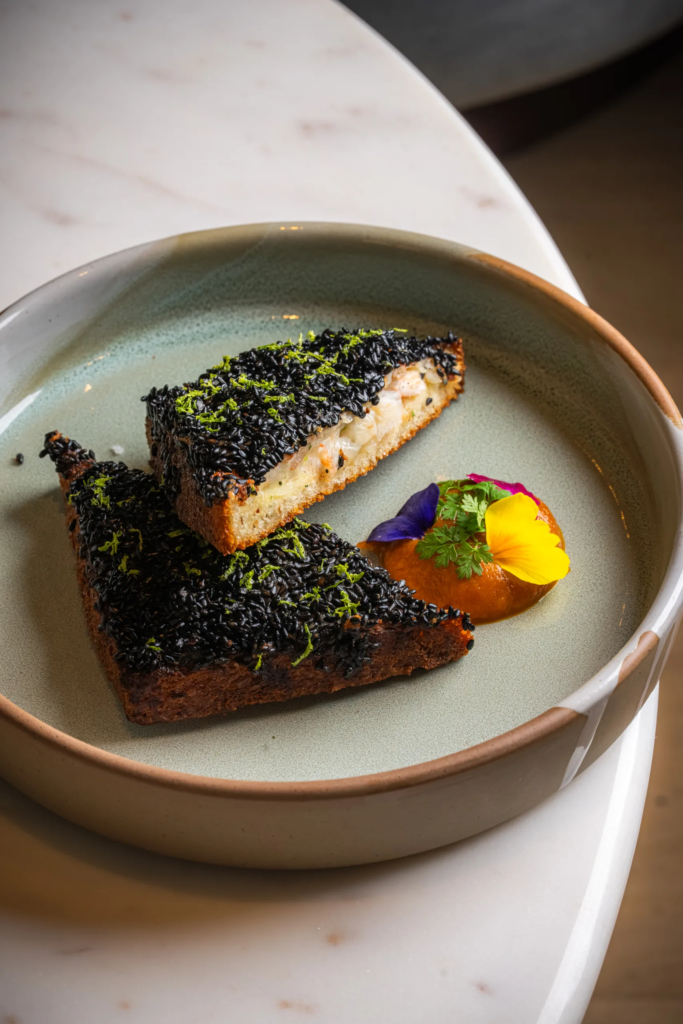
That restraint becomes particularly evident in Orion’s signature lobster and prawn toast, a dish that has quickly become synonymous with the restaurant. Webb understands that its appeal lies precisely in its familiarity. Instead of dismantling the original or disguising it beneath unnecessary complexity, he refines each individual component.
The toast arrives with an exceptionally crisp exterior that retains its structure beneath a generous layer of lobster. Black sesame introduces an earthy depth that grounds the sweetness of the seafood, while fresh lime provides just enough acidity to sharpen each mouthful. The textures are carefully judged, allowing crunch, richness and freshness to coexist without one overwhelming the other.
If the dish falls fractionally short of perfection, it is only because the lobster occasionally struggles to distinguish itself from ther est. Given lobster’s more delicate sweetness, a slightly greater proportion would have given the dish even greater definition. It is, however, a small observation rather than a meaningful criticism.
Curiously, the element that revealed the most about Webb’s cooking was neither lobster nor prawn.
It was the carrot purée.
Served almost incidentally beside the toast, it possessed remarkable depth for something so apparently simple. The carrots had clearly been cooked slowly enough to concentrate their natural sweetness before being blended into a purée of almost impossibly smooth consistency. Rather than becoming sugary, the sweetness was balanced by careful seasoning and enough acidity to retain freshness.
Many kitchens devote extraordinary attention to expensive seafood while allowing accompaniments to become functional. Orion refuses to draw that distinction. Every element contributes something meaningful to the finished plate, whether it costs thirty pounds per kilo or thirty pence.
Revisiting Britain’s Most Familiar Plate
Fish and chips remains one of the defining expressions of British cooking, yet it is surprisingly difficult to elevate without losing the qualities that make it comforting in the first place.
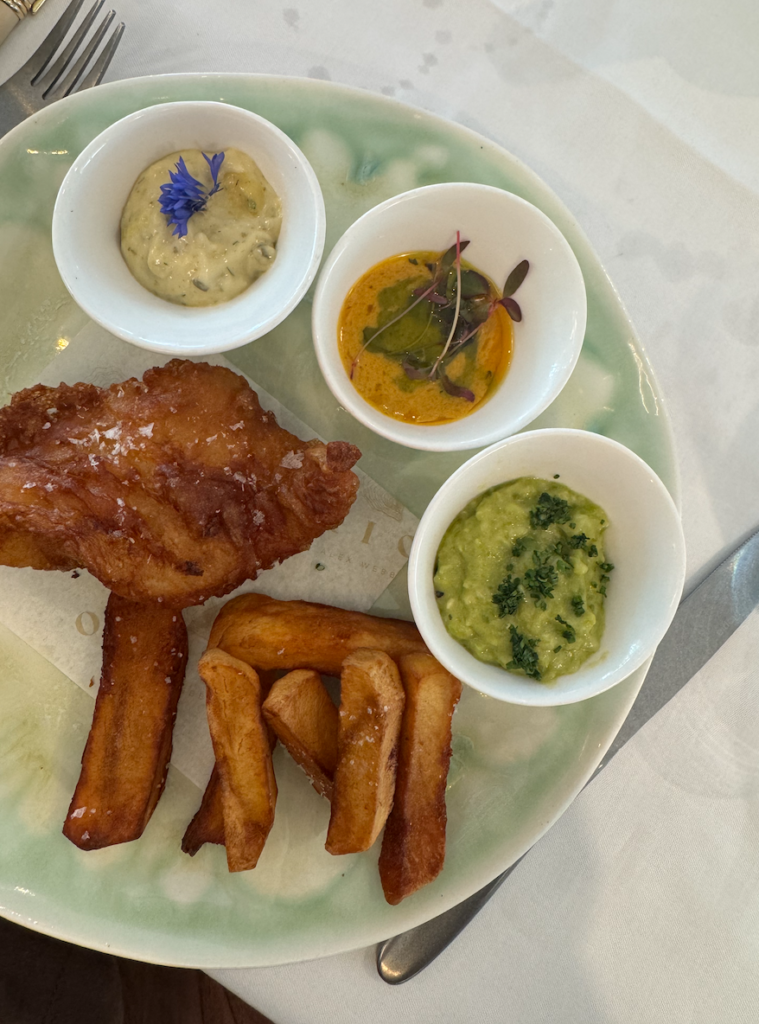
Webb approaches the challenge intelligently. The batter is exceptionally crisp yet remarkably light, avoiding the heaviness that often accompanies more elaborate interpretations. The fish itself flakes cleanly, retaining all of its natural moisture beneath the delicate crust.
Alongside sits a curry sauce that deserves particular mention. Rather than mimicking the bright yellow chip shop version, this interpretation carries greater aromatic complexity, introducing warmth and spice without dominating the fish. It succeeds because it complements rather than competes.
Even so, the dish left me with the impression that the menu contains stronger expressions of Webb’s cooking. Surrounded by Cornish monkfish, oysters and beautifully sourced daily specials, the fish and chips inevitably feels like the safest decision available. It is expertly prepared, but perhaps not the plate that best captures the ambition of the kitchen.
A Seasonal Finish
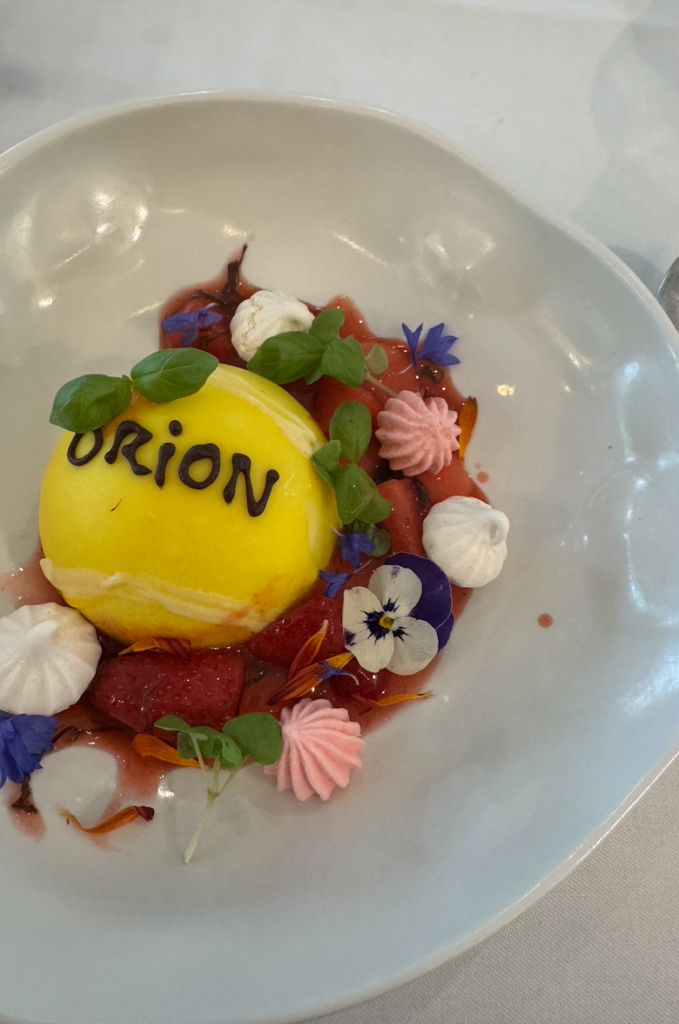
Being only minutes from the All England Club, Orion acknowledges its surroundings with a limited-edition dessert inspired by Wimbledon. A perfectly smooth white chocolate shell arrives moulded into the shape of a tennis ball, concealing a light vanilla cream while Champagne jelly provides brightness around the plate.
The presentation could easily have tipped into novelty, yet the execution remains elegantly restrained. The white chocolate contributes richness without becoming cloying, while the Champagne jelly lifts the dessert with gentle acidity, ensuring that the meal concludes with freshness rather than excess.
Verdict
Orion succeeds because it resists the temptation to overstate itself. Alex Webb has built a restaurant that values craftsmanship above spectacle, allowing British ingredients and recognisable dishes to take centre stage without unnecessary embellishment.
The lobster and prawn toast will continue to attract attention, but it is the consistency of the cooking that ultimately defines the restaurant. Every sauce, garnish and accompaniment appears considered, every ingredient treated with equal respect. That philosophy runs quietly through the entire menu and gives Orion an identity that feels both contemporary and unmistakably British.
In revisiting the familiar rather than chasing the fashionable, Webb has created a restaurant that reflects the growing confidence of modern English cuisine itself. It is thoughtful, technically accomplished and, above all, comfortable in its own identity.
Best for: Elegant Sunday lunches, exceptional British seafood and diners interested in the evolution of contemporary English cooking.
Don’t miss: The lobster and prawn toast, and the carrot purée that quietly captures the precision of the kitchen.
Price: Set lunch from approximately £38. Starters from around £18. Main courses between £32 and £38.
Address: 75–77 Ridgway, Wimbledon Village, London SW19 4ST.