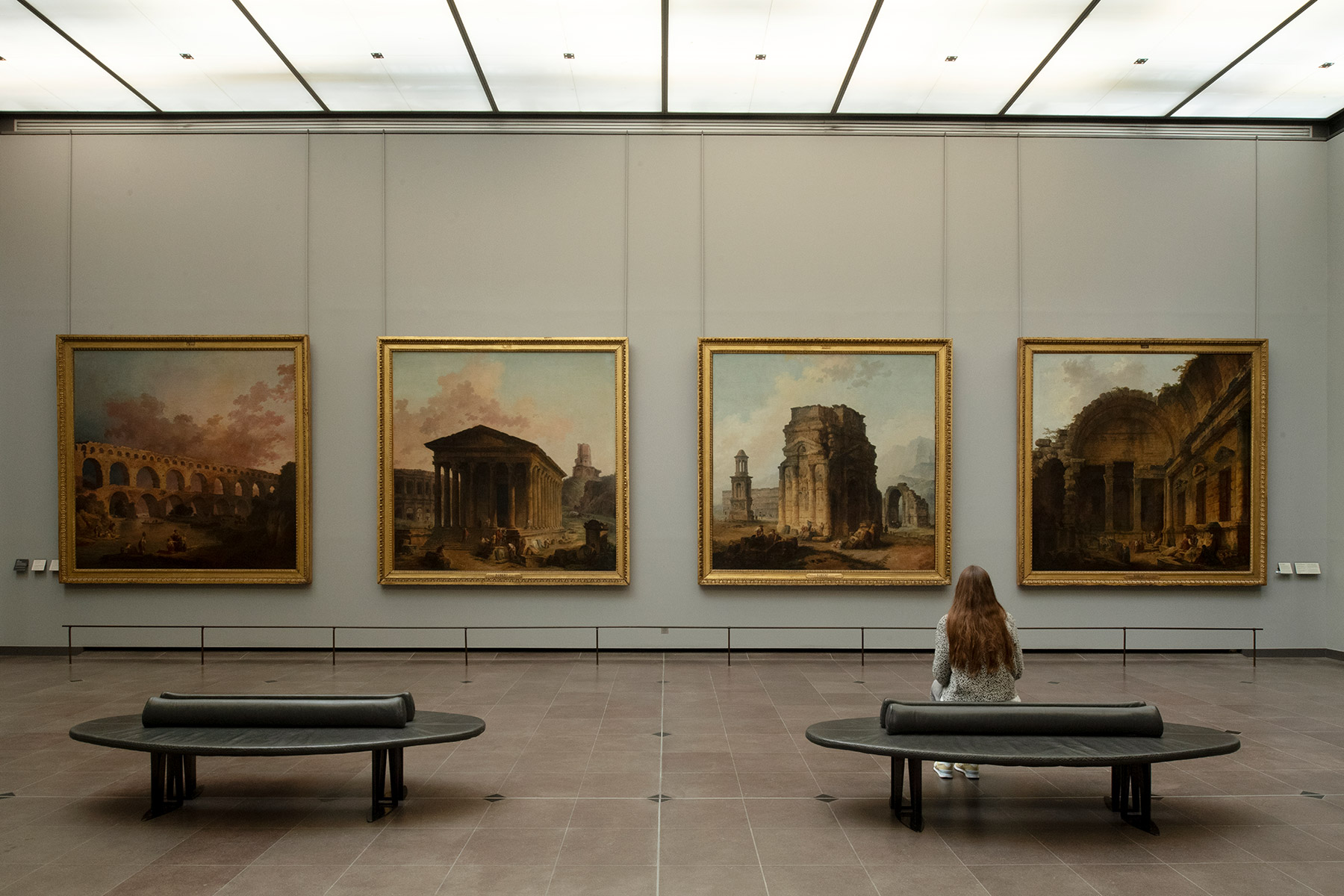
Paris choreographs art. In repurposed railway stations flooded with natural light, inside aristocratic mansions lined with silk, beneath domes and within elliptical sanctuaries built for contemplation, masterpieces are staged with architectural intelligence. The city rewards the deliberate viewer. It invites you to sit longer than you planned, to look twice, to notice how space alters perception.
This is not about ticking off icons. It is about standing before works that shift something internally; that sharpen your eye, deepen your curiosity, or quietly rearrange your sense of beauty.
1) Les Nymphéas, Claude Monet
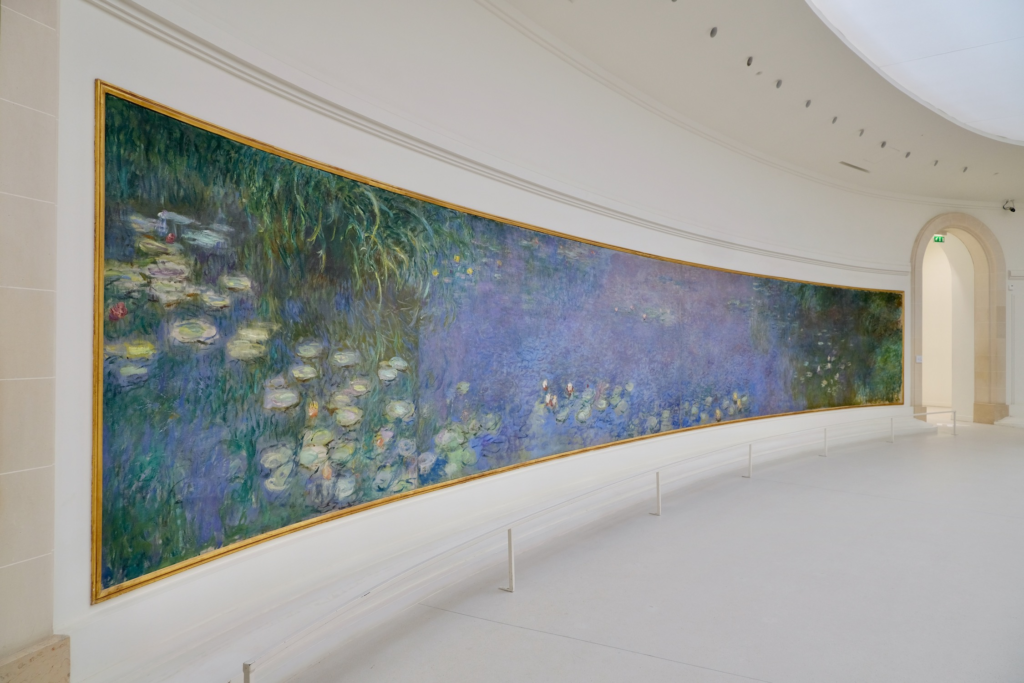
Where: Musée de l’Orangerie
Monet’s Water Lilies are not paintings you glance at; they are atmospheres you inhabit. Installed across two oval rooms designed with the artist himself, the eight monumental panels curve around you in a continuous horizon of reflection and light. There is no centre, no frame to anchor your gaze; instead, colour dissolves into sensation. Blues melt into mauves, greens flicker against silver, and brushstrokes become rhythm rather than representation. Painted in the final years of Monet’s life, partially as a peace offering to France after the devastation of war, the works feel suspended between fragility and infinity. Sit in the centre bench and allow the silence to settle. The longer you remain, the less the paintings resemble water; and the more they resemble memory.
Who will love it: those who crave immersion, serenity, and art that feels like meditation made visible.
2) The Frame, Frida Kahlo
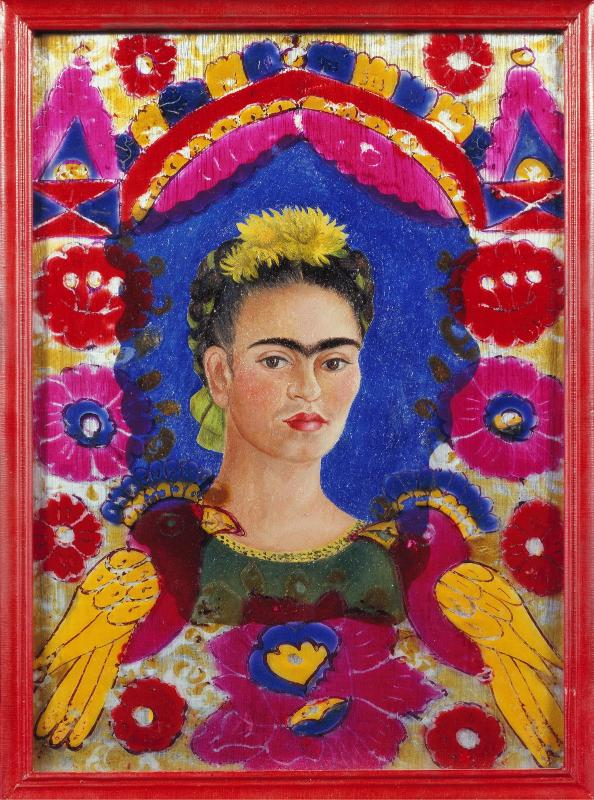
Where: (Usually) Musée national d’art moderne
At first glance, its scale surprises you. Barely thirty centimetres high, The Frame demands proximity rather than distance. Kahlo painted her self-portrait on a thin sheet of aluminium, encasing it within an ornate Mexican devotional frame she had discovered hours earlier. The colours vibrate; deep reds, luminous greens; while birds hover symbolically around her unflinching gaze. The intimacy is magnetic; you step closer almost involuntarily. There is nothing theatrical here, only intensity distilled into surface and stare. The frame becomes part of the work, collapsing object and image into one unified statement of identity. It is devotional and defiant in equal measure.
Who will love it: those drawn to art that feels personal, unfiltered, and emotionally exact.
3) The Kitchen V, Carrying the Milk, Marina Abramović
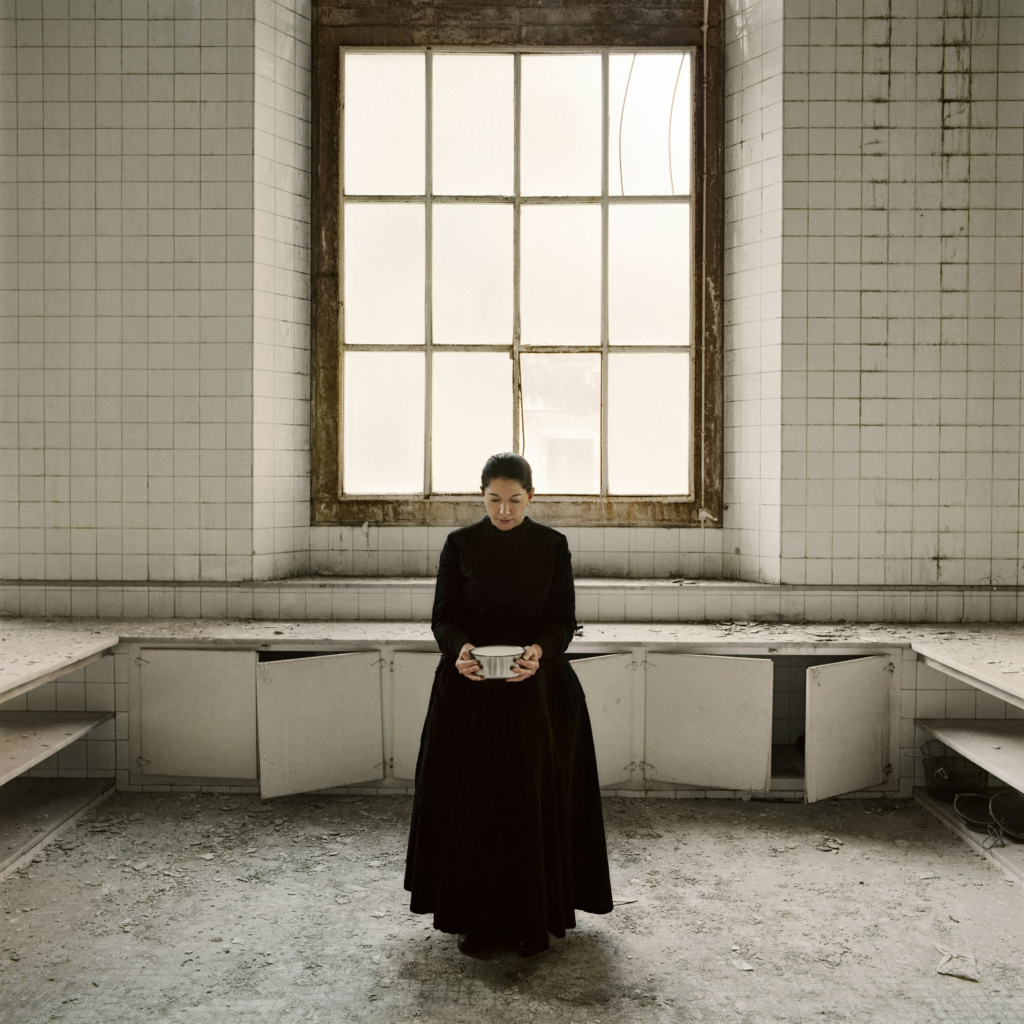
Where: Fondation Louis Vuitton
In this short yet deeply resonant video piece, Abramović stands motionless in a vast, abandoned kitchen, holding an overflowing pot of milk that spills steadily over her hands. The image is austere, almost monastic, yet charged with symbolism. Milk evokes nourishment, sacrifice, motherhood, but here it also suggests endurance and discipline. The silence is heavy; every second stretches. The setting references Saint Teresa of Ávila and spiritual asceticism, while subtly reflecting Abramović’s own upbringing under strict maternal authority. Presented within the Fondation’s immaculate architectural lines, the work becomes even more austere, its emotional temperature heightened by the pristine surroundings. It is hypnotic and faintly unsettling; a meditation on devotion and control.
4) Grillo, Jean-Michel Basquiat
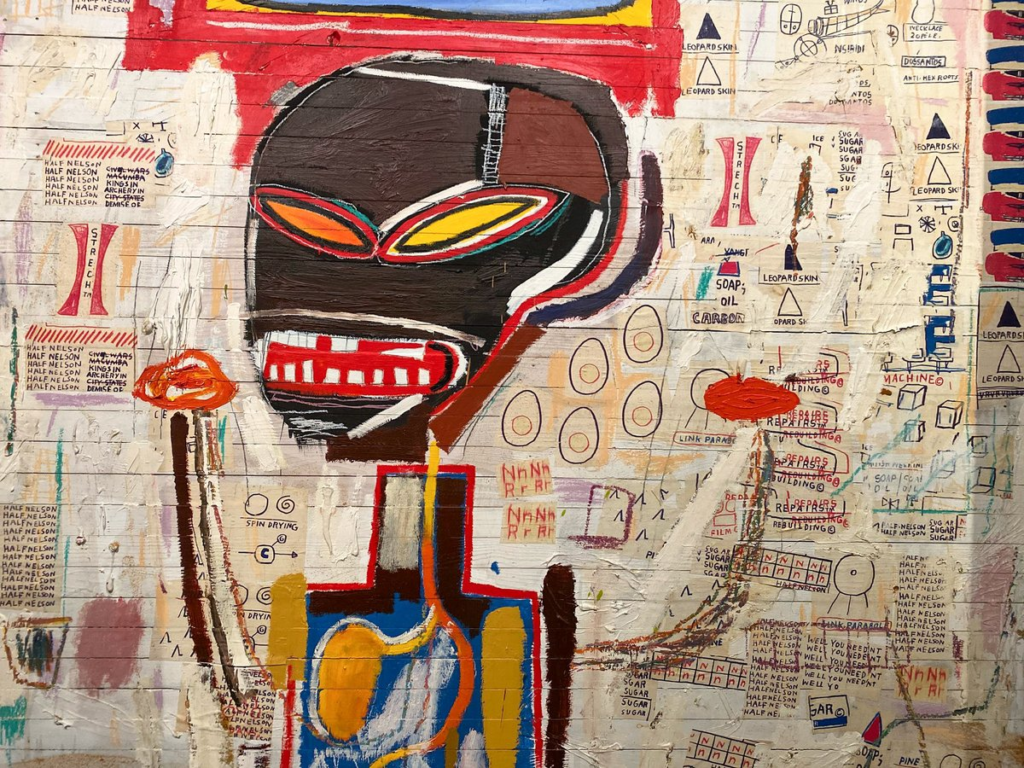
Where: Fondation Louis Vuitton
Grillo unfolds across four wooden panels like a visual improvisation; urgent, layered, irreverent. Basquiat’s three-pointed crown hovers above fragments of text, skeletal forms, references to Caribbean myth and American jazz culture. The title alludes to the griot, the traditional West African storyteller, a role Basquiat inhabited effortlessly as he navigated between street art and the highest tiers of the art market. The surface feels alive, as if the paint has barely settled. There is poetry here, but also anger; lyricism, but also critique. Stand back for composition, then approach for detail; the work reveals itself in stages. It is raw intelligence translated into colour and line.
Who will love it: those who appreciate cultural hybridity, visual rhythm and art that refuses complacency.
5) The Welcoming Hands, Louise Bourgeois
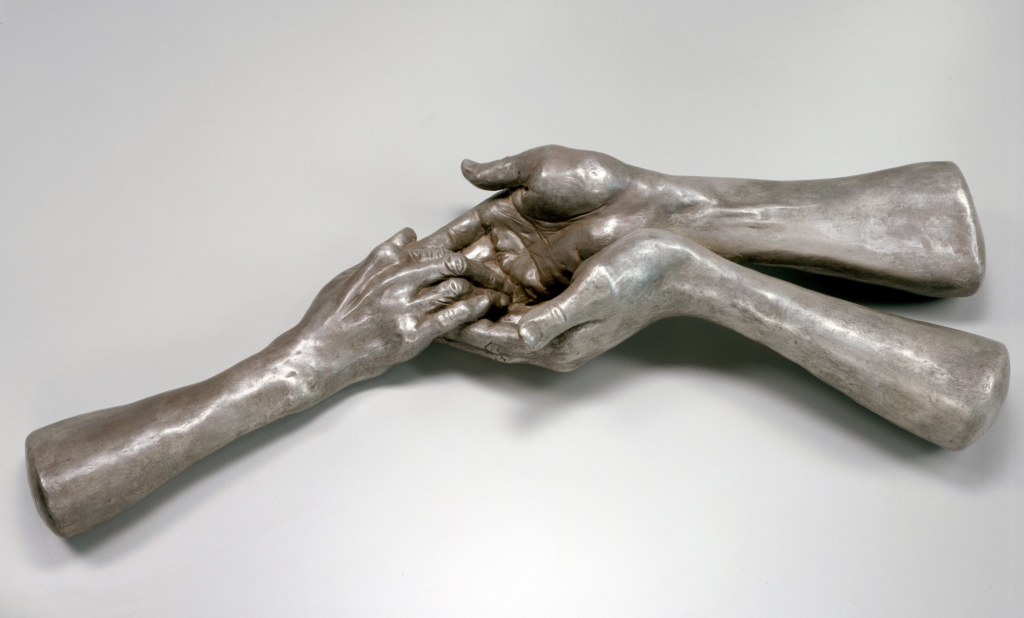
Where: Jardin des Tuileries
Emerging quietly from granite pedestals in the Tuileries, five bronze hands intertwine in gestures that feel both protective and precarious. Bourgeois modelled them partly on her own hands, and they carry her lifelong themes of memory, displacement and emotional vulnerability. Positioned outdoors amid manicured symmetry, they introduce softness into formal geometry. The sculpture feels intimate despite its scale; it reads almost like a whispered conversation in bronze. Walk around them slowly, the shapes shift subtly depending on your angle. In daylight, they glow warm; in evening light, they become contemplative silhouettes.
Who will love it: reflective wanderers and those attuned to sculpture as emotional language.
6) Les Deux Plateaux, Daniel Buren
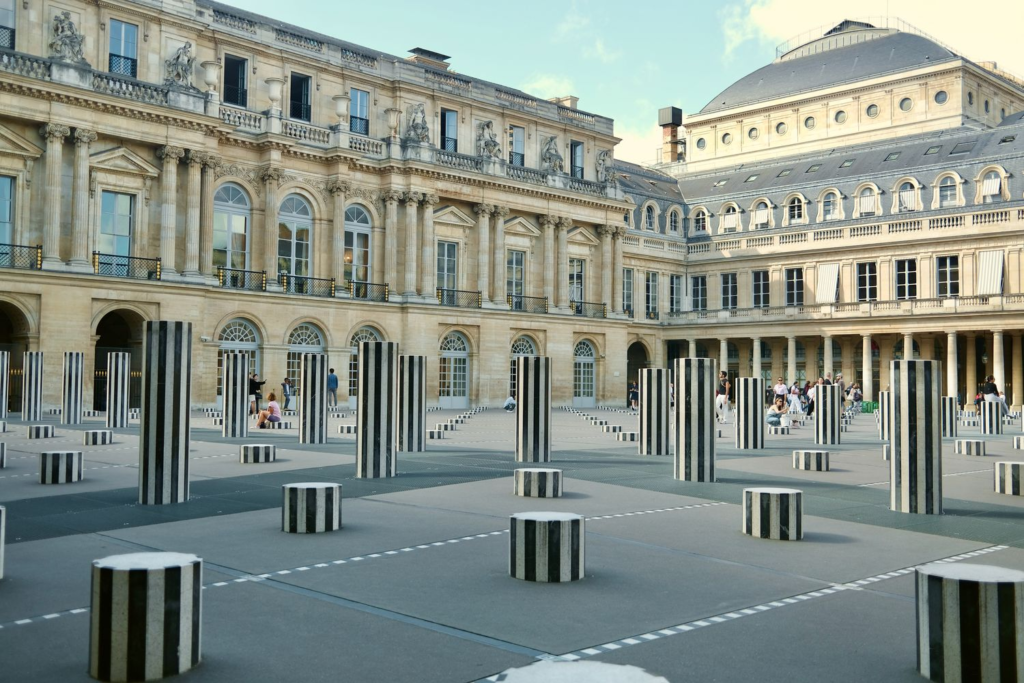
Where: Palais-Royal Courtyard
Two hundred and sixty striped columns rise and fall across the Palais-Royal courtyard, disrupting classical order with bold graphic clarity. When unveiled in 1985, the installation provoked outrage — critics accused it of desecrating heritage. Today, it feels inseparable from its setting. The repetition of black-and-white stripes creates optical rhythm, while varying heights encourage visitors to move, perch and reconsider perspective. Children climb; photographers compose; historians debate. It is both playful and conceptual: a meditation on space, repetition and context. Buren’s intervention did not erase history; it conversed with it.
Who will love it: design aficionados and those intrigued by contemporary art’s dialogue with tradition.
7) Le Déjeuner sur l’Herbe, Édouard Manet
Where: Musée d’Orsay
Manet’s infamous picnic retains its power more than 160 years later. A nude woman sits confidently between two clothed men, her gaze direct and unembarrassed. The composition references Renaissance precedents, yet the context is unmistakably modern. When first exhibited, it shocked audiences not because nudity was new, but because mythological alibi was absent. The brushwork feels deliberate yet fresh; the forest backdrop hums with muted tension. In Orsay’s luminous former railway hall, the painting reads as a pivot point: a declaration that art could challenge taste rather than obey it.
Who will love it: admirers of artistic audacity and cultural turning points.
8) La Fée électricité, Raoul Dufy
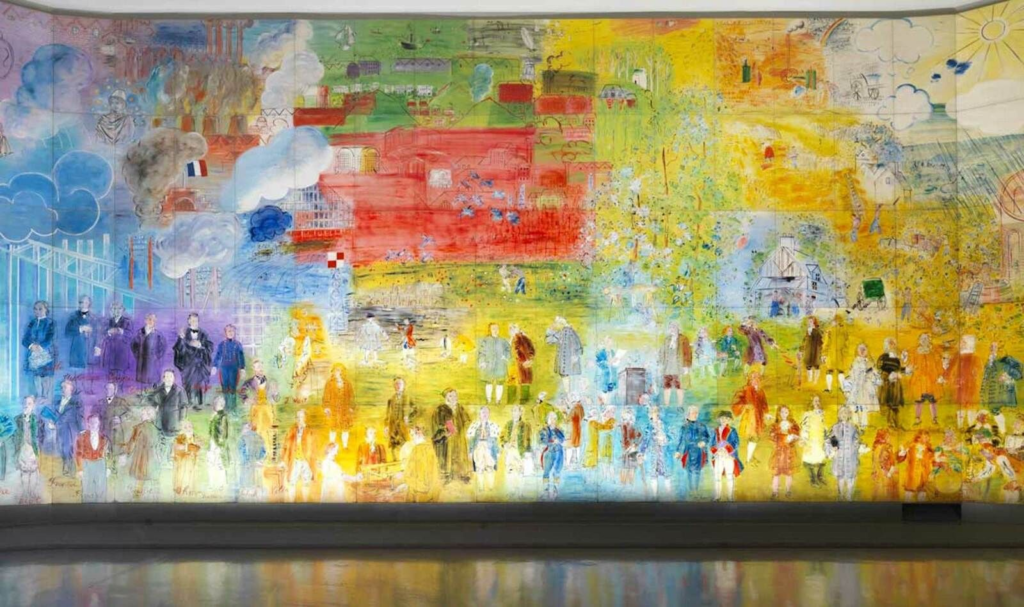
Where: Musée d’Art Moderne de Paris
Commissioned for the 1937 International Exposition, this monumental mural celebrates electricity as myth, science and modern marvel. Spanning 600 square metres, it traces innovation from ancient allegories to industrial triumphs. Zeus stands alongside turbines; scientific pioneers mingle with celestial symbolism. The colour palette is buoyant, almost playful, despite the work’s scale. Painted on hundreds of panels in under a year, it embodies technical prowess and creative exuberance. Step back for impact; step closer for narrative intricacy. It is optimism rendered monumental.
Who will love it: lovers of grand narrative, innovation and unapologetic scale.
9) Le Penseur, Auguste Rodin
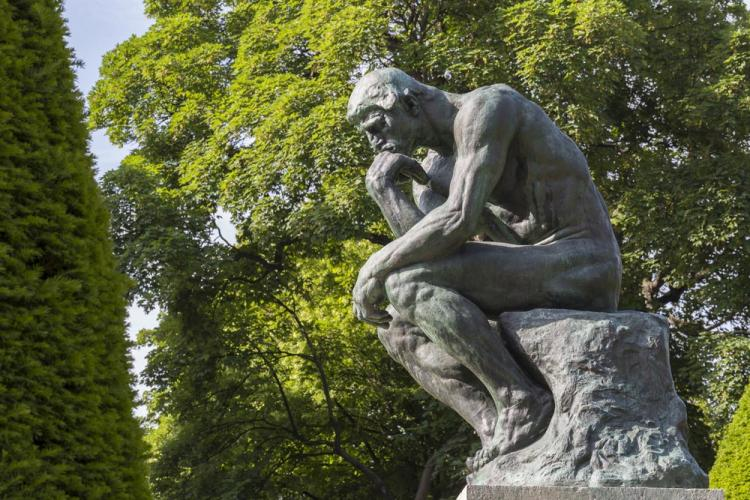
Where: Musée Rodin
Rodin’s Thinker is so globally recognisable that it risks becoming symbolic before it becomes seen; yet in the gardens of the Musée Rodin, it regains its physicality. Cast in bronze, the figure is muscular, grounded, almost heavy with intellectual labour. The tension in the curled toes, the contraction of the forearm, the bowed head: everything suggests thought as exertion rather than abstraction. Originally conceived as Dante contemplating the gates of hell for The Gates of Hell commission, the sculpture transcended its literary origins to become a universal emblem of contemplation. Outdoors, surrounded by clipped lawns and filtered light, it feels less like an icon and more like a presence: vulnerable in its stillness. Walk around it slowly; notice how the silhouette shifts from heroic to human depending on your angle.
Who will love it: those drawn to sculpture that feels alive, weighty and psychologically charged.
10) Les Restes II, Annette Messager
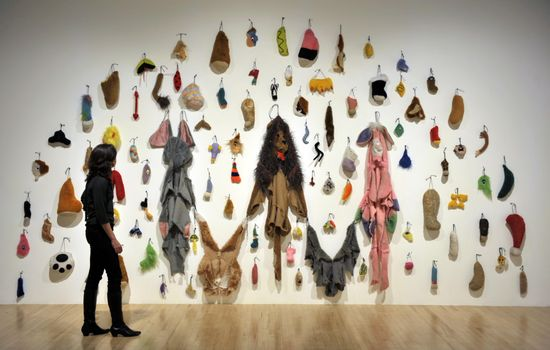
Where: MAC VAL
Messager’s Les Restes II unsettles with deceptive softness. At first glance, the fragments of stuffed animals pinned to the wall appear whimsical: pastel limbs, tiny paws, familiar textures from childhood. But proximity reveals something darker: dismemberment, reduction, the transformation of innocence into relic. The installation parodies the family portrait while evoking taxidermy and ritual display, collapsing domestic tenderness into quiet violence. It is both playful and macabre, forcing you to reconsider nostalgia itself. The decision to journey to MAC VAL, just beyond central Paris, becomes part of the experience: contemporary art unfolding outside postcard clichés. The work lingers because it refuses comfort.
Who will love it: viewers intrigued by art that blends humour, memory and unease in equal measure.
11) Marche de soutien à la campagne sur le sida, Chéri Samba
Where: (Usually) Musée national d’art moderne
Chéri Samba’s painting radiates colour and clarity, yet beneath its vibrancy lies sharp political commentary. Depicting a demonstration supporting AIDS awareness campaigns, the composition blends figurative storytelling with text written directly onto the canvas. Samba’s voice is unmistakable: candid, instructive, occasionally provocative; collapsing the distance between artwork and audience. The palette is luminous, almost celebratory, which makes the subject matter feel even more urgent. It is art that communicates rather than mystifies, that educates without relinquishing aesthetic strength. In a city often defined by its historical masterpieces, Samba’s work insists that contemporary narratives matter just as deeply.
Who will love it: those who appreciate art as civic dialogue and visual activism.
12) Kristen McMenamy 3, London, Juergen Teller
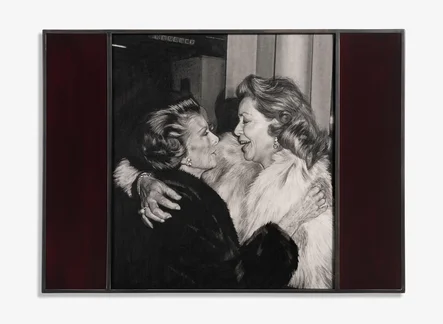
Where: Palais Galliera
Teller’s photograph dismantles conventional beauty with deliberate bluntness. The model Kristen McMenamy appears nude, cigarette poised, scar visible; raw rather than retouched. Luxury branding is scrawled across her chest, a playful and pointed contradiction that reframes fashion as commentary rather than fantasy. When first published, the image unsettled expectations of glamour; today it reads as prescient. At the Palais Galliera, within galleries dedicated to fashion’s evolution, the photograph becomes a moment of rupture: a reminder that style is not only about perfection, but about attitude and disruption. The lighting, the composition, the tension between vulnerability and defiance; all remain electric decades later.
Who will love it: fashion intellectuals and those fascinated by image-making as cultural critique.
13) Others, Maurizio Cattelan
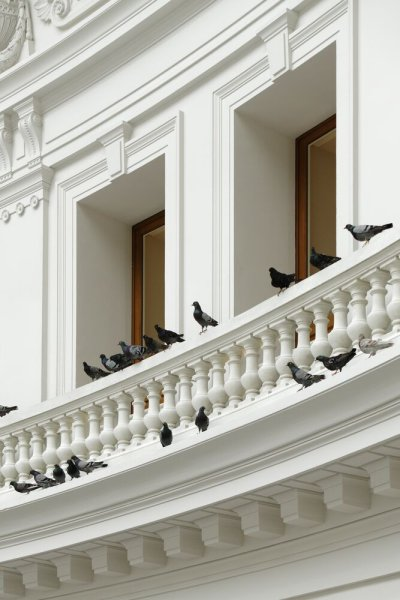
Where: Bourse de Commerce
You may not notice them at first; the pigeons perched along the interior balustrade beneath the Bourse de Commerce’s soaring dome. Then recognition dawns. Hyper-realistic and eerily still, they mirror the urban birds that populate Paris’s streets. Originally titled Tourists, Cattelan’s installation draws a mischievous parallel between flocks of pigeons and crowds of art lovers who flood cultural spaces. It is satire delivered with surgical elegance. The setting heightens the effect: a refined, architecturally resplendent institution housing a work that quietly mocks institutional reverence. The humour is subtle but unmistakable. You find yourself glancing upward repeatedly, half amused, half unsettled.
Who will love it: those who appreciate conceptual wit executed with precision.
14) La Fuite en Égypte, Sandro Botticelli
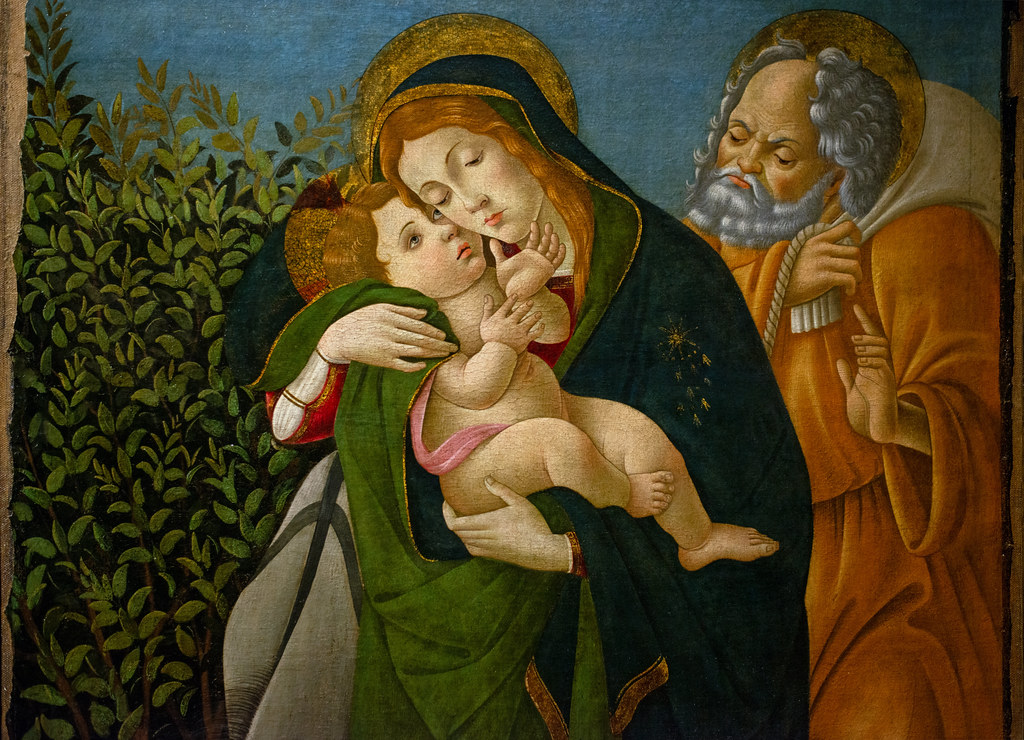
Where: Musée Jacquemart-André
Botticelli’s Flight into Egypt feels especially luminous within the intimate salons of the Musée Jacquemart-André. Unlike the vast halls of larger institutions, this setting invites closeness. The Holy Family is rendered with characteristic grace; elongated figures, delicate gestures, softly unfolding drapery. The landscape recedes gently, framing rather than dominating the sacred narrative. Botticelli’s line is elegant and precise, giving even stillness a sense of movement. The painting’s scale encourages contemplation; you are close enough to observe the subtleties of expression and brushwork. Within the museum’s opulent domestic architecture, the Renaissance scene feels both historical and intimate, devotional art presented in aristocratic surroundings.
Who will love it: admirers of classical beauty and museum experiences that feel personal rather than overwhelming.
15) Portrait de Sarah Bernhardt, Georges Clairin
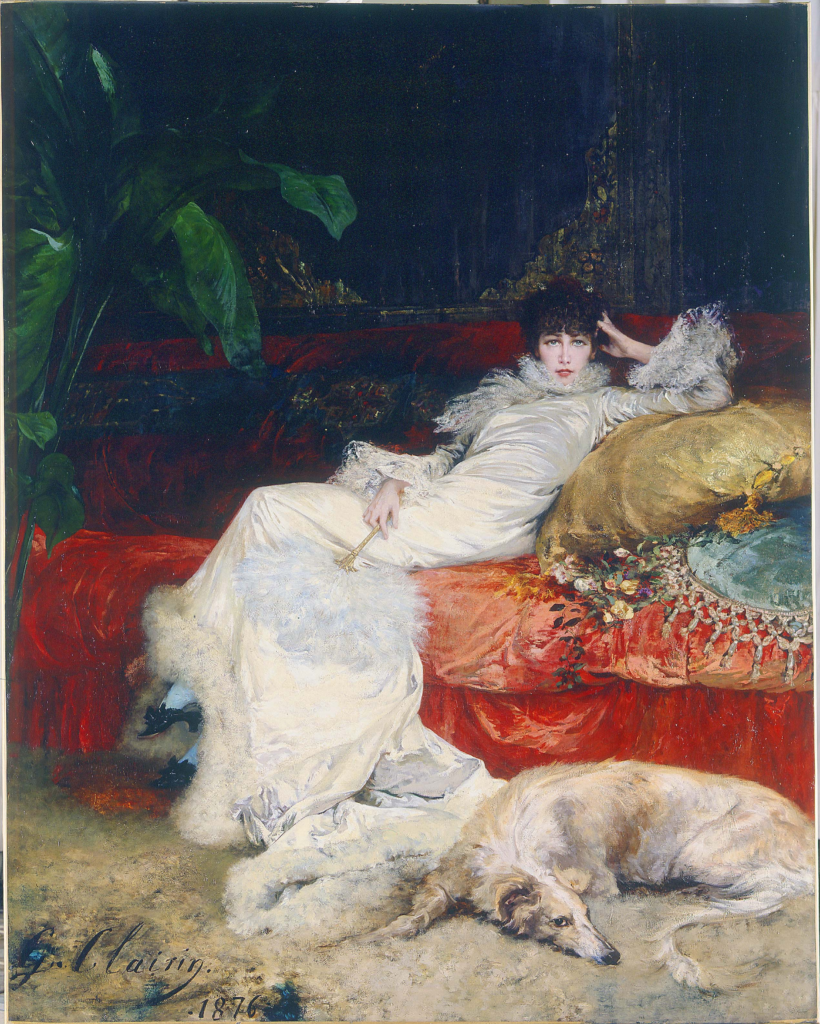
Where: Petit Palais
Clairin’s portrait of Sarah Bernhardt captures not just a face, but a phenomenon. Draped in luminous white satin, accompanied by her dog, she appears poised yet spontaneous; an actress aware of her aura. The brushwork glides over fabric, creating a cascade of light that amplifies her presence. Painted at a time when Bernhardt was redefining theatrical celebrity, the portrait embodies the emergence of modern stardom. Decorative curves and flowing lines anticipate Art Nouveau aesthetics, while the composition radiates quiet authority. In the Petit Palais’ elegant galleries, the painting becomes a dialogue between performance and permanence.
Who will love it: those enchanted by Belle Époque glamour and the evolution of public persona.
16) Le Grand Camée de France
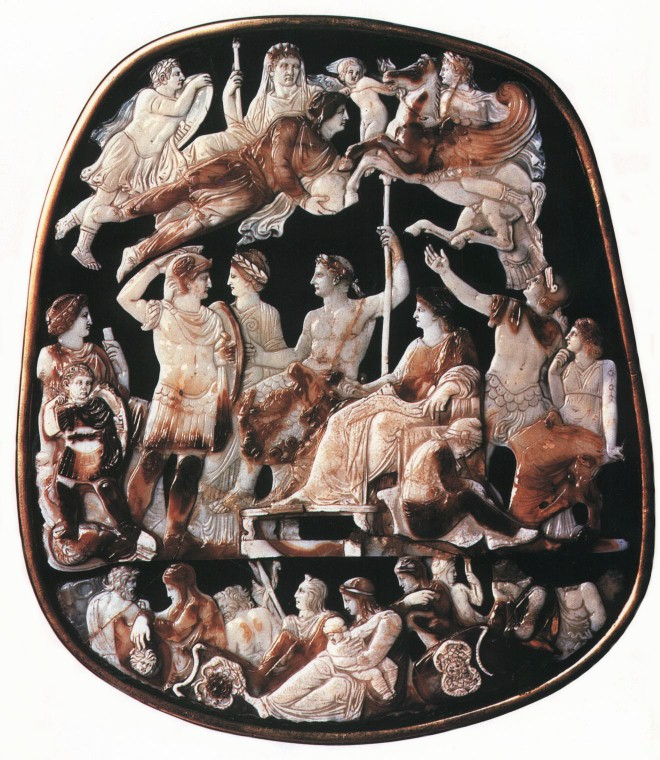
Where: Bibliothèque nationale de France
Dating from the first century AD, this monumental cameo is the largest surviving example from antiquity. Carved from layered sardonyx, it depicts members of the Julio-Claudian dynasty arranged in a meticulously structured tableau. The technical precision is staggering: each layer of stone exploited to create depth and contrast. Beyond craftsmanship, the object functioned as political assertion, projecting imperial continuity and divine legitimacy. Displayed within the Cabinet des Médailles, it feels both archaeological and regal. Standing before it, you sense not only antiquity but ambition; power distilled into ornament.
Who will love it: historians, collectors and anyone fascinated by ancient propaganda rendered exquisitely.
17) SE 71, l’Arbre, Grande Éponge Bleue, Yves Klein
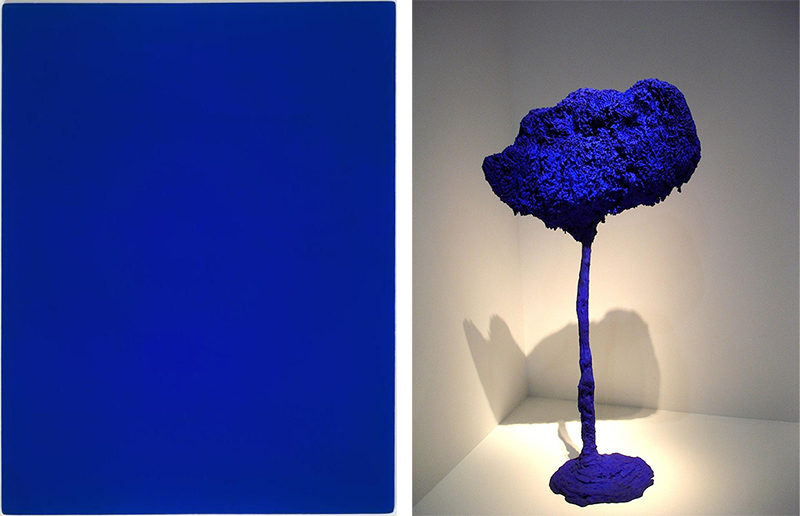
Where: (Usually) Musée national d’art moderne
Klein’s sponge sculpture saturates space with International Klein Blue; a hue so intense it becomes experiential rather than visual. The organic form absorbs pigment deeply, transforming a humble material into something almost ceremonial. It resembles coral, tree, or mineral formation, hovering between abstraction and nature. Klein’s fascination with immateriality and spiritual presence pulses through the work; colour becomes substance, surface becomes aura. In gallery light, the blue vibrates against surrounding white walls, commanding attention without narrative. It is bold, elemental and unapologetically singular.
Who will love it: those drawn to monochrome drama and art that treats colour as philosophy.
18) Liberty Leading the People, Eugène Delacroix
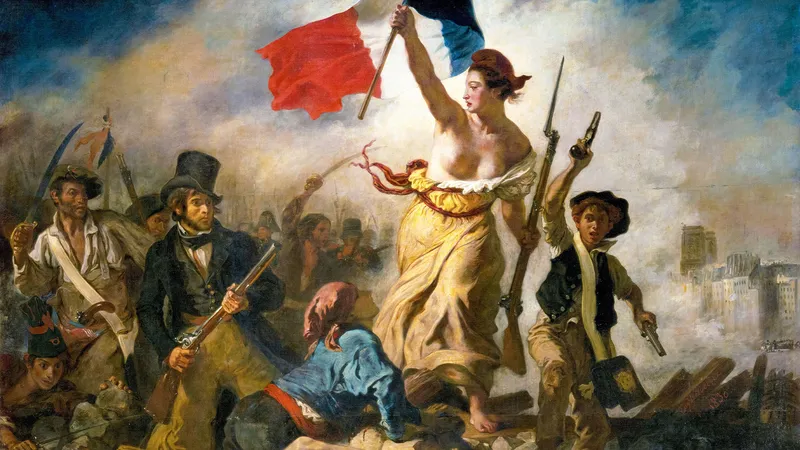
Where: Louvre
Delacroix’s revolutionary allegory remains one of the most stirring political images ever painted. Liberty strides forward through smoke and chaos, bare-breasted and resolute, tricolour raised high. Around her, figures from different social strata fall and rise in dramatic motion. The brushwork is dynamic, the palette charged with urgency. Though steeped in symbolism, the painting feels immediate; a fusion of reportage and myth-making. Within the Louvre’s vast galleries, it commands attention not by size alone but by conviction. It is theatrical, unapologetic and enduringly powerful.
Who will love it: admirers of epic composition and art that merges history with fervour.
19) Le Serment du Jeu de Paume (study), Jacques-Louis David
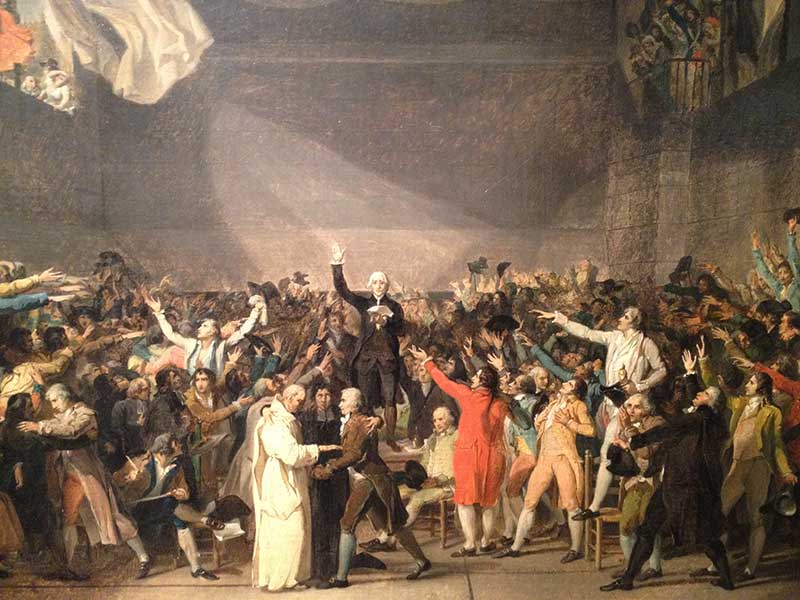
Where: Musée Carnavalet
Though unfinished, David’s monumental study for The Tennis Court Oath captures the charged atmosphere of revolutionary resolve. Figures stretch upward in collective oath, drapery billowing with neoclassical grandeur. The composition pulses with motion, even in preparatory form. David rejected mythological allegory in favour of contemporary heroism, elevating political action into visual epic. The absence of completion lends the work an almost poignant quality; ambition suspended mid-gesture. Within the Musée Carnavalet, dedicated to the history of Paris, the study resonates as both artistic vision and civic memory.
Who will love it: those captivated by revolution, rhetoric and the power of unfinished ambition.