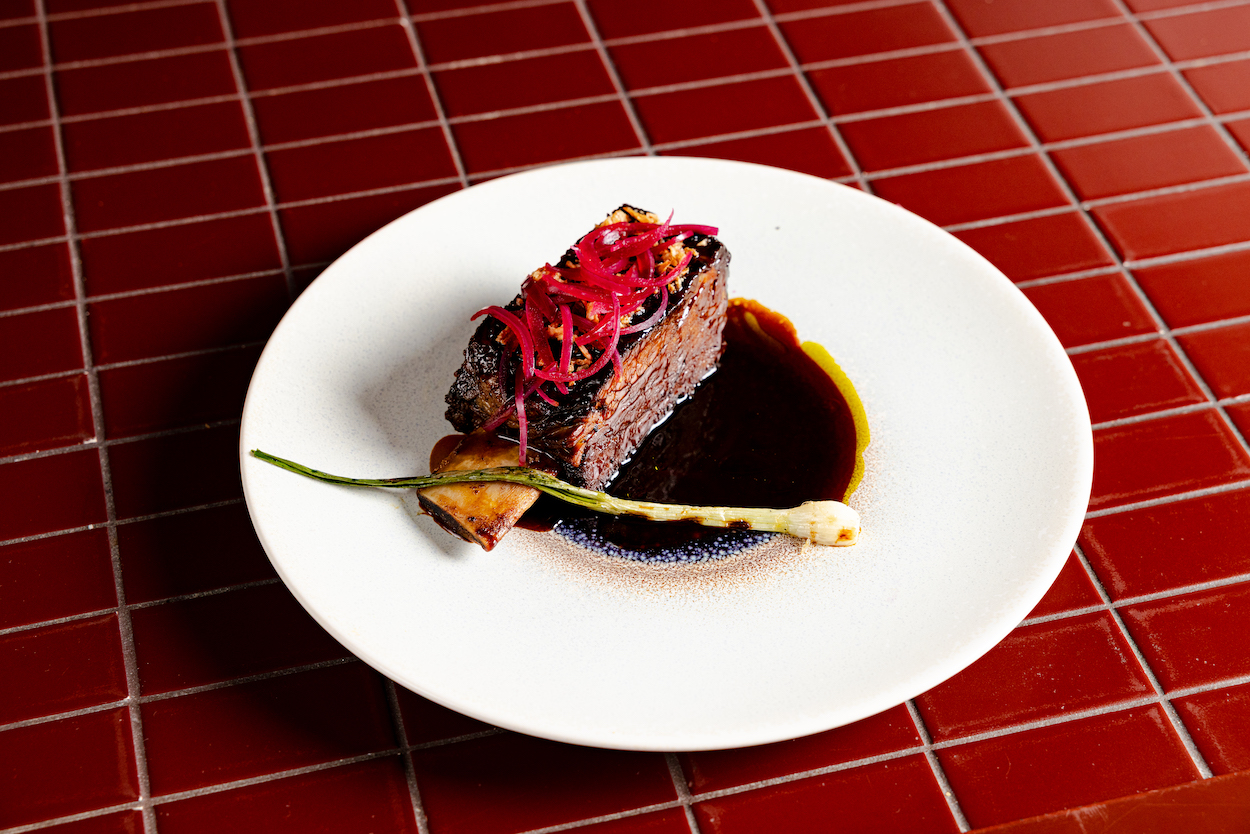
In the City, where a decent lunch usually costs twice the price and half the thought, Straits Kitchen has quietly solved the midday problem.
There are lunches you eat because you have to, and lunches you think about for days afterwards. The Express Lunch at Straits Kitchen belongs firmly in the second category, which is not something you expect from a menu engineered to get you in and out in forty-five minutes flat. I arrived with modest expectations and left having rearranged my understanding of what a City lunch can be. That doesn’t happen often enough to take lightly.
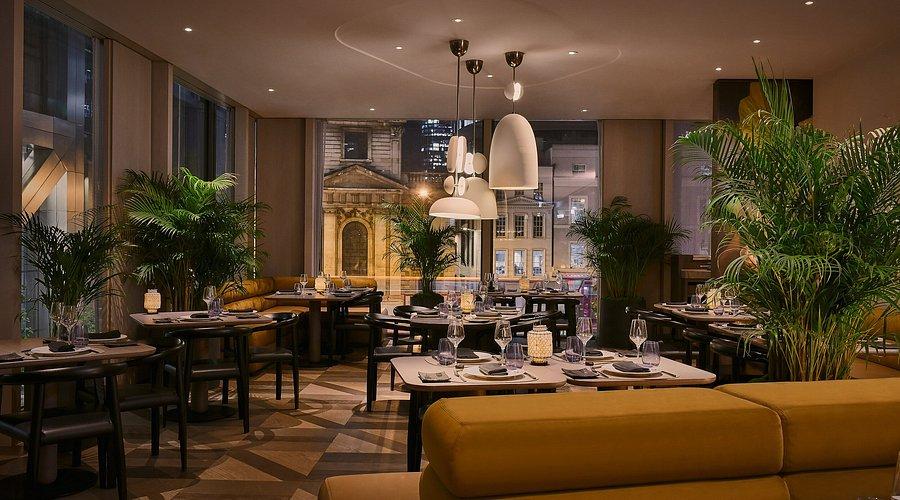
Pan Pacific London has held its Forbes Travel Guide Five-Star status for five consecutive years, and it shows before you’ve even sat down. My coat disappeared to the cloakroom before I’d thought to offer it. I was guided upstairs to the restaurant on the first floor, a room that sits above the hotel’s entrance hall and looks out quietly over Bishopsgate in the heart of the City. The space is calm without being cold, considered without announcing itself. The interiors carry the Pan Pacific sensibility throughout: clean lines, warm materials, the kind of restraint that costs more to achieve than ornamentation does. A few people from nearby offices were already settled when I arrived, conversations low, nobody performing. It felt like somewhere people genuinely come to eat rather than to be seen eating, which in this part of London is a distinction worth making.
The service set the tone early. Questions were answered properly, the pace of the meal was read and matched without being asked, and there was an attentiveness that never tipped into hovering. For a lunch designed around speed, it never once felt rushed. That balance is harder to strike than most restaurants manage.
A cocktail, some prawn crackers, and the beginning of something good
The Yang Guifei arrived first: lychee juice, mango, fresh mint, handmade dragon fruit syrup, £12. Cold and fragrant and more elegant than most cocktails I’ve been handed at lunch. Sweet in the way that fruit is sweet rather than the way sugar is, with enough complexity from the mint and dragon fruit to hold your attention across a whole meal. Then came the prawn crackers with green chilli sauce, sharp and lemony and quietly addictive, the kind of thing that raises your expectations for what’s coming without meaning to. A small gesture, but a considered one. It told me something about the kitchen’s instincts before a single proper dish had arrived.
The room filled gradually around me. City workers, a couple of business lunches, someone eating alone with focused contentment. The noise level stayed low, the light stayed good, and the particular quality of calm that Pan Pacific London has built into its spaces held throughout. Bishopsgate outside moves at pace. In here, it doesn’t reach you.
The chef behind the menu
Before the starters arrived, I had the chance to sit with Chef Giorgio, and it became clear quickly that the Express Lunch is not a side project or a commercial calculation but something the kitchen has taken genuine ownership of.
Giorgio grew up on the coast of Italy, in a culinary tradition that is specific and unsentimental: fresh ingredients, respect for the sea, a preference for letting produce speak rather than dressing it into submission. That foundation is still audible in everything he cooks, even when the dish in front of you is pulling from an entirely different hemisphere. It’s there in the precision of a sauce, in the way he handles fish, in a general refusal to overcomplicate things that are already good.
The coastline he grew up on is only part of the story. Giorgio has travelled extensively through Southeast Asia, Indonesia, Thailand, the Philippines, and those experiences have shaped his cooking in ways that go deeper than influence or inspiration. The flavours he absorbed there, the techniques, the understanding of how spice and acid and heat can work together, have become genuinely part of his culinary vocabulary. Not applied from the outside, but integrated. When you eat his food, you don’t feel the join between the Italian and the Southeast Asian. The two simply coexist, often within a single dish, and the result is a cuisine that feels entirely his own.
He spoke about ingredients with the particular attention of someone who considers sourcing a creative decision rather than a logistical one. Local produce, seasonal rhythms, supplier relationships built over time. The menu changes weekly according to what’s good, what’s seasonal, what Giorgio is drawn to at that particular moment. It is a living menu in the truest sense, and that energy is something you can taste.
The weekly rotation serves the regulars well. People who work nearby and come back often always have a reason to return. It is a format designed around the City’s rhythms, and the kitchen has found a way to make serious food work within the particular constraints of a midday hour without it feeling like a compromise.
Small plates that made me rethink the whole category
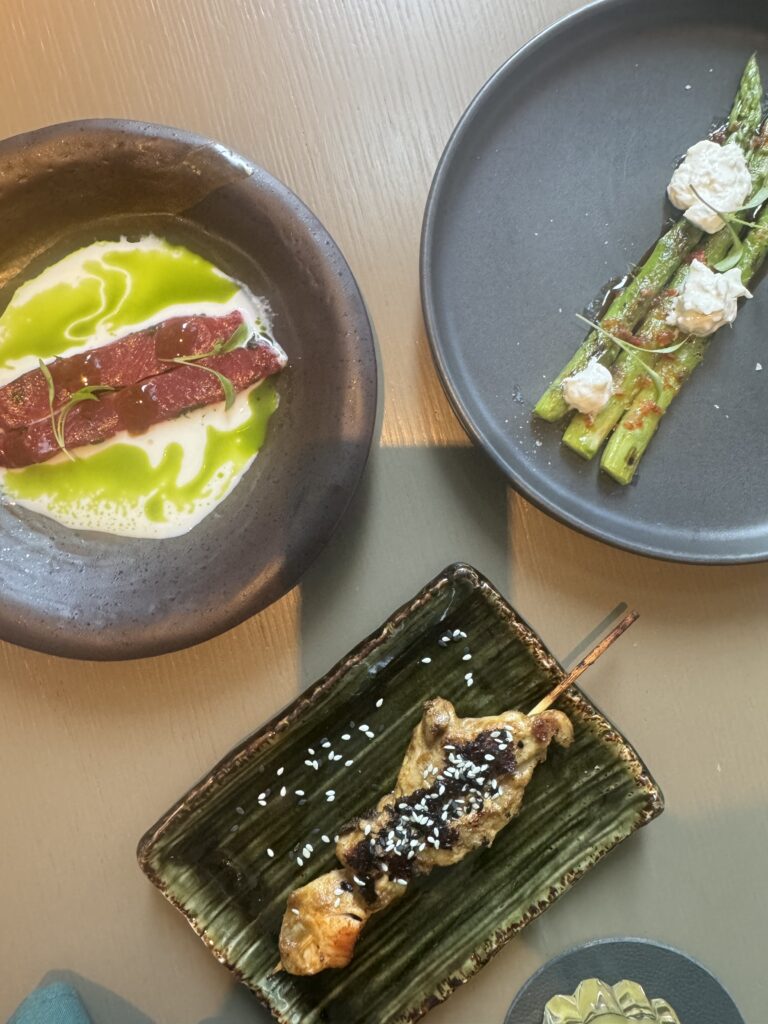
Starters arrive as small plates for the table, and this is where Straits Kitchen shows its hand most openly. The format invites sharing and comparison, and the kitchen uses that structure well, delivering plates distinct enough to hold their own but coherent enough to belong together.
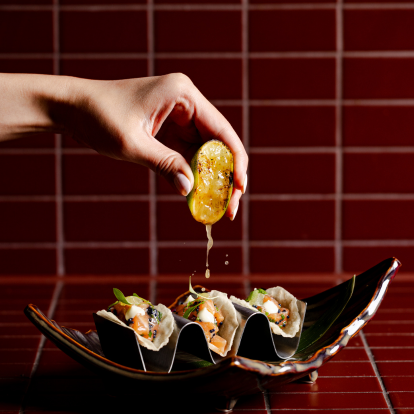
The chicken satay skewers were good: properly grilled, the peanut aftertaste working its way through long after the last bite, more nuanced than the dish’s familiarity might suggest. The beetroot-cured salmon with horseradish sauce and ponzu gel stopped me mid-conversation. The fish was immaculate, the cure doing exactly what it needed to without overwhelming the salmon’s own flavour, and the ponzu brought a clean herby brightness that cut through the richness with precision. There was a whisper of heat at the finish, the kind that registers and then disappears, leaving you thinking about it. I was not expecting to be surprised by a salmon dish. I was, genuinely, surprised.
The grilled asparagus with burrata and oelek was the dish of the afternoon. I say that having eaten everything that came before and after it, and I stand by it. The textures were so considered: the giving softness of the burrata, the slight resistance of properly cooked asparagus, the heat of the oelek landing underneath rather than on top. The whole thing felt calibrated rather than assembled. The balance between richness and spice was exact in a way that takes real skill to achieve and makes the dish seem effortless in the eating. I did not expect to feel this way about asparagus. That is the correct response to a dish that is doing its job.
The grilled chicken with peanut kept delivering small surprises to the end of the plate. Each bite landed slightly differently than the last, which sounds like a small thing but is harder to achieve than it appears and more satisfying than it has any right to be at this price point.
Across all of it, what registered most clearly was the quality of the ingredients. Not stated, not marketed, just present. The kind of quality you notice because the food tastes like itself, more intensely and more cleanly than you were expecting.
An Italian on the coast of somewhere else
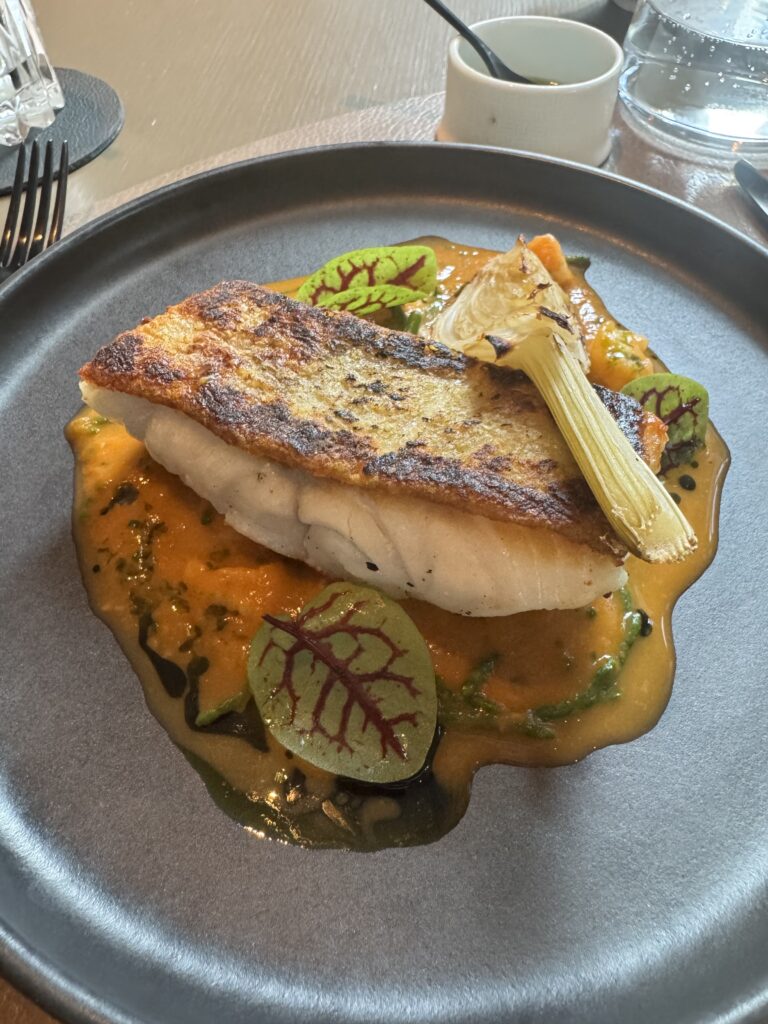
For my main I chose the pan-fried Atlantic cod with apple, braised fennel, and a lemongrass bouillabaisse sauce, and it was here that Giorgio’s background made itself felt most clearly.
The bouillabaisse had been pulled in a different direction entirely: fragrant, sharp, the lemongrass lifting the whole thing into Southeast Asian territory while the structure underneath remained recognisably classical. The cod was cooked with the kind of confidence that only comes from a kitchen that knows what it’s doing with fish. Skin crisp, flesh giving, the internal temperature precise. And the braised fennel, which I would normally approach with mild reluctance, had been handled so well that I not only ate all of it but found myself thinking about it afterwards. It had taken on the flavour of everything around it without losing its own character entirely.
Visually, the plate looked like it had come from a kitchen charging three times what this menu costs. The plating was considered without being architectural, precise without being cold. The kind of thing you photograph and then put your phone away, because the eating is better than the documenting.
A sweet finish
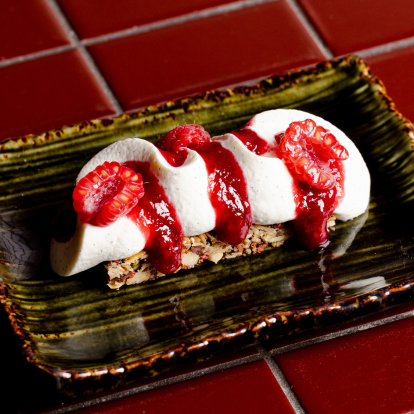
Dessert is available at an additional £7. The cheesecake brought vanilla, granola, and raspberry together in a combination that rounds off the meal without demanding much attention. After the ambition of what came before it, it sits more quietly on the table: pleasant enough, and a reasonable way to end, though the savoury courses are where Straits Kitchen makes its real argument.
I left without that particular heaviness that follows a large plate at lunch, which is partly the format: range across small plates rather than one thing to wade through, and partly the kitchen’s instinct for balance. You come away satisfied in a way that still allows for an afternoon. That, for a City lunch, is no small thing.
Beyond the express
The Express Menu is the entry point, but it is worth understanding what else Straits Kitchen is doing. At the heart of the seasonal menu is the Experience Menu, a five-course progression at £59 per person that moves through tuna tartare with soy-cured egg yolk, crab risotto with lime and kalamansi, and the kitchen’s signature Hereford Beef Short Rib with sweet soy and stout jus. A curated wine pairing is available at an additional £35 per person. It is the kitchen working without the constraints of a forty-five-minute window, and for an evening when time is not the variable, it makes a compelling case.
The restaurant also has private dining spaces that read differently from the main room: more enclosed, more suited to the kind of conversation that benefits from a door. For a lunch meeting with something at stake, or a dinner that needs its own atmosphere, that option is worth knowing about.
Why this matters
There is a version of the City lunch that costs £70 and delivers competent food in a room full of people who want to be seen having it. There is another version that costs £12 and is eaten at a desk. Straits Kitchen has found a third way: serious food, properly served, in a space that takes the quality of your hour seriously, at a price that makes it a reasonable Tuesday decision rather than a quarterly event.
The tuna tartare, Giorgio told me, has become the most requested dish since the Express Menu launched, the one regulars specifically ask about when the weekly menu changes. Having eaten the calibre of everything else that came out of that kitchen, I understand why. The food here operates at a level that earns loyalty, and the format is designed to reward it.
For anyone working in or passing through the City at midday, the calculus is straightforward. Forty-five minutes, £29, food that will make you rearrange your assumptions about what a quick lunch can be. The Express Lunch at Straits Kitchen is one of the better-value things currently happening in London, and it has no intention of advertising that fact. It simply relies on the food to do the work.
On the evidence of one afternoon, the food is more than capable of doing exactly that.
Practical information
Straits Kitchen, Pan Pacific London, Bishopsgate, City of London. Express Lunch £29 for two courses, dessert £7 additional. Available Monday to Friday, 12pm to 4pm. Experience Menu £59 per person, wine pairing £35 additional. Book via panpacific.com