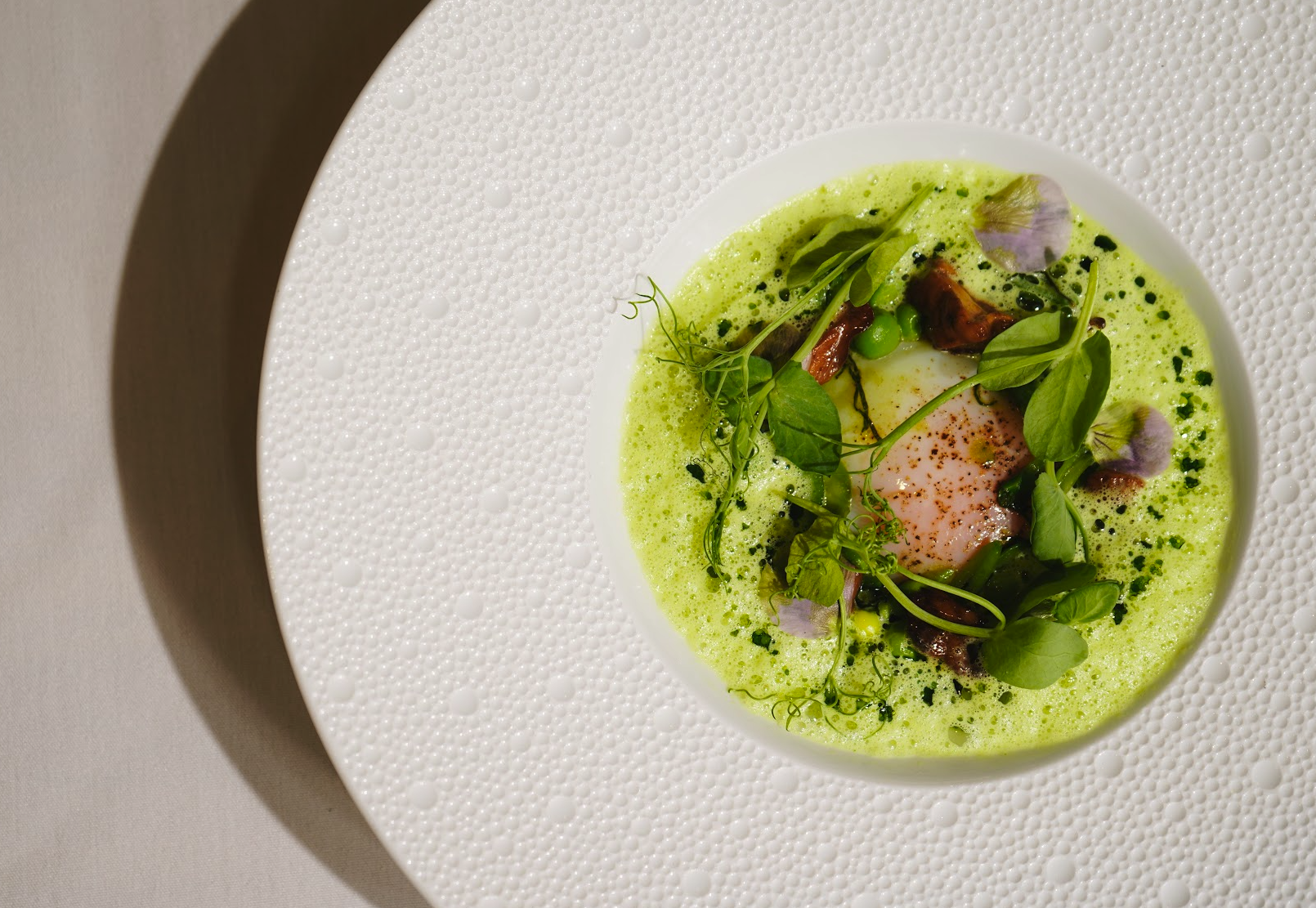
Jersey doesn’t get enough credit. Not from the travel press, not from the food world, not from the kind of people who spend their summers researching where to eat well within two hours of London. It sits there in the Channel, nine miles by five, closer to France than England, quietly accumulating more hours of sunshine than anywhere else in the UK, and somehow failing to make it onto the list of places serious food people talk about. Bohemia is in the process of fixing that.
The island’s only Michelin-starred restaurant sits inside The Club Hotel & Spa in St Helier, and is run by Head Chef Tom Earnshaw, who was named the Michelin Guide’s 2026 Young Chef of the Year earlier this year. That last detail is worth dwelling on. Young Chef of the Year isn’t a consolation prize or a career achievement award; it goes to someone doing something genuinely interesting at this specific moment. Not someone coasting on a reputation. Someone cooking, right now, better than almost anyone else their age in the country.
Earnshaw has been building towards this for over a decade. Time in some of the UK’s most rigorous kitchens gave him a foundation; travel to Japan, North Africa and the Mediterranean gave him something harder to teach. The cooking at Bohemia reflects both. It is technically precise in the way that Michelin-starred food tends to be, but it doesn’t feel like technique for its own sake. There’s a point to all of it, and that point is usually flavour, or texture, or the specific pleasure of eating something that makes immediate sense even when the combination sounds, on paper, like it shouldn’t.
What Jersey actually brings to the table
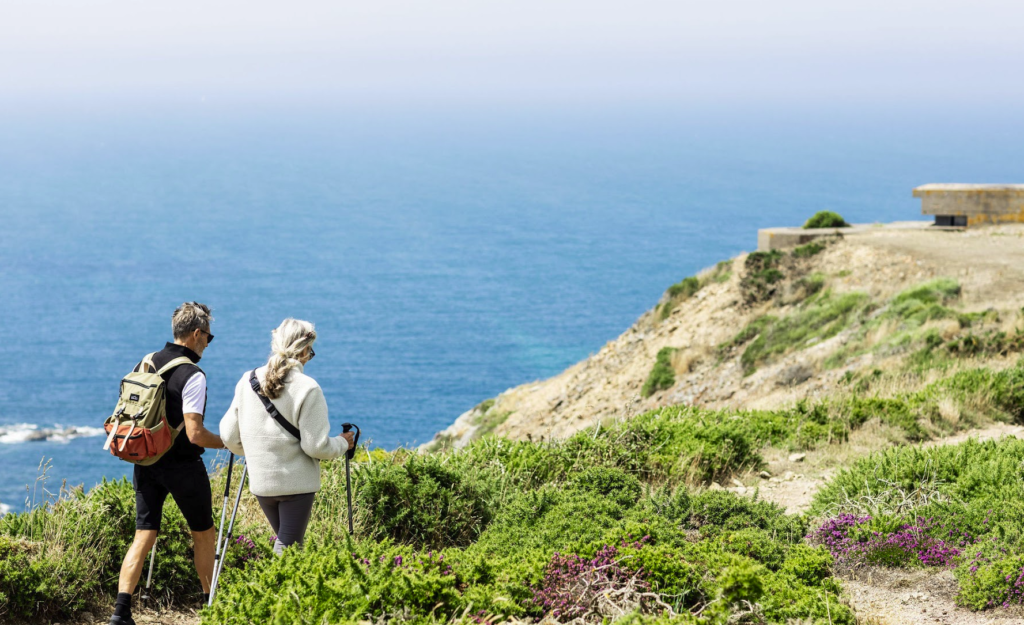
Before getting into the dishes, it’s worth understanding what Earnshaw is working with, because the ingredients here are not incidental to the cooking. They are the cooking.
Jersey has an agricultural identity that the mainland has largely lost. The Jersey Royal potato, protected by its own PDO designation, meaning it can only be grown on this island, in this soi, is not interchangeable with the potatoes you buy at a supermarket in London, whatever the packaging implies. The dairy is similarly serious: Jersey cows produce milk with a significantly higher fat content than standard breeds, which means the cream is richer and the butter is a different animal entirely. These are not marketing claims. You taste the difference.
Then there’s the seafood. Oysters pulled directly from Jersey’s shores. Fish caught that morning. The kind of supply chain that most restaurants describe in their PR and don’t actually have. Bohemia has it because the island makes it possible, and because Earnshaw has built relationships with local suppliers that show up in what arrives at the table.
The menus
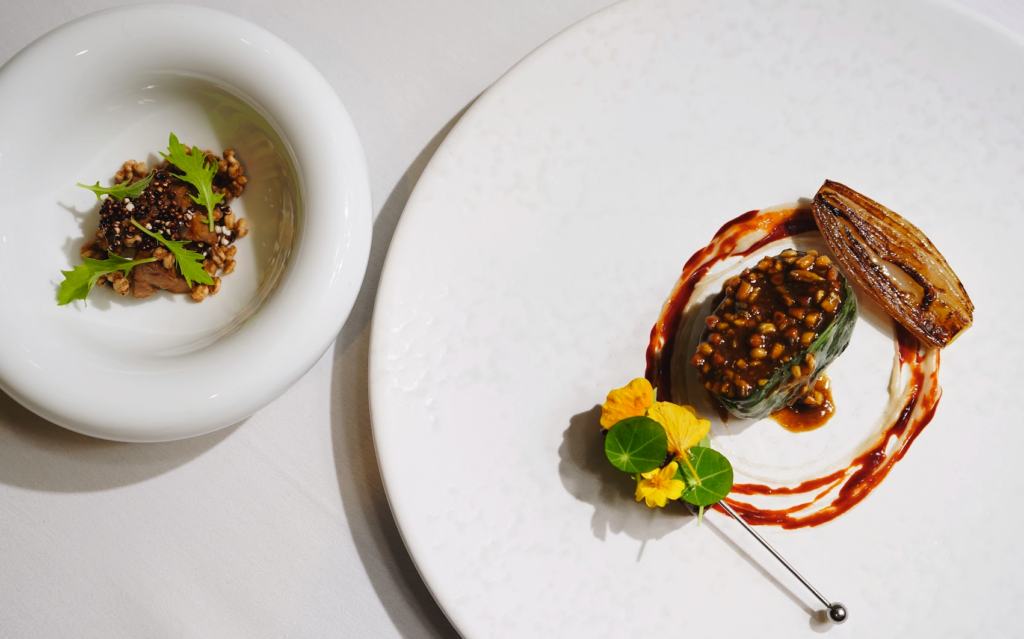
Three options: a set lunch at £59 per person, a four-course dinner at £99, and a seven-course tasting menu at £139. All three represent fair value for cooking at this level, the tasting menu in particular is priced well below equivalents in London, which is one of several arguments for making the trip rather than staying put.
The menu changes with the seasons, which means what follows is a snapshot rather than a guarantee, but it gives a sense of what Earnshaw is doing. Tim Farrar’s Eshton Herdwick lamb merguez arrives with green sauce and nettles: a combination that is simultaneously rustic and deliberate, the kind of dish that looks simple and isn’t. Loire Valley white asparagus comes with smoked eel and brown butter hollandaise, which manages to be both rich and precise, the acidity working exactly as it should against the fattiness of the eel.
The Kagoshima A5 Wagyu striploin, and yes, A5 is the highest grade available, which matters; is served with sea truffle, Jersey watercress and morel. Wagyu at this quality has a fat content that means even a small portion is a complete experience; the watercress cuts through it in a way that feels considered rather than reflexive. And then there’s the dessert: a whipped 64% Manjari chocolate cremeux with toasted sourdough, Nuñez de Prado extra virgin olive oil, Pedro Ximenez, and Exmoor Royal Beluga caviar on top. Written out like that it sounds like someone has lost the plot. Eaten, it makes complete sense: the salt and brine of the caviar doing something genuinely interesting to the chocolate, the oil adding a fruitiness that shouldn’t work and does.
This is what good tasting menus are supposed to do: take you somewhere you wouldn’t have thought to go yourself.
The chef
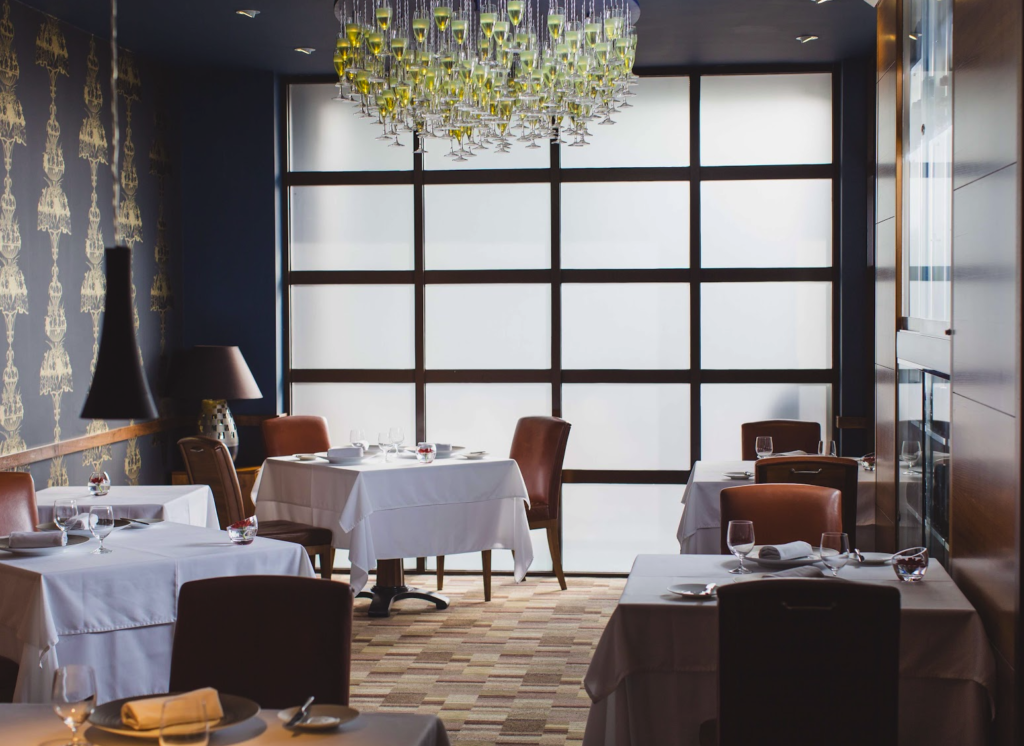
It would be easy to write about Earnshaw in the standard mode: prodigy, influences, philosophy, journey; but the more interesting thing about him is simpler than that. The cooking has a point of view. Not an abstract one, not a manifesto about locality or seasonality that exists mainly in the press release, but an actual perspective on what food should taste like and what a meal should feel like from beginning to end.
The Japanese influence shows up in restraint and precision. The North African thread appears in the spicing, in the use of ingredients like merguez, in a willingness to let heat and complexity do the work that cream and butter might do elsewhere. The Mediterranean runs through the olive oil, the asparagus, the understanding of what acid does to a dish. None of these influences are worn heavily. They’re absorbed, and what comes out is Earnshaw’s own.
The detail that keeps coming back: culinary nostalgia. Not nostalgia in the sense of recreating dishes from the past, but nostalgia in the sense of flavours that feel connected to somewhere real: to this island, to its soil, to its water, to the specific quality of its light on a summer evening when you’d rather be outside but are very glad you’re in here.
The hotel
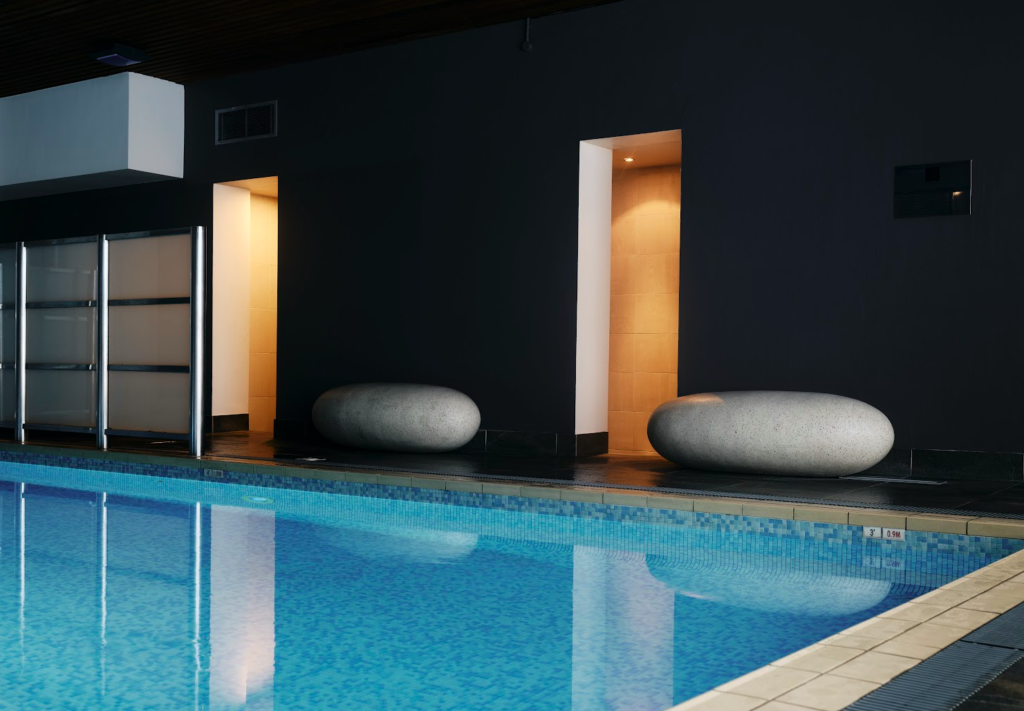
The case for staying overnight at The Club Hotel is more straightforward than it might seem. Yes, Jersey is accessible as a day trip. Yes, you could technically fly in for dinner and fly back. But the island rewards the slower visit, and The Club Hotel makes that easy.
The rooms and suites have Frette linen, floor-to-ceiling windows, Juliet balconies, and bespoke private bars. The spa is serious. The service is the kind that doesn’t draw attention to itself. And waking up the next morning on an island in the Channel, with no particular obligation to be anywhere, is an underrated pleasure: especially in summer, when Jersey’s beaches are in reasonable working order and the light is the sort that makes everyone look like they’re on holiday, which of course they are.
The larger point

Jersey in summer is a better option than its reputation suggests. The sunshine is genuinely reliable. The coastline: dramatic cliffs, secluded bays, country lanes that go nowhere in particular; is the kind of thing you drive around and feel disproportionately good about. And it is, in food terms, a place with real material to work with: produce, seafood, dairy, a culinary heritage that most islands of this size couldn’t claim.
What Bohemia does is take all of that and cook it properly, by someone who knows what they’re doing at the absolute top of their game. The Michelin star is the credential. The Young Chef of the Year award is the current form guide. The food is the actual argument.
At £139 for seven courses, it’s cheaper than dinner at most comparable London restaurants, before you factor in that you’re also on an island with more sunshine than anywhere else in the country. There are worse ways to spend a summer weekend. Quite a lot of them cost more.
Bohemia, The Club Hotel & Spa, St Helier, Jersey. Set lunch £59, four-course dinner £99, seven-course tasting menu £139. Book at bohemiajersey.com