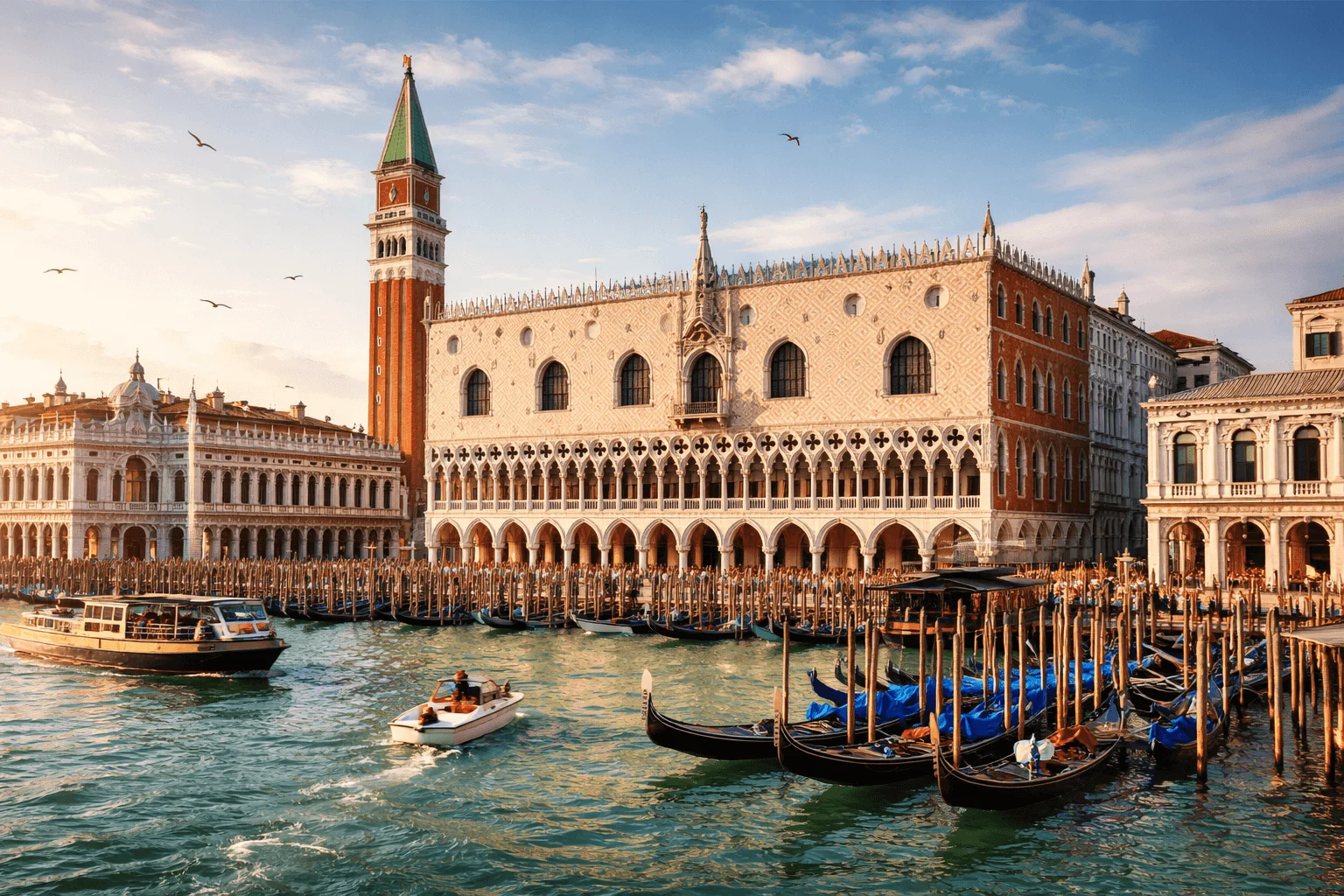
A long-read essay on Venice’s unlikely reinvention; and what three hotel brands arriving in one season actually means
There is a specific kind of exhaustion that only Venice produces. It arrives sometime around the third hour of your first afternoon, when you have crossed seventeen bridges, looked at a map sideways, and still cannot locate the thing you were looking for. You stop. You look up. And there is a church so beautiful you forget what you were looking for in the first place. This is the trick Venice has been pulling on visitors for eight hundred years. It still works.
I arrived in late March, ahead of the Biennale, ahead of the day-tripper surge, ahead of the season in which this city will accept more than it probably should. There was a reason to be here before May. Actually, there were three.
In the space of a single year, Venice has welcomed the Orient Express, Airelles, and soon the Four Seasons to palaces that had been sleeping, shuttered, or waiting for exactly the kind of budget and vision that only this tier of hospitality can provide. Orient Express Venezia opened in April in a 15th-century palazzo in Cannaregio, designed by the same architect responsible for the Doge’s Palace. Lebanese designer Aline Asmar d’Amman did the interiors: original frescoes, painted ceilings, a spiral staircase that does not need to be dramatic but is anyway. Airelles, the French brand’s first venture outside France, took three buildings on Giudecca, the island that sits across the water from the main city like an afterthought, which it is not. The Four Seasons arrives later in the year, in the Danieli, one of the most written-about addresses in Venetian hotel history and therefore one that requires a particular confidence to touch.
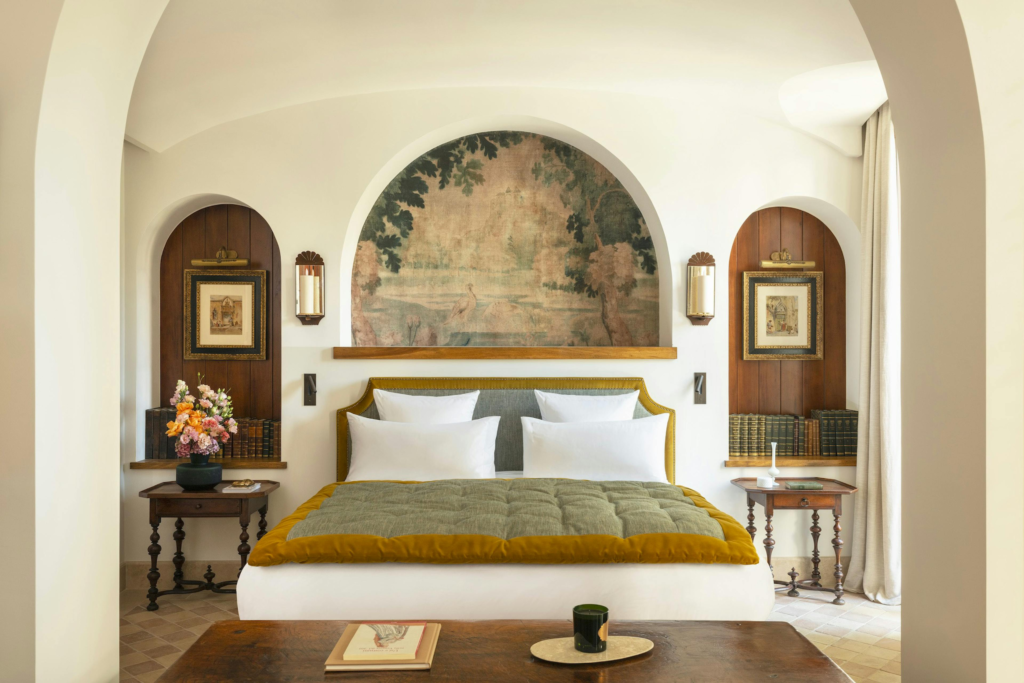
The question I kept turning over, walking the Sestiere Cannaregio that first evening, is what it means when three of the world’s most careful brands converge on the same lagoon in the same season. Either they are following each other’s instincts, which is undignified, or they are all responding to something real. I think it is the second thing.
What the city decided to become
Venice has spent the last decade in a quiet argument with itself about what it wants to be. The cruise ship bans came first: the enormous vessels that had been ruining the view from the Riva degli Schiavoni and depositing ten thousand day-trippers simultaneously were pushed out of the main waterways. Then came the access fee. Five euros to enter the city on peak days, paid in advance, monitored at checkpoints. It sounds like a tourist trap designed by bureaucrats. It is actually something more interesting: a city testing whether its own popularity can be managed rather than merely endured.
I paid my fee at the machine near the train station. The man in front of me was from Bergamo and was exempted as a regional resident, which pleased him. I walked through the old ghetto, which was quiet at eight in the morning and gold-lit in a way that justified every cliché about Venetian light, and found a bar where the coffee was two euros and everyone at the counter was local and nobody looked at me. This is becoming rarer in Venice. It is not yet rare.
The canal-adjacent truth about Cannaregio
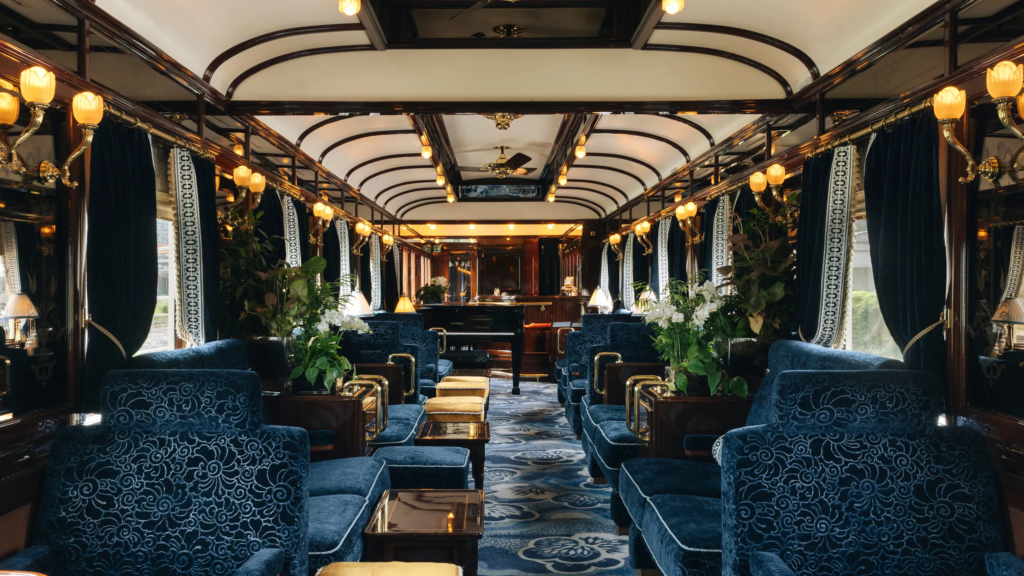
The Orient Express chose its neighbourhood wisely. Cannaregio is, by Venetian standards, genuinely residential. The tourists thin out here. The laundry hangs from windows. The bakeries sell things for prices you could eat without wincing. The palazzo sits on a canal narrow enough that you can hear the water slapping the stone from the upstairs rooms, which is either deeply charming or impossible to sleep through, depending on your disposition. Mine is the former.
The interiors are the kind that make you understand why the word “patina” exists. This is not renovation in the sense of making old things look new. It is something more like archaeology with soft furnishings: the frescoes are there, documented and protected, and around them the designer has placed velvet, custom textiles, furniture in dark wood with brass hardware. In the room I looked at, there was a desk that a person could actually write at. I notice this now because so many hotels build desks as decorative objects rather than functional ones.
What makes the Orient Express choice interesting, beyond the palazzo, is the pairing with La Dolce Vita, the brand’s luxury sleeper train that calls at Venice Santa Lucia. You could, in theory, arrive by train from Rome in a proper compartment with proper dinner service, walk off the platform in the morning, and be in Cannaregio by nine. I thought about this quite seriously.
The island that didn’t need to be discovered
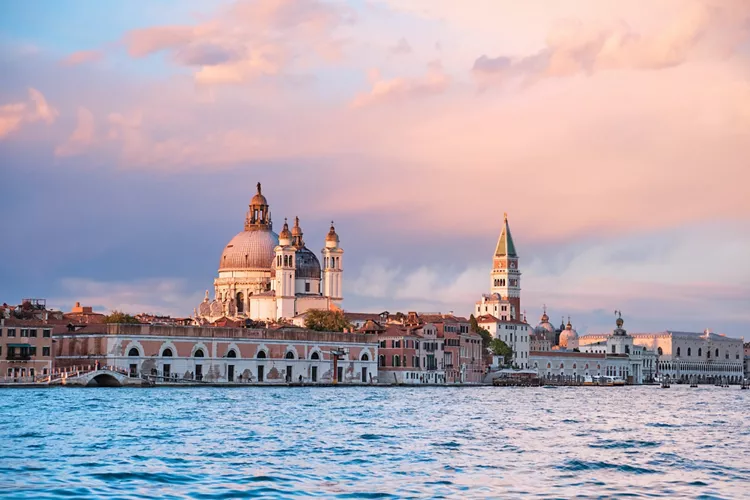
Giudecca is one of those Venetian places that Venetians assume you already know about and visitors consistently overlook. It sits at ten minutes by vaporetto from the Zattere, has several good restaurants, the Redentore church (Palladio, 16th century, worth the boat ride alone), and until recently, the Cipriani. Airelles chose it for their French luxury debut, which says something about the instinct of a brand that has spent years making exceptional hotels in exceptional French settings: they went to the island nobody was fighting over.
Three buildings, 45 rooms, gardens running to nearly a hectare, a wellness garden spa, and dining from Nobu and Jean-Georges Vongerichten, which is a combination of names that should not necessarily work together and yet, in a place this architecturally serious, probably will. The interiors, Christophe Tollemer’s work, use warm ambers and deep blues and Murano glass and custom Fortuny chandeliers, which is the correct response to being in Venice, where restraint is simply not the tradition.
I did not stay on Giudecca. I ate at a trattoria near the vaporetto stop where the pasta was made that morning and nobody offered me a menu in English. This is, I think, what the city is actually trying to protect.
What the Danieli becomes next
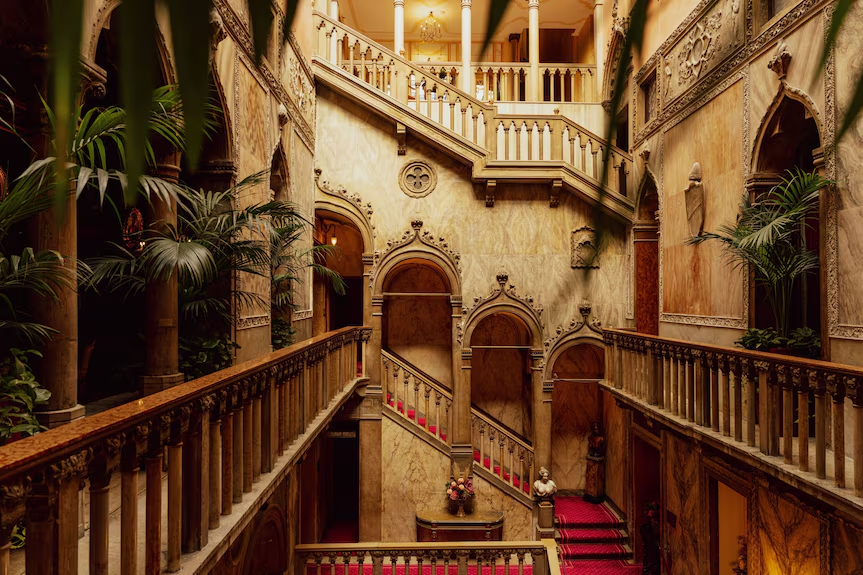
The Four Seasons opening is later in the year, timed for the Venice Film Festival in September, which is either a magnificent piece of programming or an unavoidable collision of two enormous forms of spectacle. The Danieli is three buildings: Palazzo Dandolo from the 14th century and two 19th-century additions, connected by internal bridges and containing a pink marble atrium and Murano chandeliers that will now be Pierre-Yves Rochon’s to interpret. Rochon did the Four Seasons in Florence, in Paris, in Cap-Ferrat. He knows how to leave historic buildings more themselves than he found them.
The rate, when it opens, will start at €8,722 a night for the entry rooms. I offer this fact not with outrage but with the acknowledgment that certain things simply cost what they cost, and the question is not whether the Danieli is worth that but rather what “worth” means when applied to sleeping inside a 14th-century Venetian palazzo that has been attended to by a designer of that calibre.
The city underneath
The mistake, in Venice, is to go looking for authenticity as if it is a neighbourhood you can find on a map. It is not. It is a morning thing: the boats delivering vegetables to the back entrances of restaurants, the schoolchildren arguing on a bridge, the smell of canal and bread and coffee arriving in precisely that order. It is an evening thing: the particular silence that falls after the day-trippers have gone and the lagoon goes flat and silver and the lights come on in the buildings one by one.
Three hotel brands choosing Venice in the same year are not a sign that the city has been taken over. They are a sign that someone, somewhere, looked at what Venice was becoming and decided it was worth betting on. The locals-first tourism push, the access fees, the sustainable initiatives sailing through the lagoon: these are a city trying to earn the right to be visited rather than simply enduring it. That is a different thing. It is, in fact, rather moving.
The church I found on my last morning was San Zaccaria, which contains a Bellini altarpiece so quietly extraordinary that I stood in front of it for twenty minutes without checking my phone. Three bridges from the Orient Express. Five from the Danieli. Down an alley that a map would not reliably find.
Venice has been doing this for eight hundred years. It still works.
Orient Express Venezia, Palazzo Donà Giovannelli, Cannaregio. Airelles Venezia, Giudecca Island, from €1,395. Danieli, a Four Seasons Hotel, Venice; opening August 2026, from €8,722.