A Mayfair aparthotel is making the case that going green doesn’t mean going without
There’s a stubborn assumption baked into sustainable travel: that the eco-conscious choice will be dimly lit, aggressively hessian, and faintly apologetic. SLO, a new London aparthotel that opened its first property, Claridge House, in Mayfair this February, is making a fairly compelling case against it.
Set in a restored 1924 neo-Georgian building on Davies Street, a short walk from Bond Street, Claridge House has eight residences (one to three bedrooms) that are both among the most comfortable and the most carbon-conscious places to stay in the capital. For London, which has no shortage of five-star options and a growing sustainability credibility problem, that’s a useful combination.
The building came first
Before any guest arrived, Claridge House was already causing a stir in architectural circles. PDP Studio carried out a deep retrofit of the building, and the project won the 2025 Architects’ Journal Retrofit & Reuse Award for Decarbonisation and Net Zero. Energy use fell by 80%. CO₂ emissions dropped by 93%.
Worth pausing on those figures. At a time when a meaningful chunk of new luxury hotels are still built from scratch, concrete poured, materials shipped, old buildings demolished, the decision to retrofit instead is a different kind of ambition. There’s a well-worn line in architecture: the greenest building is the one that’s already built. SLO and PDP Studio took it at face value. The 1924 shell was kept and reworked rather than cleared away, saving both embodied carbon and the kind of restrained Georgian character that Mayfair has less of every decade.
Measuring what matters
What separates SLO from hotels that have added a sustainability section to their website and moved on is that every stay at Claridge House is individually measured for its carbon footprint, using GHG Protocol and DEFRA standards, the same frameworks major corporations use for emissions reporting. You end up knowing your actual impact, rather than being reassured by vague intentions.
This matters because “sustainable hospitality” covers a lot of ground. It can mean anything from a rooftop solar panel to a card asking you not to request fresh towels. SLO is doing something more specific, and more accountable.
The residences
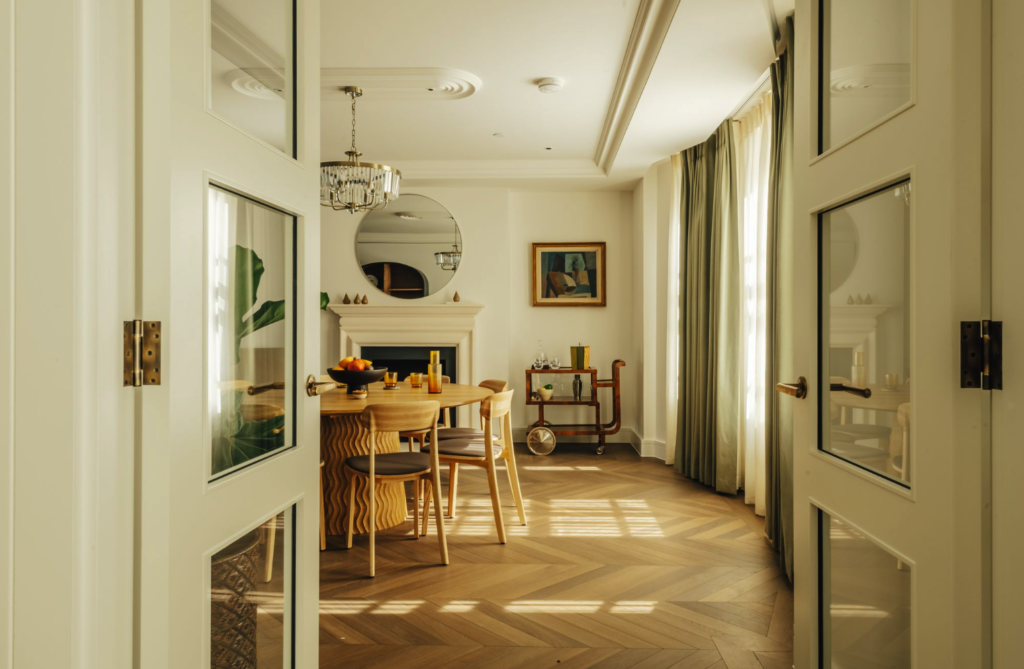
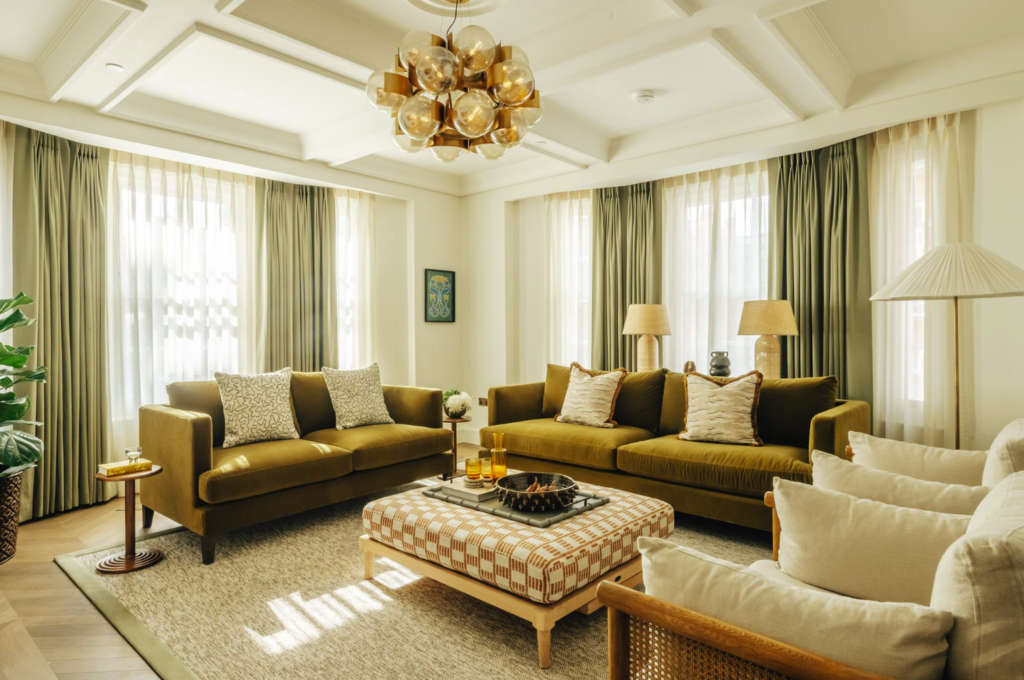
None of this has made the place uncomfortable. The interiors are good, the work of people who understand that longevity and beauty tend to reinforce each other when you buy well.
Furniture is by British makers including Robin Myerscough, Galvin Brothers and Chelsea Vivash, chosen to last rather than to be replaced in five years. Hotels furnish with fast furniture more often than they admit, so the investment in craftsmanship here is worth noting. An art collection put together by curator Claire Mander features local artists, the kind of thing that gives a property a sense of where it actually is, which chain hotels rarely manage and money alone can’t buy.
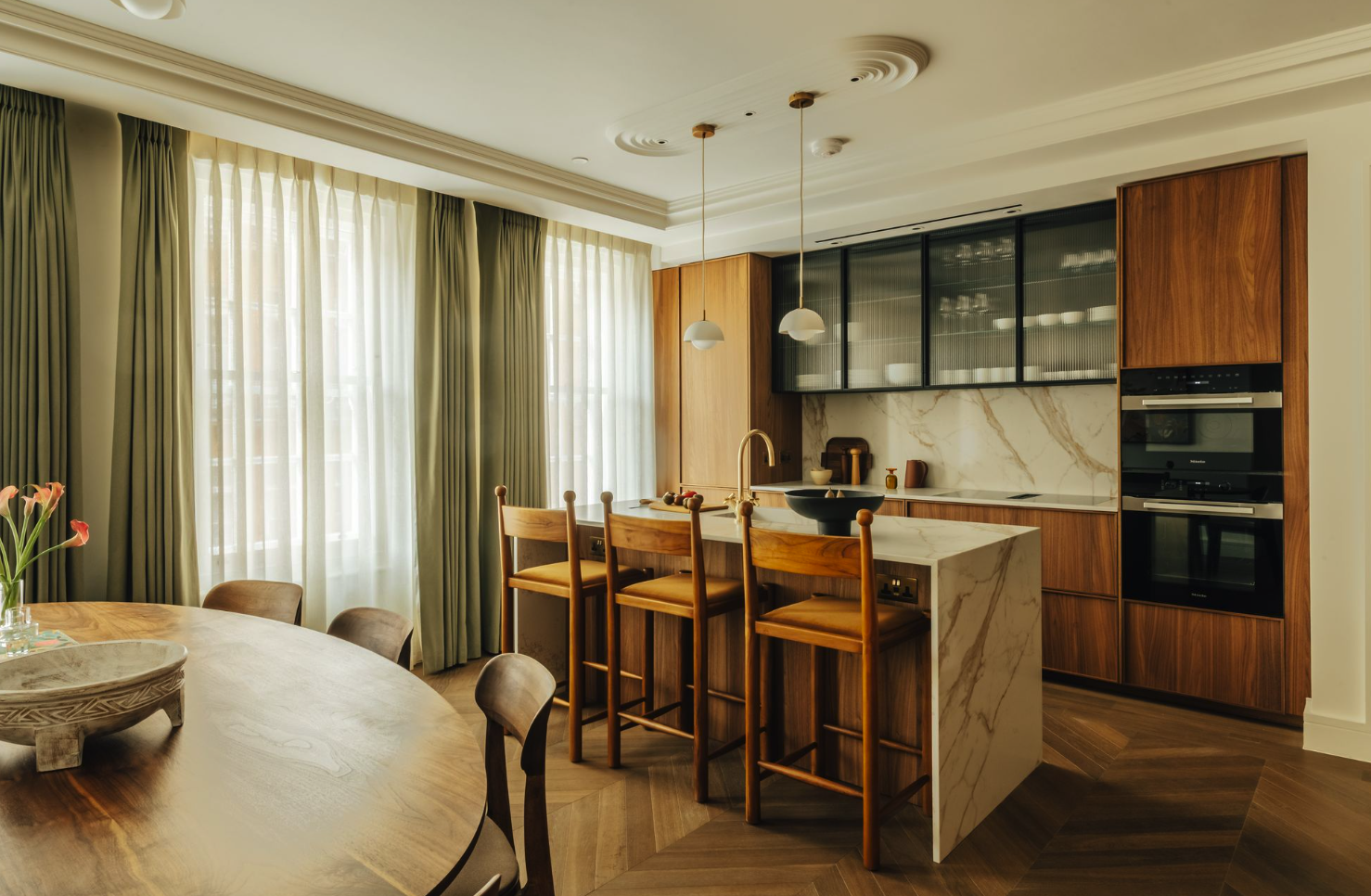
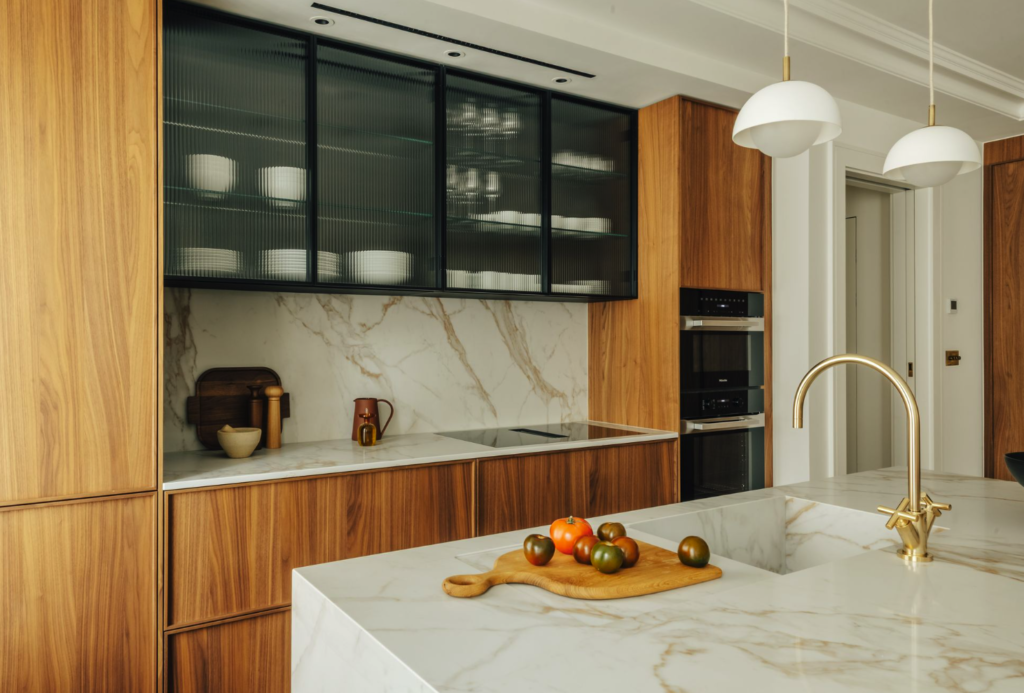
Each apartment has a fully equipped kitchen, generous living areas, and reading nooks. Some have a study. The overall feeling is closer to a well-arranged private flat than a hotel room that’s been styled within an inch of its life.
Wellness, taken seriously
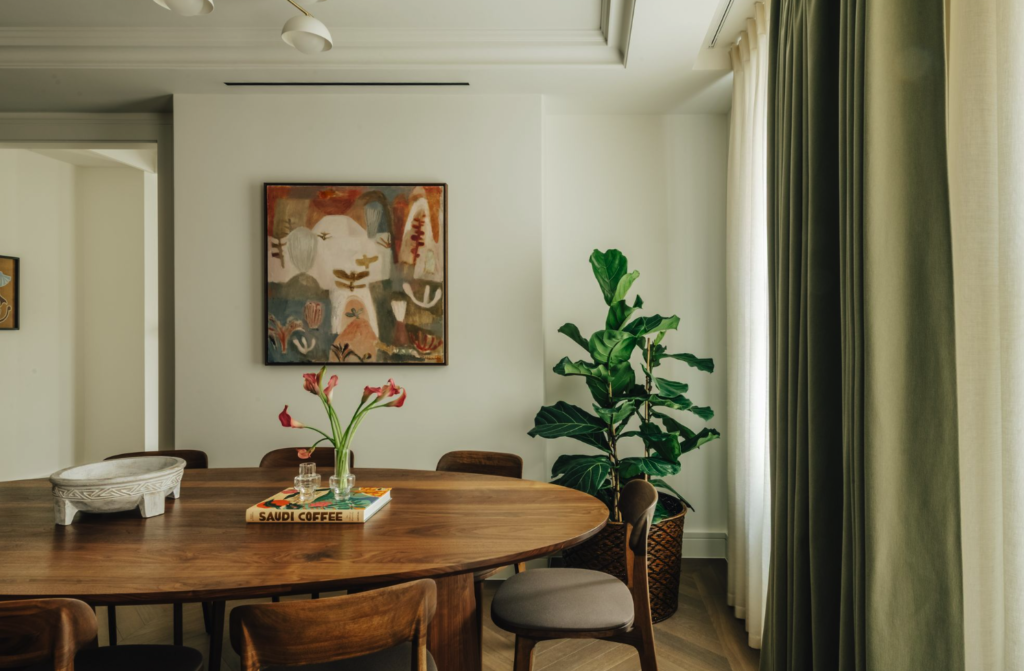
Air purifying systems run throughout each residence, an unglamorous detail that addresses something most city-centre hotels quietly struggle with: indoor air quality. Hypnos mattresses anchor bedrooms arranged with sleep as the actual priority. Anatomé London, the East London apothecary known for its botanically formulated products, supplies the scents and amenities, keeping the supply chain local and the bathroom shelf considerably more interesting than the average hotel miniature. Wooden board games, a bespoke SLO playlist and a curated book collection do the rest.
The wider picture
London’s hospitality sector is under increasing pressure, from regulators, investors, and a growing number of travellers, to address its environmental footprint with something more substantive than intention. The city has ambitious climate targets, and the buildings that house its visitors are part of that equation.
The retrofit, the carbon measurement, the British makers, the longevity-focused design: none of these are gestures. Taken together they make a coherent argument about what responsible hospitality in a historic city should look like in 2026. Claridge House makes that argument in rather good-looking surroundings.
SLO Claridge House, Davies Street, Mayfair. Rates from £550 per night for a one-bedroom apartment, including all amenities and welcome hamper. www.stayatslo.com