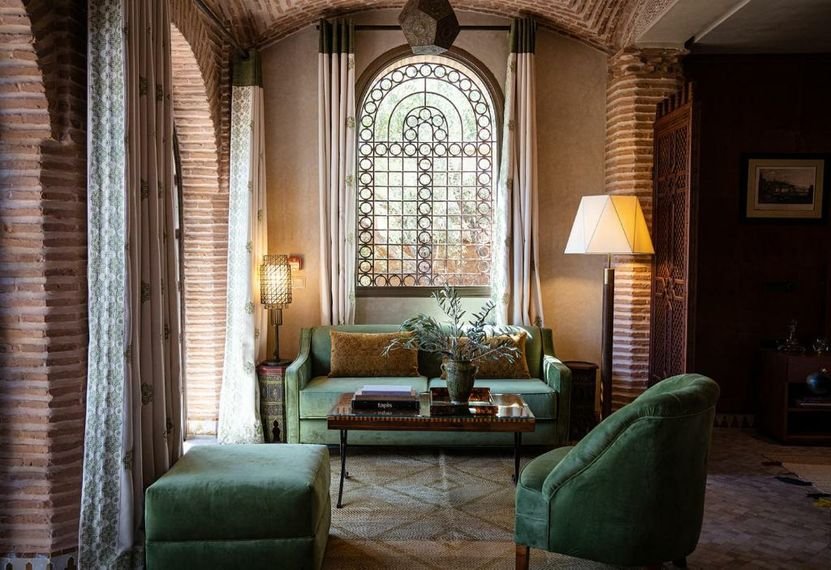
An hour into the High Atlas Mountains, Olinto proves a mountain retreat doesn’t need more than nine rooms to get absolutely everything right, and I’m still thinking about it weeks later.
Fifty-five minutes outside Marrakech, the traffic thins, the last tagine stall disappears from the roadside, and the tarmac starts climbing into red rock, walnut trees and olive groves so old they look sculpted rather than planted. By the time the road narrows into the Ouirgane valley and a pair of unmarked gates swing open onto a private drive, the medina you left behind an hour ago might as well belong to a different country. There is no sign announcing the hotel. There doesn’t need to be, and I loved that before I’d even got out of the car. Nine pavilions, one 35 acre olive estate, and an owner with a title most guests only discover by accident: this is Olinto, and it has no interest in shouting about itself.
Why nine rooms is the whole point
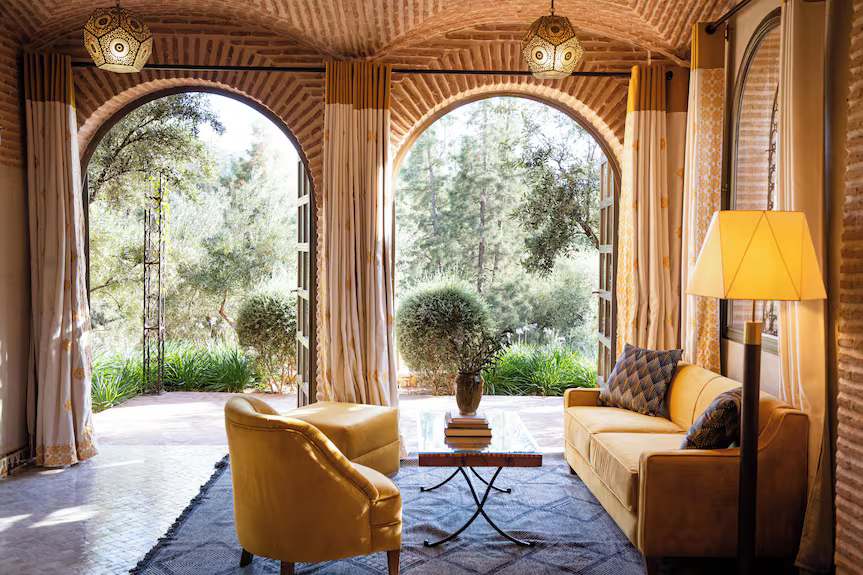
The property was built by Prince Fabrizio Ruspoli di Poggio Suasa, an Italian aristocrat with a long history of shaping Morocco’s most talked about addresses, and the restraint shows in every decision. Most new luxury openings in this price bracket arrive with sixty rooms, a spa menu the length of a small novel, and a marketing budget to match. Olinto has nine pavilions. That is the entire hotel, and if you’d asked me before I arrived whether that would feel like a limitation, I’d have said probably. It doesn’t. It’s the whole point. No conference suite, no wedding pavilion bolted on for revenue, no second restaurant competing with the first for attention. It is adults only, which here reads less like a policy and more like an honest admission that a retreat this quiet would be wasted on anyone under the age of consenting to silence. I mean that as the highest compliment I can pay a hotel at this price point.
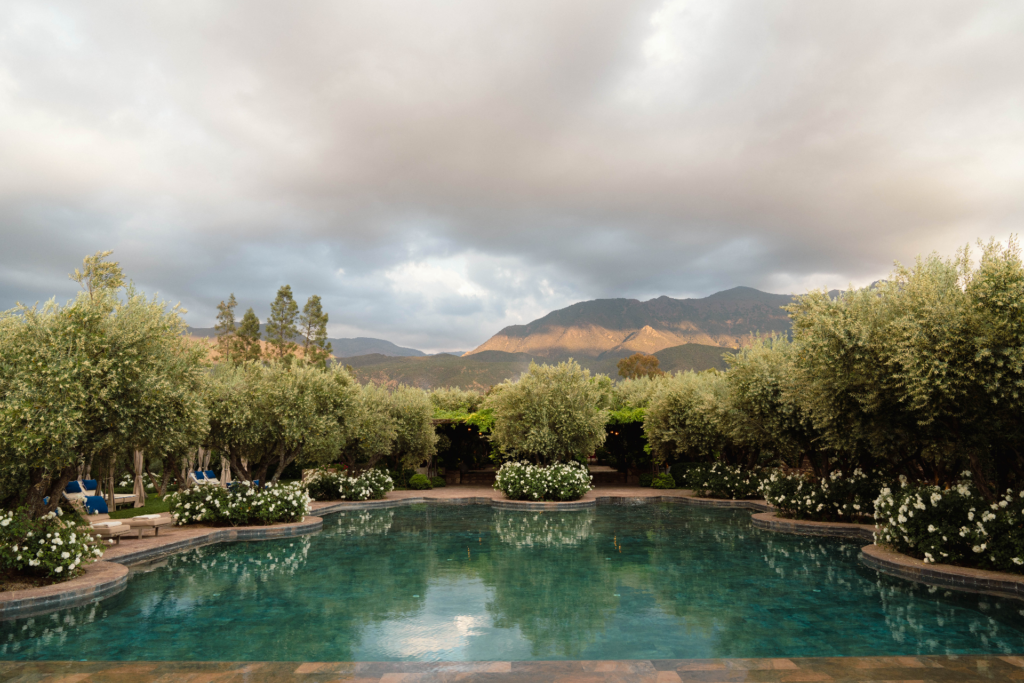
The estate sits inside a working olive plantation, and the grove is not decorative. It predates the hotel by generations, and the design team built around the trees rather than through them, which means your view from breakfast is genuinely old growth, not landscaping dressed up to look that way. Walking the paths between pavilions in the late afternoon, with the light dropping gold through silver green leaves and the Atlas peaks turning pink behind them, is the first moment you understand why nobody here talks about the drive from Marrakech. Nobody’s thinking about Marrakech at all.
Fireplaces built for October, pools built for July
Each of the nine pavilions stands entirely alone, wrapped in its own private garden, which means the closest thing to a neighbour is birdsong. Interiors lean into warm ochre and terracotta rather than the cool white riad look Morocco has leaned on for two decades, with fine linens, hand finished plasterwork and artwork that feels chosen rather than sourced from a supplier catalogue. My room had a fireplace built into the corner of the sitting area, unlit when I arrived but clearly ready for the mountain evenings that turn sharp even in a warm month, and a separate living space with a couch deep enough to disappear into with a book and no intention of moving before dinner.
The bathroom did the quiet luxury thing properly: double sinks, a rainfall shower with enough pressure to actually rinse shampoo out rather than just dampen it, and a deep soaking tub positioned so you could watch the mountains while you used it. Heated floors meant bare feet were never a hardship, even at the hour when the temperature drops fastest. The select pavilions with their own heated infinity pool are worth the upgrade if the budget allows, and if I’m honest, this is the one place on the property I’d tell you to spend the extra money without hesitation. Mine did not have one, and I found myself walking past the ones that did with the specific jealousy reserved for a neighbour’s better garden. Next time, I’m booking the pool.
The minibar is restocked daily and free, stocked with local beer, wine and soft drinks rather than the usual overpriced miniatures, which tells you something about the hotel’s actual priorities. Laundry is complimentary too, an unglamorous detail that somehow reads as more luxurious than a turndown chocolate, because it solves a real problem instead of decorating one. I handed over a bag of dusty hiking clothes on day two and got back folded, ironed linen by evening, no charge, no fuss.
The garden feeds the kitchen before the kitchen feeds you
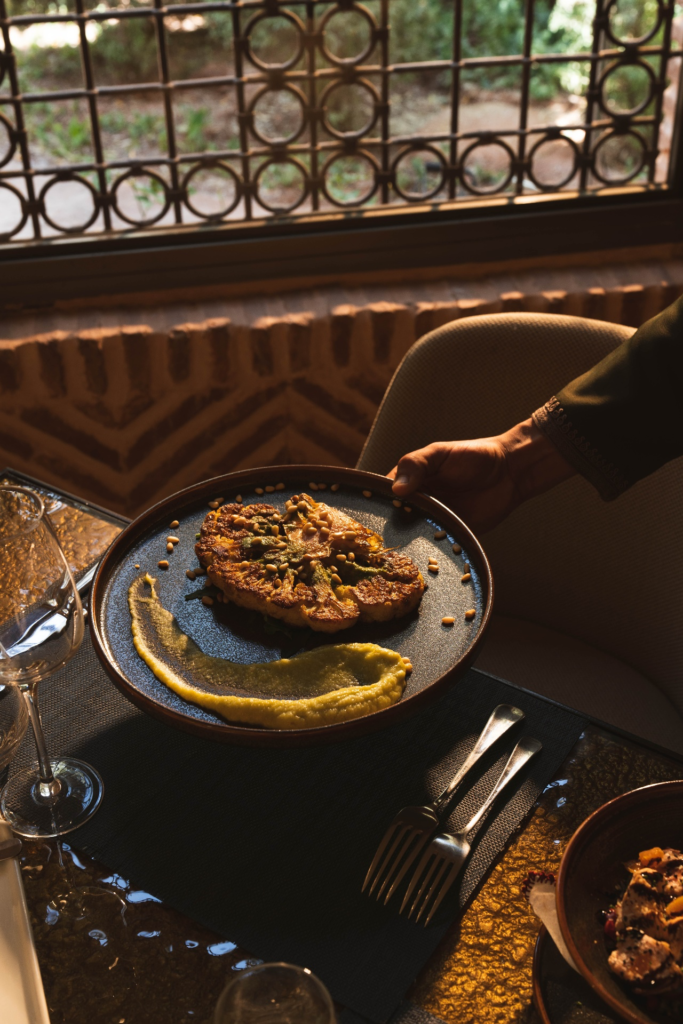
Dinner here is not an afterthought bolted onto the accommodation, and it shows from the first course. The kitchen draws heavily on produce grown within the estate’s own gardens, and the Berber inspired menu leans into slow cooked tagines, char grilled lamb mechoui, warm bread pulled straight from a clay oven, and vegetables that taste like they were picked that morning because they were. There is a lightness to the cooking that surprised me, and I’ll say it plainly: this was some of the best Moroccan food I’ve had at a hotel anywhere in the country, hotel restaurants included the ones with far bigger reputations. Moroccan food abroad often arrives heavy with cumin and caution, playing it safe for an international palate, but here the spicing felt considered rather than default, closer to what a Berber grandmother would actually put on her own table than what a hotel group assumes tourists expect. I went back for the lamb mechoui a second night purely because I couldn’t stop thinking about it.
Breakfast is served à la carte rather than as a buffet, which sounds like a small thing until you realise it means pancakes arriving hot rather than sitting under a heat lamp, and fresh fruit cut to order instead of pre-plated an hour earlier. I ate mine most mornings on the terrace outside the main dining room, mint tea poured from height in the traditional style, steam rising into cold mountain air while the olive grove below slowly lit up gold.
The bar sits under its own terrace with wide views back across the valley, and the wine list leans respectably into Moroccan producers most visitors have never heard of, which is exactly the point of drinking wine somewhere like this rather than at home. Both indoor and outdoor dining options are available depending on the evening, and on a warm night the outdoor tables under string lighting, with candles doing most of the work once the sun drops, are the better choice by some distance.
A hammam that doesn’t perform for Instagram
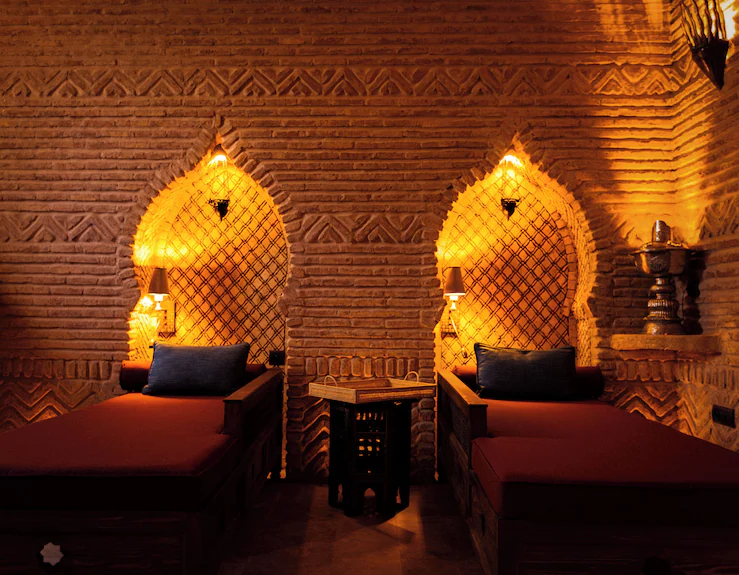
The spa sits in its own building near the pool and gym, modern in finish but restrained in scale, and it does not attempt to be all things to all guests. There is a traditional hammam, a steam room, and a treatment menu covering massage, facials and nail care rather than a hundred options nobody actually books. My hammam session followed the proper Moroccan sequence: black soap applied and left to work, a genuinely rough exfoliation with a kessa glove that left my skin looking a full shade lighter than when I walked in, and a rinse with warm water thrown by the bucketful rather than sprayed politely from a showerhead. It is not a gentle experience, and it should not be. There was a point about ten minutes in where I genuinely considered asking her to ease off, and I’m glad I didn’t, because the version of my skin that walked out the other side made the discomfort entirely worth it. The therapist worked with the kind of confidence that only comes from doing the same ritual correctly for years, checking in without hovering, adjusting pressure without being asked.
I left feeling wrung out in the specific, good way that only a proper hammam achieves, skin buzzing, muscles loose, appetite suddenly enormous. Yoga classes and a small but well equipped gym are available for anyone determined to counteract the tagines, though I noticed most guests treated the fitness centre as a formality and the pool sun loungers as the actual plan.
Said knows the mountain like his own kitchen
What elevates Olinto above a simply beautiful building is the staff, and specifically how few of them there are relative to how much they seem to care. With only nine rooms, the ratio of team to guest tips heavily in your favour, and it shows in the way requests get anticipated rather than merely fulfilled. A guide named Said led our hike into the High Atlas Mountains National Park and then on into a nearby Berber village, walking the paths at a pace that suggested he had done this route more times than he could count and still found something worth pointing out each time, from wild herbs growing at the trail edge to a family’s walnut harvest drying on a rooftop.
Back at the hotel, a member of staff called Youssef ran dinner service most nights with the sort of quiet attentiveness that means you never actually see the moment your water glass gets refilled, it simply always is. A cooking class with the hotel’s chef the following morning turned into an hour of hands pressed into dough and questions about spice ratios that got answered properly rather than deflected with a smile. E-bike tours are available for covering more ground than a hike allows, and the guided village visits felt genuinely reciprocal rather than staged, more introduction than performance.
None of this reads as effortless because it was easy. The region was hit hard by the September 2023 earthquake, and Olinto, like much of the Atlas foothills, has spent the years since rebuilding around that loss. I found myself thinking about that a lot during my stay, and it changed how I read every small kindness the team showed me. That the team manages to deliver a stay this seamless while carrying that history is worth noting rather than glossing over. It is not incidental to the experience. It is part of what makes the warmth here feel earned rather than trained, and it’s why I tipped more generously than I usually would, and still felt like I’d underpaid for what they gave me.
The stars don’t need an appointment
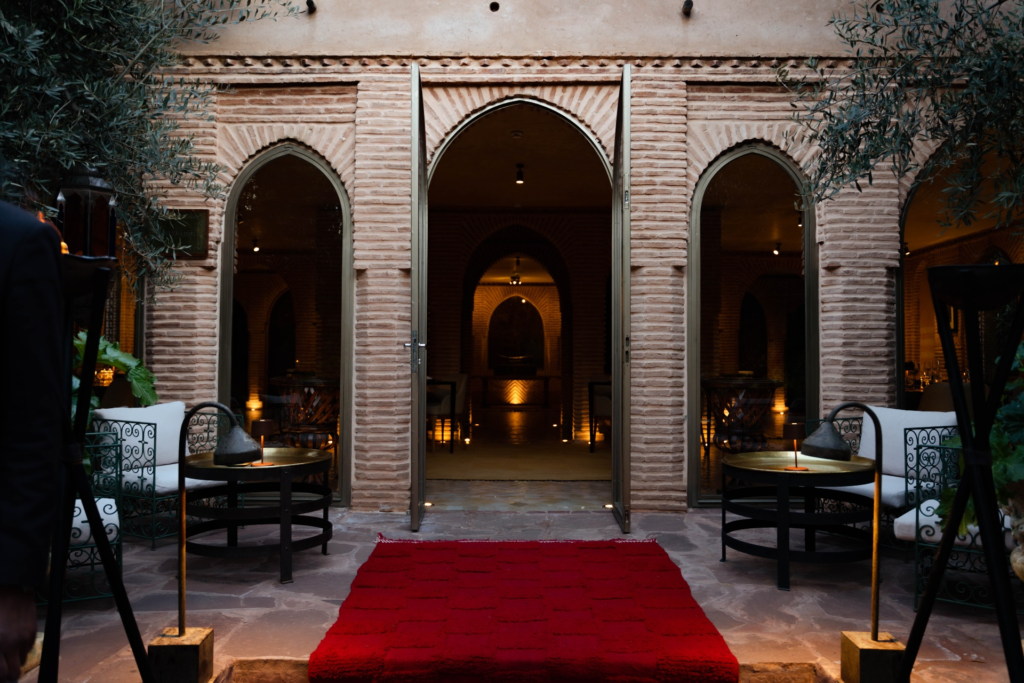
The roof terrace is where Olinto makes its final, unforced case for itself. There is no scheduled stargazing experience, no telescope wheeled out for a photo opportunity, just a flat open space above the pavilions where the absence of any nearby town means the sky arrives properly dark, properly full, in a way most travellers haven’t seen since childhood. I went up on my last night with a glass of the local wine from dinner and stayed far longer than planned, watching a satellite cross the sky twice while the olive grove below went black and silent.
That is the thing Olinto understood that a larger, louder resort might have missed. The best luxury here isn’t a feature you can list on a website. It’s restraint. Nine rooms instead of ninety. A garden that grows dinner instead of importing it. A laundry service instead of a signature scent in the lobby. I’ve stayed in hotels three times the price of Olinto that gave me a fraction of what this one did, and I’d take this over almost all of them without a second thought. By the time the car came to collect me for the drive back down to Marrakech, I was already working out how soon I could justify coming back.
Rates from: approximately £750 per night for a Garden View pavilion, based on double occupancy; Private Pool pavilions command a premium. Rates fluctuate by season, so it is worth checking directly for current pricing.
Getting there: Olinto is roughly 55 to 60 minutes by car from Marrakech Menara Airport, in the Ouirgane Valley of the High Atlas Mountains. Private transfers can be arranged directly with the hotel.